Square Balers: Engineering Principles, Performance Parameters and Industrial Applications for UK Farming and Biomass Operations
A precision engineering guide for agricultural contractors, farm managers, biomass plant operators, and procurement teams across the United Kingdom.
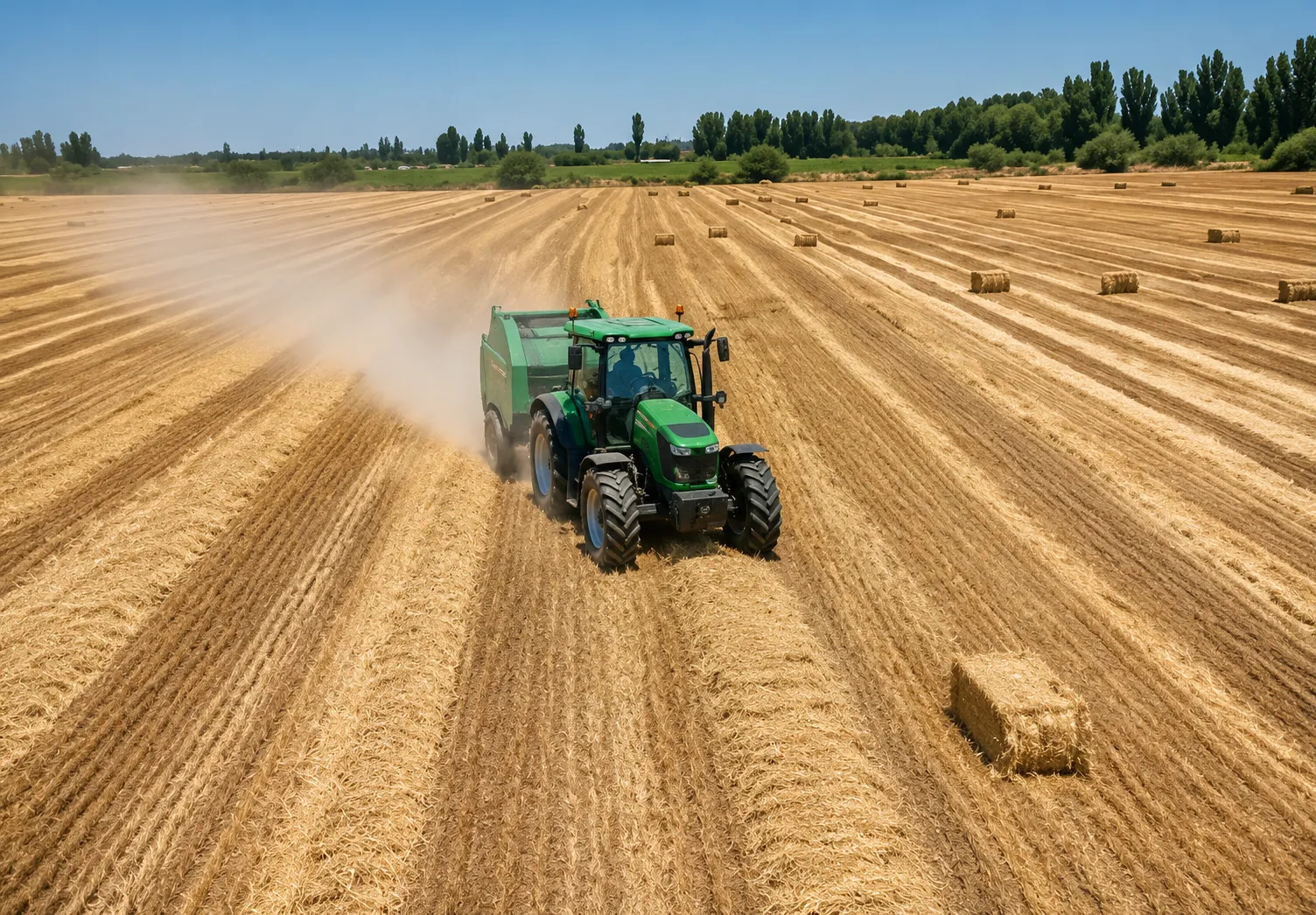
How a Square Baler Works: Mechanical Principle and Drive Architecture
The tractor’s power take-off shaft, typically turning at 540 or 1,000 RPM, connects directly to a heavy-duty flywheel. This flywheel stores kinetic energy between plunger strokes, smoothing the enormous instantaneous loads generated during compression and preventing damaging torque spikes from reaching the tractor drivetrain. On large commercial models used by contractors in Cambridgeshire and Nottinghamshire, the flywheel can weigh upward of 80 kg, engineered from high-tensile cast iron to sustain continuous high-cycle operation across a long harvest season.
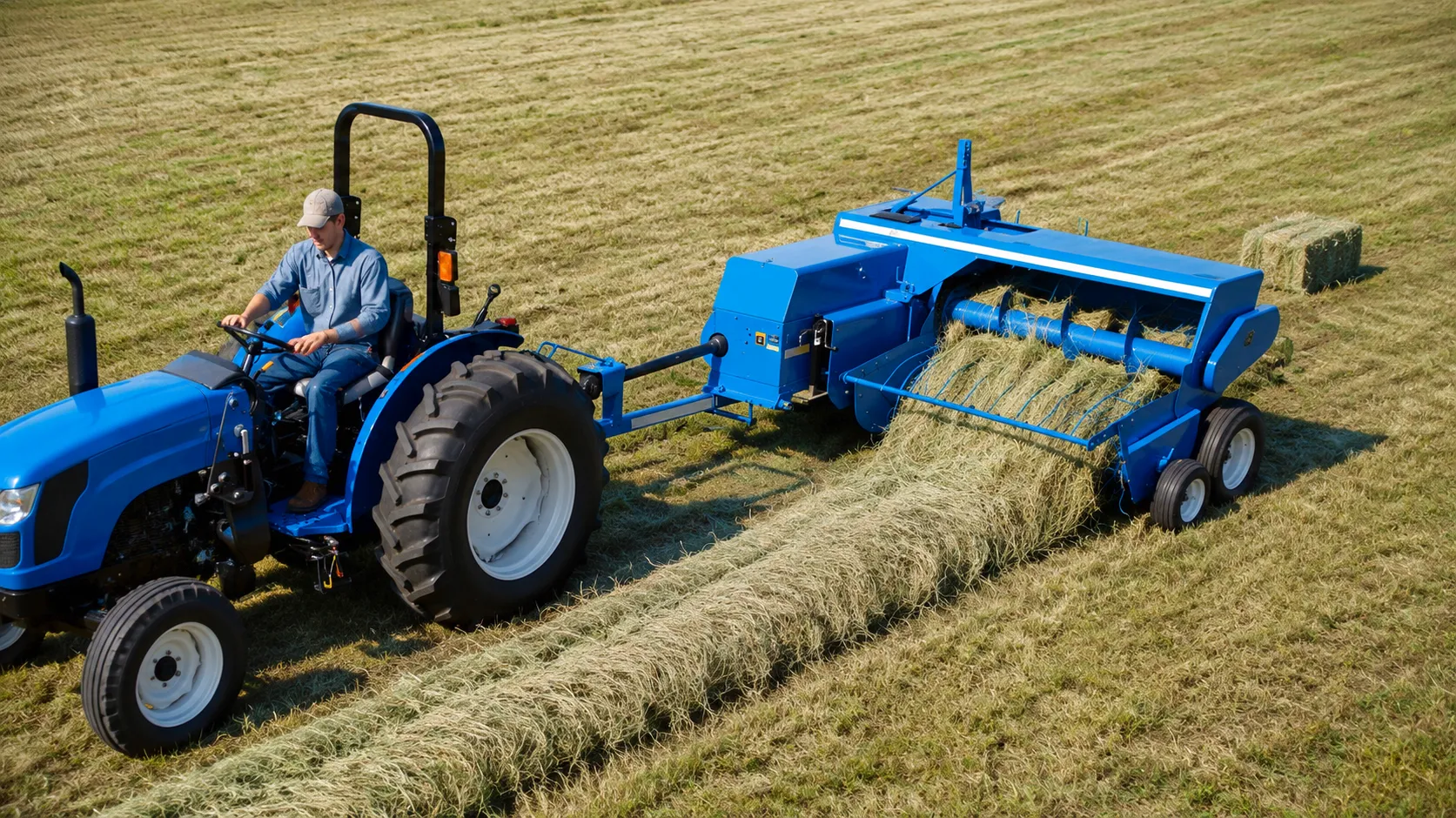
As the baler moves forward, a rotating pick-up reel — typically 2.0 m to 2.2 m wide — lifts windrowed material from the ground using spring-loaded tines. The gathered crop is then delivered into the baler’s throat by a feed rotor or auger. Pre-compression forks stage incoming material into consistent flakes before each plunger stroke, ensuring uniform bale density from end to end. On dual-chamber models, a separate pre-compression chamber doubles throughput capacity without requiring additional PTO power, making them particularly suitable for large-scale straw contractors working the flat, high-output fields of Eastern England.
The reciprocating plunger — driven by a crank mechanism connected to the flywheel — compresses each flake of material against the previously formed bale inside the bale chamber. Plunger strokes typically operate at 70–100 cycles per minute, exerting compression forces of 150–300 kN depending on machine class. Once the bale density sensor registers that the preset length has been achieved, the automatic knotting mechanism activates: a pair of needles thread twine around the bale, and knotters tie off two parallel strands simultaneously. The knotters — engineered to produce a reliable, slip-proof knot at machine speed — represent one of the most mechanically complex assemblies on the entire machine, and their build quality directly determines field reliability.
Material Engineering: What Goes Into a Durable Square Baler
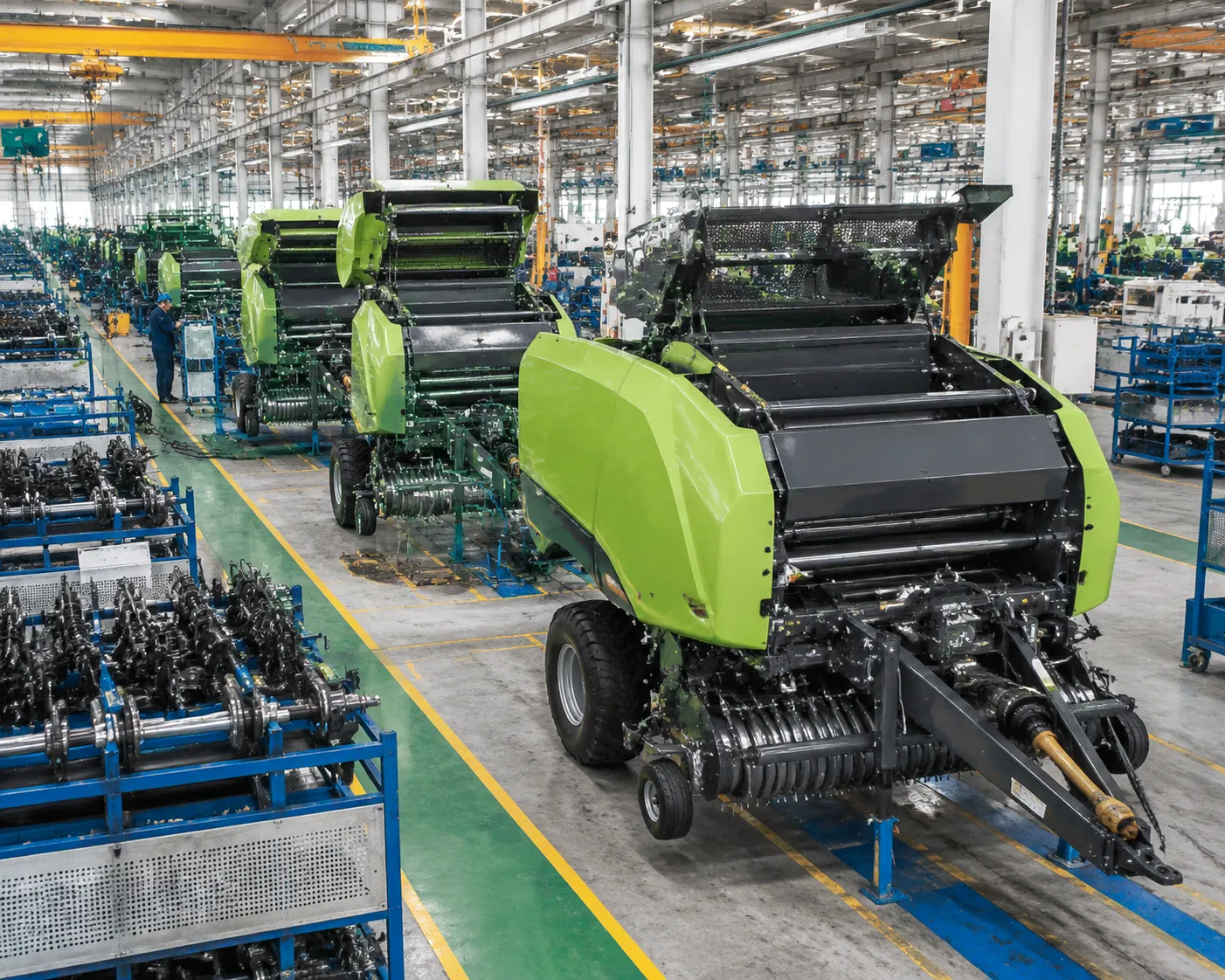
The operational life of a square baler — often 15 to 25 seasons in the hands of a conscientious owner — is almost entirely determined by the materials selected for its most heavily loaded components. Choosing a machine built to genuine engineering tolerances, rather than one that appears equivalent on a spec sheet but uses lesser alloys, is the single most cost-effective decision a UK agricultural contractor can make.
High-strength structural steel plate, typically S355 or equivalent, laser-cut and robot-welded. Chamber wall thickness of 10–16 mm resists deformation under sustained compression loads exceeding 200 kN.
Forged or precision-cast ductile iron plunger faces, with replaceable hardened steel wear inserts. Forging eliminates internal porosity that leads to fatigue cracking under high-cycle compression. Case-hardened to 55–62 HRC on contact faces.
Spring-tempered manganese steel or boron steel tines, phosphate-treated against corrosion. Designed to flex on impact with ground obstacles before returning to geometry, drastically reducing breakage rate compared to standard carbon-steel alternatives.
Investment-cast nodular iron or sintered metal powder components for the billhook and twine disc, nitrided to surface hardness of 65+ HRC. Dimensional tolerances held to ±0.05 mm to ensure consistent knot formation at 90+ strokes per minute.
Rectangular hollow section (RHS) and I-beam steel, hot-dip galvanised or epoxy-primed before powder-coat topcoat. Multi-layer corrosion protection is particularly important for UK machines exposed to frequent wet-weather operation and high-salt road environments during transport.
ISO-standard roller chains in Grade A precision specification, with induction-hardened sprocket teeth. Oil-bath or sealed-grease lubrication housings prevent ingress of chaff and grit, the two primary causes of accelerated chain wear during prolonged baling operations.
Technical Performance Parameters: Square Baler Specification Table
The table below consolidates the key technical parameters across typical small-to-medium and large commercial square baler classes relevant to UK agricultural and industrial markets. Values reflect standard production specifications; custom configurations are available from specialist manufacturers.
| Parametri | Small Commercial (Standard) | Large Commercial | Double-Chamber |
|---|---|---|---|
| Bale Size (Width × Height × Length) | 360 × 460 mm, length adjustable 500–1,200 mm | 460 × 560 mm, length adjustable 600–1,400 mm | 460 × 560 mm, dual-chamber, max 2,200 mm |
| Plunger Compression Force | 150–200 kN | 220–300 kN | 240–320 kN |
| Plunger Stroke Rate (SPM) | 70–82 strokes/min | 82–96 strokes/min | 88–100 strokes/min |
| Noukkimen leveys | 1.7–1.9 m | 2.0–2.2 m | 2.0–2.2 m |
| Required PTO Power (kW) | 37–55 kW (50–75 hp) | 55–90 kW (75–120 hp) | 75–110 kW (100–150 hp) |
| Maximum Bale Density (kg/m³) | Straw: up to 180 kg/m³; Hay: up to 200 kg/m³ | Straw: up to 220 kg/m³; Hay: up to 240 kg/m³ | Straw: up to 230 kg/m³; Hay: up to 250 kg/m³ |
| Hourly Throughput Capacity | 20–35 bales/hour | 40–65 bales/hour | 50–80 bales/hour |
| Knotter Type / Twine Strands | Double knotter / 2 strands | Double knotter / 2–3 strands | Double knotter / 3–4 strands |
| Flywheel Weight (kg) | 45–65 kg | 70–90 kg | 80–100 kg |
| Koneen paino (noin) | 1,200–1,900 kg | 2,200–3,400 kg | 3,100–4,200 kg |
| Primary Structural Material | S355 steel; cast iron plunger | S355/S460 steel; forged plunger | S460 steel; forged plunger, dual-bore |
| Tine Material | Manganese spring steel, phosphate treated | Boron steel, heat-treated | Boron steel, heat-treated |
Core Technical Advantages of Modern Square Balers
Unlike round bales, square bales stack precisely on pallets and in lorry loads. This geometric predictability is critical for UK hauliers transporting hay to equestrian centres across the South East or delivering biomass pellet feedstock to energy plants in the Midlands. Each bale occupies a known volume, enabling accurate load planning and weight optimisation within HGV legal limits.
Modern large-chamber square balers achieve output rates of 40–80 bales per hour on typical UK cereal straw, with specific fuel consumption of 2.5–4.0 litres per tonne baled — significantly more efficient than multi-stage shredding-and-baling setups. The flywheel energy storage system means peak plunger loads do not drive proportional fuel spikes, maintaining consistent PTO draw across variable windrow densities.
The bale density setting is adjusted by changing spring tension on the bale chamber or via electronic pressure monitoring on premium machines. This allows a single square baler to produce lighter bales for equestrian markets — where horse owners prefer bales that can be broken apart by hand — and denser bales for industrial biomass clients requiring maximum energy content per unit volume. A single machine can serve multiple revenue streams across the agricultural year.
When built to engineering-grade material standards, a commercial square baler is a long-cycle capital asset. Forged plunger assemblies, hardened knotter components, and sealed-bearing pick-up drums typically deliver 15–25 seasons of commercial operation before major rebuild is required. Modular component design on current-generation machines means worn knotters, tine bars, or plunger facings can be replaced in the field without specialist workshop access — a significant advantage during the compressed UK harvest window.
A versatile square baler handles cereal straw, grass hay, silage (at appropriate dry-matter levels), hemp stalks for industrial fibre, miscanthus energy crop, reed beds for thatching, paper and cardboard for industrial recycling, and light timber slash from forestry thinning operations. This material flexibility makes the square baler the most commercially versatile compression machine available to UK agricultural and land-management businesses.
Square bales can be built into stable, weather-resistant stacks without specialised racking systems. On UK farms where covered storage is at a premium, well-tied square bales stacked correctly can be successfully stored outdoors under polythene sheeting for six to twelve months with acceptable DM losses, compared with the significant financial and logistical challenges of outdoor round-bale storage. This translates to measurably lower on-farm infrastructure expenditure.
Industrial and Agricultural Application Scenarios Across the UK
Across the intensive cereal-growing regions of Lincolnshire and East Yorkshire, straw is a high-value co-product rather than a field nuisance. Following combine harvest, custom contractors operating large commercial square balers can clear 60–100 hectares per day, producing uniform bales for sale directly to livestock farmers, equestrian businesses, or biomass fuel aggregators. The key commercial advantage of the square baler in this context is speed combined with logistics compatibility: rectangular bales load efficiently onto flatbed trailers operating under UK road weight regulations, maximising payload per journey and reducing haulage cost per tonne. In Norfolk, where long field margins and high windrow density from intensive wheat production are common, a double-chamber square baler with a 2.2 m pick-up width can reduce baling cost per tonne by 18–25% compared with single-chamber alternatives.
The UK equestrian sector represents one of the most commercially active markets for small square bales, particularly in the commuter belt counties of Surrey, Hertfordshire, and Cheshire, where high concentrations of livery yards and riding schools generate consistent year-round demand. Small-format square balers — producing bales in the 15–25 kg range — are the machine of choice for supplying this market, because livery yard operators require bales that can be handled manually by a single person, stored in standard stable dimensions, and shaken apart cleanly for bedding or hay-rack feeding. The predictable weight and shape of square bales eliminates the buyer uncertainty associated with round bales, making them the premium product in this segment, typically commanding a 20–30% price premium over equivalent round-bale product.
Energy crop operators growing miscanthus, short-rotation coppice reed canary grass, and energy wheat straw across South Yorkshire and the West Midlands use large-chamber square balers as the primary field-compression step in their biomass supply chain. High-density bales with consistent dimensions are essential for efficient lorry loading, biorefinery intake weighing, and shredder-feed staging. A square baler producing bales at 220+ kg/m³ dry matter density reduces transport cost per GJ by up to 22% compared with lower-density product. In Birmingham and Sheffield, where biomass energy plants operate under biomass supply contracts with energy generators, consistent bale specification directly affects feedstock payment rates, making baler performance a financial variable — not just an operational one.
Beyond pure agriculture, industrial square balers are widely deployed in the recycling and waste management sector across Greater Manchester and Lancashire. Cardboard, paper, light textile waste, and natural fibre packaging are all compressible materials that benefit from the high-force reciprocating plunger mechanism of the square baler. Recycling operations in the North West of England frequently use stationary industrial balers adapted from agricultural square baler architecture, producing dense rectangular bales that minimise storage footprint and maximise trailer payload when moving material from collection depots to processing facilities. The closed-loop integration of square baler technology into circular economy logistics infrastructure is an expanding market that UK machinery suppliers are increasingly addressing with purpose-adapted models.
A highly specialised but economically significant UK application involves the use of compact square balers for harvesting Phragmites australis (common reed) from managed reed beds in the Norfolk Broads and Somerset Levels. Reed for thatching is harvested in late winter using modified pick-up systems with gentle tine geometry to preserve stem integrity, and tied into tight, precisely dimensioned bundles compatible with thatcher handling requirements. Square baler mechanics are well-suited to this task, and several specialist UK agricultural engineering companies in Norfolk have developed dedicated reed-harvesting front attachments that pair with standard square baler chassis. The resulting product commands a significant premium in the traditional thatching materials market, supporting sustainable employment and biodiversity management in protected wetland landscapes.
Ever Power: Precision Manufacturing and Full Customisation Capability
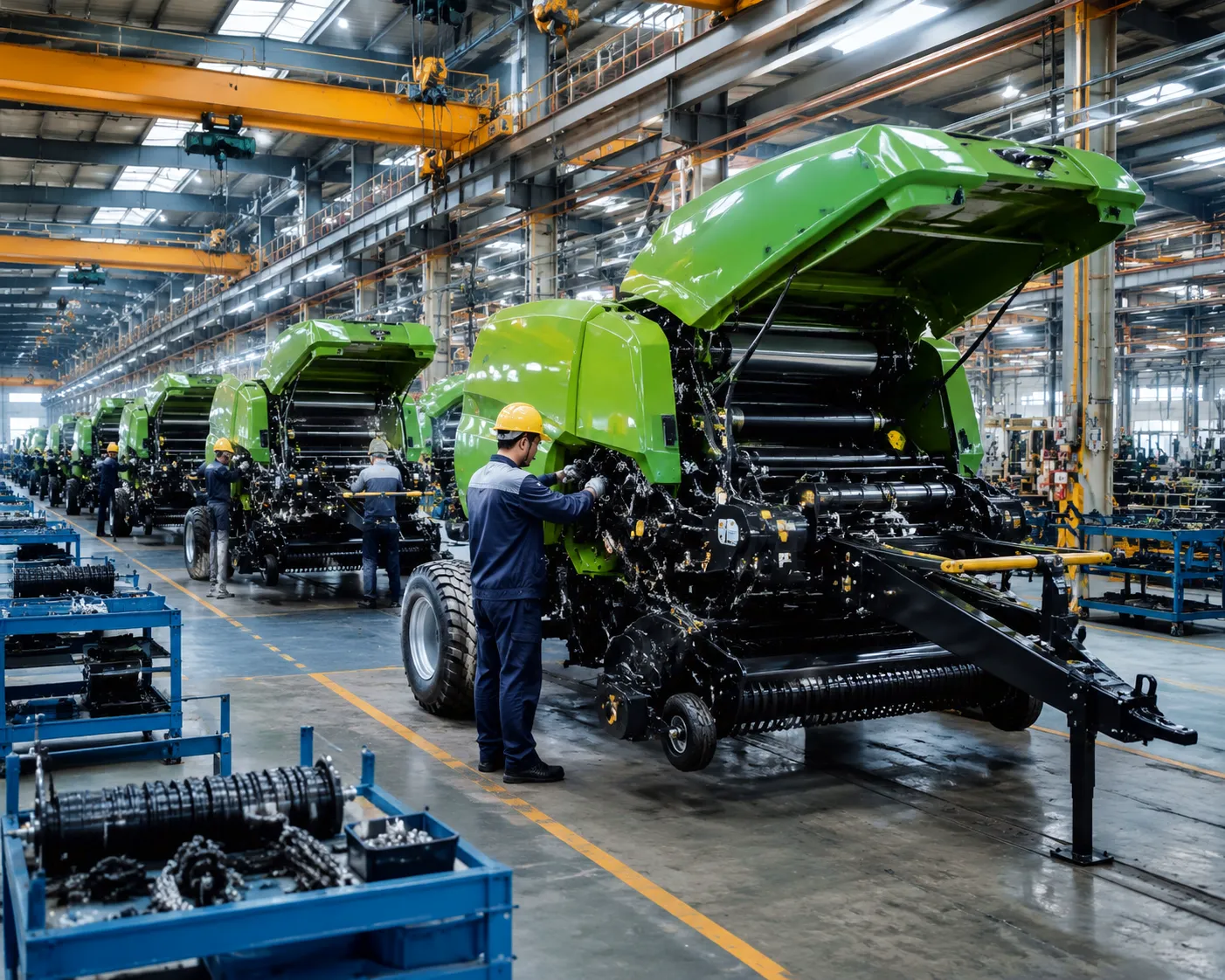
Ever Power operates a purpose-built manufacturing complex equipped with CNC laser cutting, robotic welding stations, precision heat-treatment furnaces, and coordinate measuring machinery for component-level quality verification. This infrastructure enables the production of agricultural and industrial square balers built to specifications that go substantially beyond the standard catalogue offering — a capability that defines Ever Power’s competitive position in the export market and, increasingly, in direct supply relationships with UK agricultural machinery dealers and biomass equipment distributors.
Customisation capability covers every critical assembly of the square baler. Bale chamber dimensions can be adapted to non-standard cross-sections required by specialist handling or storage infrastructure. Pick-up widths from 1.7 m to 2.2 m are available across the range, with optional crop lifters, windrow conditioners, and feed rotor speed adjustments for high-stemmed or high-moisture crops. Knotter configuration — including strand count, twine capacity, and knotter-to-knotter spacing — is adjustable to client specification. PTO shaft configurations and hitch geometry are engineered to match specific tractor models used by UK clients, including current-generation AGCO, CNH Industrial, and CLAAS tractors common in British contracting operations.
Ever Power’s supply chain management is built around guaranteed parts availability and rapid international logistics. UK clients benefit from a stocked spare parts programme covering all high-wear components — knotters, tines, plunger inserts, chain sets — held in a European distribution hub with 48-hour despatch capability. This parts availability commitment directly addresses the UK contractor’s greatest operational risk: machine downtime during the three-to-four week harvest window when every baling day has measurable financial value.
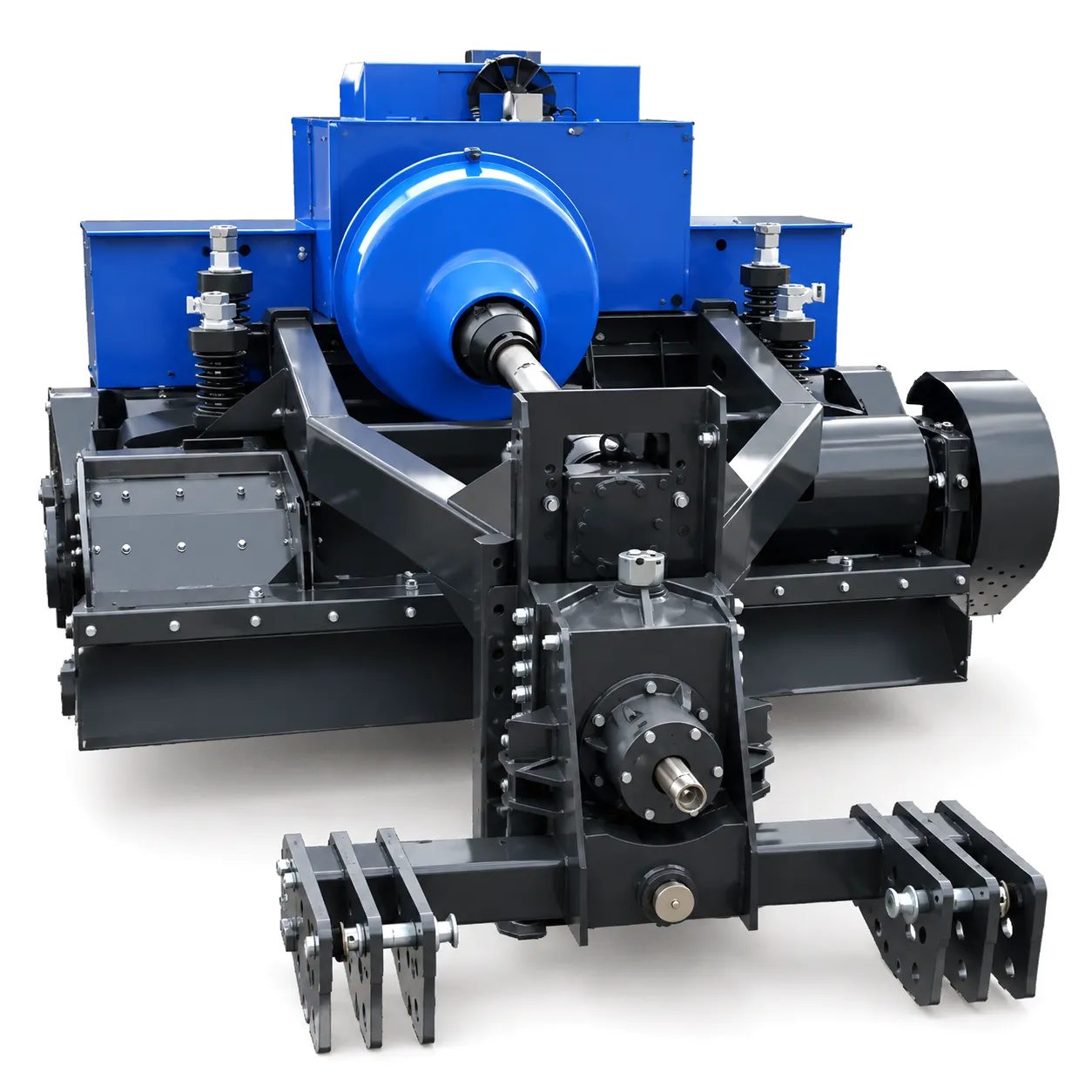
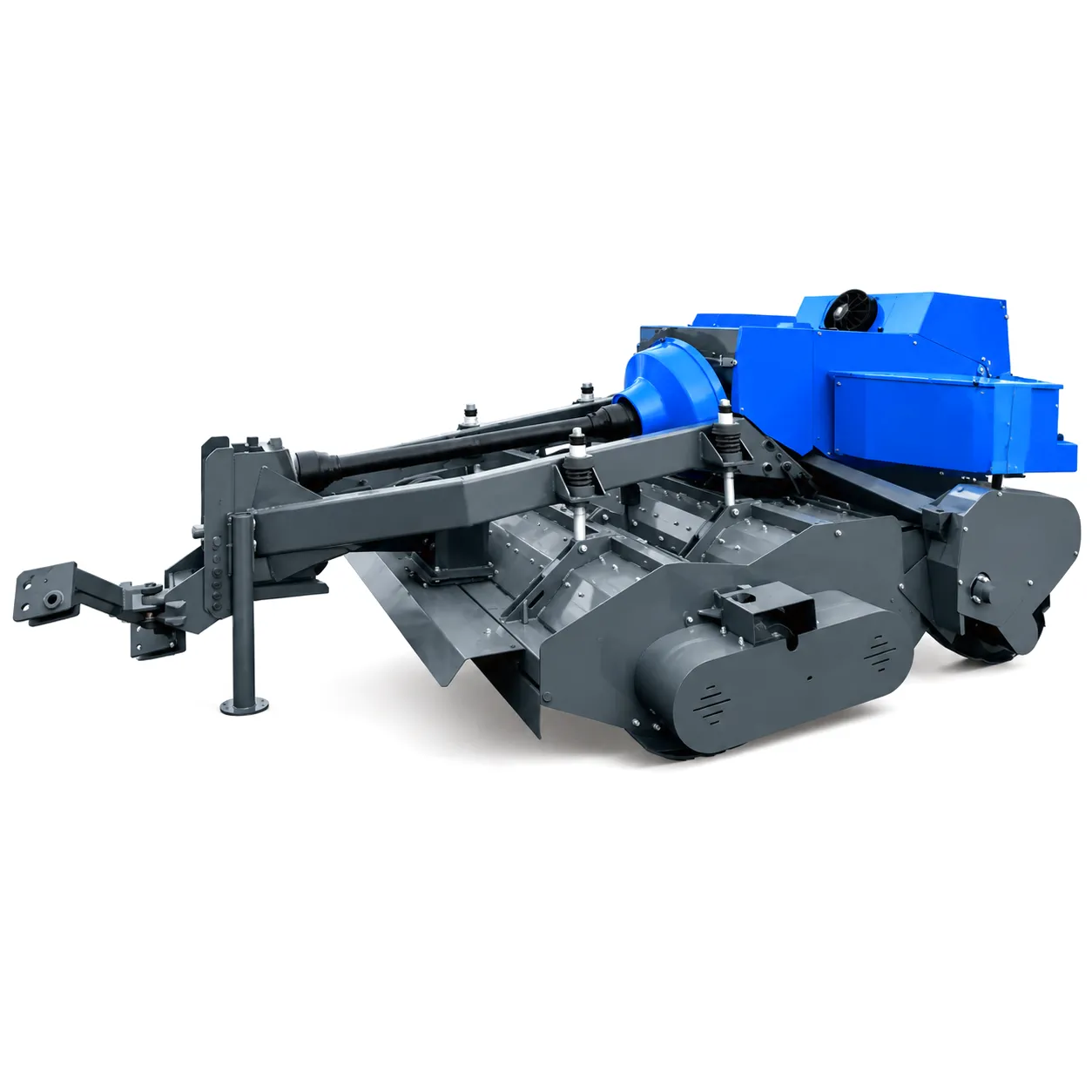
Ever Power Square Baler Product Range
Customer Success Story: Contractors in South Yorkshire Biomass Sector
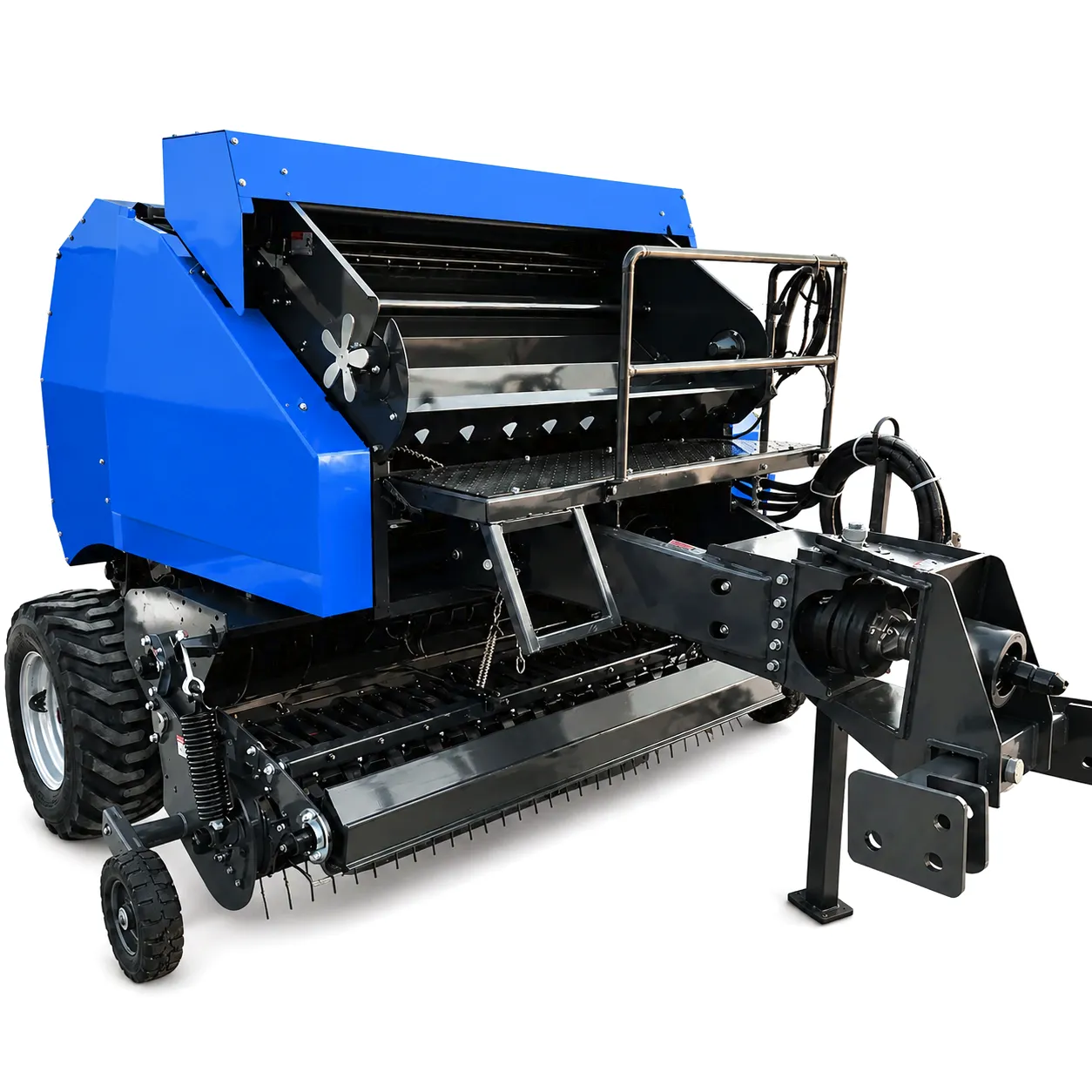
Meadow Ridge Agricultural Contracting, a family-owned agricultural contracting business based near Rotherham in South Yorkshire, had been supplying straw and miscanthus to local biomass energy operators for twelve years when the business decision to scale throughput brought them into contact with Ever Power. The company had previously run two medium-capacity square balers from a European manufacturer but found that the combination of ageing machines, increasing demand from biomass clients, and the short Yorkshire harvest window was creating a capacity bottleneck that was costing the business confirmed contracts.
After discussions with Ever Power’s UK-focused sales team and a factory inspection visit, Meadow Ridge ordered two units of the 9YFS-2.2 Double-Chamber Square Baler, customised with 2.2 m pick-up widths and a three-strand knotter configuration specified for their primary biomass client’s handling system. The machines were delivered with full operator training documentation in English, a twelve-month parts guarantee, and a direct technical support line to Ever Power’s European parts team.
In the first full season of operation, Meadow Ridge increased their total annual bale output by 62% without adding tractor-and-driver pairs to their contracting team. The dual-chamber design allowed them to clear miscanthus windrows at a rate that consistently outpaced their previous machines even in the high-density, slightly stemmy crop conditions typical of South Yorkshire energy plots. Their biomass client formally recognised the improved bale consistency and density in the following year’s supply contract, incorporating a quality premium that partially offset the capital investment within two seasons. Meadow Ridge’s director, speaking at the Yorkshire Agricultural Society’s contractor forum in Harrogate, cited the Ever Power supply relationship as a decisive factor in the business’s ability to take on a second biomass energy supply contract in the region.
“The bale density consistency from the double-chamber machine is genuinely remarkable — our biomass client’s weighbridge data showed less than 4% variance across a 14,000-bale delivery. That kind of specification accuracy was something we simply couldn’t achieve before.”
“We specified a non-standard pick-up width and knotter arrangement, and Ever Power delivered exactly what we asked for with proper engineering drawings to confirm the build before manufacture. The customisation process was professional at every stage.”
“Parts availability was our biggest concern when buying from an international manufacturer. Two seasons in, we’ve had zero harvest delays waiting for components — Ever Power’s European parts stock held everything we needed, next-day.”
Frequently Asked Questions About Square Balers in the UK
Ready to discuss a square baler specification for your UK farming or industrial operation?
📩 Get a Quote — [email protected]
gzl:n muokkaama