Ever Power · Industrial Equipment · Square Baler Technology
Square Balers: Engineering, Performance, and Agricultural Efficiency for the UK Market
A technical deep-dive into how modern square balers work, what makes them built to last, and why British farmers and agri-businesses are choosing precision-engineered baling solutions from Ever Power.
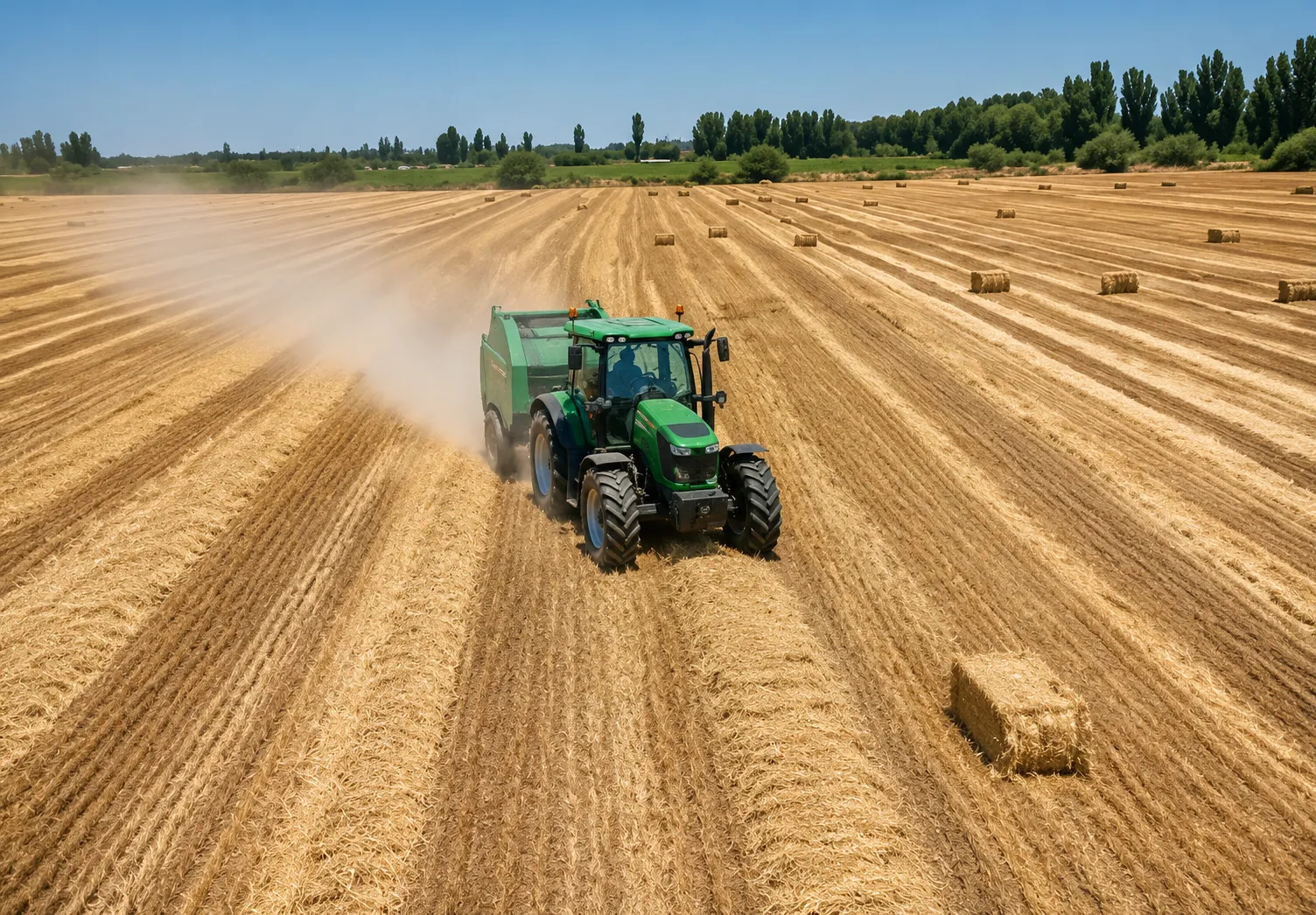
In the heart of the British agricultural calendar — from the rolling fields of Yorkshire to the broad arable plains of Lincolnshire — the efficiency of the post-harvest operation often comes down to a single machine: the square baler. These robust, precision-driven implements convert loose crop material into tightly compressed rectangular bales, enabling streamlined handling, storage, and transport across farms, estates, and agri-businesses of every scale. Whether a contractor is servicing multiple holdings across the East Midlands or a family operation in Devon is looking to reduce haulage costs, the square baler sits at the centre of post-harvest logistics. Modern engineering has transformed what was once a mechanically simple press into a sophisticated, sensor-integrated field machine capable of delivering consistent bale weights and densities across variable crop conditions. This article examines the core technology inside square balers, the materials that define their durability, the performance parameters buyers should understand, and the real-world applications where these machines demonstrate their value across the United Kingdom.
How a Square Baler Works: The Mechanical Principle
Toimintaperiaate
Pick-up & Feed
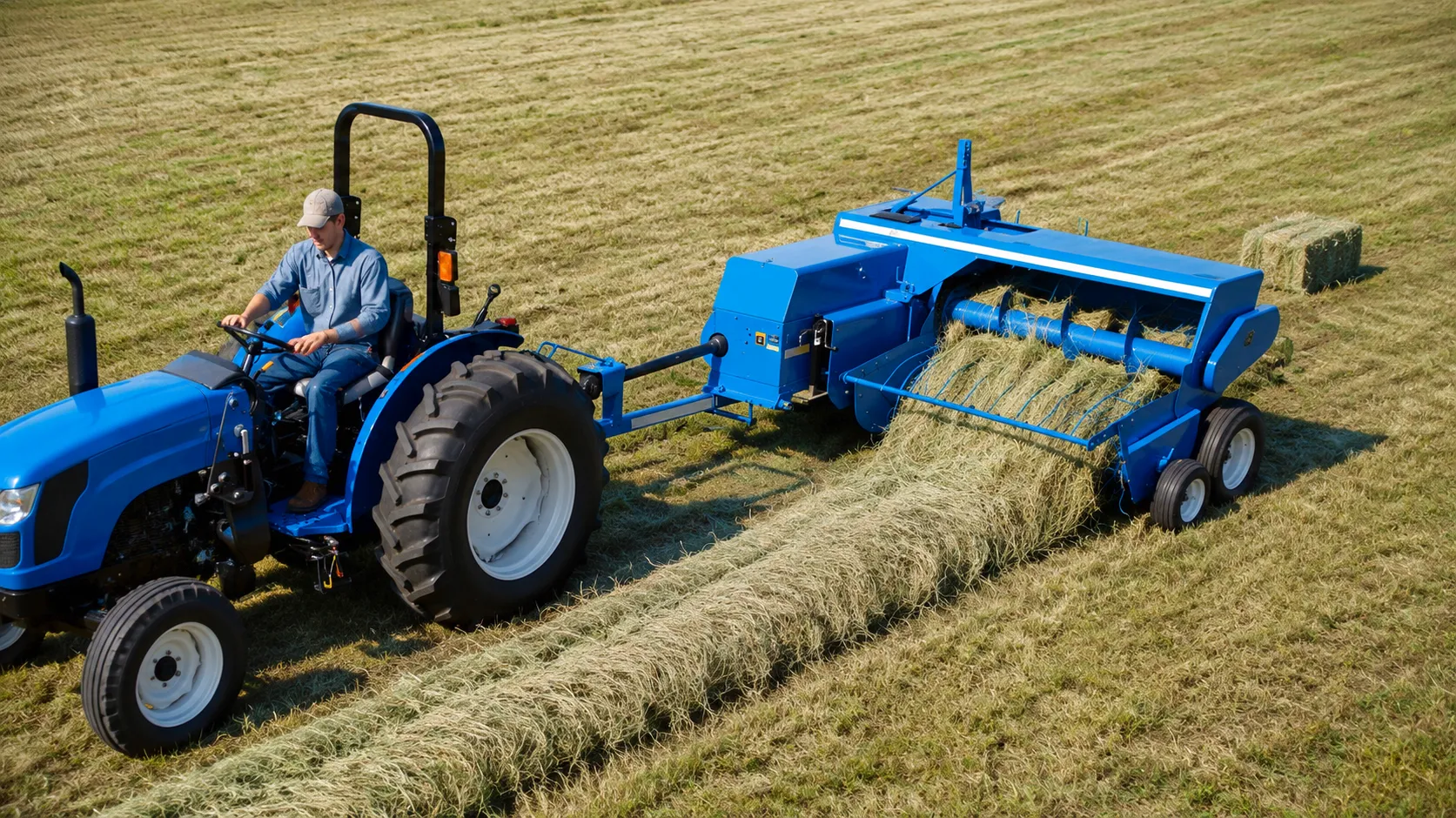
A rotating pick-up reel with spring-loaded tines lifts the windrow from the ground surface. The tines are engineered to feed crop into the intake channel without wrapping or jamming. Feed augers and pre-compression rotors then channel the material toward the bale chamber, metering the flow to maintain consistent piston load.
Pre-Compression & Stuffing
Material accumulates in a pre-chamber where it is initially compressed. Once a sensor detects that a sufficient charge has built up, a stuffing fork or rotor drives the material through a throat into the main rectangular bale chamber. This two-stage compression is a defining characteristic of high-density square balers: it prevents irregular density gradients that would cause bales to fall apart during stacking or transport.
Plunger Compression
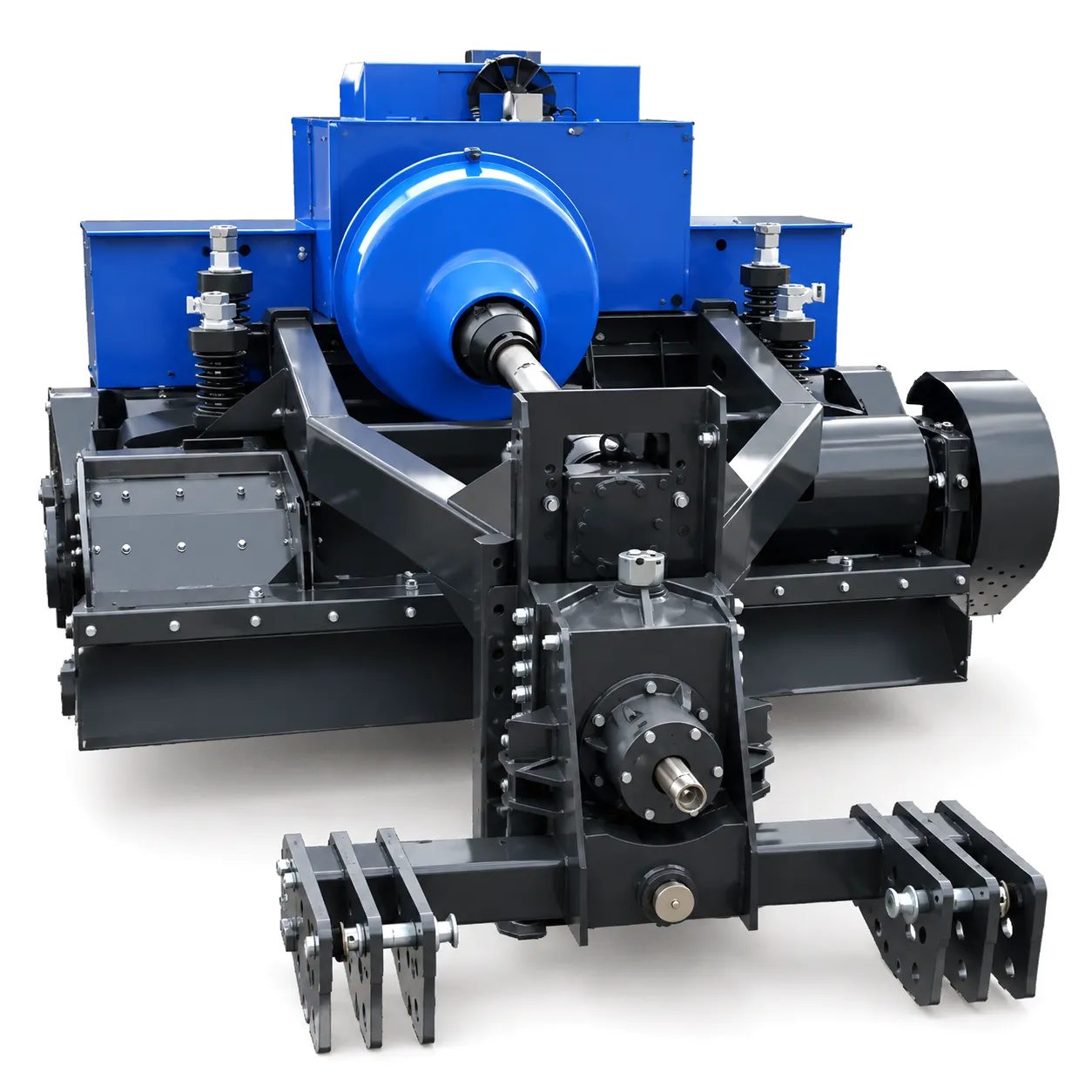
The plunger, reciprocating at rates of 40–100 strokes per minute, compresses each slice of crop tightly against the previously formed material. The plunger mechanism is driven by a heavy-duty crankshaft connected via a gearbox to the tractor’s PTO. Flywheel mass smooths the stroke impulse, preventing power spikes that could damage the driveline. Shear bolt protection on the PTO shaft shields both tractor and baler against foreign object damage.
Knotting & Ejection
Once the bale reaches the preset length — measured by a star wheel metering arm — the knotting mechanism fires simultaneously on multiple twine loops. Twine is drawn from spools housed in a sealed compartment, fed through needles that rise through slots in the bale channel floor, and tied by spring-loaded bill hooks rotating at high speed. After tying, the completed bale is discharged from the rear of the machine, either onto the ground, a chute, or directly onto a bale accumulator or wrapper.
Core Materials in Square Baler Construction
Material Engineering
Gearbox & Bearing Grades
The main drive gearbox is case-hardened from 20CrMnTi alloy steel, providing a service-life target exceeding 5,000 operating hours. Tapered roller bearings at all major load points use ABEC-5 grade precision rings with sealed lipstick seals to exclude silica dust — an occupational hazard in stubble fields common across Lincolnshire and Cambridgeshire cereal operations.
Surface Treatments
External panels and structural sections receive a multi-stage epoxy primer plus polyurethane topcoat system rated to ISO 12944 C3/C4 corrosion category, appropriate for the wet maritime climate of the British Isles. This goes beyond standard agricultural machinery coating practice and reflects Ever Power’s commitment to long-term machine integrity for UK operators.
Core Technical Advantages of Modern Square Balers
Tuotteen edut
High-Density Bale Formation
Contemporary square baler designs achieve bale densities of 180–250 kg/m³ in wheat straw and 140–200 kg/m³ in hay, depending on moisture content and crop type. High density directly reduces the number of bales produced per tonne of crop — fewer bales means lower per-unit handling, transport, and storage costs. For contractors running large straw-clearing contracts across the Yorkshire Wolds, the economic arithmetic is straightforward: a 10% increase in bale density equals 10% more tonnage per trailer load.
Consistent Bale Geometry
Precision-machined bale channel walls with flat-honed internal surfaces ensure that every bale exits with consistent cross-sectional dimensions. Dimensional variation within ±8 mm across the bale cross-section is achievable with high-quality equipment. Consistent geometry matters enormously for automated handling: self-stacking bale chasers, grab loaders, and export-specification bale packs all depend on predictable bale size. Grain merchants and biomass energy buyers in the UK increasingly specify tightly controlled bale weights as a condition of supply contracts.
Adjustable Bale Length
The star wheel metering arm on the bale channel allows bale length to be set across a defined range — typically 600 mm to 1,300 mm — without tools, enabling quick adaptation between short animal-feed bales and long export-specification bales within the same working day. Some models offer electronic bale length control from the tractor cab, with real-time bale count and weight estimation displayed on an ISOBUS-compatible terminal.
Reliable Knotting Performance
A modern square baler ties two to six knots per bale depending on bale width. The statistical knot reliability target for commercial equipment is fewer than one missed knot per 10,000 bales — a benchmark that depends almost entirely on the quality of the bill hook profiles, the twine tension calibration, and the cleanness of the twine path. Ever Power’s knotting systems are bench-tested for 50,000 consecutive tie cycles before shipment, ensuring that reliability in the field matches the factory standard.
Product Technical & Performance Parameter Table
Specifications
| Parametri | Small / Mid Baler | Large Format Baler | Unit / Note |
|---|---|---|---|
| Bale Cross-Section | 360 × 460 mm | 460 × 560 mm / 500 × 700 mm | Width × Height |
| Bale Length Range | 400 – 900 mm | 600 – 1,300 mm | Adjustable via star wheel |
| Bale Weight (Straw) | 18 – 28 kg | 70 – 130 kg | Dry wheat straw, 12–14% MC |
| Paalitiheys | 140 – 200 kg/m³ | 200 – 280 kg/m³ | Max at rated PTO speed |
| PTO Speed Requirement | 540 rpm | 1,000 rpm / 540 rpm optional | Nominal shaft speed |
| Required Tractor Power | 45 – 75 kW (60 – 100 hp) | 90 – 150 kW (120 – 200 hp) | PTO power at rated load |
| Männän iskunopeus | 60 – 80 strokes/min | 40 – 60 strokes/min | At rated PTO rpm |
| Noutoleveys | 1,700 – 1,900 mm | 2,000 – 2,400 mm | Working width |
| Number of Knots / Bale | 2 | 4 – 6 | Twine or net options |
| Frame Material | High-tensile steel S550 | High-tensile steel S700 | Main chassis grade |
| Gearbox Torque Capacity | 1,800 Nm | 3,200 – 4,800 Nm | Continuous rating |
| Corrosion Protection | Epoxy primer + PU topcoat | Epoxy primer + PU topcoat | ISO 12944 C3/C4 |
Industrial & Agricultural Application Scenarios
Application Scenarios
🌿 Cereal Straw Baling — Yorkshire, Lincolnshire
Following combine harvesting of wheat, barley, and oilseed rape across the broad arable plains of Lincolnshire and the East Riding of Yorkshire, square balers clear straw residue at high throughput for bedding, export, and biomass fuel applications. High-density rectangular bales are preferred because they stack stably inside standard articulated trailers and shipping containers, reducing transport costs per tonne significantly compared with round bales of equal mass.
🍏 Hay & Haylage Production — Wales & Northern England
Livestock farms across the Pennines, the Welsh uplands, and the Lake District produce square bales of ryegrass, timothy, and clover hay for winter feed. Small square balers producing 18–28 kg bales remain commercially popular on these holdings because the bale size is manageable for single operators. The consistent bale dimensions are critical for stacking in hay barns with limited ceiling clearance — a practical constraint that frequently governs equipment specification on traditional British farm steadings.
♬ Biomass Energy Feedstock — East Midlands & Scotland
Energy crops including miscanthus, short-rotation coppice residues, and reed canary grass are baled for delivery to anaerobic digestion plants, combined heat-and-power installations, and biomass boiler fuel supply chains. The UK’s Renewables Obligation and contract-for-difference energy framework has steadily increased the commercial scale of this sector, particularly around facilities in the East Midlands and Fife. High-density large square balers — producing bales of 80–130 kg — are the de facto standard for biomass supply chains owing to the logistics efficiency they provide.
📦 Export Packing — Port-Adjacent Operations, Humberside
A specialist segment of the UK straw market involves baling to exact dimensions for container export to the Middle East, Japan, and South Korea, where premium horse bedding straw commands strong prices. Producers operating near the port facilities at Immingham and Hull often specify balers with electronic length control and high-pressure bale chambers to achieve the compact, uniform bales that fit container profiles with minimal void space. Ever Power’s customisation capability in bale chamber dimensions and knotting head geometry is particularly relevant for this demanding application.
🏭 Industrial Waste Fibre Baling — Birmingham, Sheffield
Beyond agriculture, square baler technology is adapted for industrial fibre waste streams including paper, cardboard, textile off-cuts, and packaging materials. In the light industrial zones of Birmingham’s Solihull corridor and Sheffield’s Lower Don Valley, manufacturers and waste-management contractors use modified square baler platforms to compress and tie fibre waste for recycling logistics. The same mechanical principles apply: plunger compression, knotting, and consistent bale geometry for handling efficiency across the waste-to-resource supply chain.
Ever Power Square Baler Product Range
Featured Products
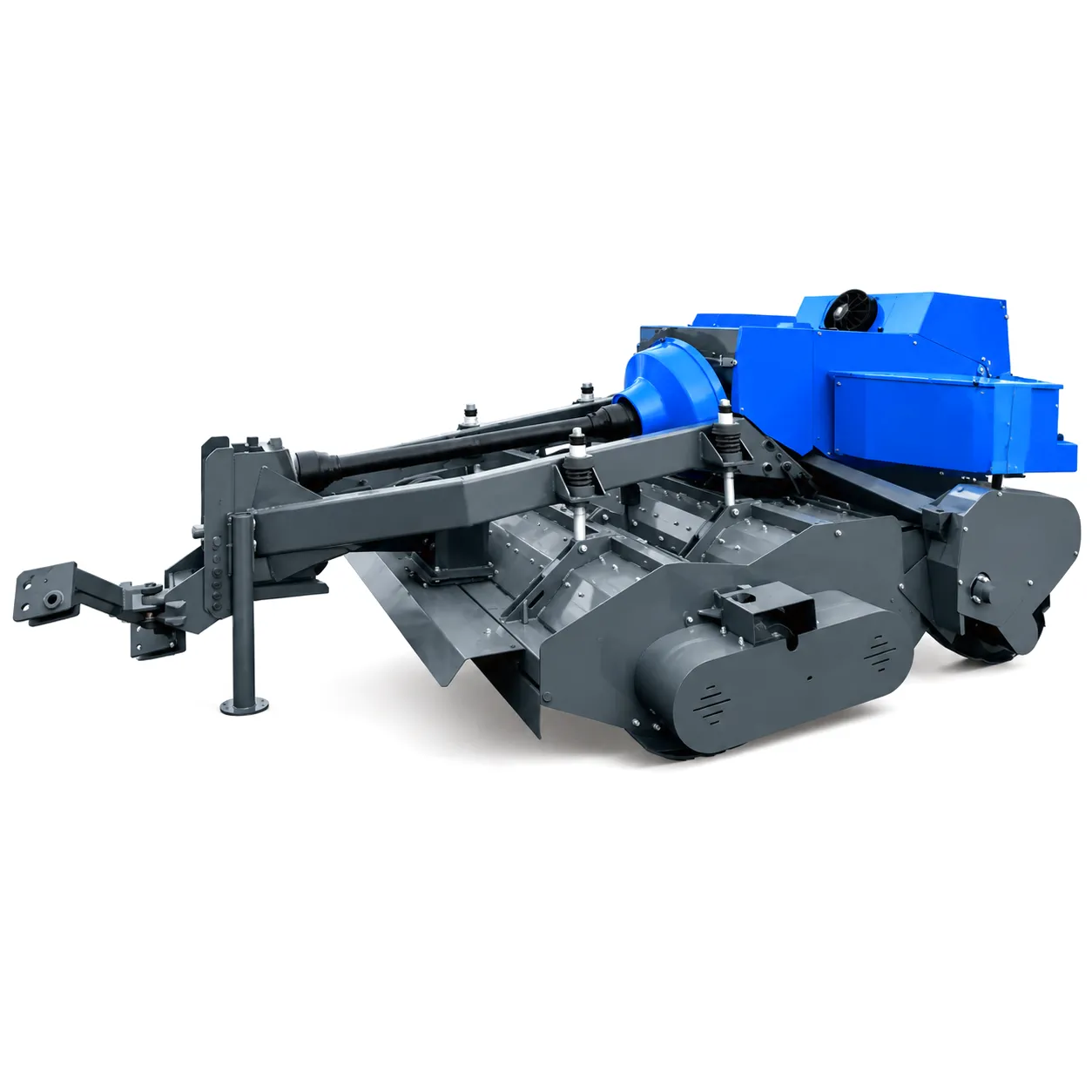
Ever Power: Precision Manufacturing & Customisation Capability
Factory & Custom Manufacturing
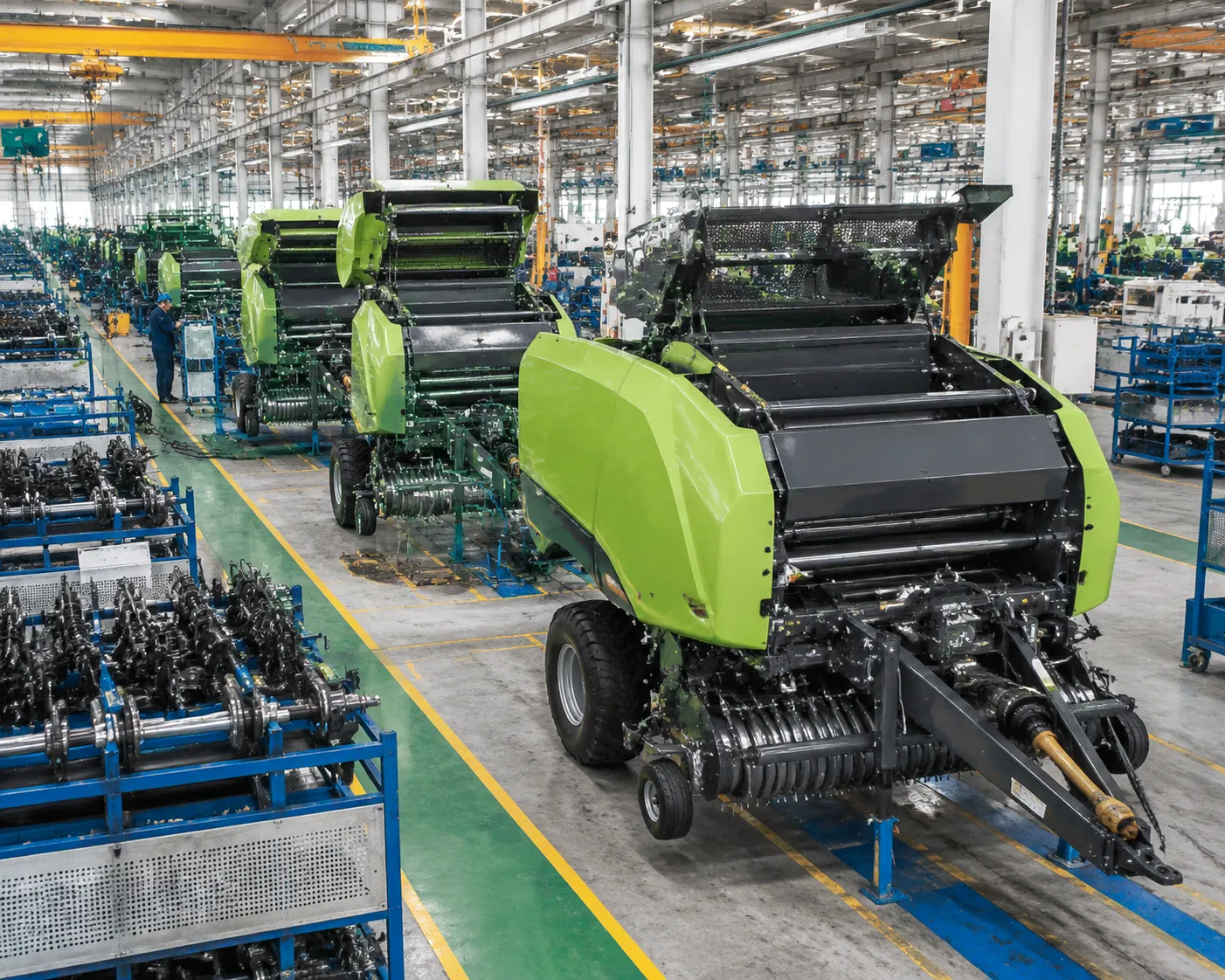
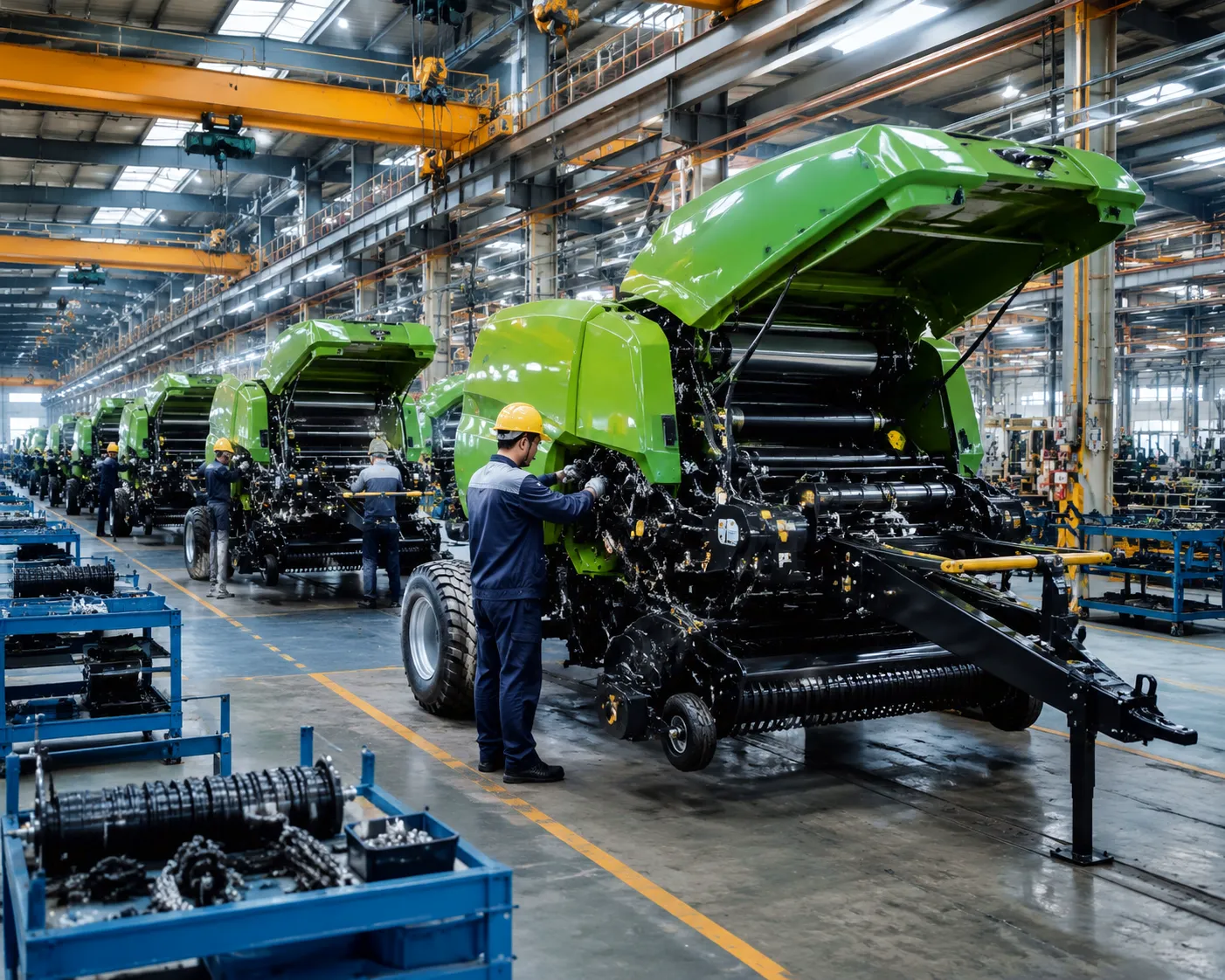
Customisation capability extends beyond dimensional changes. Ever Power can adapt the corrosion protection specification for coastal operating environments in Cornwall or the Northumberland coast, integrate specific hydraulic connection standards for compatibility with European tractor quick-couplings, and configure pre-wired electrical looms for ISOBUS terminal compatibility. For export-orientated buyers, documentation packages including CE declarations of conformity, Declaration of Incorporation, and test certificates are provided as standard. The supply chain reliability that underpins these capabilities draws on long-standing partnerships with verified steel mills, bearing manufacturers, and component suppliers, ensuring production schedules are maintained even during periods of raw material market volatility.
Customisation Options
- Bale channel dimensions (width × height)
- Plunger pressure settings
- Pickup width (1,700–2,400 mm)
- Knotter head count (2–6)
- PTO shaft coupling type
- Hydraulic system pressure
- Electronic control interface
- Corrosion protection grade
- OEM branding & colour
Customer Success Story: Holbrook Arable Contractors, Lincolnshire
Case Study · Cereal Straw & Export Baling
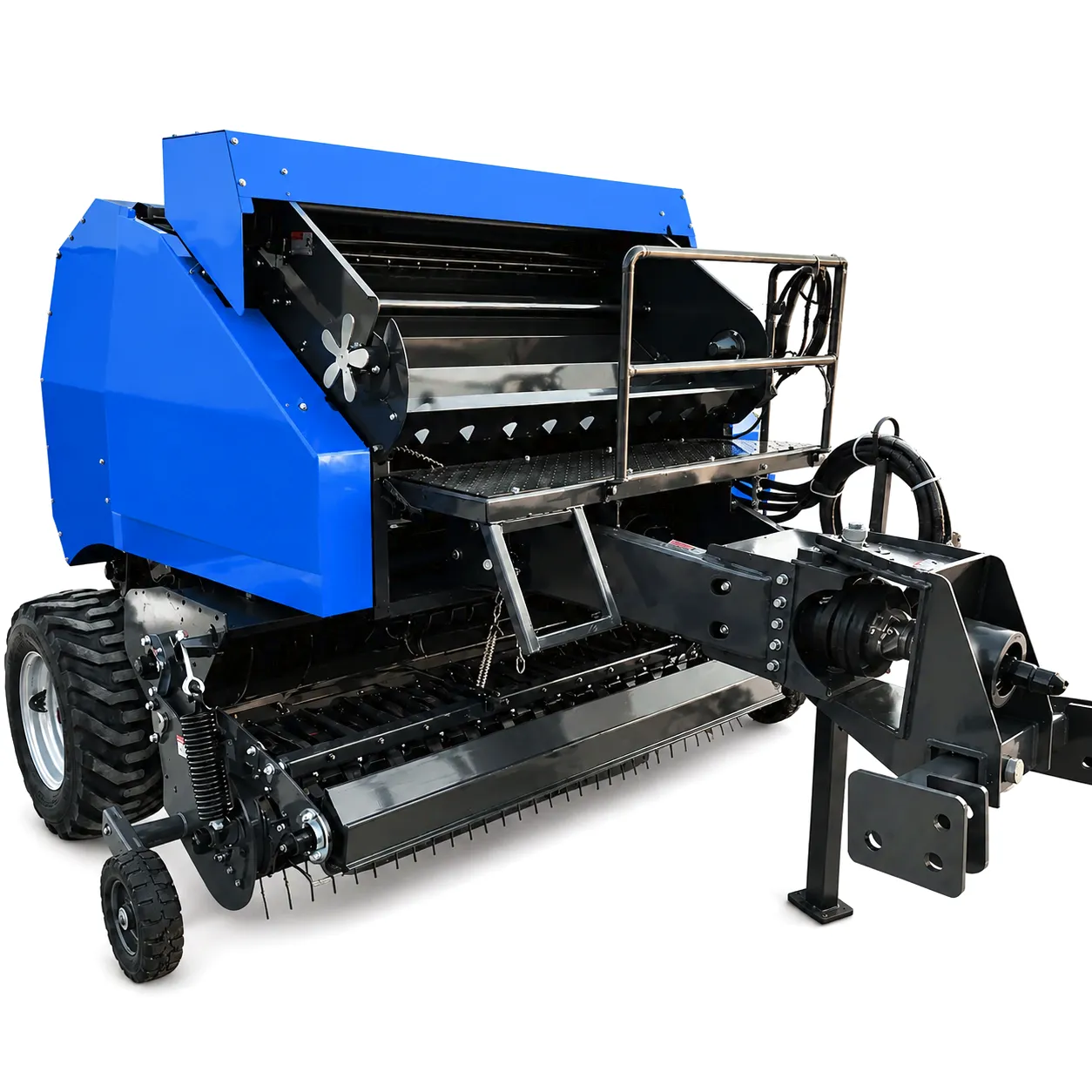
What our customers say
★★★★★★
“The 9YFS-2.2 ran through our entire 2024 straw season without a single missed knot. We were sceptical about switching brands, but the six-knot configuration on the custom spec has meant zero bales opened during transit to the port. The bale weight consistency across 38,000-plus bales was frankly better than anything we’ve seen from our previous machines.”
— Tom H., Operations Manager, Holbrook Arable Contractors, Lincolnshire
★★★★★★
“We asked Ever Power to customise the bale channel dimensions so we could hit exact container weights for our Japanese export contract. They came back with a solution within three working days, and the factory pre-commissioned the machine to our target bale length settings before shipping. The communication throughout was genuinely professional — much better than dealing with a large European manufacturer’s local dealer network.”
— Sarah M., Partner, Fenland Straw Merchants, Cambridgeshire
★★★★★★
“The frame quality on the Ever Power baler is notably heavier than what we’d been used to. We run on clay-heavy Nottinghamshire ground where the terrain puts a lot of stress on the chassis, and within the first season it was clear that the plunger guide rails and the bale channel sidewalls are built to a higher structural standard. Maintenance time is down, and we haven’t had any cracking issues. The knotter reliability has been excellent — we’ve tied over 20,000 bales so far with no failures.”
— David A., Director, Trent Valley Agricultural Services, Nottinghamshire
Usein kysytyt kysymykset
Voice-Search Friendly FAQs
Ever Power · Square Baler Division
Ready to Specify Your Next Square Baler?
Tell us your crop type, target bale weight, and any export requirements. Our engineering team will respond within one working day with a tailored recommendation and price.
📧 Pyydä tarjous — [email protected]
gzl:n muokkaama