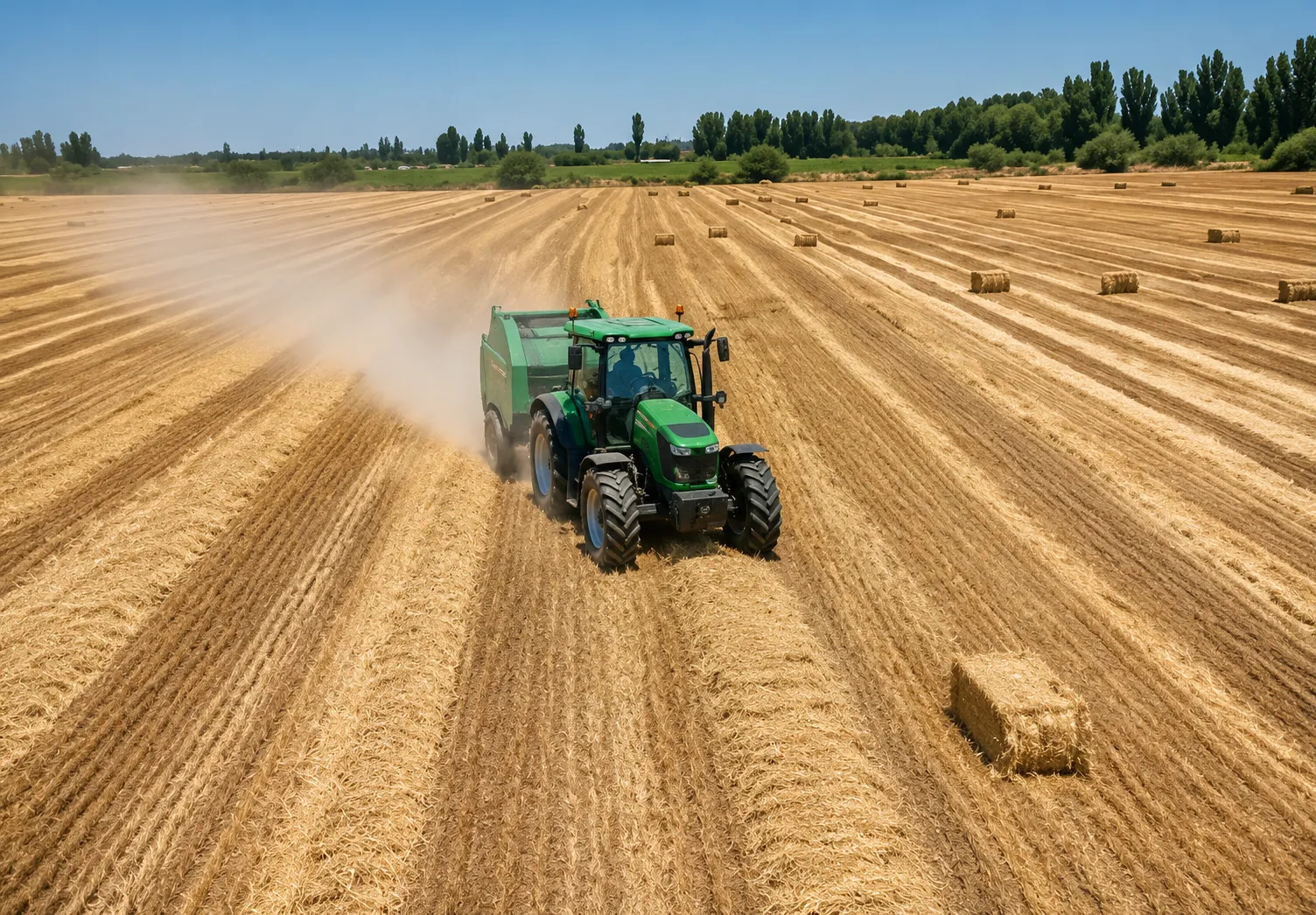
How a Square Baler Works: The Mechanical Principle in Detail
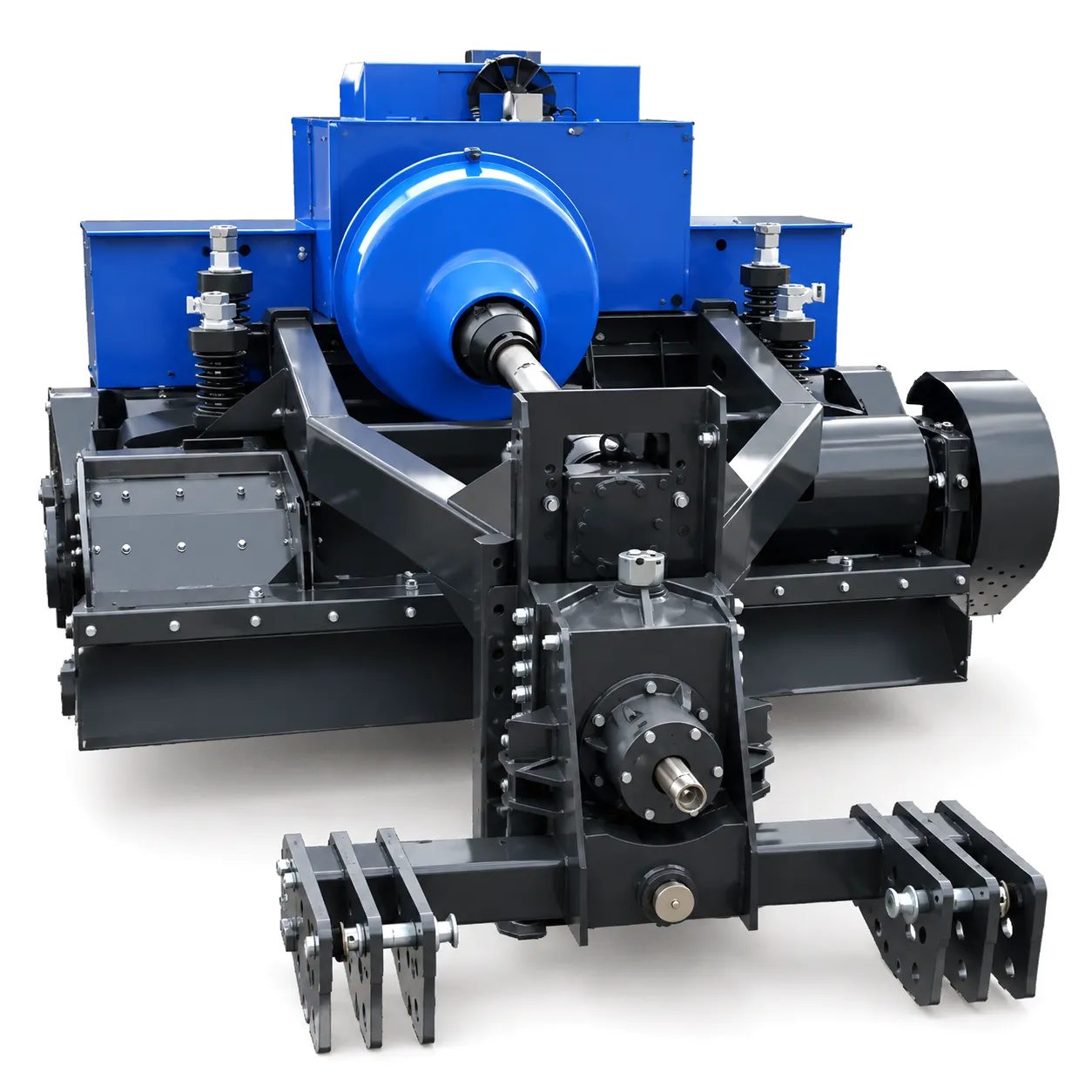
Core Materials and Metallurgical Specifications
Manufactured from Q345B low-alloy high-strength structural steel, normalised and shot-blasted. Slide rail contact faces are through-hardened to HRC 48–52 via induction hardening, then ground to Ra 1.6 µm. This combination delivers the surface hardness needed to resist abrasive crop particles — particularly silica-rich cereal straw common in Cambridgeshire — while maintaining the toughness needed to absorb sudden plunger shock loads without crack propagation.
The chassis and bale chamber box section are fabricated from S355 EN 10025 structural steel — a grade widely specified in UK heavy engineering and certified to the same standard used in off-highway plant and agricultural trailed equipment. Box sections are welded by robotic MIG welding with 100% visual and penetrant-tested fillet welds at all high-stress nodes. Frame weight targets are balanced against ground-following flexibility; the drawbar hitch point is designed with a 15° articulation arc to prevent frame torsion on undulating ground typical of the Welsh Borders or Devon farmland.
Pickup tines are spring-formed from 65Mn spring steel, heat-treated to a hardness of HRC 40–44, allowing elastic deflection over stones and root debris without permanent deformation. Rotor knives on shredding models are manufactured from Hardox 450 wear plate — a Swedish abrasion-resistant steel with 450 Brinell surface hardness — providing service intervals of 300–500 operating hours in abrasive crop conditions before re-sharpening. The knife geometry (rake angle 15°, relief angle 8°) is optimised for clean stem-severing rather than tearing, which materially reduces power consumption at the PTO shaft.
The primary drive chain is an ISO 16B-3 triple-strand roller chain with pin links manufactured from 20CrMo case-hardened steel, providing a dynamic working load above 120 kN. The main drive gearbox is a three-stage helical gear unit, manufactured with 20CrMnTi carburised and case-hardened gears ground to AGMA Quality 10, delivering mechanical transmission efficiency of 96–97.5% across the operating load range. IP65-rated sealing on all bearing housings resists the ingress of moisture and crop dust — a specification driven by the persistently humid working conditions of a British harvest season.
All fabricated steel surfaces are pre-treated by sandblasting to Sa 2.5 standard, then coated with a two-coat epoxy primer and polyurethane topcoat system to a minimum DFT of 120 µm. The finish passes 500-hour salt spray testing to ISO 9227 — a threshold particularly relevant for balers operating near coastal areas of East Anglia, or in the salt-laden air of coastal farms in Cornwall and Pembrokeshire. Exposed fasteners are Grade 10.9 with zinc-nickel plating providing Class C3 corrosion category coverage per ISO 12944.
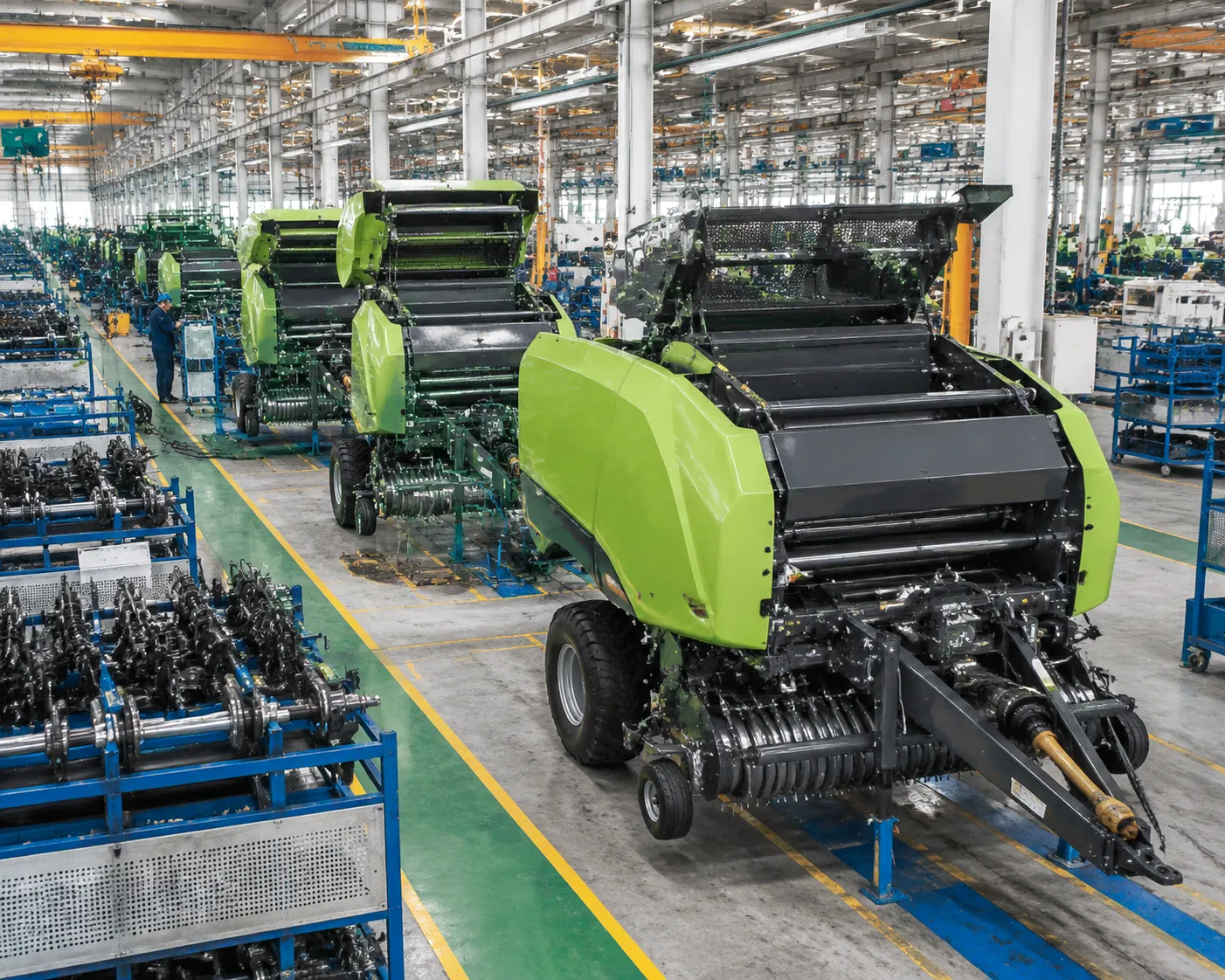
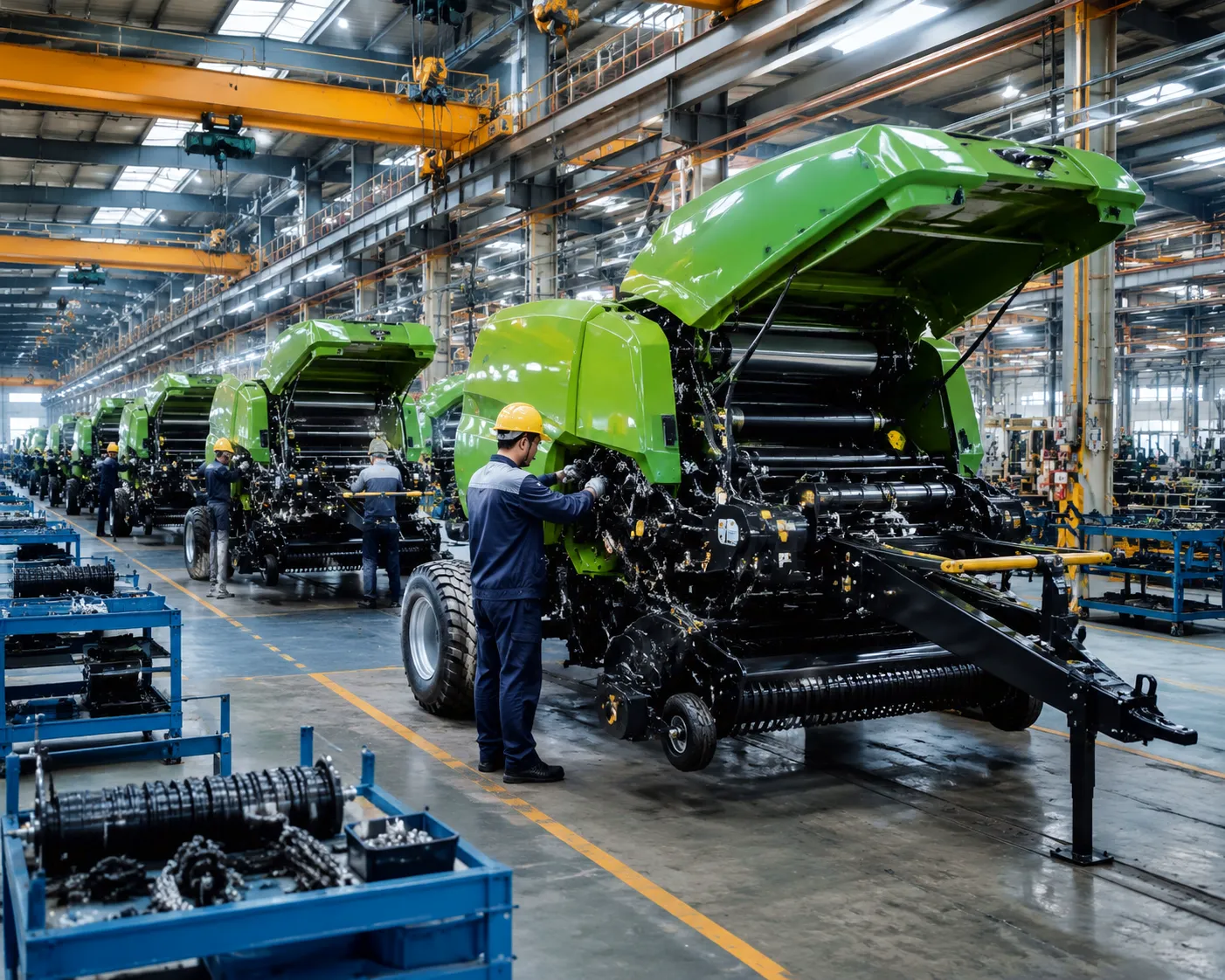
Ever Power precision manufacturing facility — square baler assembly and quality control line
Product Technical Advantages
The dual-chamber configuration splits the pre-compression and final compression steps into mechanically discrete zones. Material enters the first chamber at low density and is progressively compacted into a coherent mat before being transferred at controlled feed rate into the main plunger chamber. This staged compression reduces peak plunger force requirements by 18–22%, translating to lower tractor PTO torque demand and measurably lower fuel consumption per tonne of baled material. UK contractors working extended harvest shifts — sometimes 16–18 hours during a narrow weather window — see direct operating cost savings through this architecture.
An electro-hydraulic density-control valve adjusts bale chamber side-wall pressure in real time, responding to plunger load cell feedback at 50 Hz sampling rate. When heavier, wetter crop enters the chamber — a daily event in Britain’s maritime climate, particularly after overnight dew or a passing summer shower — the system compensates within three plunger strokes, preventing bale density from drifting outside the target band. This removes the need for manual valve adjustment that older machines required every time crop conditions changed, freeing the operator to focus on field coverage rather than machine management.
The optional dual-knife shredding rotor installed upstream of the bale chamber reduces crop stem length to 50–80 mm before compaction. Shortened stems interlock more densely, increasing bale density by 12–15% compared to uncut material at equivalent plunger force, and reducing the tendency of long-stemmed material to spring back when bale chamber pressure is released. For UK biomass fuel producers — a growing sector in the West Midlands and the Humber Estuary industrial corridor — this matters because chipped and densified material meets boiler hopper sizing requirements without secondary processing, reducing logistics cost per GJ of energy delivered.
The twin-knotter head, manufactured from cast and hardened 40Cr alloy steel, achieves knot security of 98.6% across 10,000-cycle accelerated testing. Each knotter cam lobe is precision-machined to a profile tolerance of ±0.08 mm, ensuring consistent twine loop geometry regardless of twine batch variation or ambient temperature. Unlike friction-driven knotter mechanisms common in entry-level machines, the positive-drive configuration used in these machines does not rely on twine tension to trigger the knotter cycle, meaning knot reliability in cold, wet conditions — a reality across northern England and Scotland from October onwards — remains consistent with summer performance.
ISOBUS (ISO 11783) compatibility allows the baler to be operated and monitored directly from a tractor’s existing ISOBUS terminal, eliminating the need for a dedicated in-cab controller. On modern UK farm fleets — which increasingly run John Deere CommandCenter, Case IH AFS, or AGCO Fendt Vario terminals — this integration reduces cab clutter, allows data logging at the tractor telematics level, and simplifies end-of-day reporting for area-based subsidy claims under the UK’s Sustainable Farming Incentive. GPS track recording and bale count with geo-tagging are accessible via the same ISOBUS interface, with data exportable in ISO-XML format for precision agriculture software.
Product Technical and Performance Parameters
| Parameter | 9YF-1700 | 9YF-1900 | 9YF-2200 | 9YFS-2.2 (Dual) |
|---|---|---|---|---|
| Bale Chamber Width | 1,700 mm | 1,900 mm | 2,200 mm | 2,200 mm |
| Bale Cross-Section | 500×600 mm | 600×700 mm | 700×800 mm | 700×800 mm ×2 |
| Plunger Force (max) | 90 kN | 140 kN | 210 kN | 2 × 210 kN |
| Plunger Strokes/min | 60–70 | 55–68 | 50–65 | 50–65 (each) |
| Bale Length (adjustable) | 400–1,300 mm | 500–1,500 mm | 600–2,000 mm | 600–2,000 mm |
| Target Bale Density | 180–260 kg/m³ | 200–300 kg/m³ | 230–370 kg/m³ | 230–370 kg/m³ |
| PTO Input Speed | 540 RPM | 540 / 1,000 RPM | 1,000 RPM | 1,000 RPM |
| Recommended Tractor Power | 75–100 hp | 100–140 hp | 150–200 hp | 180–220 hp |
| Lebar Pickup | 2,050 mm | 2,200 mm | 2.400 mm | 2.400 mm |
| Jenis Pengikat Simpul | Twin twine | Triple twine | Triple / quad twine | Quad twine (×2) |
| Frame Material | baja struktural S355 | baja struktural S355 | baja struktural S355 | baja struktural S355 |
| Knot Reliability Rate | ≥98% | ≥98.5% | ≥98.6% | ≥98.6% |
Industrial Application Scenarios
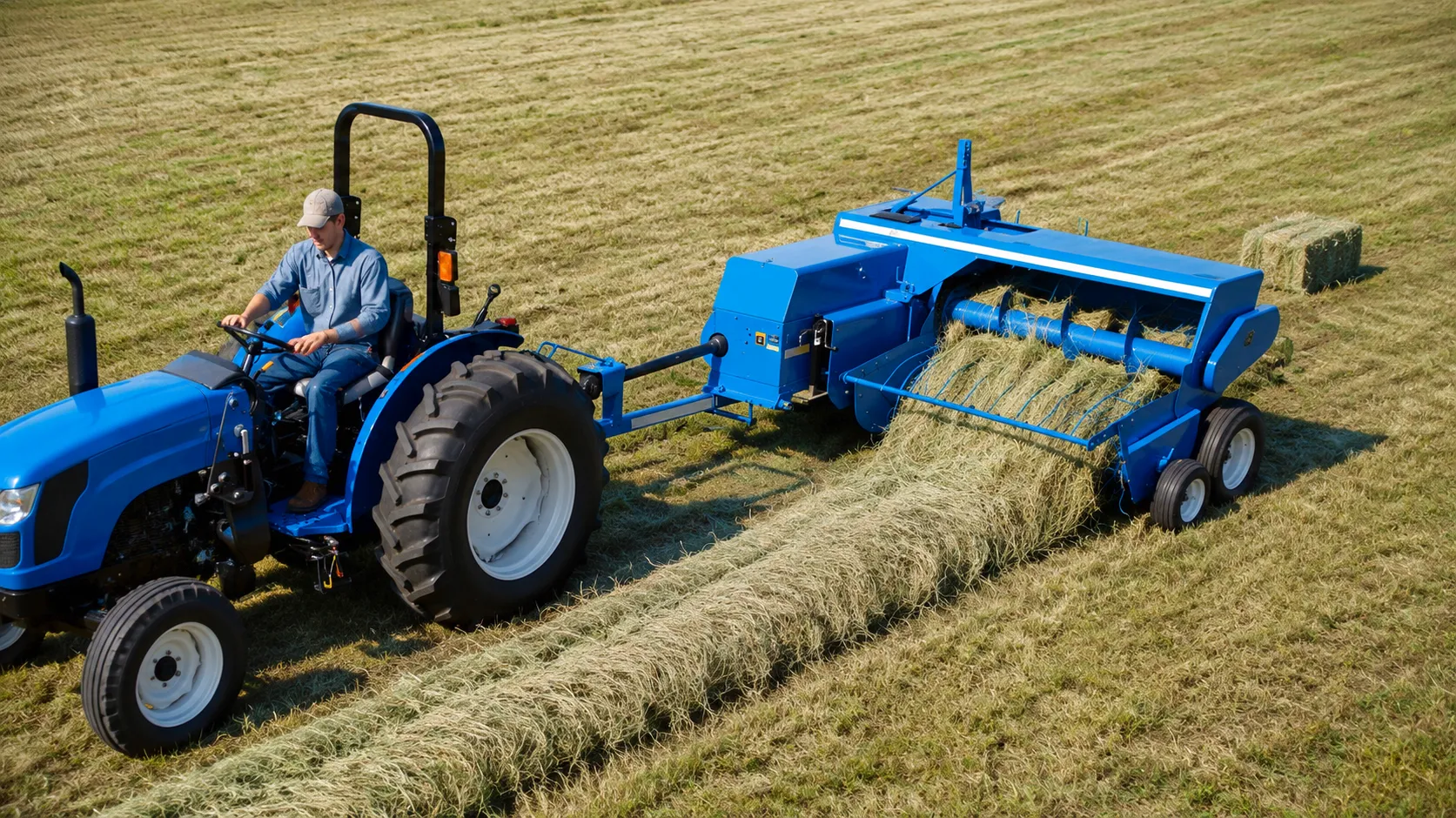
The growth of dedicated energy crops — particularly miscanthus, short-rotation coppice willow, and reed canary grass — across the Midlands energy corridor and the Humber industrial region has created a substantial new application for high-density square balers. Biomass boilers and Combined Heat and Power (CHP) plants operating in Sheffield, Rotherham, and Doncaster accept baled feedstock on a continuous supply contract basis, where bale density directly affects the economics of storage and transport. Feedstock contracts typically specify a minimum bulk density of 120 kg/m³ for round bales or 200 kg/m³ for square bales delivered to storage bays, thresholds that require the plunger force ratings of large-format machines. The shredding rotor option — which reduces miscanthus stem length from 1,200–1,500 mm to under 80 mm before compaction — is particularly valuable here, enabling the kind of tight, interlocked bale structure that maintains geometry during telehandler and conveyor handling through the receiving facility. Operators running under long-term supply agreements in this sector have reported bale rejection rates falling from 8–12% with conventional balers to under 1.5% after switching to dual-chamber, shredding-equipped machines.
Britain’s equestrian sector — which spans approximately 900,000 horse owners across rural and semi-rural areas from the Cheshire Plains to Surrey’s green belt — represents a year-round, premium-priced market for small square bales. Equine bedding buyers are among the most specification-sensitive purchasers in the hay and straw trade, with strong preferences for dust-extracted, uniformly sized bales that can be handled without machinery. The two-string small square bale format produced by balers with 350×450 mm or 400×500 mm cross-sections — typically weighing 18–25 kg — fits this market exactly. For contractors supplying this segment, bale weight consistency and knot reliability (a broken string on a 25 kg bale at a livery yard represents product rejection and reputational damage) are the two parameters that determine re-order rates. Machines with the positive-drive knotter system and load-cell density control consistently outperform conventional alternatives in livery yard supply chain audits, a factor that shapes purchasing decisions for several of the larger contracting firms operating out of Newmarket, Lambourn, and Epsom.
Beyond traditional agricultural use, heavy-duty plunger-type balers derived from the square baler principle are deployed in material recovery facilities (MRFs) and industrial waste management operations throughout the UK’s major cities. In Birmingham’s industrial estates and around Leeds’ recycling corridor, stationary baler variants handle OCC (old corrugated cardboard), mixed paper, and plastic film — all materials which, unlike agricultural crop, present relatively uniform compression characteristics but demand high output rates to match tipping floor throughput. Agricultural square baler engineering — particularly the proven plunger, flywheel, and knotter architecture — forms the technical basis for many static channel balers deployed in these settings, and suppliers comfortable in both markets bring cross-application expertise that purely industrial machinery vendors cannot offer. Bale weights for cardboard at 800–1,000 kg are commercially optimised for loading on standard 44-tonne articulated lorries operating under UK haulage regulations.
Ever Power: Manufacturing Capability and Customisation Services
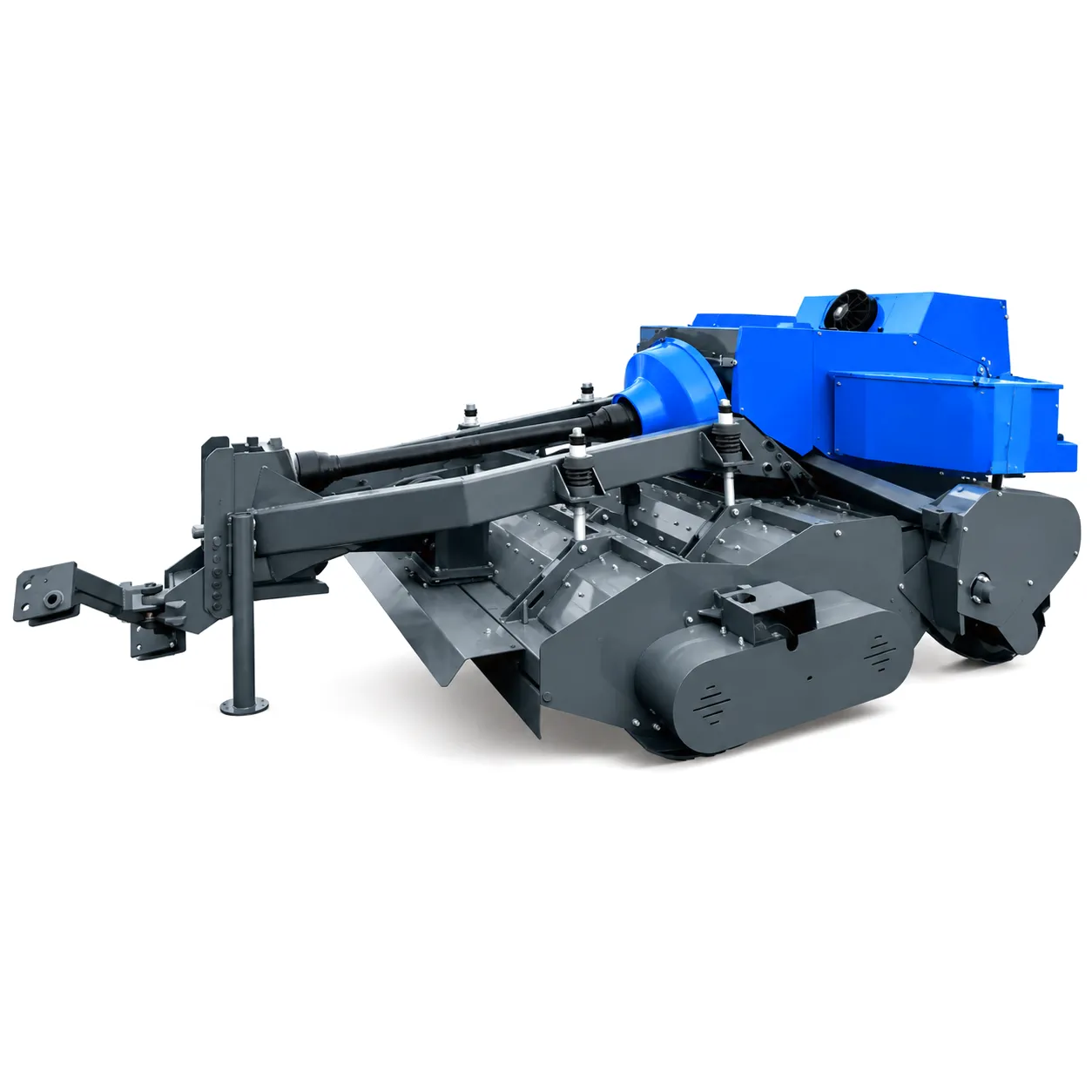
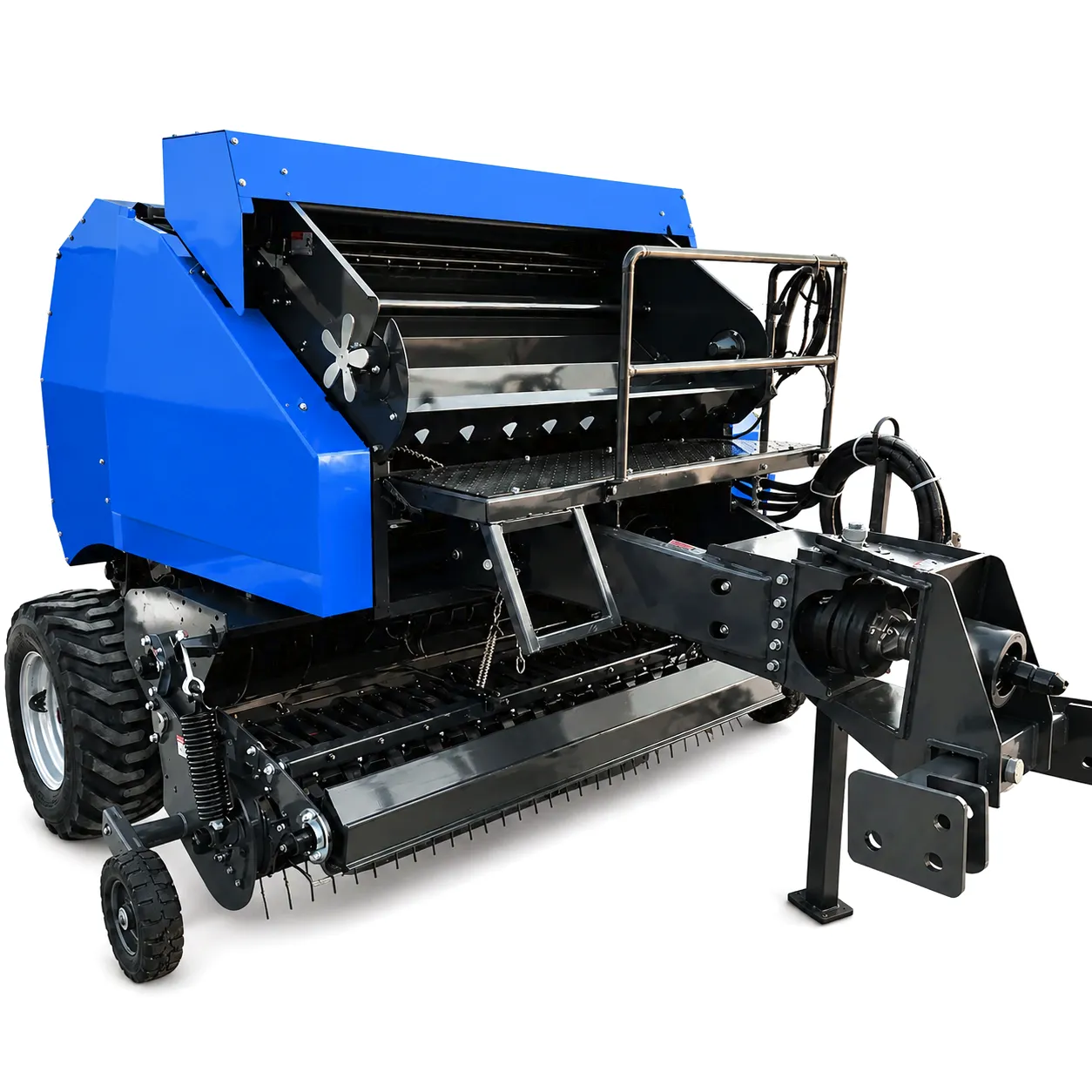
Ever Power Square Baler Product Range
Customer Success Story: Lincolnshire Biomass Energy Contractor
Greenfield Agricultural Services Ltd, based near Gainsborough in Lincolnshire, operates across 12,000 ha of arable land under contract harvesting and baling agreements with three landowners and a dedicated supply contract to a biomass CHP plant outside Lincoln. The business had previously operated a fleet of four conventional large square balers, but as their biomass contract grew — reaching 18,000 tonnes of baled miscanthus and straw per season — the limitations of conventional machines became acute. Bale density variation was causing 9–11% rejection rates at the CHP plant receiving bay, where conveyor handling systems required bales to maintain their geometry under vibration and repeated gripping cycles. Rejected bales had to be returned or chipped on-site at the contractor’s cost, eroding the margin on an otherwise profitable long-term supply agreement.
In late 2023, Greenfield’s operations manager contacted Ever Power following a recommendation from a machinery agent in Sleaford. After an initial technical consultation, Greenfield trialled an Ever Power 9YF-2200 fitted with the dual-knife shredding rotor and electro-hydraulic density control, operating it through the 2024 harvest season alongside their existing fleet. The results were significant. Average bale density across the trial machine increased from 246 kg/m³ to 318 kg/m³, and bale rejection rates at the CHP plant fell to 0.8% — a reduction of more than 90% compared to the conventional machines running in parallel. PTO fuel consumption per tonne of baled material fell by 14% through the combination of dual-chamber pre-compression and crop shredding, which reduced the peak plunger load. Following the trial, Greenfield placed an order for two further 9YF-2200 units and entered a service and spare-parts agreement with Ever Power’s UK logistics partner based in Peterborough, covering 48-hour parts delivery to anywhere in England and Wales.
What Our Customers Say
“The density consistency out of the Ever Power 9YF-2200 is genuinely different from anything we ran before. We went through the whole 2024 harvest season without a single knotter failure on either machine — not one. At the volumes we’re running for the Lincoln CHP plant, that reliability is worth more than any price difference at purchase.”
“We specified a non-standard chamber size to fit our existing bale-handling cradles, and Ever Power turned that around in under six weeks — detailed drawings reviewed in week two, first-article inspection at the factory in week five. The customisation process was professional and the finished machine met every dimension we specified. That kind of response from a supplier at this price point is rare.”
“We supply three equestrian centres in Cheshire and our buyers are meticulous about bale weight. The Ever Power small-square configuration holds bale weight within 1.2 kg across a full day’s run — that is tighter than anything the previous machine achieved. The livery yards noticed and it’s directly improved our reorder rate. Parts availability from the Peterborough depot is also genuinely 48 hours as advertised.”
Pertanyaan yang Sering Diajukan
Pricing for large square balers in the UK market varies significantly with specification. Entry-level single-chamber machines rated to 100 hp tractors typically carry ex-works prices in the range of £28,000–£45,000. Mid-range units with electronic density control and integrated shredding mechanisms sit between £55,000 and £85,000. High-specification double-chamber machines like the Ever Power 9YFS-2.2, with full ISOBUS integration and quad-knotter arrays, are priced above £95,000. For a precise quote matched to your specific crop type, working width requirements, and tractor horsepower, contact Ever Power’s sales team directly at [email protected] — customised configurations can affect pricing, and the team can advise on the most cost-effective specification for your operation.
General guidance from machine manufacturers and UK contractor associations suggests a minimum of 150 hp for 2,200 mm chamber-width machines producing bales over 400 kg. In practice, operating headland cycles, maintaining road speed between fields, and managing hills in areas like the Lincolnshire Wolds or the Yorkshire Wolds often means operators run machines with 170–220 hp tractors to maintain productivity without risking PTO overload on heavy or wet crops. Dual-chamber machines require a minimum of 180 hp, with 200 hp or above recommended for sustained high-output use.
For biomass supply chains, the three most commercially significant features are: (1) integrated crop shredding, which increases bale density by 12–15% and reduces rejection at CHP plant receiving bays; (2) electro-hydraulic density compensation, which maintains consistent bale geometry across varying moisture content in miscanthus and reed canary grass; and (3) positive-drive knotters that maintain knot reliability in cold and wet autumn conditions. Secondary considerations include ISOBUS data logging for contract compliance reporting and bale geo-tagging for traceability documentation required under some Renewable Heat Incentive successor schemes.
Ever Power operates a logistics support arrangement with a UK parts depot in Peterborough, covering 48-hour delivery of stock parts to addresses across England and Wales. For custom configurations — non-standard bale cross-sections, modified drawbar geometry, alternative coating systems for coastal environments — Ever Power’s factory engineering team provides technical support with a formal first-article review process. Enquiries can be submitted directly to [email protected], with typical quote turnaround of two to three working days for standard configurations and five to seven days for modified specifications.
A double-chamber machine like the 9YFS-2.2 runs two bale chambers simultaneously from one PTO shaft, doubling the number of bales completed per field pass without increasing tractor fuel consumption in proportion. On large arable units where field time is the binding constraint — a common reality during the narrow weather windows of a British harvest — doubling bale output per pass can extend the working area covered before rain interrupts the harvest by 70–90%. On long-term supply contracts where bale throughput is linked to revenue, the capital cost premium of a dual-chamber machine can typically be recovered within two to three harvests through increased billable output.
For machines operating at 400–600 hours per season — typical for a commercial contractor across East Anglia or Lincolnshire — standard maintenance intervals are: daily visual inspection and greasing of all nipple points (approximately 45 minutes); 50-hour service covering drive chain tension and oil level checks; 100-hour service covering knotter cleaning and cam inspection; 200-hour service covering rotor knife inspection and slide rail measurement. End-of-season overhaul should include knotter cam replacement or re-hardening, bearing pack replacement on the plunger guide, and full repainting of any areas showing coating damage to prevent rust developing over winter storage.
Manufacturing lead times for standard-specification machines are typically 8–12 weeks ex-factory, with additional transit and port clearance time of 3–5 weeks for UK delivery. To guarantee pre-harvest delivery — with UK cereal harvest typically beginning in mid-July in the south and mid-August in northern England — orders should be placed no later than March for standard configurations. Custom specifications requiring engineering review should be submitted to Ever Power by January to allow design iteration time without compressing the manufacturing lead time. Contact [email protected] in autumn or winter for the following harvest season to ensure the best lead time and to allow time for factory acceptance inspection if required.
Ready to discuss your square baler requirements? Ever Power’s technical sales team covers all specifications, lead times, and customisation options.
Dapatkan Penawaran — [email protected]
diedit oleh gzl