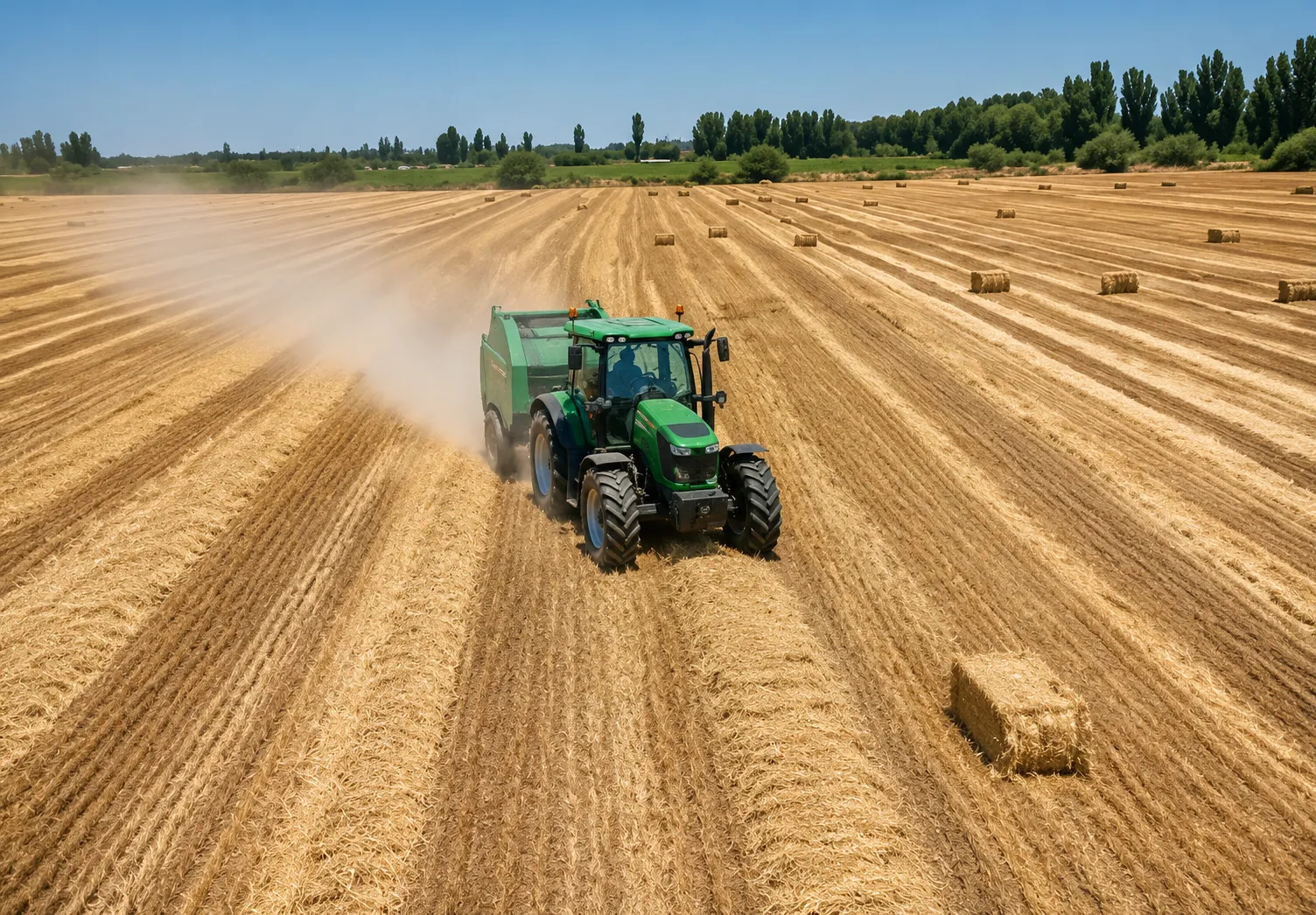
What Is a Square Baler and Why Does It Matter to UK Farmers?
A square baler — sometimes referred to as a rectangular baler — is a tractor-mounted or self-propelled agricultural machine that gathers, compresses, and ties crop material, including hay, straw, silage, and biomass, into dense, uniform rectangular blocks. This compact, stackable format has become the preferred harvest solution across thousands of British farms in counties stretching from the flat fenlands of Lincolnshire to the pastoral hills of Shropshire and the cereal belts of East Anglia. The ability to produce bales of consistent geometry makes square balers indispensable for mechanised handling, on-farm storage, and bulk logistics to dairy and equestrian yards throughout England, Scotland, and Wales.
Unlike their round-baler counterparts, which produce cylindrical rolls that must be stood upright or strapped to prevent rolling, square bales stack three to four high in standard agricultural trailers and 40-foot shipping containers with minimal wasted headroom. This makes them commercially attractive not only for domestic sale but also for export through ports such as Southampton, Tilbury, and Felixstowe, where compressed forage commands premium prices from Middle Eastern and Asian livestock markets. Across the UK agricultural contracting sector — where efficiency per hour is measured ruthlessly — the square baler’s throughput, reliability, and bale density are decisive purchasing criteria.
Modern square baling technology has evolved substantially from the mechanical knotters and simple pick-up reels of earlier decades. Today’s machines integrate hardened steel plunger chambers, precision variable-density control systems, electronic knotter monitoring, and wear-resistant shredding mechanisms that pre-process straw and silage crops to improve fibre breakdown and bale cohesion. Understanding these engineering details is essential for any procurement manager, farm business adviser, or agricultural machinery dealer evaluating a baler purchase in the current UK market.
Working Principle: From Windrow to Finished Bale
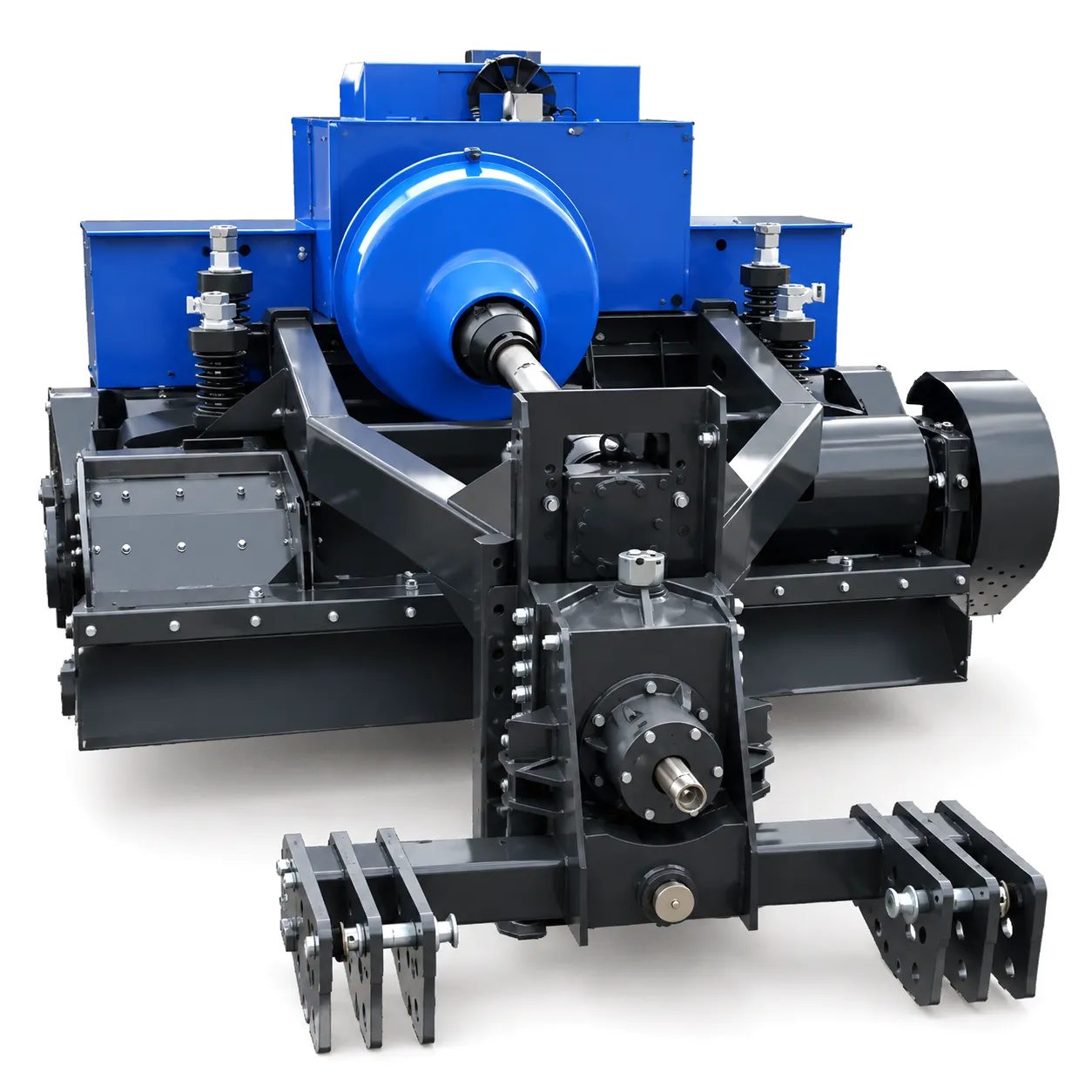
The operational cycle of a square baler begins the moment the PTO-driven pick-up reel — typically a spring-tined rotor rotating at around 75–90 rpm — engages the crop windrow lying flat across the field surface. As the rotor lifts the material from the ground, the tines guide it rearward into the feed auger or conveyor, which compresses the swath laterally and funnels it into the pre-chamber. At this stage on machines equipped with a shredding mechanism, a set of fixed and rotating knife blades begin breaking the stem structure, increasing fibre surface area and improving fermentation in silage applications or combustion efficiency in biomass fuels.
The pre-compressed crop charge then enters the main bale chamber through a floor-mounted or side-mounted feeder. Once enough material has accumulated to trigger the sensor — determined by the operator’s pre-set density setting — a hydraulically or mechanically actuated stuffing fork drives the entire charge forward into the rectangular compression chamber where the reciprocating plunger awaits. The plunger, running on a crankshaft driven from the machine’s flywheel, makes between 35 and 55 strokes per minute depending on model and ground speed, each stroke compressing the accumulating crop column against the completed portion of the bale.
As bale length reaches the calibrated set point — measured by a star-wheel running against the completed bale surface — the knotter mechanism engages automatically. Two or three needle assemblies swing through pre-cut slots in the compression chamber floor, carrying twin strands of natural sisal, synthetic polypropylene, or heavy-duty netwrap twine over and under the bale. The double-loop knotter head ties off, cuts, and holds each strand in a secure, mechanically locked knot. The finished bale is then ejected rearward by the arrival of the next charge, exiting cleanly onto the ground or into a trailing bale accumulator.
The density control system — increasingly managed by a digital controller with real-time pressure feedback — allows the operator to vary bale weight from as little as 180 kg up to well over 500 kg on heavy-duty commercial models. This variable-density functionality is especially valued by Scottish straw merchants and Midlands hay dealers who must match bale weight precisely to wagon axle-load regulations under UK road traffic law.
Core Materials: What Makes a Baler Built to Last
Plunger Chamber & Frame
High-tensile Q345B structural steel forms the main frame rails and bale chamber walls. Plunger faces are faced with Hardox 400 or equivalent wear-resistant plate (Brinell hardness 370–430 HBW), selected specifically for its toughness under high-frequency impact loading. Weld joints are prepared by automated MIG/MAG processes with full-penetration butt welds at stress-critical locations, then subjected to ultrasonic NDT inspection during manufacture.
Crankshaft & Gearbox
The crankshaft is forged from 42CrMo4 alloy steel and then induction-hardened at the main journals to achieve surface hardness of 52–58 HRC with a core toughness sufficient to withstand the cyclic torsional loads of 35–55 working strokes per minute over a service life exceeding 3,000 operating hours. The gearbox housing is cast in GG25 grey cast iron for vibration damping, while all internal gears are case-hardened 20CrMnTi steel ground to DIN class 6 tolerances.
Knotter & Needle Assembly
The twin or triple knotter heads are precision-machined from spheroidal graphite cast iron (SG iron, Grade 700/2), selected for its combination of strength and the slight compliance needed to handle varying twine gauges without jamming. Needle arms are fabricated from cold-drawn seamless steel tube, then hot-dip galvanised for corrosion resistance against the damp British climate, with replaceable wear inserts at the twine-contact points to simplify field maintenance.
Pick-Up Reel & Shredding Knives
Pick-up tines are manufactured from spring steel (65Mn grade), heat-treated to achieve the elasticity needed to deflect over stones without permanent deformation — a critical property for working in rocky upland pastures in the North Pennines or Welsh Borders. Where a dual crushing or single shredding mechanism is fitted, fixed counter-knives are produced from Hardox 500 and held in replaceable cassette holders, allowing worn knives to be rotated or swapped in the field using standard tooling without removal of major assemblies.
Product Advantages: Why Square Balers Outperform Alternatives
Superior Storage Density
Rectangular geometry eliminates the wasted interstitial space inherent in round-bale storage, yielding up to 28% more dry matter per cubic metre of barn space. For large UK dairy farms in Cheshire or the Severn Valley spending thousands of pounds annually on covered forage storage, this density advantage directly translates into reduced capital expenditure on storage buildings.
Logistics Compatibility
Square bales load flush against trailer walls and lock together during transit, eliminating the need for net restraints on every individual bale. Hauliers operating through UK freight hubs such as Peterborough and Swindon report up to 18% shorter loading times compared to equivalent round-bale consignments, with fewer trailer-side abrasion marks that can trigger cargo inspection at export terminals.
Crop Versatility
Modern square balers handle wheat straw, barley straw, oat straw, meadow hay, Timothy grass, lucerne, energy miscanthus, and even compressed cardboard and paper waste. This multi-crop capability makes the machine commercially viable across a wider seasonal calendar, generating revenue streams well beyond the traditional July–September British harvest window and into the autumn biomass and waste-processing market.
Precision Density Control
Electronic density management systems allow the operator to dial in and hold bale weight within ±5% of target, regardless of crop moisture variation across the field. For biomass fuel customers supplying power stations under fixed-weight-per-tonne contracts — a growing sector as the UK moves toward renewable heating — this consistency is not merely convenient but contractually mandatory.
High Throughput Rate
Large-chamber square balers operating on a dual-shredding mechanism configuration can process between 18 and 28 tonnes of crop dry matter per hour in optimal conditions. On a typical British harvest day running from 9:00 am to 7:00 pm, this equates to outputs of 180–280 tonnes — enough to clear the straw rows from 40 to 60 hectares of winter wheat stubble in a single shift, substantially reducing the exposure window to unsettled British weather.
Reduced Maintenance Downtime
Centralised lubrication systems, self-adjusting pick-up cam followers, and readily accessible knife cassettes have dramatically reduced seasonal maintenance time on current-generation machines. Agricultural contractors in the East Midlands and Yorkshire regularly report complete seasonal servicing completed within eight working hours — a significant reduction from the multi-day strip-downs required on balers from fifteen years ago, keeping machines revenue-generating through the critical harvest season.
Product Technical & Performance Specifications
| Parameter | 9YF-2200 Square Baler | 9YF-1900 Square Baler | 9YF-1700 Square Baler |
|---|---|---|---|
| Bale Cross-Section | 800 × 900 mm | 700 × 900 mm | 600 × 900 mm |
| Bale Length Range | 500–2,400 mm | 500–2,200 mm | 500–2,000 mm |
| Max Bale Weight (straw) | ≤ 600 kg | ≤ 480 kg | ≤ 380 kg |
| Velocità della presa di forza | 1,000 rpm | 1,000 rpm | 1,000 rpm |
| Required Tractor Power | ≥ 110 kW (150 hp) | ≥ 85 kW (115 hp) | ≥ 66 kW (90 hp) |
| Plunger Strokes / min | 35–55 | 38–56 | 40–58 |
| Pick-Up Width | 2,200 mm | 1,900 mm | 1,700 mm |
| Twine Type | Sisal / PP / HD Netwrap | Sisal / PP | Sisal / PP |
| Knotter Count | 3 (triple-tie) | 3 (triple-tie) | 2 (twin-tie) |
| Shredding Knives (opt.) | 0 / 17 / 25 (selectable) | 0 / 17 (selectable) | 0 / 13 (selectable) |
| Frame Material | Q345B + Hardox 400 | Q345B + Hardox 400 | Q345B |
| Surface Finish | Epoxy primer + PU topcoat | Epoxy primer + PU topcoat | Epoxy primer + PU topcoat |
| Machine Weight (approx.) | 5,800 kg | 5,100 kg | 4,400 kg |
Industrial & Agricultural Application Scenarios in the UK
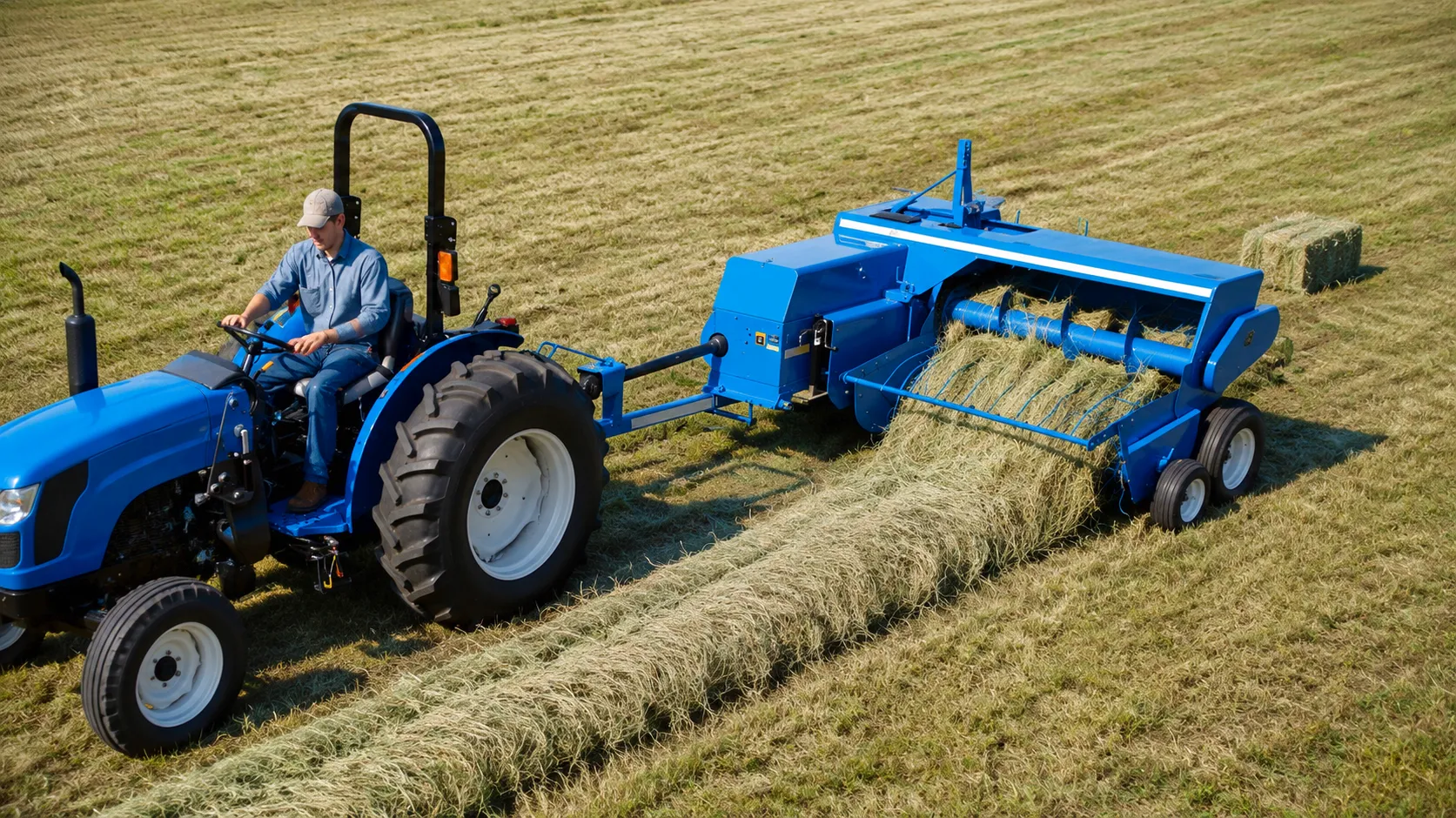
Cereal Straw Harvesting Across East Anglian Arable Farms
Across Cambridgeshire, Suffolk, and Norfolk — the heartland of British cereal production — farmers routinely run square balers through 200 to 400 hectares of wheat and barley stubble each August. The combination of high bale density and consistently sized output allows merchants to load double-deck wagons to their legal gross vehicle weight limit without the guesswork that comes with variable round-bale outputs. Merchants operating from depot yards around Bury St Edmunds and Kings Lynn report that square bales from contracted farms sell at a consistent premium to equestrian and smallholder buyers precisely because of their reliable dimensions and handleable individual weights.
Hay and Silage Production for Dairy and Livestock Operations in the Midlands
Dairy farms throughout Staffordshire, Cheshire, and Derbyshire producing preserved forage for year-round feeding increasingly favour large-format square bales over wrapped round bales where long-term clamp storage is available. The ability to tightly pack square bales into existing three-sided concrete bale clamping structures — common on older British farms built before the round bale era — avoids the capital cost of fitting new round-bale handling equipment. Baled silage in this format also suits the growing network of anaerobic digestion plants across the UK Midlands, where consistent bale geometry is essential for automated infeed conveyor systems.
Biomass Fuel Baling for Renewable Energy Supply Chains
The rapid expansion of biomass heating across institutional buildings in Scotland and energy crop plantations in Yorkshire has created a growing demand for precisely compressed bales of miscanthus, straw, reed canary grass, and short-rotation coppice residues. Square balers producing 600 kg bales of miscanthus meet the bulk density thresholds specified by combustion plant operators, who must maintain consistent furnace feed rates. Agricultural contractors in North Yorkshire and Aberdeenshire have installed dedicated baling capacity specifically for this application, running extended September-to-November harvesting windows well after the traditional grain-straw season has closed.
Equestrian Bedding and Forage Supply in the Home Counties and Wales
The equestrian sector — particularly concentrated in Surrey, Berkshire, the Cotswolds, and the equestrian heartland of Leicestershire — demands small to medium square bales that can be handled by a single person without a forklift. Two-string small square balers producing 25–30 kg bales of wheat straw or dust-extracted shavings remain the preferred product for livery yards and riding centres with limited mechanical handling. Many contractors operating in this space run both large square and small square balers simultaneously, switching machine type to match the customer’s specific handling infrastructure during the harvest window.
Industrial Waste and Cardboard Baling for Recycling Depots
Industrial baler configurations adapted from agricultural square baler chassis are widely deployed in the recycling and waste management sector at materials recovery facilities around Birmingham, Leeds, and Manchester. Cardboard, paper, PET film, textile waste, and mixed fibre materials are compressed into standard pallet-sized bales for direct shipping to reprocessing mills. The same mechanical principles — reciprocating plunger, chamber-side density control, and automated tying — apply in these industrial settings, and many of the core components, including plunger faces and knotter assemblies, are interchangeable with agricultural equivalents, simplifying spare parts logistics significantly.
Our Square Baler Product Range
Two proven models, engineered for productivity and long-term reliability in demanding UK harvesting conditions.
Pressa per balle quadrate 9YF-2200/1900/1700
The 9YF series covers three pick-up widths in a single proven platform, making it the ideal choice for contractors and arable farms scaling from medium to large baling volumes. The wide 2,200 mm version excels on high-yield cereal stubbles, while the 1,700 mm configuration suits narrower paddock gates and smaller tractors. All variants feature triple-tie knotters, hydraulic density adjustment, and optional shredding knife packages for biomass and silage applications.
Pressa per balle quadrate a doppia camera 9YFS-2.2
The 9YFS-2.2 introduces a tandem dual-chamber baling system that allows simultaneous compression and pre-loading, effectively eliminating the dead time between plunger strokes and lifting throughput by up to 35% compared with conventional single-chamber designs. This makes it the preferred specification for large-scale contracting operations across the Yorkshire Wolds and Scottish Borders where maximum output during the narrow harvest window is a business-critical requirement. The dual-chamber design also produces a more uniform bale face, improving stacking stability on uneven farmyard floors.
Ever Power: Manufacturing Capability & Customisation Services
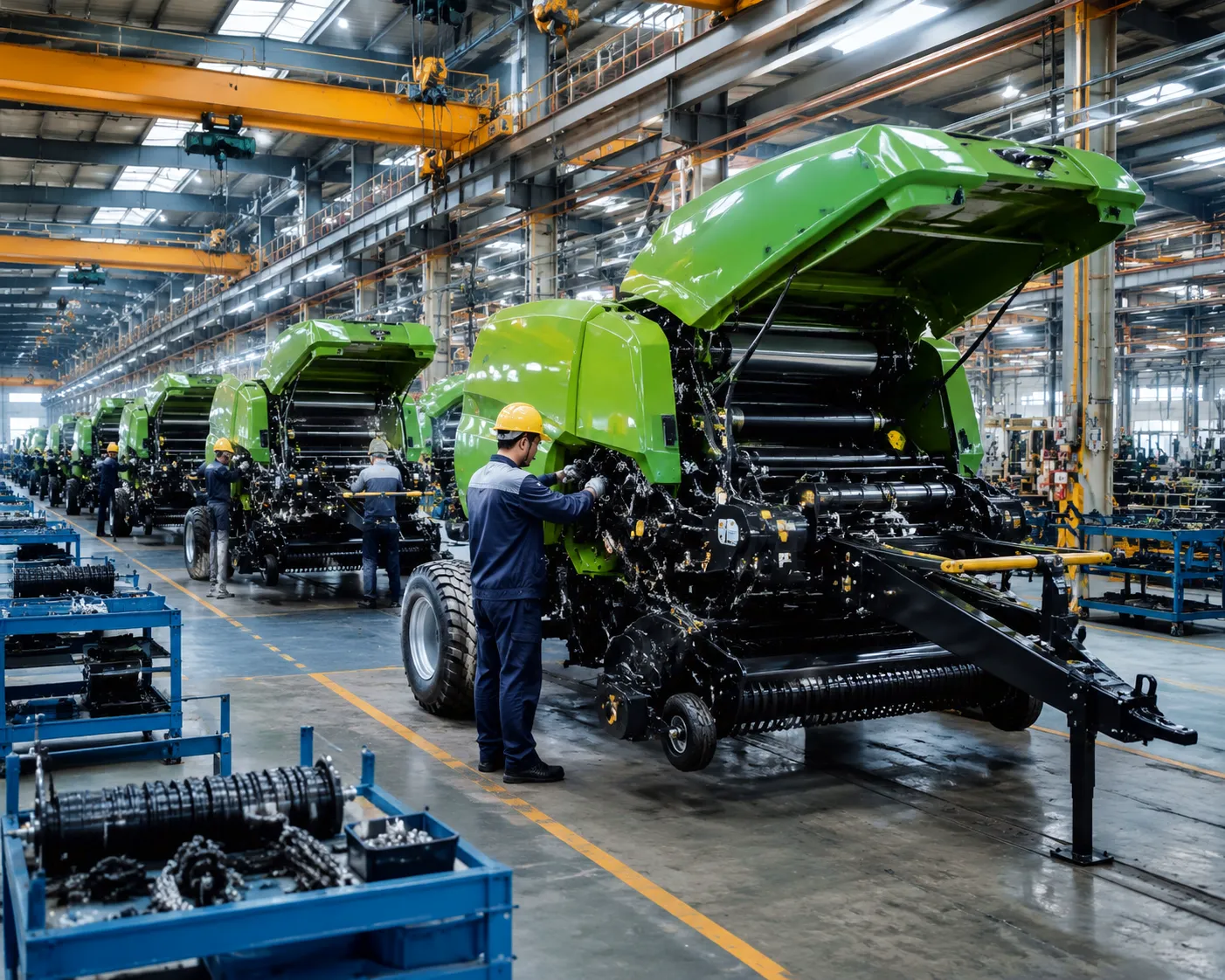
Ever Power operates a purpose-built manufacturing campus encompassing over 40,000 square metres of covered production floor space, housing CNC plasma cutting centres, robotic welding bays, automated surface treatment lines, and a dedicated assembly hall for full-machine build and commissioned testing. The facility’s investment in computer-aided manufacturing — including 5-axis CNC machining centres and laser measurement CMM inspection stations — enables tolerances that would be unachievable through conventional fabrication methods, guaranteeing the precise plunger-to-chamber clearances that determine bale density consistency on every machine shipped.
Customisation capability is a defining strength of Ever Power’s engineering offering. Procurement teams from UK agricultural machinery distributors and direct-purchase farming groups can specify bale cross-section dimensions, knife count and pitch, twine type compatibility, electronic monitoring packages, and paint scheme from a comprehensive options matrix — without the minimum-order premiums that equivalent requests from European competitors typically attract. Full custom engineering designs — including non-standard chamber cross-sections, bespoke hydraulic circuit layouts, and agricultural-to-industrial conversion specifications — are supported by an in-house engineering team with over 150 combined years of baler design experience.
Supply chain reliability is supported by Ever Power’s vertically integrated component production. Crankshafts, gearbox housings, knotter assemblies, and pick-up reels are manufactured entirely in-house rather than sourced from third-party suppliers, eliminating the quality variance and lead-time risk that external procurement introduces. All outgoing machines undergo a full load-test cycle on the factory floor using calibrated crop simulators before despatch, with test certificates and dimensional inspection reports shipped with every unit.
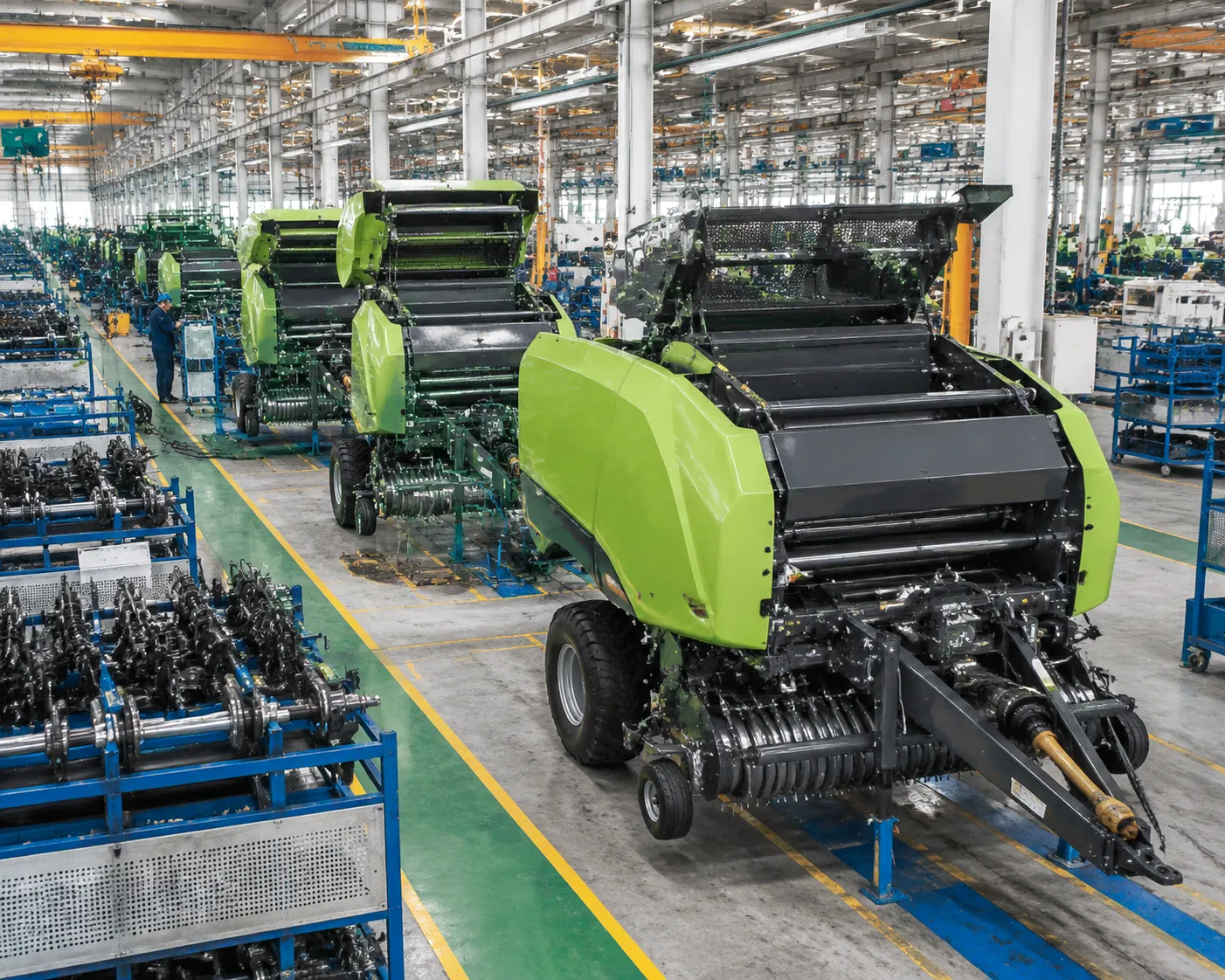
For UK-market clients, Ever Power provides dedicated pre-sale technical support in English, with engineering consultants available for video calls to discuss application requirements, regulatory compliance, and tractor compatibility before order confirmation. Spare parts packages — covering all high-wear items including knotter bills, twine holders, pick-up tines, and shredding knife sets — are available for consolidated shipment alongside the main machine, reducing initial commissioning delays and ensuring immediate operational readiness.
Ever Power’s export logistics team handles all documentation required for UK importation, including commercial invoices, packing lists, CE-equivalent declarations, and phytosanitary certificates where required. The team has established relationships with freight forwarders operating through the Port of Felixstowe and Southampton container terminals, enabling predictable transit times and minimal customs friction for buyers throughout England, Scotland, and Wales.
Ready to discuss your specific baling requirements? Our engineering team can provide a tailored specification and competitive quotation within 48 hours.
Customer Success Story: Doncaster Agricultural Contracting
Greenfield Harvesting Services, an agricultural contracting business based in Doncaster, South Yorkshire, had been running two ageing European-branded large square balers through their fleet for several seasons. Despite ongoing maintenance investment, the machines were producing inconsistent bale weights — averaging ±12% variance on straw — a margin wide enough to cause friction with their largest customer, a biomass supply chain aggregator delivering to a district heating plant outside Sheffield. Bale-weight variability was triggering rejection claims at the weighbridge and increasing transport cost per tonne of delivered dry matter.
After evaluating three alternative machine specifications, Greenfield’s director James Whitaker made contact with Ever Power through a referral from an agricultural engineering dealer in Lincoln. Following a detailed video consultation with Ever Power’s technical team, Greenfield specified two units of the 9YFS-2.2 Double-Chamber Square Baler with a 25-knife shredding pack, triple-tie knotters, and electronic density monitoring linked to a cab-mounted display. The customisation request — a non-standard bale length ceiling of 2,350 mm to maximise pallet efficiency in the biomass plant’s infeed system — was accommodated within the standard order timeline at no additional engineering charge.
In their first full operating season across 1,850 hectares of contracted straw work in South Yorkshire and Lincolnshire, the two 9YFS-2.2 machines produced bale weight variance of less than ±3.8% across all crop types — a threefold improvement on the previous fleet. Downtime attributed to knotter failures fell from an average of four hours per machine per season to under 45 minutes, as the triple-tie system’s self-cleaning twine path eliminated the most common failure mode of the outgoing machines. Throughput increased by 31% per tractor hour compared with their previous balers, allowing Greenfield to take on an additional 220-hectare contracting contract in Nottinghamshire without adding a further machine or tractor to their fleet.
The commercial outcome was equally clear. The consistent bale specification eliminated all weighbridge rejection claims in the season following commissioning. Greenfield’s biomass customer extended their contracting agreement by two additional years and increased the contracted volume by 18% — attributing the extension directly to Greenfield’s improved bale quality. James Whitaker concluded that the total cost per tonne of baled dry matter, including machine depreciation and finance charges, fell by approximately 9% compared with the previous fleet’s operational costs on an equivalent volume basis.
What Our UK Customers Say
“The density consistency from the 9YFS-2.2 is genuinely exceptional. We’re hitting our target bale weight within 4% across the whole season — wheat straw, barley, even the damp-ish meadow crop we run in October. The biomass plant stopped querying our loads entirely after the first four deliveries. That’s worth more to us commercially than any other single machine specification we’ve ever invested in.”
James Whitaker
Director, Greenfield Harvesting Services — Doncaster, South Yorkshire
“We contacted Ever Power asking about a non-standard 25-knife configuration for our short-chop silage work. Most suppliers would have quoted a premium or asked for a substantial minimum order. Ever Power’s engineers came back within 24 hours with a full technical drawing and confirmed it was achievable within standard lead time. The machine arrived exactly to spec, and the after-sales communication for our first service interval was equally responsive. Real professional outfit.”
Patricia Ogden
Farm Manager, Ogden Forage Ltd — Skipton, North Yorkshire
“We run the 9YF-2200 through mixed cereal straw across 280 hectares in Lincolnshire each season. The triple-tie knotter has been genuinely trouble-free — two seasons in and we’ve had zero missed knots during the main harvest run. The pick-up reel handles the heavy, slightly damp rows we sometimes encounter in late August without blocking. Good value for money and a well-built machine. Parts availability from Ever Power has also been straightforward — no delays on anything we’ve needed.”
Robert Haines
Owner, Haines Agricultural Contracting — Sleaford, Lincolnshire
Dual-Mechanism Technology: Single vs Double Shredding Configurations
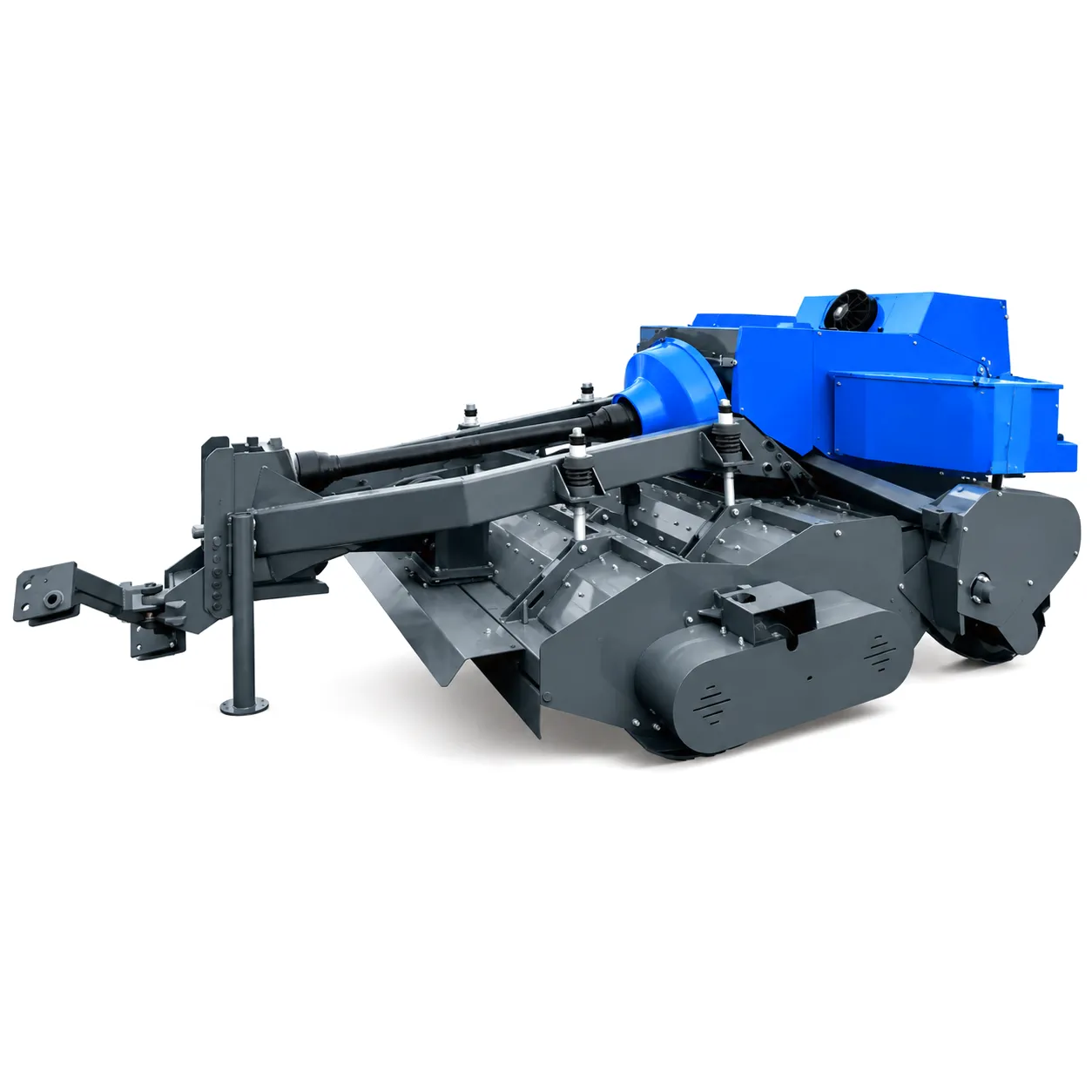
The dual crushing mechanism delivers enhanced fibre breakdown, improving bale cohesion and fermentation performance in wrapped silage applications. It is particularly suited to heavy miscanthus and reed canary grass biomass crops.
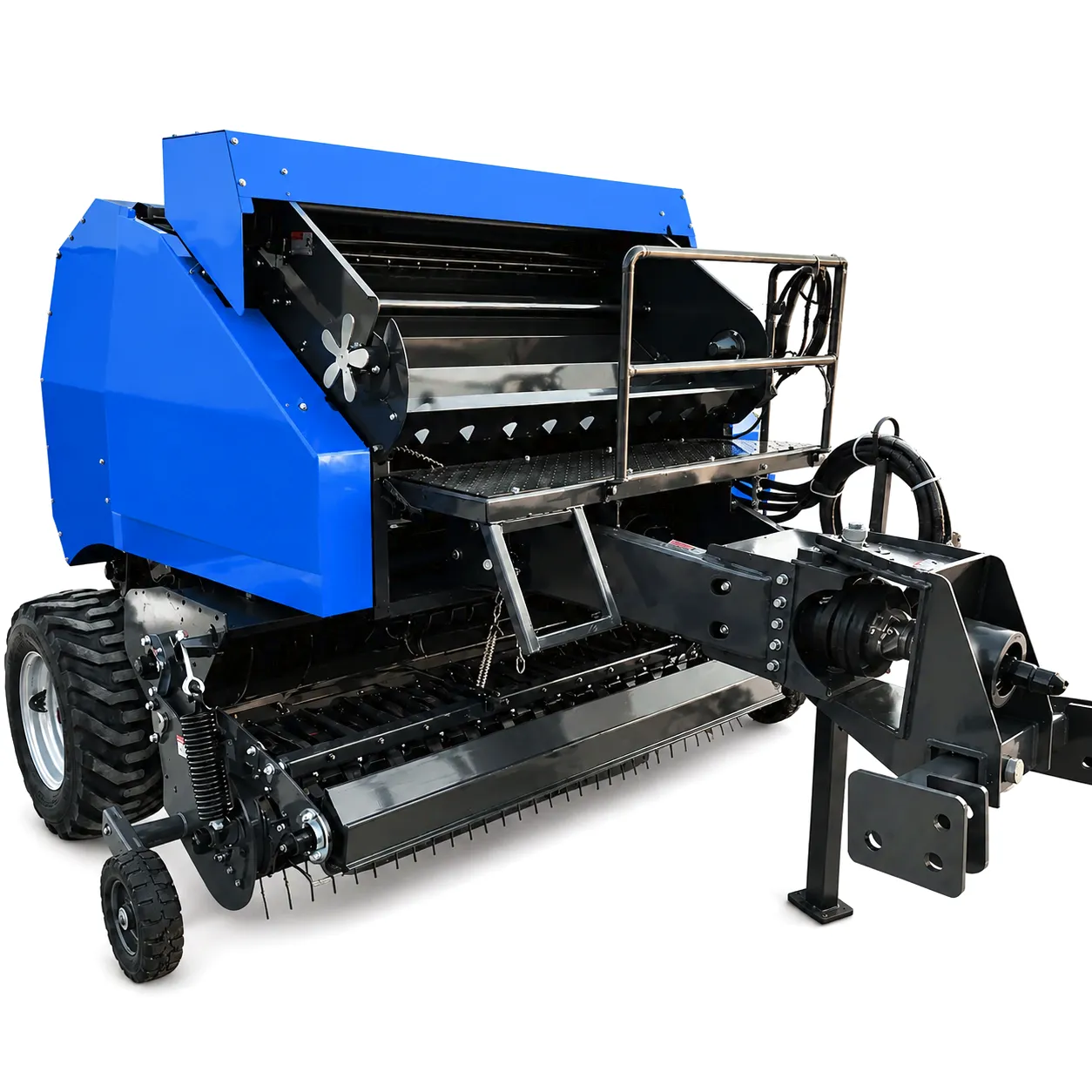
The 9YQ-1950 round baler complements the square baler range, offering flexible silage and hay solutions for farms whose storage infrastructure or terrain favours cylindrical bales. Ever Power’s product range ensures the right format for every harvesting challenge.
The choice between single and dual shredding configuration depends primarily on crop type and end-use specification. For standard cereal straw baled for equestrian bedding or export, the simpler single-shredder or plain-chamber arrangement reduces capital cost and maintenance complexity. For energy crops, chopped silage destined for anaerobic digestion, and export hay requiring high bale density for container freight, the dual-crushing mechanism consistently justifies the additional procurement cost through improved downstream value and throughput efficiency. Ever Power’s technical sales team can model expected return on investment for each configuration based on an operator’s specific crop mix and target market.
Domande frequenti
© Ever Power Agricultural Machinery | Technical Content Team | edit by gzl