What Is a Square Baler and Why Does It Matter in UK Agriculture?
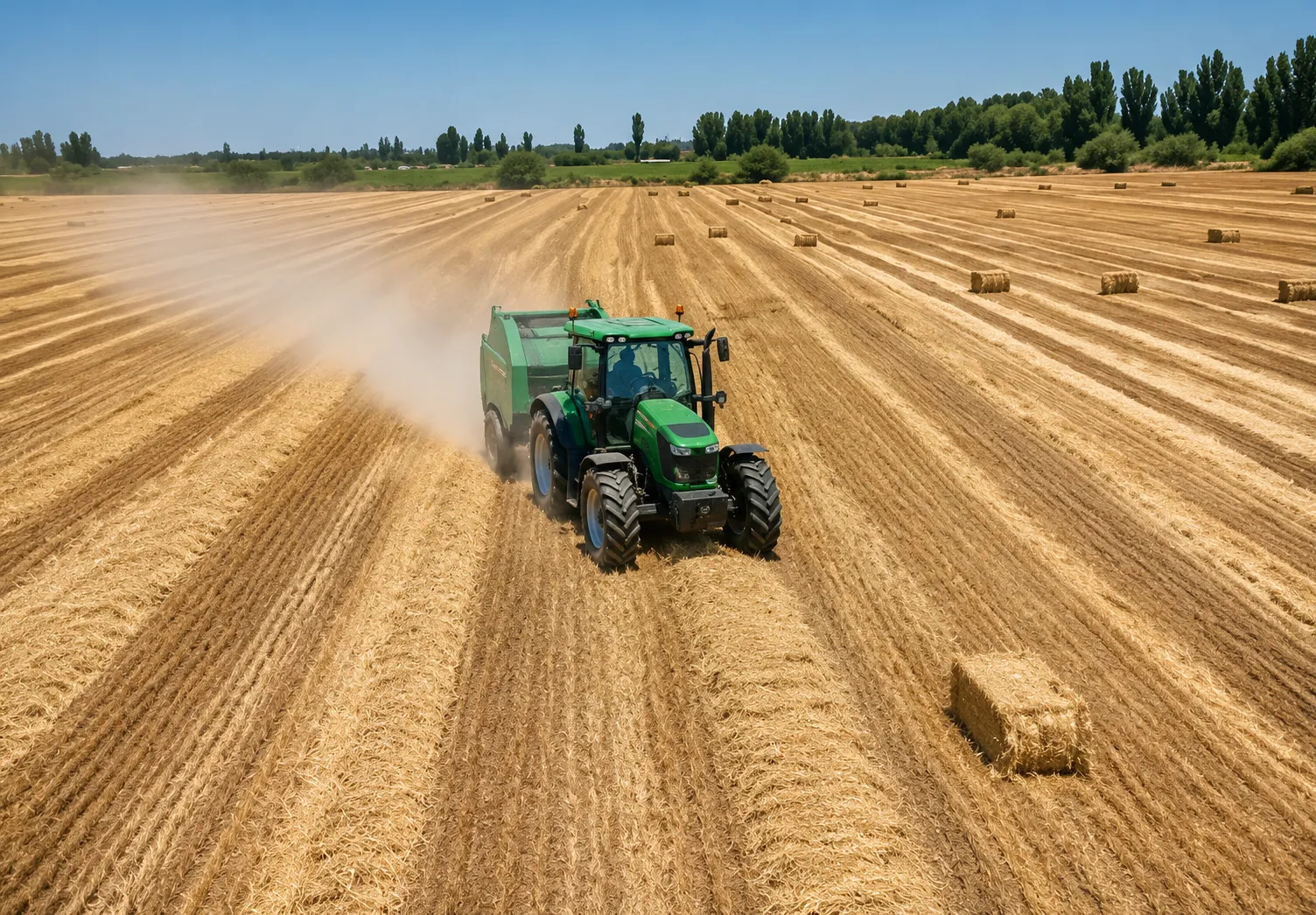
A square baler is a specialist agricultural machine designed to compress loose crop material — straw, hay, silage, miscanthus, hemp, and increasingly recycled biomass waste — into densely packed, uniformly shaped rectangular bales. Unlike round balers, which produce cylindrical rolls suited to open field storage, square balers deliver a geometric form factor that is ideal for efficient stacking, transport in standard HGV trailers, and warehouse-grade storage. In the UK, where farm logistics rely heavily on covered storage and tight-loaded lorry movements, this distinction directly affects operational economics.
The machine works by gathering windrowed crop with a pick-up mechanism, channelling material into a pre-compression chamber, and then driving a reciprocating plunger to compact it against a formed block of material already inside the bale chamber. As successive plunges add material, the growing bale is pushed forward by the resistance of adjustable tension rails. Once the bale reaches the pre-set length — measured mechanically or electronically — a knotting mechanism ties off the bale with twine or cord, and the finished product exits from the rear of the machine. The entire cycle happens continuously at field speeds, meaning output is directly proportional to tractor speed and crop yield per metre of swath.
The significance of this process in the British context cannot be overstated. From the mixed arable farms of Lincolnshire and Yorkshire to the cereal belts of East Anglia and the livestock operations of Wales and Scotland, square balers are working year-round. Beyond food and feed, the UK’s growing appetite for straw-fired and biomass district heating systems has opened a second market for square-baled agricultural residues — one where bale density, moisture tolerance, and consistent dimensions are engineering requirements, not preferences.
Working Principle: How a Square Baler Converts Loose Crop into Dense, Marketable Bales
01 — Crop Pick-Up
Spring-tine or rubber-finger pick-up drums sweep the windrow from the ground into the feeder housing. The pick-up width typically ranges from 1.7 m to 2.2 m, matching most UK stubble swath widths. Crop flow augers centralise the material before the feeder.
02 — Pre-Compression
A rotary pre-compression rotor or stuffing fork charges material into the bale chamber in discrete slugs. Pre-compression ratios of 3:1 to 6:1 are achieved before the main plunger stroke, which is critical for achieving target bale densities above 200 kg/m³.
03 — Plunger Compression
The main crank-driven plunger reciprocates at 50–80 strokes per minute, driven via a PTO-powered gearbox. Each stroke compresses a slug of material against the growing bale. Adjustable density rails along the bale chamber walls provide the counter-pressure needed to achieve and maintain the desired density.
04 — Knotting and Ejection
When the bale meter registers the target length, a trip mechanism activates the knotters — the most mechanically sophisticated component in the machine. Dual or triple knotters tie twine around the bale in 0.5–0.9 seconds per knot. The finished bale then slides from the chamber onto the ground or a trailing accumulator.
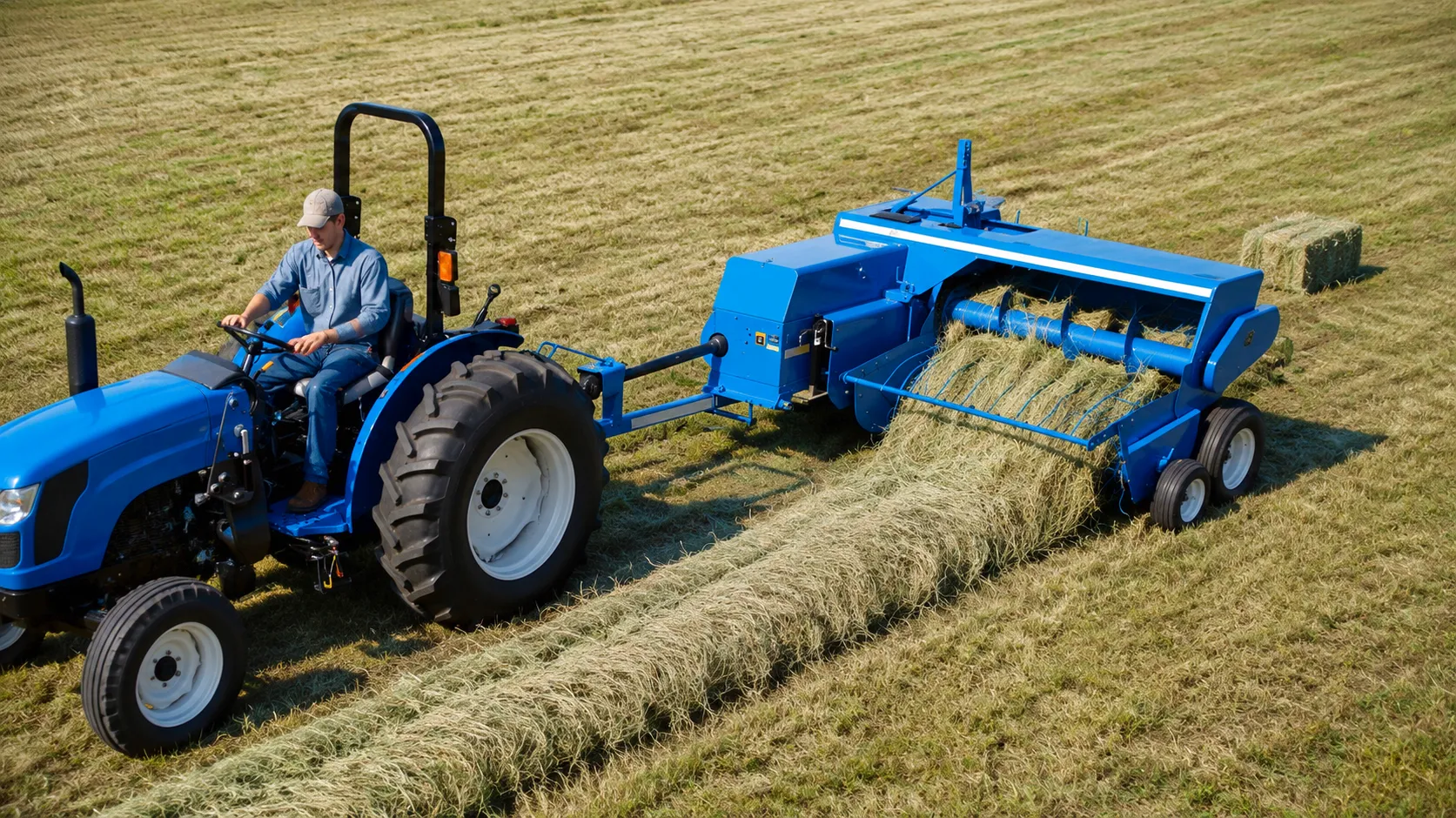
The knotting system deserves particular attention because it is where most field failures originate. Modern square balers use a bill-hook and twine-disc arrangement derived from the original McCormick patent, but extensively re-engineered with hardened alloy-steel bills, precision-ground disc edges, and self-cleaning geometry to handle the dusty, chaff-heavy conditions typical of English wheat harvests in July and August.
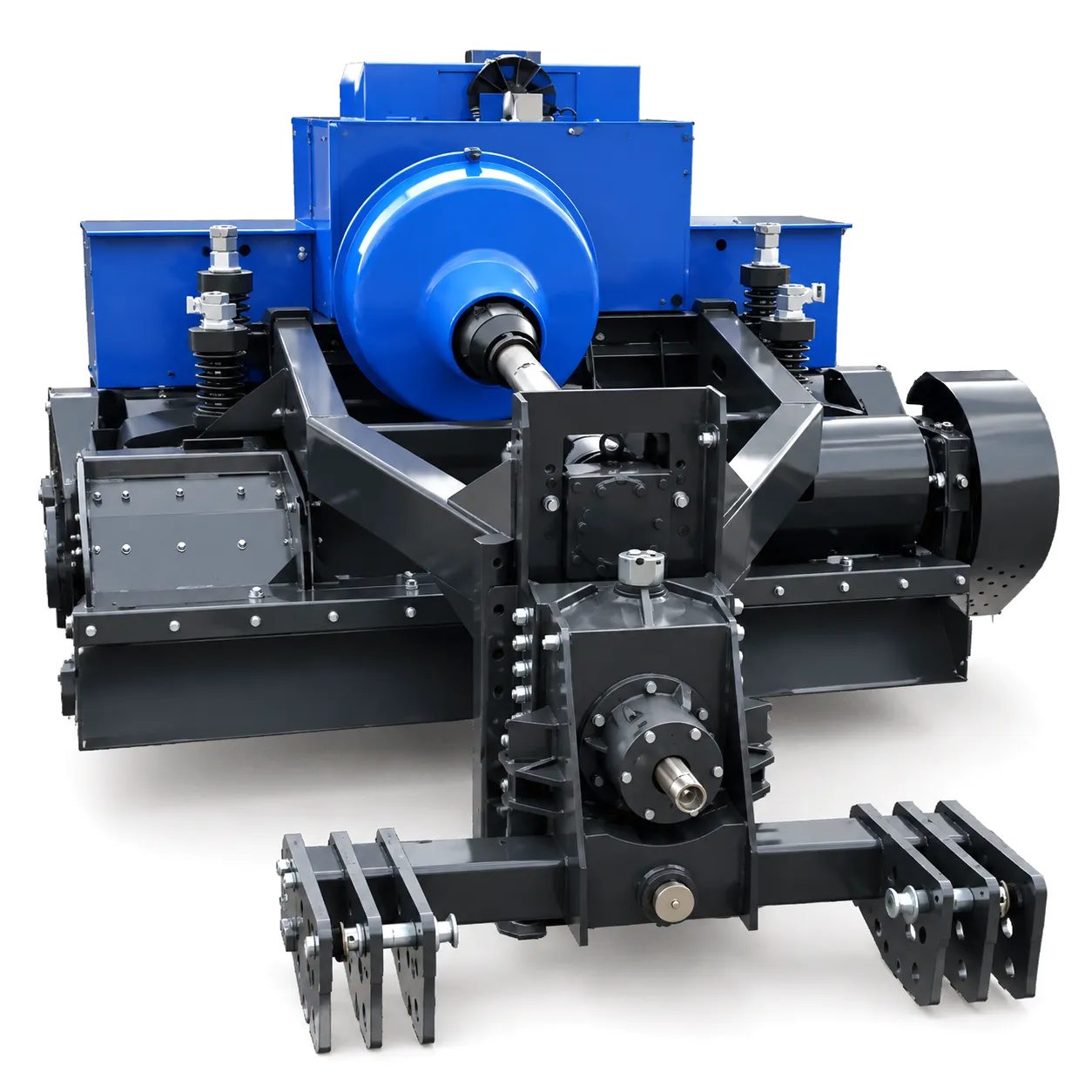
PTO-driven models run at a standard 540 rpm or 1,000 rpm shaft input, with the internal gearbox stepping speeds down or up as required. The flywheel, typically weighing 180–260 kg on a large-format machine, stores rotational energy to smooth out the pulsating load of each plunger stroke — a consideration that directly affects tractor fuel consumption across a full harvesting day.
Modern square balers may also integrate electronic crop-flow sensors, load-cell density monitoring, and GPS-linked bale mapping systems that record the position of every bale dropped in a field. For UK contractors operating across multiple client farms in regions like the Fens or the Vale of York, this data trail integrates directly into farm management software, simplifying invoicing and crop traceability for assured food chain compliance.
Material Construction: What a High-Performance Square Baler Is Made Of
The longevity and reliability of a square baler across a British harvesting season — which can run from early July through late September with minimal downtime tolerance — depends entirely on the materials used in its manufacture. A machine that fails at the knotters during a 10-day weather window can cost a contractor more in lost throughput than the purchase price of a replacement knotter assembly. Material selection is therefore an engineering decision with direct commercial consequences.
Main Frame — S355 Structural Steel
The primary chassis is fabricated from S355 or equivalent high-tensile structural steel plate, welded using MIG or submerged-arc processes. Minimum plate thickness at the bale chamber side walls is 8 mm, rising to 12–16 mm at load-bearing gussets.
Plunger Face — Wear-Resistant Hardox 400
The plunger compaction face and leading edge are lined with Hardox 400 or equivalent wear plate (400 Brinell hardness). This material extends plunger service life to 3,000–5,000 operating hours versus 800–1,200 hours for mild-steel alternatives under typical UK straw conditions.
Knotters — Case-Hardened 20CrMnTi Steel
Bill hooks, twine discs, and holder jaws are machined from 20CrMnTi chromium-manganese-titanium alloy steel, carburised and case-hardened to 58–62 HRC on working surfaces. This combination provides toughness at the core and extreme hardness at the contact surface, reducing knotter timing drift over a season.
Pick-Up Tines — Spring Steel 65Mn
Pick-up tines and feeder fingers are formed from 65Mn spring steel, oil-quenched and tempered to 42–48 HRC. This grade combines the fatigue resistance required for 200+ million flex cycles per season with the elasticity needed to deflect over stones without fracture — an essential property given the flint-heavy soils of parts of Cambridgeshire and the Yorkshire Wolds.
Gearbox Housings — GGG50 Nodular Iron
PTO gearbox housings are cast in GGG50 spheroidal graphite cast iron for its combination of rigidity, vibration damping, and machinability. Internal gear sets are typically 20MnCr5 or 17CrNiMo6 alloy steel, carburised to achieve surface hardness of 60–63 HRC while retaining a tough, impact-resistant core.
Surface Protection — Epoxy-Polyurethane Coating
Exterior surfaces receive a two-coat system: a zinc-phosphate epoxy primer (60–80 microns DFT) followed by a polyurethane topcoat (60 microns DFT), providing salt-spray resistance exceeding 1,000 hours per ISO 9227. This is essential for UK coastal and upland farms where saline-laden rainfall and morning dew create persistent corrosion risk.
Core Technical Advantages of Modern Square Balers
High Bale Density — Reduced Transport Costs
A well-calibrated square baler achieves straw bale densities of 180–230 kg/m³, compared to 110–140 kg/m³ for conventional round bales. This 40–60% density advantage means a standard 13.6 m flatbed trailer can carry 25–30 large square bales versus 18–22 round bales — a material saving in haulage cost per tonne of material moved to farm store or processing plant in the UK Midlands logistics network.
Stackability — Maximised Storage Efficiency
Rectangular geometry allows stable four- to six-high stacking without specialist equipment. A typical 18 m × 12 m Dutch barn can store 480–520 large square bales versus 200–240 round bales of equivalent material. For UK producers supplying the equestrian feed market — a significant channel through counties like Hertfordshire, Surrey, and Cheshire — consistent bale dimensions also simplify retail packaging and weight labelling compliance.
Continuous Output — Low Downtime Risk
Unlike batch-process packaging machinery, a square baler operates as a continuous-flow system with no stop-start cycling. Modern designs achieve throughput rates of 50–120 bales per hour depending on crop density and working width. For large arable contractors covering 800–2,000 ha of cereal stubble per season — a common scale of operation across Lincolnshire and Cambridgeshire — the ability to run through variable crop yields without speed reduction is a decisive economic advantage.
Versatile Crop Range — Year-Round Utilisation
A single square baler can handle wheat, barley, oat, and oilseed rape straw; dried hay and haylage; energy crops including miscanthus and short-rotation willow coppice; and industrial hemp. With relatively minor pick-up and density-rail adjustments, the same machine running through Yorkshire in August on barley straw can be re-deployed to the West Midlands in October on willow biomass.
Precise Weight Control — Compliant with UK Transport Regulations
Adjustable density systems coupled with electronic load sensing allow operators to target bale weights within ±5 kg per bale. For road haulage under UK axle-weight regulations, this precision prevents overloading incidents and simplifies the load-plan calculations required for vehicles operating under Operator Licences issued by the Traffic Commissioner — a compliance requirement that biomass hauliers in particular cannot afford to overlook.
Reduced Net Wrap Cost — Twine-Only Operation
Square baling using sisal or polypropylene twine eliminates the expense of net wrap, which can add £1.80–£3.50 per bale when round baling. At 5,000 bales per season, the material-cost saving is £9,000–£17,500 before any premium is applied for recyclability — an important consideration under the UK’s Extended Producer Responsibility (EPR) legislation that is reshaping how farmers account for single-use plastics.
Product Technical and Performance Parameters
Data reflects typical large-format square baler specifications. Contact Ever Power for custom-configuration datasheets.
| Parameter | Specification / Range | Notes |
|---|---|---|
| Bale Chamber Dimensions (W × H) | 0.80 × 0.90 m / 1.20 × 0.90 m | 2-string or 6-string knotting |
| Bale Length (adjustable) | 0.60 m – 2.40 m | Mechanical or electronic star-wheel meter |
| Target Bale Density (wheat straw) | 160 – 230 kg/m³ | Adjustable via density-rail pressure |
| Plunger Stroke Rate | 50 – 80 strokes/min | Crank-driven via PTO gearbox |
| PTO Input Speed | 540 rpm or 1,000 rpm | Specify at order |
| Required Tractor Power | 74 – 185 kW (100 – 250 hp) | Model dependent |
| Pick-Up Width | 1.70 m / 1.90 m / 2.20 m | Spring-tine / rubber finger options |
| Flywheel Weight | 180 – 280 kg | Cast iron, dynamically balanced |
| Tipo di nodo | 2-string / 4-string / 6-string | 20CrMnTi case-hardened bill hooks |
| Throughput (typical) | 50 – 120 bales/hour | Crop and tractor speed dependent |
| Frame Material | S355 high-tensile structural steel | MIG / SAW welded, shot-blasted |
| Surface Coating | Epoxy primer + PU topcoat (120 µm DFT) | 1,000 h salt-spray per ISO 9227 |
| Hitch Type | Clevis / pick-up hitch / swinging drawbar | To customer specification |
| Machine Weight (approx) | 3,800 – 7,200 kg | Configuration dependent |
Industrial Application Scenarios: Where Square Balers Deliver Real Value
The square baler’s utility extends far beyond its traditional cereal-straw role, and understanding the full breadth of application scenarios is important for buyers evaluating total return on capital investment.
Arable Farming — Cereal Straw Collection in East Anglia and Lincolnshire: This is the highest-volume use case in England. Combines harvesting wheat, barley, and oilseed rape leave a structured windrow behind; square balers operating behind the combine at 6–10 km/h collect 70–85% of the available straw per hectare. In Lincolnshire alone, an estimated 900,000 tonnes of cereal straw are baled annually, and the square format’s transport efficiency is a key reason large farms in this region favour it over round baling for long-haul movements to straw merchants or biomass plants in Sheffield or Nottingham.
Livestock Bedding Supply — Yorkshire and Scottish Lowlands: Dairy and beef units across Yorkshire’s Vale of York and the Scottish Borders require consistent, dry-straw bedding material year-round. Square balers producing 500 mm × 900 mm × 1,200 mm bales are the industry standard for this supply chain, because the bales can be stored in standard-height livestock buildings without specialist handling equipment. Contractors based in Harrogate and York are well-known for operating square-baler fleets specifically targeting this market segment.
Biomass and Renewable Energy Supply Chains — Midlands and Northern England: The UK’s growing installed base of straw-fired and biomass heating plants — particularly in the East Midlands power generation cluster — demands square-baled feedstock because automated feeding systems in these plants are designed around the geometry of a large square bale. Plants operating near Birmingham, Nottingham, and Leeds specify bale dimensions and density targets in their supply contracts, and square baler operators who can consistently meet these parameters command premium gate prices per tonne.
Equestrian and Pet-Bedding Markets — Home Counties and West Midlands: The UK equestrian sector, centred on counties like Hertfordshire, Surrey, Oxfordshire, and Cheshire, is a premium niche where square bales are the dominant retail format. Retail bagged straw — often re-cut and repackaged from square baler output — is sold through equestrian supply chains at substantial margins over bulk farm-gate prices. Square baler accuracy in dimensions and weight is essential for packaging-line compatibility downstream.
Construction and Landscaping — Straw-Bale Building and Erosion Control: A smaller but growing application is the supply of square bales for natural building systems and temporary erosion-control matting on motorway and railway embankment construction projects across England and Wales. These applications require precise bale dimensions and known-moisture-content bales — parameters that only a well-calibrated square baler can deliver at scale.
Precision Manufacturing
Built to perform through every British harvest season
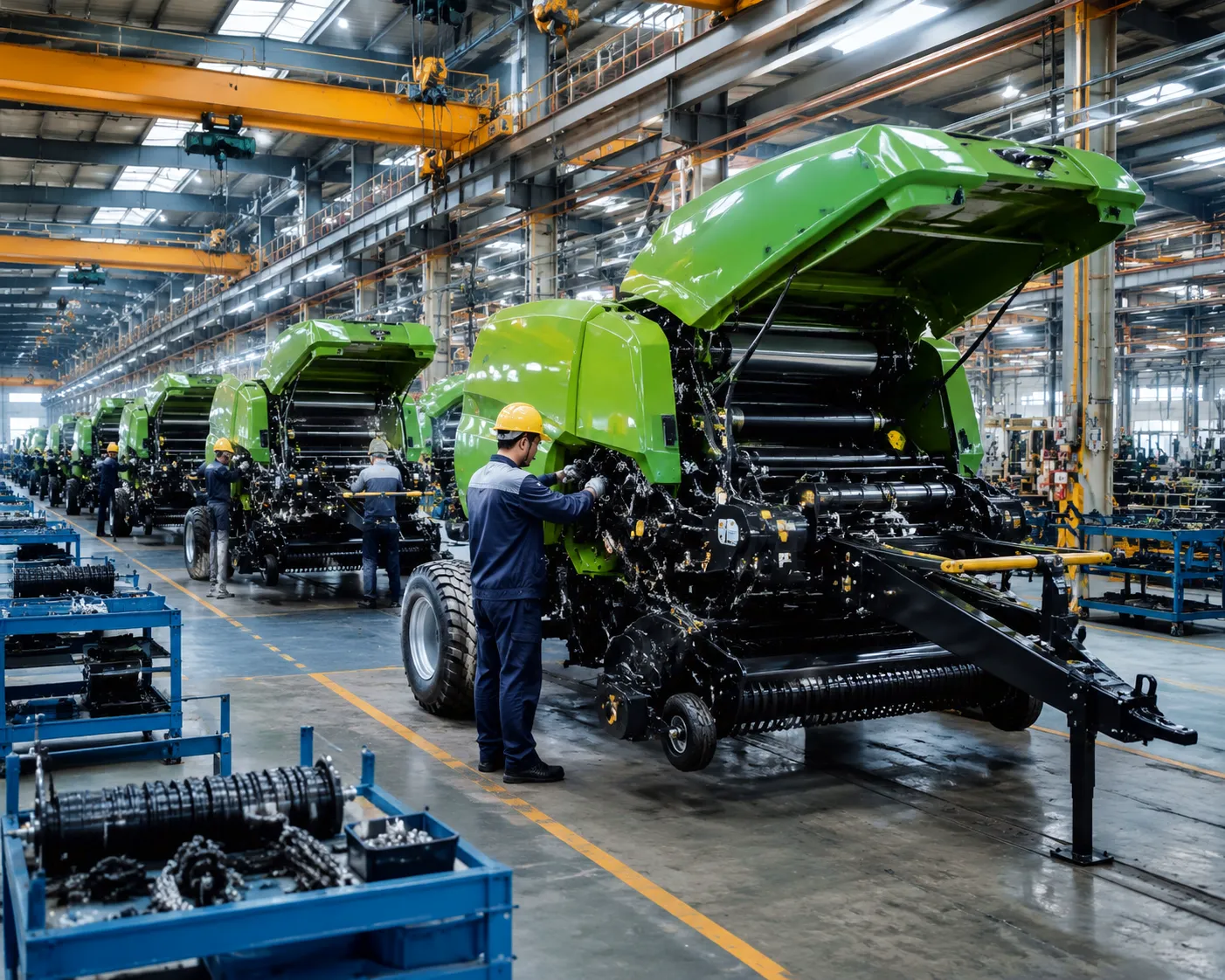
Ever Power’s manufacturing facility operates CNC plasma and laser cutting, robotic welding cells, and a dedicated precision machining department for knotter and gearbox components — ensuring dimensional consistency that field-assembled or sub-contracted production cannot match.
Ever Power Square Baler Product Range
Two proven models engineered for UK arable and biomass operations — click through for full technical datasheets.
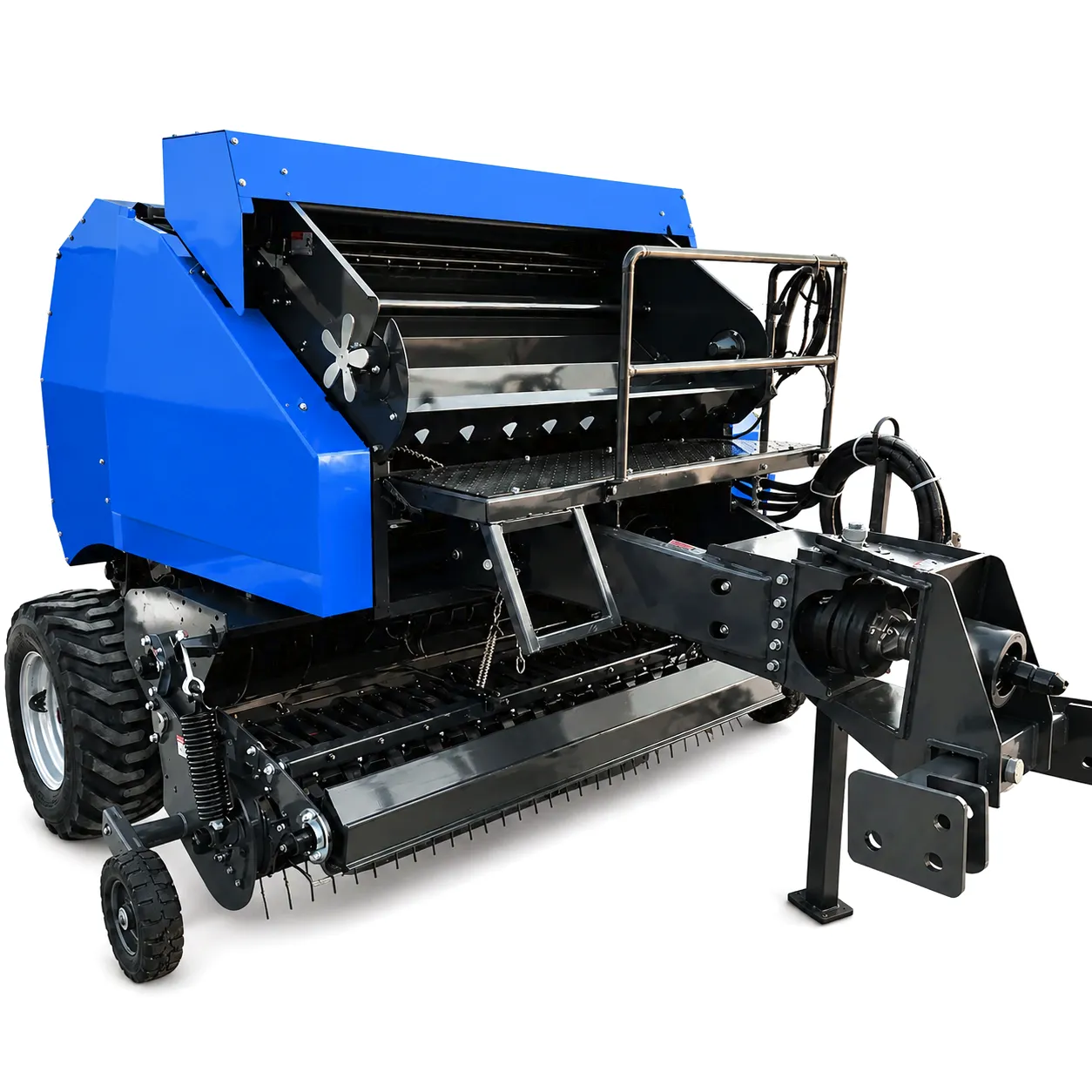
Pressa per balle quadrate 9YF-2200/1900/1700
A flagship single-chamber square baler available in three pick-up widths — 2,200 mm, 1,900 mm, and 1,700 mm — to match swath width and tractor power across the UK arable sector. Features a 6-string knotter system, adjustable density rails, and a heavy-duty 260 kg flywheel. Ideal for high-throughput straw collection in Lincolnshire and Yorkshire cereal operations.
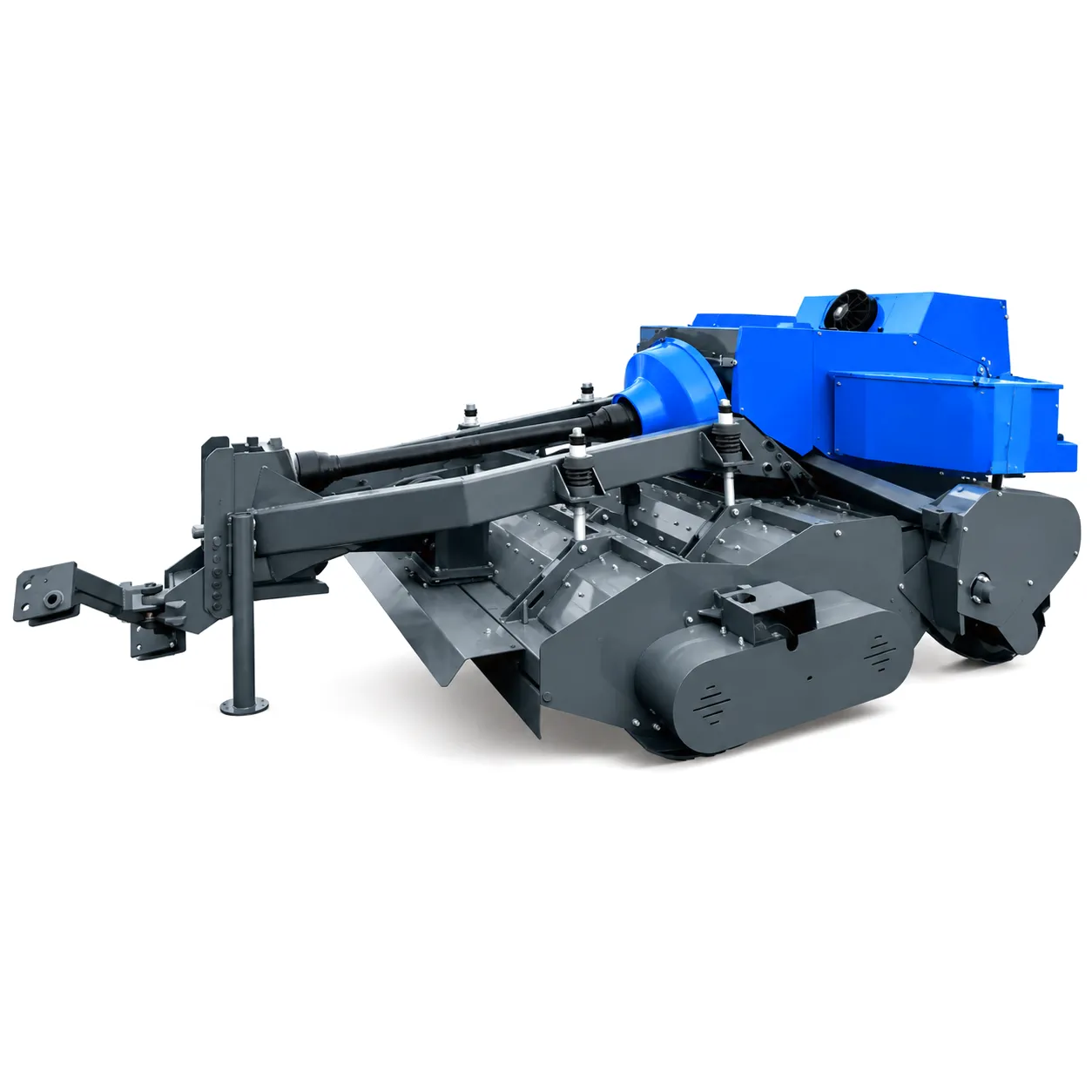
Pressa per balle quadrate a doppia camera 9YFS-2.2
A dual-chamber configuration that simultaneously delivers two bale sizes per pass, maximising output per tractor hour in high-yield crops. The integrated dual crushing mechanism reduces stem resistance by up to 30%, improving pick-up reliability in thick swaths of energy crops including miscanthus and hemp. Particularly well-suited to West Midlands and Scottish biomass supply chains that require mixed-size bale outputs for different end users.
Ever Power Manufacturing Capability and Customisation Services
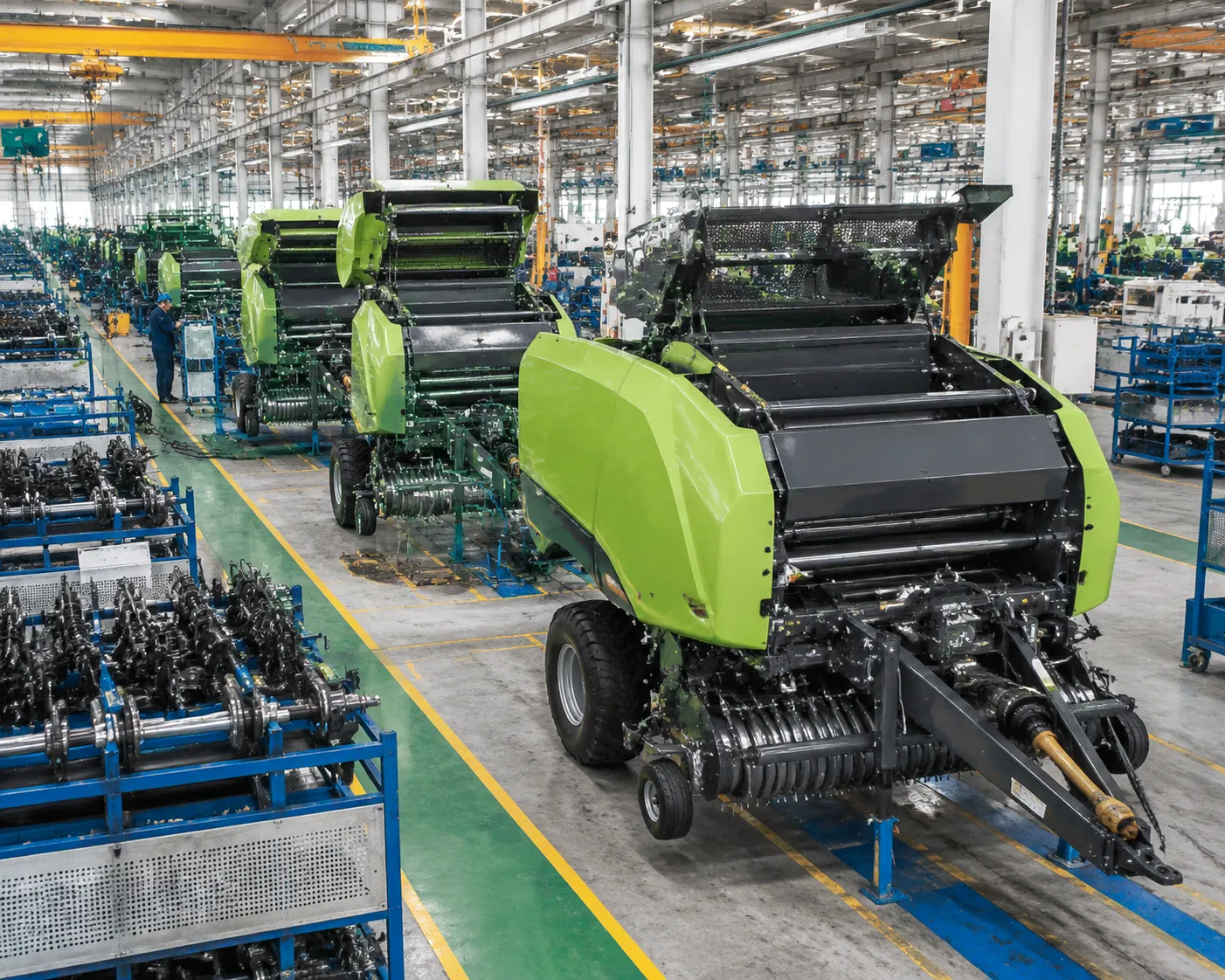
Ever Power operates a dedicated agricultural machinery manufacturing complex equipped with seven automated welding stations, three CNC laser cutting lines capable of 30 mm plate, and a precision machining centre handling all knotter, bill-hook, and gearbox components in-house. The facility holds ISO 9001:2015 certification, and quality gates at each production stage are documented and traceable — a requirement that European and UK distributors increasingly demand as part of their own quality management obligations.
Customisation is not a supplementary service at Ever Power; it is a core engineering capability. The design team can modify bale chamber dimensions to non-standard cross-sections for niche markets — for instance, narrow-profile bales for horse-box storage or oversized bales for bulk biomass loading. Pick-up width, knotter count, density-rail material and adjustment range, hitch type, and electrical specification (12 V or 24 V, ISO bus or proprietary display) are all configurable at the component level rather than by selecting from a limited pre-built option list.
Supply chain reliability is backed by a comprehensive spare parts inventory covering all wear components — knotters, tines, plunger knives, twine boxes, and gearbox internals — with DDP (Delivered Duty Paid) despatch to UK ports typically within 14 working days of order. For UK importers, Ever Power’s export documentation package includes CE Declaration of Conformity, EN ISO 4254-7 compliance statement, and pre-shipment inspection reports, simplifying the import process and reducing customs clearance risk.
Whether the requirement is for a compact two-string baler for a family farm in the Welsh Borders or a twin-knotter large-chamber machine for a 1,200 ha arable contractor in Lincolnshire, Ever Power’s engineering team begins with the customer’s specific agronomic, logistical, and economic constraints — not a standard product catalogue.
Caso di successo del cliente
How a Lincolnshire Agricultural Contracting Business Doubled Throughput with Ever Power Square Balers
Meridian Arable Services, based near Spalding in Lincolnshire, is a third-generation agricultural contracting business handling cereal straw collection across approximately 3,400 ha of contracted acreage each season. In 2023, managing director James Alderton identified that their two ageing large-square balers were increasingly unreliable during the peak July–August straw season — a period when weather windows in the Fens can close with less than 24 hours’ notice. Downtime for knotter failures alone was costing the business an estimated 12–15 operational hours per season, translating directly to lost straw revenue at the farm-gate price then prevailing for Lincolnshire wheat straw.
After evaluating options from multiple manufacturers, Meridian Arable Services contacted Ever Power and began a specification dialogue with the Ever Power UK sales team. The brief was specific: they needed a 2,200 mm pick-up width to match the wide stubble swaths produced by their 12.2 m combine header, a 6-string knotter configuration for large-chamber bales, and a gearbox capable of sustained 1,000 rpm PTO input from their New Holland T8 tractor fleet. Critically, they also required DDP delivery to a port of entry with a short lead time — a requirement Ever Power met with an 11-week build and shipping schedule.
Two Ever Power 9YF-2200 square balers were delivered in April 2024. The 2024 harvest season ran from 10 July through 29 August across Meridian’s contracted farms. Both machines completed the season with zero knotter failures — a result James Alderton attributed directly to the 20CrMnTi case-hardened bill hooks and the pre-season knotter timing check carried out by Ever Power’s technical team via video call. Bale count for the season reached 14,850, with average bale weight holding within ±4 kg of the 480 kg target across variable crop moistures. The business reported an 18% reduction in total contracting hours per 1,000 bales compared to the previous season’s machines.
For the 2025 season, Meridian Arable Services has added a third Ever Power machine to their fleet and entered a preferred-supplier agreement with Ever Power for wear-part replenishment ahead of the harvest period.
★★★★★
“Going through a full Lincolnshire straw harvest with zero knotter stops is something I would not have believed possible before running the Ever Power machines. The bill-hook quality is visibly superior to what we had before.”
James Alderton, Meridian Arable Services, Spalding, Lincolnshire
★★★★★
“The bale weight consistency is what impressed us most. Running into a biomass plant on the edge of Nottingham, every bale has to hit a weight band for the automated feeder to process it correctly. The Ever Power machines stayed within spec all season without any density-rail readjustment.”
Rachel Pemberton, Operations Manager, GreenEnergy Biomass Ltd, Nottinghamshire
★★★★★
“We specified a narrow-profile chamber for our horse-bedding supply business in Surrey, and Ever Power’s engineering team turned around a custom drawing within five working days. Delivery was on schedule, and the customised bale dimensions have made a genuine difference to our retail packaging line throughput.”
Tom Whitfield, Director, CountryCrop Supplies Ltd, Guildford, Surrey
Domande frequenti
Common questions from UK buyers, contractors, and biomass operators.
How much does a large square baler typically cost to buy or hire from a UK agricultural machinery supplier? +
New large square balers in the UK market range from approximately £45,000–£65,000 for entry-level configurations up to £130,000+ for fully specified high-throughput models with electronic density sensing and accumulator trailers. Ever Power’s models offer a competitive price-to-specification ratio for buyers targeting the mid-range — contact [email protected] for a tailored quote based on your specific pick-up width, knotter configuration, and delivery requirements.
Which square baler models are best suited to the large arable farms in Lincolnshire that need high throughput during the July wheat harvest? +
For Lincolnshire cereal straw operations harvesting above 800 ha per season, you need a large-chamber machine with at minimum a 2,200 mm pick-up width, a 6-string knotter system, and a flywheel above 220 kg to handle variable swath densities without PTO load spikes. Ever Power’s 9YF-2200 is built specifically for this scale of operation. The 1,000 rpm PTO input option pairs well with high-horsepower New Holland and John Deere tractor fleets common in the region.
What is the difference between a single-chamber and a double-chamber square baler, and which one offers better value for a UK biomass supplier? +
A single-chamber machine produces one bale at a time and is simpler to maintain and set up. A double-chamber model like the Ever Power 9YFS-2.2 simultaneously charges two chambers, producing two bales per tractor pass and significantly increasing throughput per operating hour. For biomass suppliers who need to move large tonnages of miscanthus or energy straw in tight weather windows — particularly in northern England where the growing season is shorter — the double-chamber configuration typically delivers better return on capital within two to three seasons.
Where can I find a reliable square baler supplier in the UK who can also provide spare knotter parts and after-sales technical support? +
Ever Power operates as a direct manufacturer-to-buyer supply channel, which means the engineering team that designed the machine handles technical support queries directly rather than through a distributor intermediary. Spare parts — including knotter kits, tine sets, plunger wear plates, and gearbox oil seals — are held in inventory and dispatched DDP to UK addresses. Lead time for standard wear parts is typically 8–14 working days to any UK destination.
How do I get an accurate price quote for a custom-specification square baler from Ever Power for my farm in Yorkshire or the East Midlands? +
Send a brief technical specification to [email protected] covering your intended crop types, estimated seasonal bale count, tractor make and available PTO speed, preferred pick-up width, and any non-standard requirements such as chamber dimensions or electrical spec. Ever Power’s sales engineering team typically responds with a detailed quotation within two to three working days, including CIF or DDP pricing options to a UK port of entry.
When is the best time of year to service a square baler’s knotter system before the UK summer harvest season begins? +
The ideal window is April to early June — after any winter storage has been completed and before pre-harvest machinery pressure peaks in late June. A knotter service should include measuring bill-hook timing against the manufacturer’s spec, checking and replacing worn twine discs and holder jaws, lubricating all pivot points with the correct grease grade, and test-running the knotter cycle dry before fitting twine. Ever Power’s technical documentation provides a full pre-season service checklist for all their square baler models.
What tractor horsepower and PTO specification do I need to run a large 2,200 mm square baler efficiently on a mixed arable farm in the UK? +
A 2,200 mm large-chamber square baler requires a minimum of 140–160 kW (190–215 hp) at the PTO for sustained operation in dense crop conditions. The flywheel draws significant peak current at each plunger stroke, so a tractor with strong flywheel effect and a reliable 1,000 rpm PTO output is preferable to relying on an older 540 rpm drive shaft. Most modern 180–220 hp tractors from the major UK fleets — including New Holland T8, John Deere 8R, and CLAAS Axion 800 series — are well-matched to this class of baler.