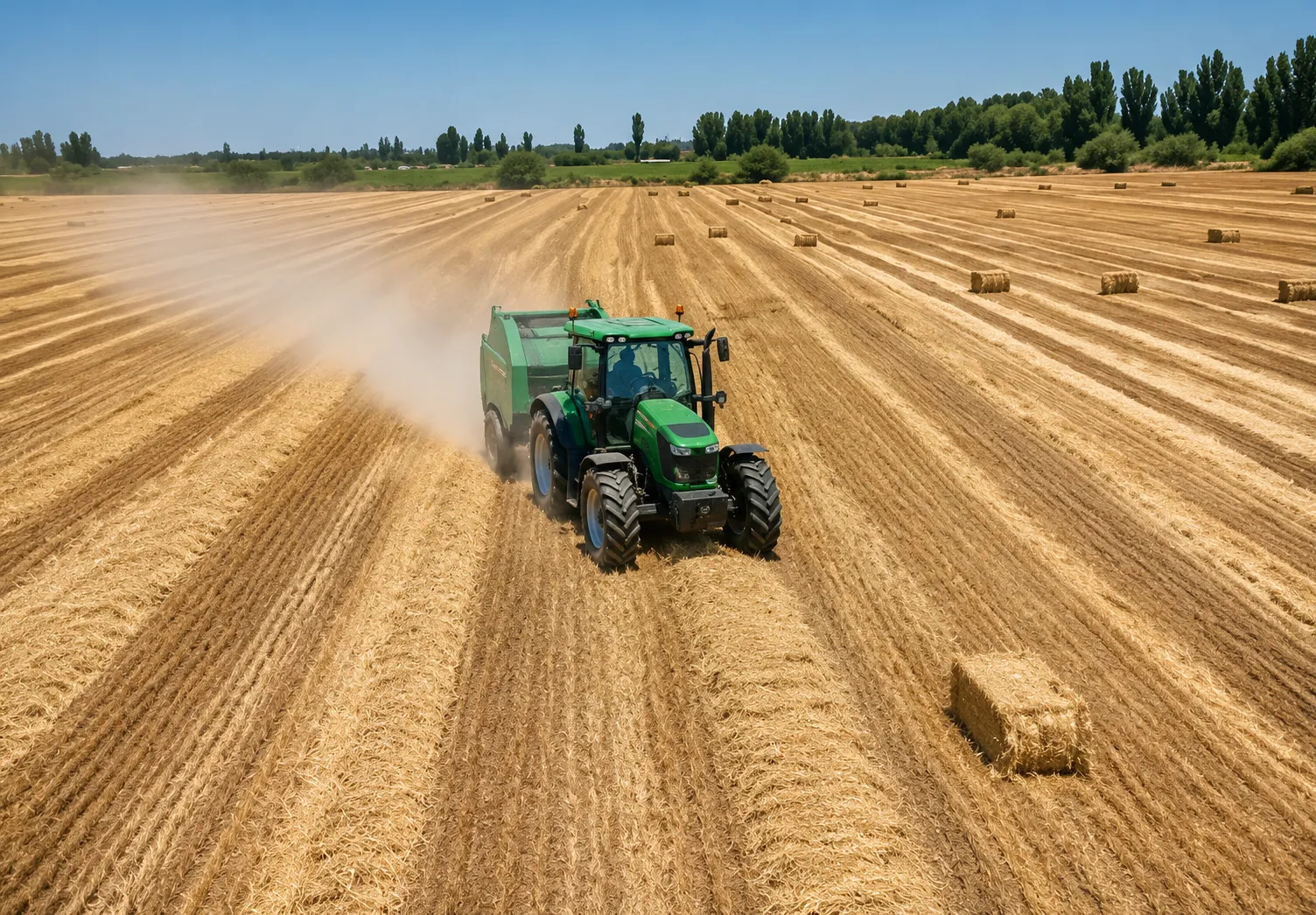
The square baler sits at the intersection of mechanical ingenuity and agricultural efficiency. Across the rolling arable fields of Lincolnshire, the intensive silage operations in Yorkshire and the diversified biomass estates spreading through the East Midlands, no single piece of machinery has reshaped post-harvest logistics more profoundly. A square baler compresses cut crop material — straw, hay, silage, dedicated energy crops and an expanding range of industrial biomass — into dense, geometrically uniform rectangular packages that stack with exceptional space efficiency, travel cleanly on standard flatbed transport and meet the tight dimensional tolerances demanded by large-scale storage facilities. Where round balers deliver convenience, the square baler delivers precision engineering matched to the supply-chain realities of commercial farming.
Modern square balers are no longer purely mechanical devices operating on the same cam-and-plunger geometry that defined the mid-twentieth century. Today’s machines integrate variable-chamber density control, electronic monitoring of bale count and weight, reinforced high-alloy steel knotters capable of cycling thousands of times per hour without service intervention, and drivetrain architectures engineered to survive the punishing PTO loads of continuous harvest campaigns. Whether you are specifying a machine for a 2,000-hectare combinable crops holding near Boston, Lincolnshire or tendering for a biomass collection contract in the Yorkshire Wolds, understanding what separates a capable baler from a genuinely engineered one is essential procurement knowledge.
How a Square Baler Works: The Complete Mechanical Sequence
Spring-tine pick-up reel lifts windrowed crop from the ground. Tine spacing is matched to crop type. A cross auger or feed rotor centralises the material flow towards the pre-chamber, preventing uneven bale density caused by side-heavy feeding.
Crop accumulates in the pre-chamber until the rotor senses a defined charge weight. At that point, a stuffer fork pushes the entire charge through the inlet valve into the main compression chamber in a single, controlled stroke, ensuring the plunger always contacts uniformly distributed material.
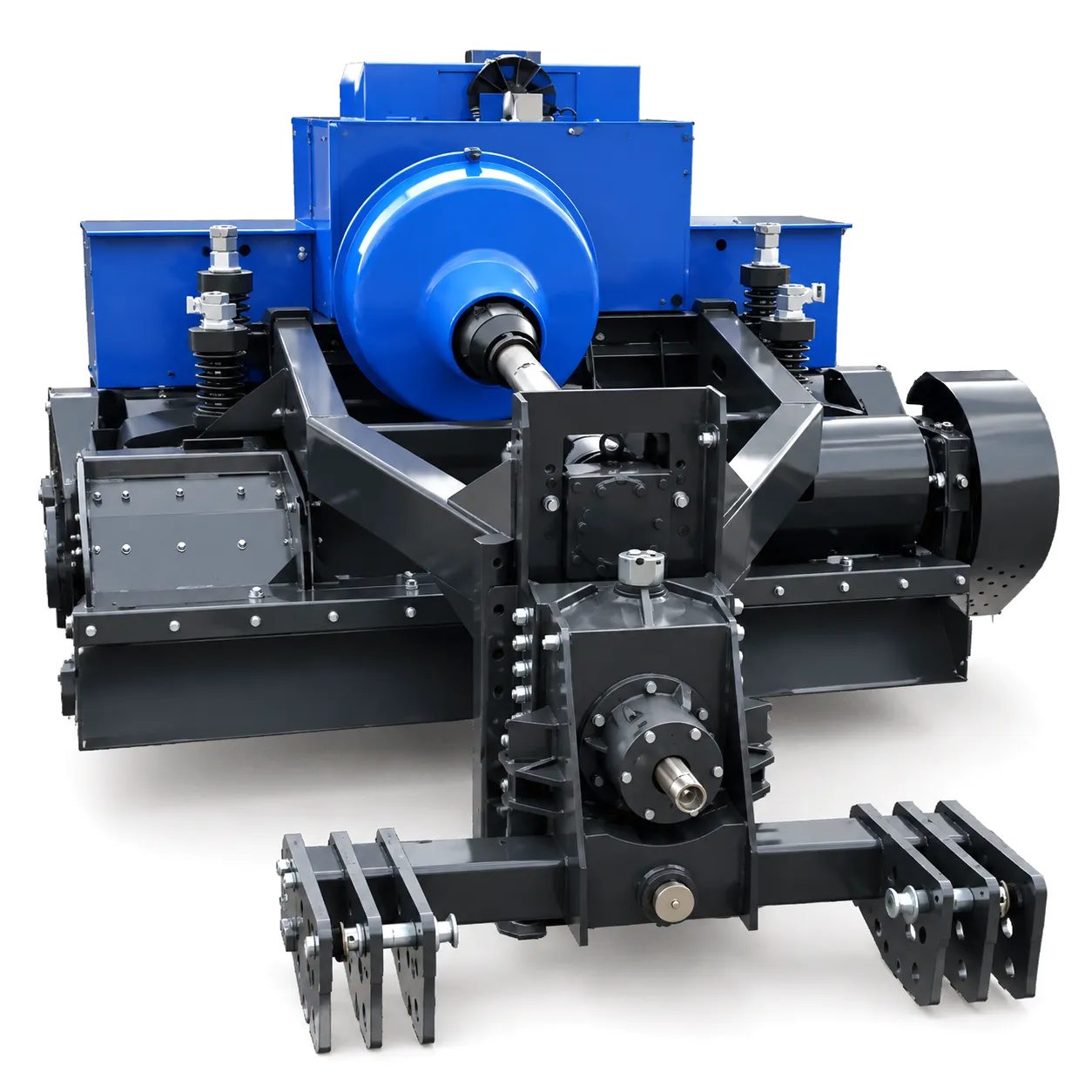
The reciprocating plunger — driven by a robust crankshaft and connecting rod from the PTO-powered flywheel — compresses each charge against the accumulated bale column. Plunger speeds on commercial machines typically reach 38–52 strokes per minute, directly setting the theoretical output ceiling when crop supply is continuous.
Once the bale length sensor reaches the set measurement, the needle arms sweep twine around the completed bale, feeding it to the bill-hook knotter. High-quality knotters are precision cast from alloy steel, hardened and ground to tolerances below 0.05 mm. A failed knot is an immediate work stoppage, which is why knotter durability is the defining quality metric for commercial operators.
Core Materials: Why Metallurgy Defines Baler Longevity
The relentless reciprocating load of a plunger baler imposes fatigue stresses that defeat ordinary mild steel within a single season of hard commercial use. Every structural element of a professionally engineered square baler must be specified with the full harvest load cycle in mind, not the average load. The bale chamber walls, which bear lateral and vertical compression forces simultaneously, are fabricated from S355 structural steel plate with a minimum yield strength of 355 MPa. High-wear contact zones — plunger faces, bale channel liners, pick-up cam tracks — are built from Hardox 400 or equivalent abrasion-resistant plate, which delivers a Brinell hardness of approximately 400 HB without the brittleness that would make it unsuitable for impact-loaded parts. Knotter bill hooks and knives are drop-forged from 42CrMo4 alloy steel and through-hardened to 52–56 HRC, enabling reliable operation through hundreds of thousands of tying cycles before any service is required. PTO input shafts and crankshafts are typically machined from 40Cr or 42CrMo round bar stock, induction-hardened at bearing journals to resist surface fatigue. Bearings at all high-cycle pivot points are sealed, grease-packed units rated to a minimum L10 life of 2,000 hours, ensuring that a full UK harvest campaign of straw and hay baling does not expose the operator to premature bearing failures.
External surfaces receive a multi-stage anti-corrosion treatment — zinc phosphate primer followed by a high-build epoxy intermediate coat and a final polyurethane topcoat — because UK field conditions, particularly in coastal and upland zones, expose baler metalwork to sustained moisture and agrochemical contamination from the crops being baled. The floor of the bale chute, which contacts every finished bale as it slides back, is often lined with replaceable UHMWPE wear strips that reduce friction, protect the paint system and can be swapped out in under an hour without removing major components.
Core Technical Advantages of Modern Square Balers
Rectangular geometry enables stacking to heights limited only by structural constraints, achieving volumetric storage efficiency 35–45% higher than equivalent round bale stacks in a barn or covered yard. For large arable operations in Lincolnshire and Cambridgeshire, this directly reduces shed construction or leasing costs.
Standard 1.2 m x 0.9 m x variable-length bales load precisely onto 13.6 m curtainsiders without wasted air space, reducing haulage cost per tonne of dry matter by 20–30% versus round bales on the same vehicle. This is a critical margin for contractors supplying biomass power stations or feed mills in the Midlands and Yorkshire.
Electronic density control systems maintain bale weight variation below ±3% across a full day’s baling run regardless of crop yield variation across the field. This predictability is required by feed compound manufacturers and energy plant operators who run automated in-feed systems calibrated to bale weight rather than volume.
Advanced models feature a double-chamber design that allows simultaneous primary and secondary compression, increasing throughput without raising peak PTO demand. This architecture protects tractor driveline components and reduces fuel consumption per tonne baled — a meaningful saving during extended campaigns in the large arable estates of East Anglia.
Adjustable pick-up width, variable rotor speed and interchangeable chamber liners allow a single machine to transition between wheat straw, barley straw, hay, miscanthus and short-rotation coppice within a single season. This operational flexibility reduces capital cost per crop type for contractors operating across multiple farm clients.
Centralised automatic lubrication systems, extended-life sealed bearings and hardened wear surfaces on commercially engineered machines extend oil and grease service intervals to 250–500 hours, significantly reducing scheduled downtime during the short summer window that UK harvest conditions impose.
Technical Performance Parameters
| Parameter | Standard Range | High-Performance | Notes |
|---|---|---|---|
| Bale width | 900 mm – 1,200 mm | 1,200 mm – 2,200 mm | Wider = fewer bales, faster loading |
| Bale height | 700 mm – 900 mm | 900 mm – 1,200 mm | Governed by chamber dimension |
| Bale length (variable) | 500 mm – 1,200 mm | 500 mm – 2,400 mm | Adjustable via sensor |
| Bale density (straw) | 120 – 180 kg/m³ | 180 – 240 kg/m³ | Higher density = fewer trips |
| Plunger strokes/min | 32 – 42 spm | 42 – 56 spm | At rated PTO speed |
| PTO power requirement | 55 – 100 kW | 100 – 180 kW | Continuous rated load |
| PTO speed (input) | 540 rpm | 540 / 1,000 rpm selectable | Dual-speed models available |
| Pickup width | 1,700 mm – 2,200 mm | 2,200 mm – 3,000 mm | Matched to swath width |
| Chamber material | S355 steel | S355 + Hardox 400 liner | Liner replaceable in field |
| Knotter material | 42CrMo4 forging | 42CrMo4 + nitriding | 52–56 HRC surface hardness |
| Machine weight | 3,800 – 6,500 kg | 6,500 – 12,000 kg | Transport permit thresholds vary |
| Theoretical output | 80 – 140 bales/hr | 140 – 220 bales/hr | Crop supply and forward speed dependent |
Industrial Application Scenarios
The largest single application for commercial square balers in the UK is post-combine straw baling on arable holdings in the eastern counties. In Lincolnshire and East Yorkshire alone, hundreds of thousands of hectares of wheat, barley and oilseed rape produce straw volumes that exceed the absorption capacity of local livestock units, creating a strong export market to animal bedding distributors, biomass processors and mushroom growing substrates. Square balers are preferred in these situations because the bales palletise cleanly for containerised export, stack tightly against shed walls to maximise floor utilisation across winter and present consistent weight for sale by the tonne. High-output machines capable of 180 bales per hour allow contractors to clear fields ahead of secondary cultivations in the narrow window that the UK’s often-wet autumn conditions provide. The ability to set bale length precisely matters greatly here, as bedding distributors often specify a maximum bale length for their automated de-baling lines.
Dedicated energy crop production has expanded steadily across the English Midlands following biomass incentive programmes, with Miscanthus x giganteus plantations concentrated in Nottinghamshire, Derbyshire and Staffordshire. These crops are harvested in late winter when standing material has dried to below 20% moisture content, and the dense, fibrous stems require a square baler with a heavy-duty cutting rotor upstream of the pick-up — or a purpose-designed shredding mechanism — to prevent plug formation in the feed system. Square balers producing high-density bales in the 200 kg/m³ range are strongly preferred by biomass plant operators near Drakelow and Rugeley, whose handling and conveying systems are engineered around predictable bale mass. The rectangular format also simplifies stock management within the plant’s fuel yard, where wheel loaders can move bales without the losses and difficulty associated with round bale handling in confined spaces.
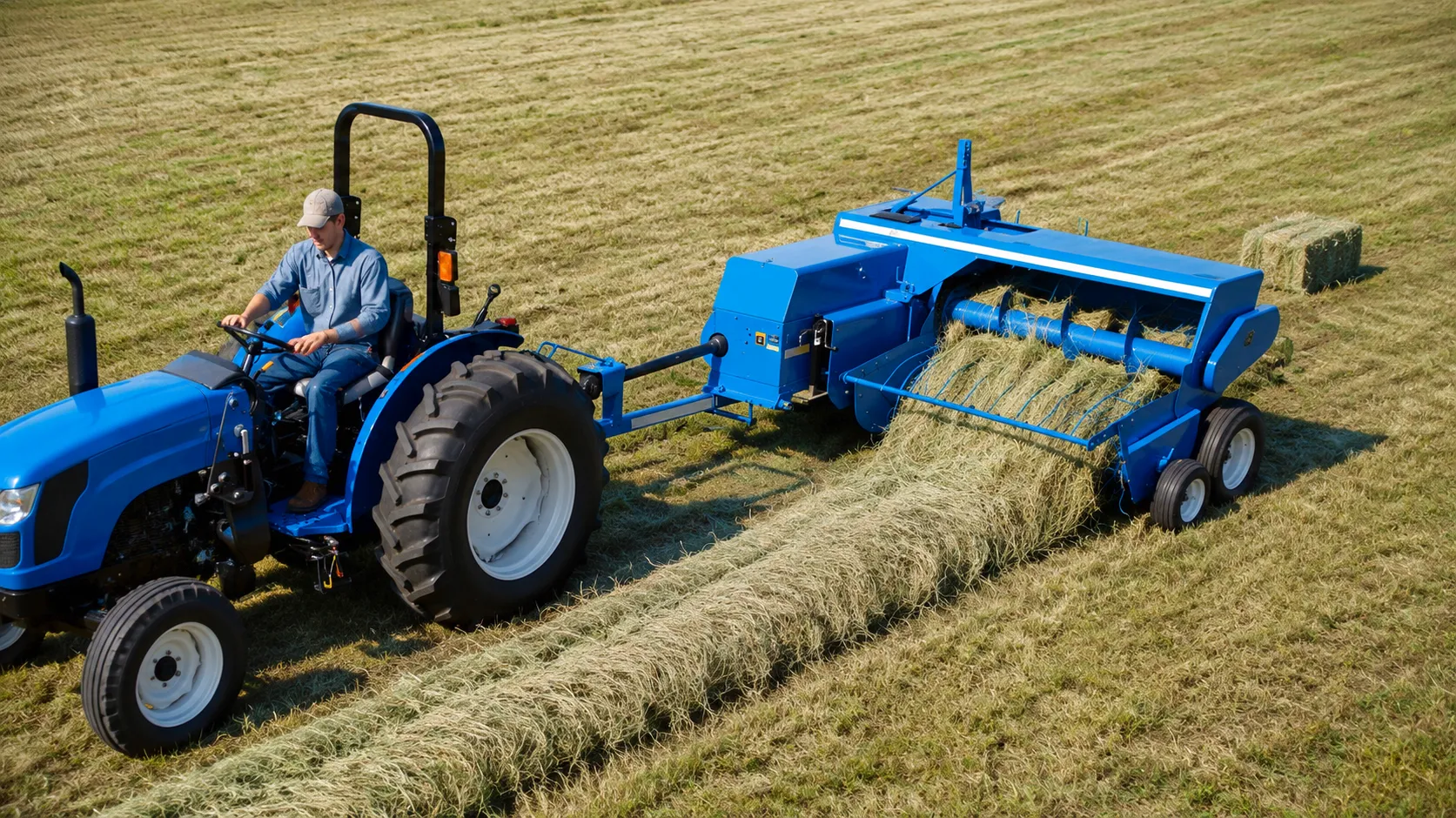
Hay and haylage production across the upland grazing regions of the Yorkshire Dales, North Pennines and the Lake District relies heavily on square baling for suckler cow and sheep enterprises that demand a feed product compatible with simple rack or gantry feeding systems. Large square bales produced by machines with working widths up to 1,200 mm offer the right ratio of intake volume to handling effort for these farms, where manual and mechanical handling systems are often older and conservatively engineered. The square format allows safe stacking in traditional stone field barns under low roof pitches where round bales simply cannot be stored without mechanical assistance. Farms supplying premium hay to equestrian customers across the UK’s riding centres demand bale consistency that only an electronically controlled square baler can reliably deliver: the horse industry will pay a significant price premium for bales that pack cleanly into hay stores with minimal wastage.
Beyond agricultural settings, heavy-duty square baler designs engineered with reinforced feed systems and high-torque plunger drives are deployed at paper recycling depots, packaging operations and natural fibre processing plants throughout the UK industrial heartlands — from the distribution parks around Sheffield and Birmingham to the textile recovery facilities in the West Yorkshire mill towns. These applications demand machines with peak plunger forces significantly above agricultural specification, often with custom chamber widths to match the bale dimensions specified by the end commodity market. Twine is replaced in many industrial applications by steel wire tying, requiring purpose-built knotters rated for wire rather than sisal. Throughput rates at fixed-plant waste processing sites can demand round-the-clock operation, making the fatigue life of the crankshaft, plunger guides and knotter mechanism the governing economic factor in machine selection.
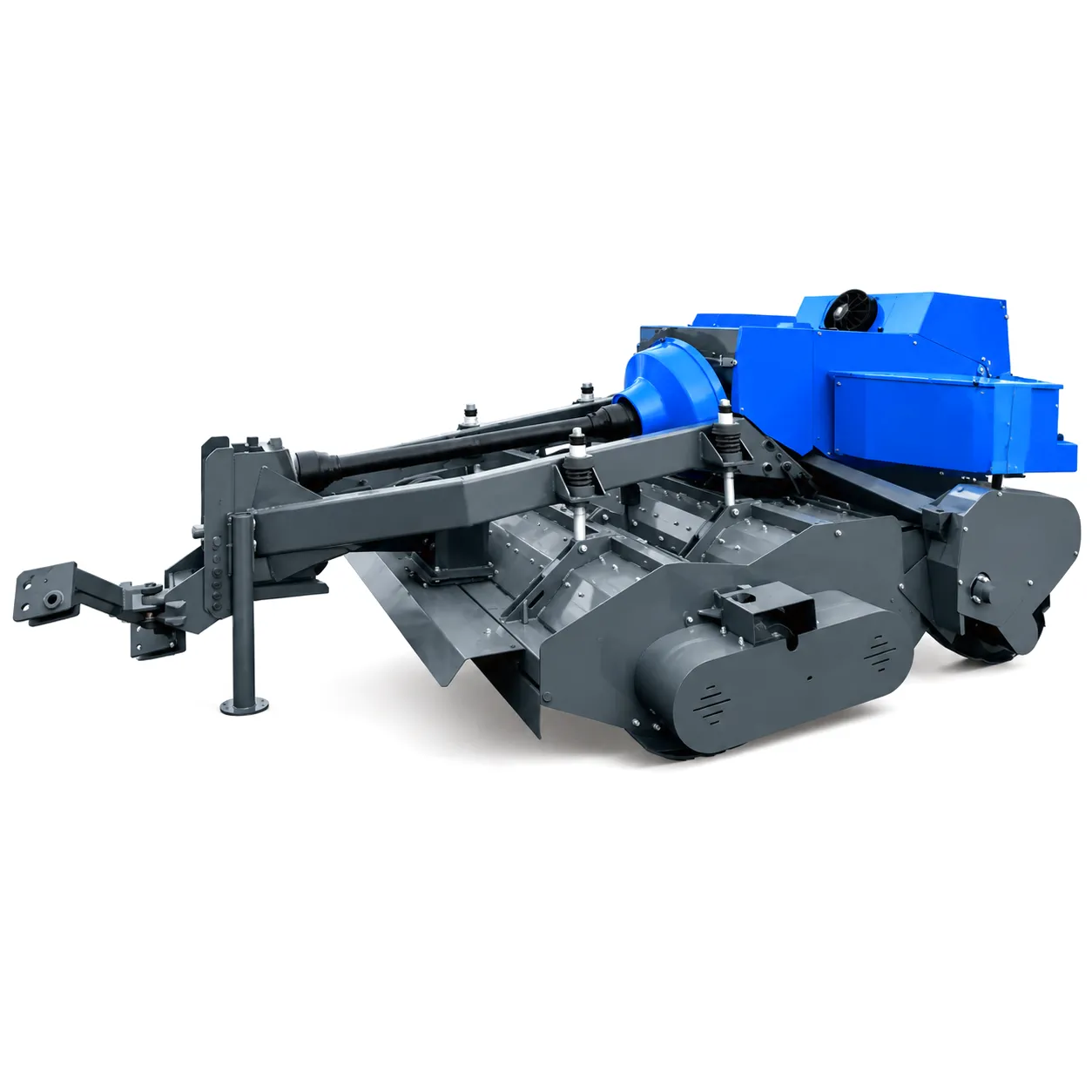
Ever Power Square Baler Product Range
Ever Power: Manufacturing Capability & Customisation Services
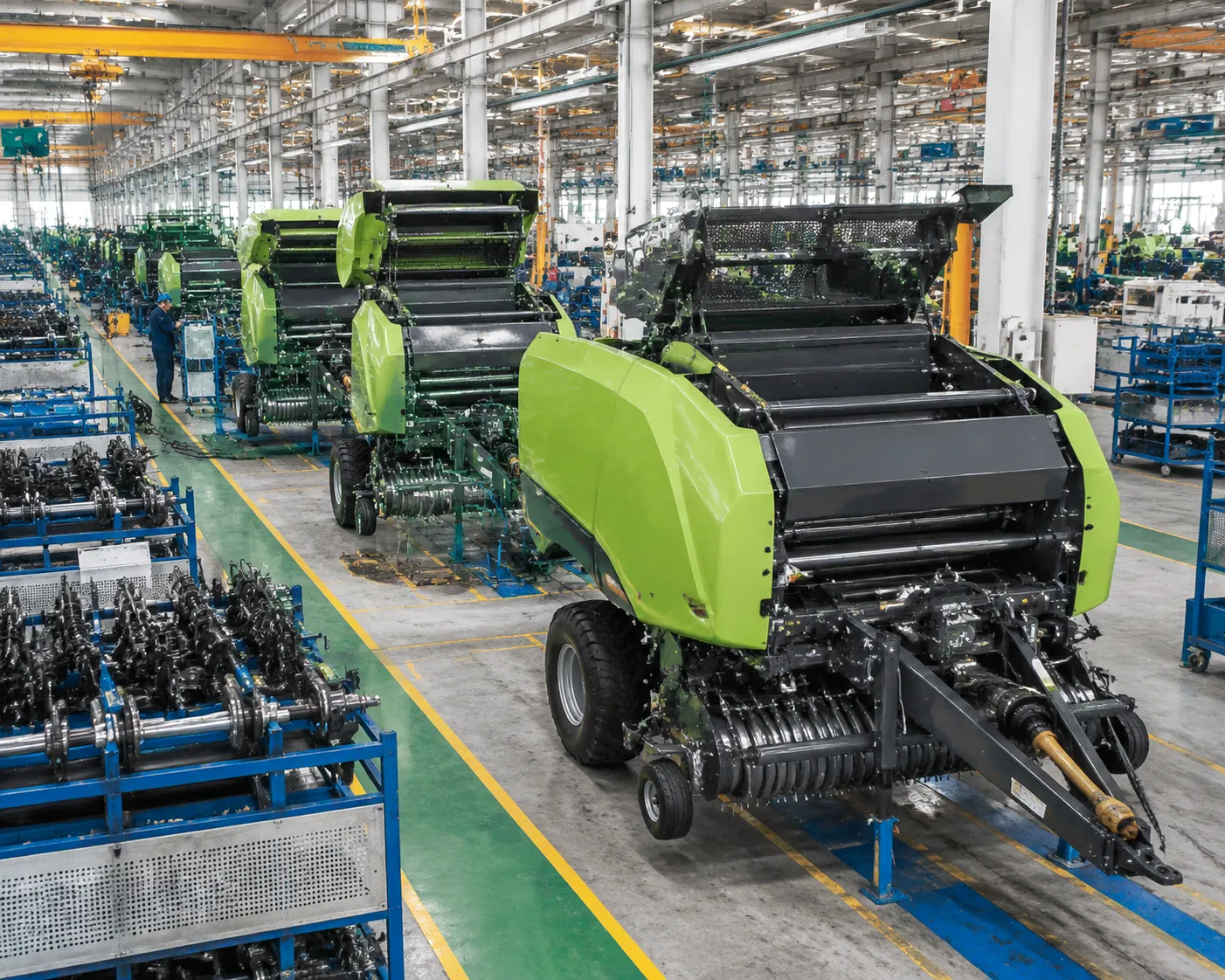
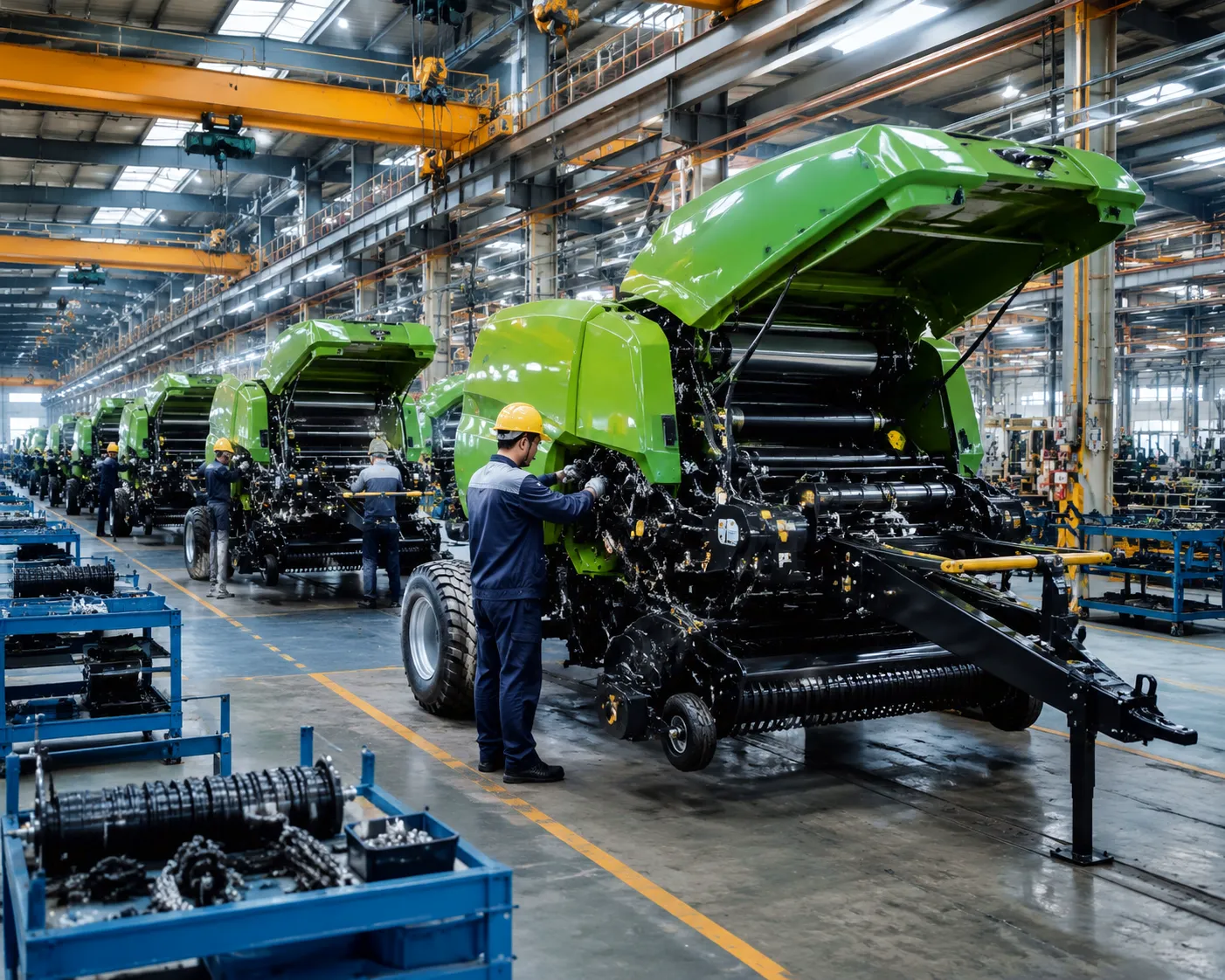
Ever Power operates a dedicated agricultural and industrial machinery manufacturing facility equipped with laser cutting centres, robotic MIG welding stations, CNC machining cells and a fully enclosed shot-blast and liquid paint facility capable of applying a four-stage corrosion protection system to meet the demands of UK coastal and upland farming environments. Our engineering team works from initial brief through to production-ready CAD package, meaning that bespoke chamber dimensions, non-standard pickup configurations and specialist tie systems are not catalogue exceptions — they are a routine part of our order pipeline.
Customisation capability at Ever Power covers chamber cross-section (width and height), bale length sensor range, knotter configuration (twine or wire), shredding mechanism presence and specification, PTO input speed, wheel and axle configuration for heavy-ground operation, and colour and branding for private-label supply. Our supply chain for high-alloy structural steel, precision forgings and sealed bearing assemblies is managed across certified ISO 9001 suppliers, with batch traceability from raw material heat number through to finished machine delivery documentation. UK importers and agricultural machinery distributors can source stock configurations from warehouse inventory or commission bespoke variants with a standard lead time of 45–75 days from confirmed order. Spare parts packages, operator training materials and service documentation in English are available as standard.
Customer Success Story: Yorkshire Biomass Contract, Doncaster
Greenfield Agricultural Services, a specialist agricultural contracting business based in Doncaster, South Yorkshire, was awarded a three-year supply contract to deliver Miscanthus bales to a biomass combined heat and power plant operating near Selby in 2023. The contract specified a minimum delivery volume of 4,800 large square bales per season at a maximum moisture content of 18% and within a defined bale weight range of 320–380 kg per bale. The Greenfield team had previously operated older machines with single-chamber plunger systems and experienced persistent density variation — their outgoing machines could swing from 280 kg to 420 kg per bale in the same field, causing rejection events at the plant’s automated in-feed weigh bridge.
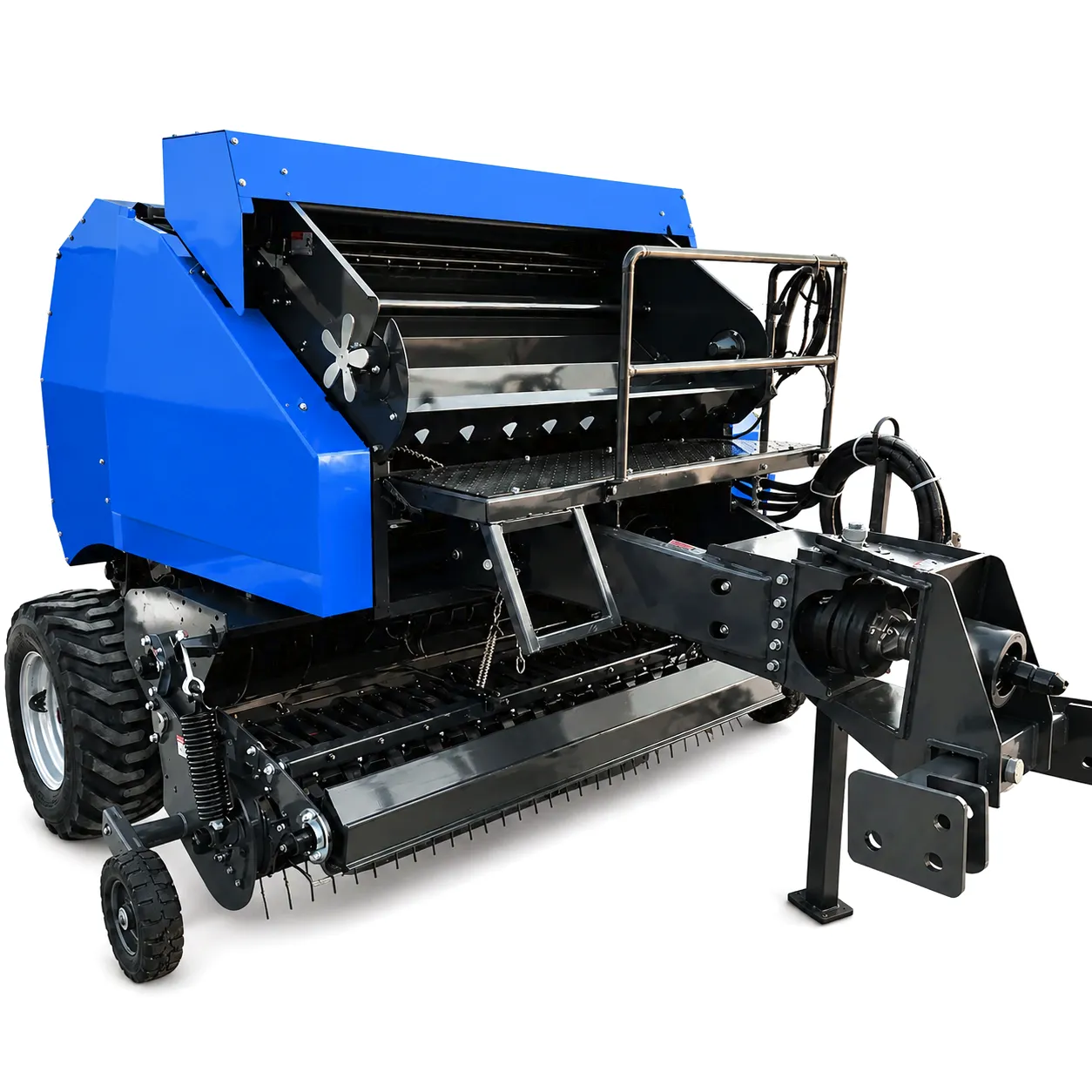
Working with Ever Power’s export team, Greenfield specified two units of the 9YFS-2.2 Double-Chamber Square Baler, customised with heavy-duty Miscanthus cutting rotors, extended pick-up width to 2,200 mm matched to the plantation’s harvest swath, and wire-tie knotters to meet the power station’s handling protocol. Ever Power delivered both machines to Doncaster within 68 days of order confirmation, accompanied by English-language workshop manuals, a field commissioning engineer for the first week of operation and a pre-stocked initial spares kit. During the first full Miscanthus harvest campaign, the machines produced 5,120 bales with a measured weight variation of ±18 kg — well inside the contract specification — and zero rejection events at the plant weigh bridge. Greenfield subsequently placed a further order for two additional units ahead of their contract renewal.
“The bale weight consistency from the double-chamber machines genuinely transformed our relationship with the plant operator. Before, we were spending half a day each week arguing over rejections. Now the weigh bridge data speaks for itself — we haven’t had a single out-of-spec load in two seasons.”
“Ever Power’s team was able to modify the cutting rotor spec to handle our lodged and tangled Miscanthus without any extra charge to the order. That kind of flexibility from a supplier is rare — most manufacturers just send you what’s in the catalogue. The commissioning support in the first week was exactly what we needed to get the knotters dialled in correctly.”
“The price was competitive against the European brands we quoted, and the delivery timeline was kept to the day. Spare parts arrived within five working days of our first order, which for a machine working in South Yorkshire isn’t always guaranteed from some overseas suppliers. We’ll be ordering again when we expand the contract in 2026.”
Domande frequenti
❓ How much does a commercial square baler cost from a UK supplier or international manufacturer, and what should I budget for a high-output machine in 2025?
Commercial square baler pricing varies widely depending on working width, chamber size, output rate and specification. Entry-level machines capable of 80–100 bales per hour typically start from £35,000–£55,000 when supplied by established international manufacturers. High-output double-chamber machines in the 180–220 bale per hour category, especially those with electronic density control and heavy-duty shredding mechanisms, range from £70,000 to £120,000 or above at UK importer pricing. Custom-specification machines sourced directly from manufacturers such as Ever Power offer better price-to-capability ratios, and a get-a-quote enquiry to [email protected] will produce a specific ex-works price within 48 hours.
❓ What tractor power do I need to run a large square baler efficiently on a Lincolnshire arable farm?
As a practical planning figure, allow for a minimum continuous PTO output of at least 120% of the baler’s rated power requirement. Standard large square balers in the 1.2 m x 0.9 m bale format typically require 80–120 kW of continuous PTO power. A 140–160 kW tractor gives the necessary headroom to maintain plunger speed in high-yield crop conditions without operating near the drivetrain’s torque limit. On Lincolnshire’s predominantly level ground, a 160 kW tractor is well-suited to a mid-range baler; double-chamber high-output machines may warrant 180–220 kW tractor pairing to avoid plunger slow-down events during peak crop-flow conditions.
❓ Where can I find a reliable square baler supplier in the UK who can also provide custom specifications for biomass energy crop operations?
UK agricultural machinery dealers covering established brands are the traditional channel, but for bespoke specifications — particularly for energy crops like Miscanthus or short-rotation willow — direct supply from specialist manufacturers offers better value and a more flexible design process. Ever Power supplies directly to UK buyers and contractors, with English documentation, commissioning support and a UK-compatible spare parts programme. Send your specification enquiry to [email protected] for a detailed technical and commercial response.
❓ What is the difference between a single-chamber and a double-chamber square baler, and which type should I choose for high-volume straw baling in Yorkshire?
A single-chamber baler compresses each crop charge with one plunger stroke sequence before the bale column advances. A double-chamber machine incorporates a secondary pre-compression stage that conditions the crop charge before it reaches the main compression plunger. The result is more uniform density distribution through the bale cross-section, lower peak plunger force spikes and the ability to run at higher forward speeds without density penalties. For large-volume straw baling in Yorkshire — particularly where you are supplying biomass plants or animal bedding merchants with tight bale-weight specifications — the double-chamber architecture delivers measurable advantages that justify the additional capital cost within one or two seasons of commercial operation.
❓ When is the best time of year to service and overhaul a square baler used for UK wheat straw baling operations, and what are the main components to inspect?
The optimum window for a full baler overhaul in a UK arable operation is the late autumn period — typically October through December — after harvest completion and before the machine enters storage. Primary inspection items include knotter bill hooks and knives for wear beyond 0.3 mm deviation from nominal, plunger guide strips and slide rails for scoring or step wear, pick-up tine condition and set, all sealed bearing assemblies for play or heat discolouration, and the crankshaft and connecting rod bearing clearances. Twine passages and tensioners should be cleaned and reset. Spring is an appropriate time for a secondary check before any secondary cutting or hay season operation begins in May or June.
❓ Who should I contact to get a price and delivery quote for a heavy-duty square baler that meets the biomass plant bale-weight specification common in the East Midlands?
For a detailed commercial and technical quotation from a manufacturer with customisation capability, contact Ever Power directly at [email protected]. Provide the target bale weight range, crop type, desired working width, annual throughput target and any specific delivery or documentation requirements for your market. Ever Power’s export team typically responds with a full specification sheet and indicative ex-works price within 48 working hours.
❓ Which square baler features are most important for agricultural contractors operating across multiple farm clients in the Yorkshire Wolds and East Riding?
For contractors moving between clients across the Yorkshire Wolds and East Riding, the most commercially significant features are: fast pick-up height adjustment with no tools required, electronic density control that can be reset between crop types in minutes, a centralised automatic lubrication system that eliminates the need for greasing multiple points when moving between farms, and a bale count and weight monitoring system that generates per-client output records. Robust road lighting and a compact transport width under 3.0 m for unrestricted road movement between sites are also important. Machines with a service-friendly design — wide-opening service doors, clearly labelled lubrication points and structured English workshop manuals — save significant time when operating away from a fixed workshop base.
Talk to the Ever Power team about working width, bale density, knotter specification and delivery lead times for UK supply. We respond to every enquiry within 48 hours.
Get a Quote — [email protected]