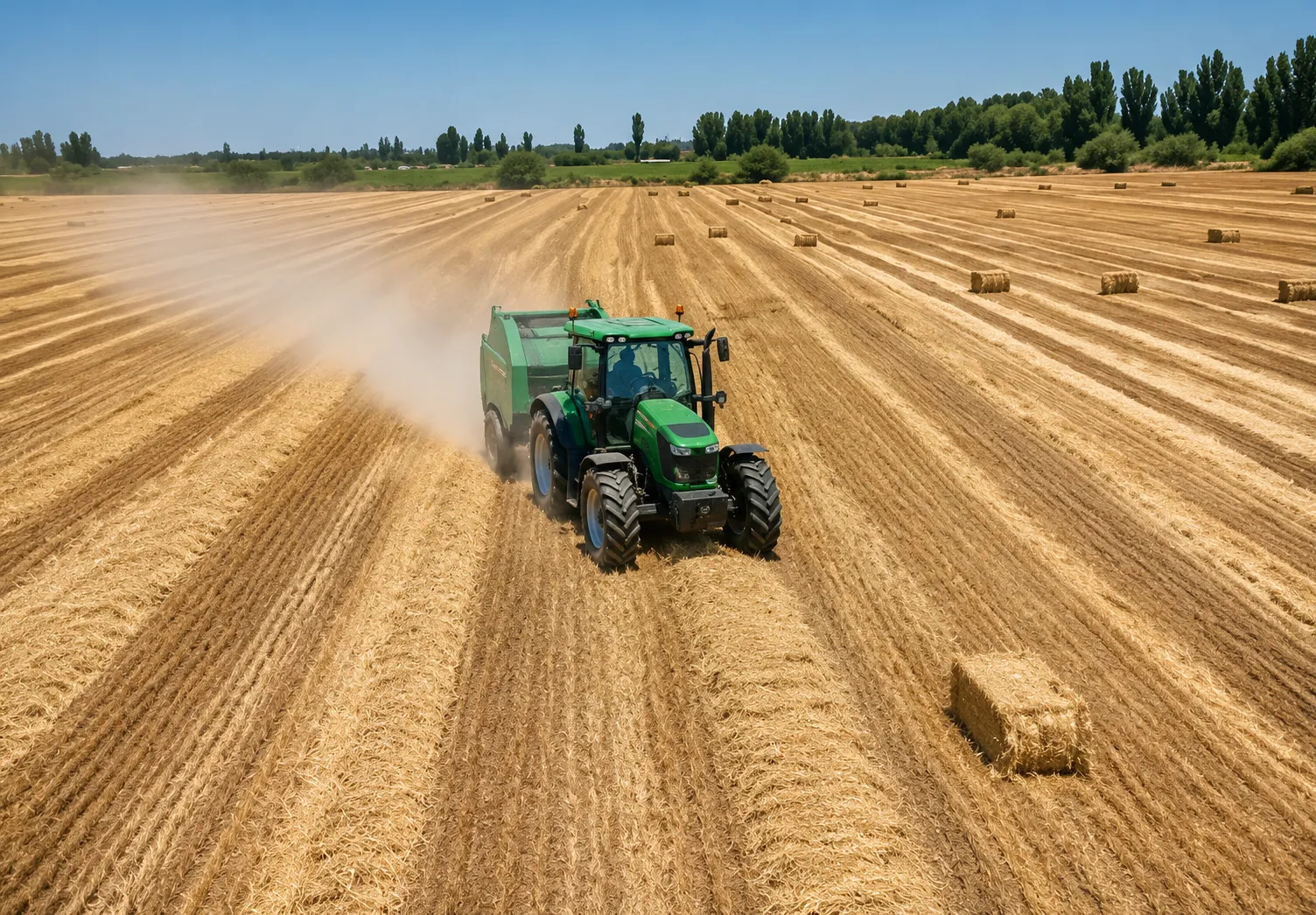
The square baler stands as one of the most consequential machines in modern agricultural and industrial operations. From the rolling fields of Yorkshire to the managed estates of East Anglia, and from silage operations in the Scottish Borders to straw-processing facilities in Lincolnshire, the square baler has reshaped how Britain handles bulk fibrous material at scale. Unlike its round counterpart, the square baler compresses crop residues, straw, hay, and other biomass into geometrically uniform rectangular blocks that stack cleanly, transport efficiently in standard lorry configurations, and store with minimal wasted space in agricultural buildings and warehouses. This precision geometry is not incidental — it is engineered into every mechanical cycle the machine performs, from crop pick-up through pre-compression chamber design to the final knot-tying sequence. For UK farm operations managing hundreds of acres under arable or mixed production, investing in the right square baler specification is a decision with direct implications for labour costs, haulage efficiency, and long-term machinery reliability.
Ready to specify a square baler for your UK operation? Our engineering team responds within 24 hours.
How a Square Baler Works: The Full Mechanical Cycle
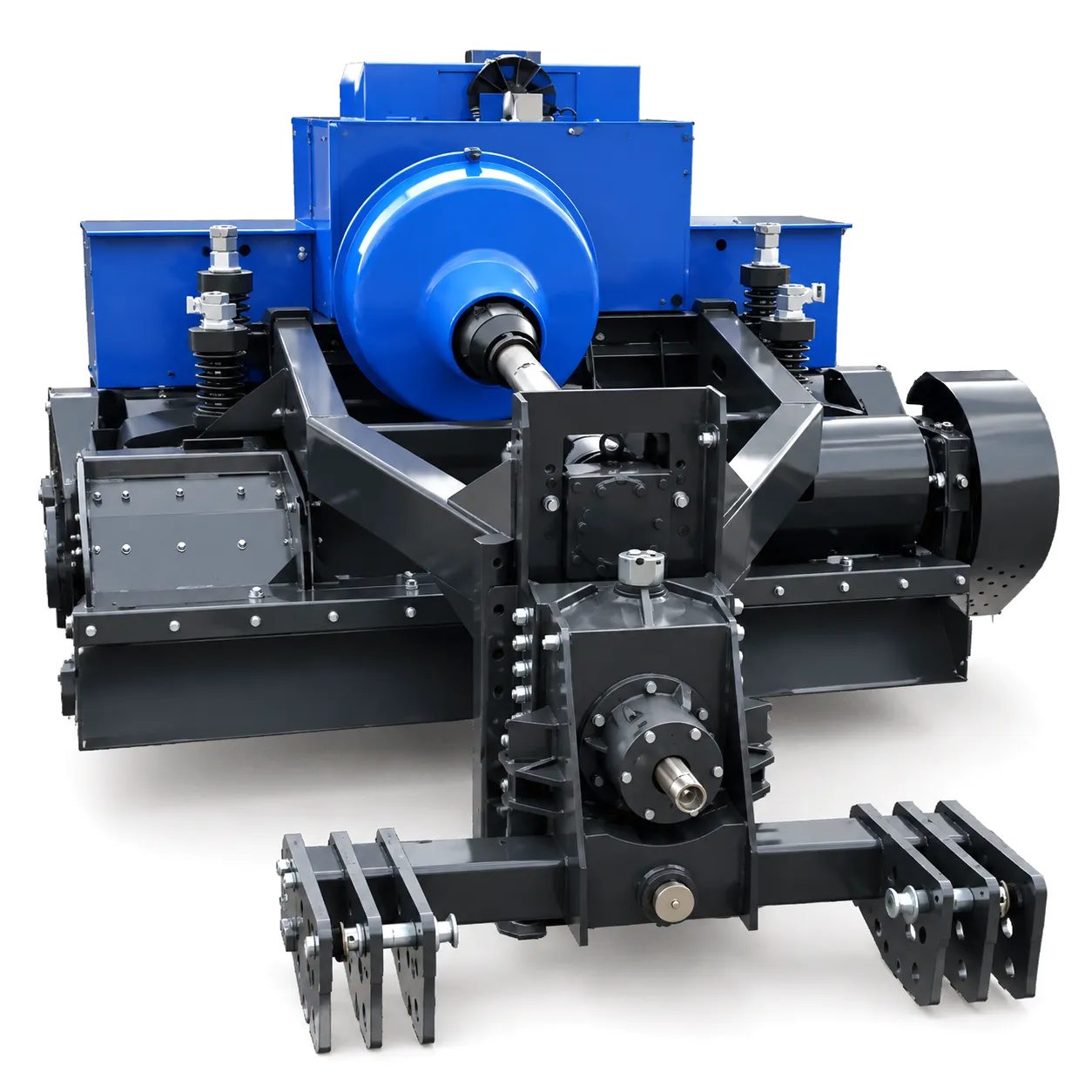
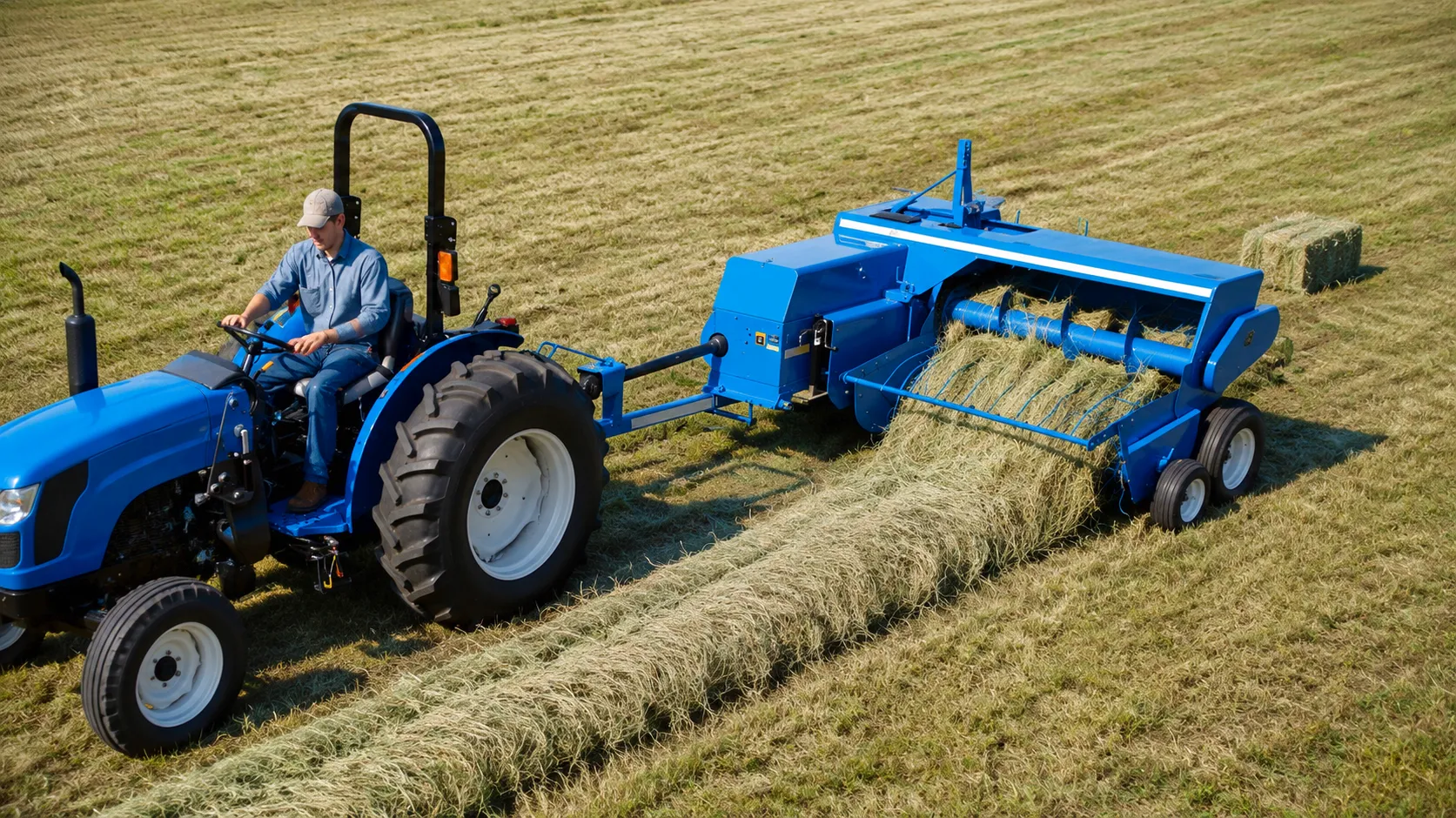
At the heart of every square baler lies a reciprocating plunger system that converts continuous rotational PTO power into a precisely timed compression stroke. The process begins at the pick-up reel — a tined drum rotating at high speed that lifts windrowed crop off the ground and feeds it rearward through an auger or cross-conveyor. The crop enters the pre-compression chamber, a shaped throat where material accumulates until a sensor or mechanical trip signals that a sufficient charge has built up. At this point, a feeding fork or stuffing mechanism pushes the accumulated charge sideways into the main baling chamber, directly in front of the plunger face. The plunger, driven by a heavy flywheel-cranked mechanism, then advances and compresses the material against the previously formed bale, increasing density with each stroke. A bale length measurement wheel monitors the growing bale until it reaches the preset length, triggering the knotting cycle. Dual knotters — typically two or more per bale width — loop sisal or synthetic twine around the bale, tie a knot, and cut the twine in a coordinated mechanical sequence that must complete cleanly within one crank revolution. The finished bale is then ejected through the rear of the machine via a star-wheel or push-through mechanism, landing squarely on the ground or onto a bale chute. Throughout this cycle, the flywheel stores kinetic energy between compression strokes, smoothing the load on the PTO shaft and protecting the tractor’s drivetrain from shock loading. Modern high-capacity square balers complete this full cycle at rates exceeding 120 strokes per minute, producing throughputs that allow a well-matched tractor-baler combination to clear a substantial field within a single working shift.
Core Materials Used in Square Baler Manufacturing
The material specification of a square baler directly determines its service life, repairability in the field, and the density of bales it can reliably produce season after season. This is not an area where cutting corners is viable for any serious agricultural operation, and Ever Power’s manufacturing philosophy treats material selection as the non-negotiable foundation of every machine that leaves the Hangzhou facility. The plunger, which absorbs thousands of high-impact compression cycles per hour, is manufactured from high-strength S355 structural steel with precision-machined bearing surfaces, then heat-treated to achieve a surface hardness that resists the abrasive particulate carried in crop streams. The baling chamber side-plates are fabricated from wear-resistant Hardox 400 or equivalent high-chromium steel plate, because the frictional contact between compressed straw or hay and the chamber walls is relentless and will destroy softer materials within a single season under heavy use. Pick-up tines — the first contact point with the crop — are formed from spring-tempered manganese steel, allowing them to deflect over soil clods and stones without permanent deformation, yet return instantly to their operating geometry. The main frame, which must withstand bending, torsional, and shock loads simultaneously during field operation over rough terrain, is a welded assembly of RHS (rectangular hollow section) and solid-bar steel, stress-relieved after welding to prevent residual stress cracking. Knotter components, arguably the most mechanically complex and failure-critical assemblies in the machine, are manufactured from case-hardened alloy steel with surface treatments including phosphating or nickel plating to resist the corrosion inherent in outdoor agricultural environments across the UK’s wet climate. Drive chains and sprockets are rated to ISO 606 standards using hardened link plates and precision-ground teeth, while the flywheel itself is a high-mass grey cast iron or ductile iron component balanced to fine tolerances to minimise vibration transmitted to the tractor hitch.
Technical & Performance Specification Table
| 매개변수 | 9YF-2200 Series | 9YFS-2.2 Double-Chamber | Industry Range |
|---|---|---|---|
| Bale Chamber Width | 2,200 / 1,900 / 1,700 mm | 2,200 mm (dual) | 700–2,400 mm |
| Bale Height x Width (cross-section) | 460 x 360 mm | 460 x 360 mm | 360×460 – 900×1,200 mm |
| Bale Length Range | 600–1,350 mm (adjustable) | 600–1,350 mm (adjustable) | 500–2,500 mm |
| Plunger Strokes per Minute | Up to 105 spm | Up to 110 spm | 60–130 spm |
| PTO Speed Requirement | 540 rpm | 540 / 1,000 rpm | 540 / 1,000 rpm |
| Required Tractor Power | 55–75 kW (75–100 hp) | 75–110 kW (100–148 hp) | 40–250 kW |
| Throughput Capacity | Up to 50 t/h (straw) | Up to 65 t/h (straw) | 15–100 t/h |
| Bale Weight (straw) | 15–35 kg | 18–40 kg | 12–550 kg |
| Twine Type Compatibility | Sisal / polypropylene | Sisal / polypropylene | Sisal / PP / net |
| Pick-up Working Width | 2,000 / 1,750 / 1,600 mm | 2,000mm | 1,200–2,600 mm |
| Frame Material | S355 welded RHS steel | S355 welded RHS steel | S355 / S690 / AR steel |
| Surface Treatment | Shot-blast + 2-coat epoxy | Shot-blast + 2-coat epoxy | Epoxy / polyurethane |
Industrial & Agricultural Application Scenarios in the UK
The range of material streams that a modern square baler can process efficiently has expanded dramatically beyond traditional cereal straw, making these machines pivotal assets across numerous sectors of UK industry and agriculture. In the arable heartlands of Lincolnshire and Cambridgeshire, wheat straw baling remains the most significant volume application: following combine harvest, square balers follow immediately, clearing fields of residue at rates that allow rapid fieldwork turnround ahead of autumn drilling. The bales produced are sized precisely for collection by purpose-built telehandlers and stacked in ventilated field barns that meet Red Tractor scheme storage requirements for sale to equine and livestock markets. In Yorkshire’s dairy regions, chopped hay and lucerne baling for winter feed uses high-density square baler settings to produce bales suitable for block-stacker feeding systems common in modern cubicle buildings. Moving to England’s industrial heartland, Birmingham and the West Midlands host significant quantities of industrial hemp processing, where square balers configured with shredding mechanisms produce tightly compressed fibre bales for supply to insulation board manufacturers — a growing sector under the UK government’s decarbonisation agenda. In Sheffield and South Yorkshire, recovered textile waste and nonwoven fibre scrap from technical textile manufacturers is increasingly baled using heavy-duty industrial square balers adapted from agricultural platforms, producing dense rectangular packs that integrate directly with container-loading operations for export. Scotland’s miscanthus and short-rotation coppice energy crop sector relies on large-format square balers to produce dimensionally consistent bales that slot directly into the automated fuel-handling systems at dedicated biomass power stations in the Central Belt. The equine sector across the Home Counties and Cheshire plain demands quality small-square hay bales that precisely match the weight and density limits manageable manually by stable staff — a market niche that rewards tight baler calibration and reliable knotter performance over raw throughput capacity. Across all these scenarios, the square baler’s core attribute — a predictable, stackable rectangular product — is what unlocks downstream handling efficiency.
Our Square Baler Product Range
Two flagship models engineered for demanding UK and international operations:
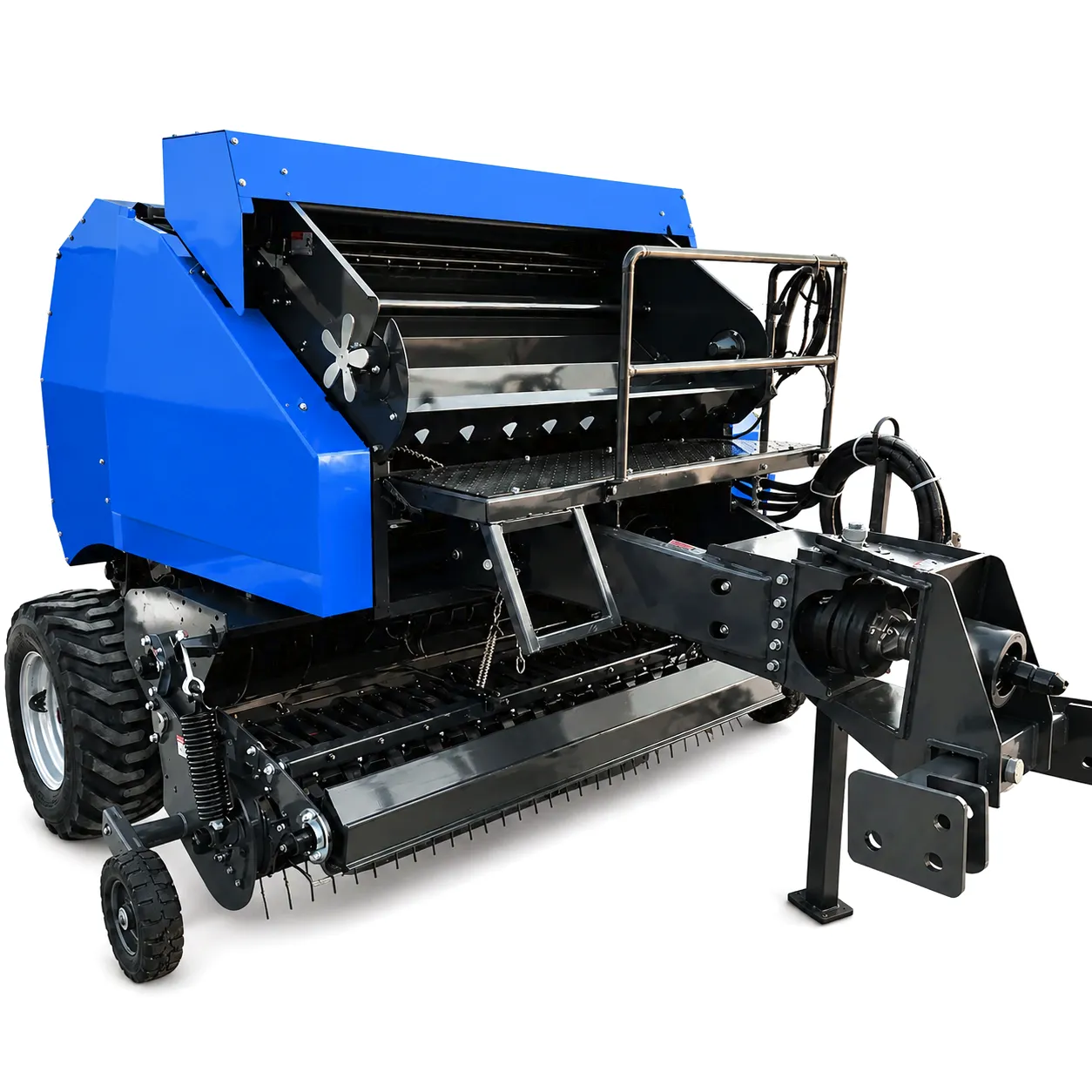
The 9YF series is Ever Power’s workhorse large-format square baler, available in three working widths to match a wide range of tractor power classes and field conditions. Its robust S355 welded frame, precision-balanced flywheel, and case-hardened knotter assembly deliver consistent bale geometry across cereal straw, hay, and biomass energy crops. The adjustable bale length mechanism and three-knotter configuration make it well-suited to both arable farm operations and commercial bale contracting across the UK.
The 9YFS-2.2 introduces dual-chamber compression technology alongside an integrated crop shredding mechanism, producing consistently denser and more uniform bales even from difficult or variable-moisture material streams such as miscanthus, hemp fibre, or maize stover. The twin-chamber design pre-compresses each charge before it enters the primary baling chamber, reducing peak plunger force requirements and increasing knotter reliability at high throughput rates — making this model the preferred choice for commercial biomass supply chain operators across England and Scotland.
Ever Power: Custom Manufacturing & Factory Capability
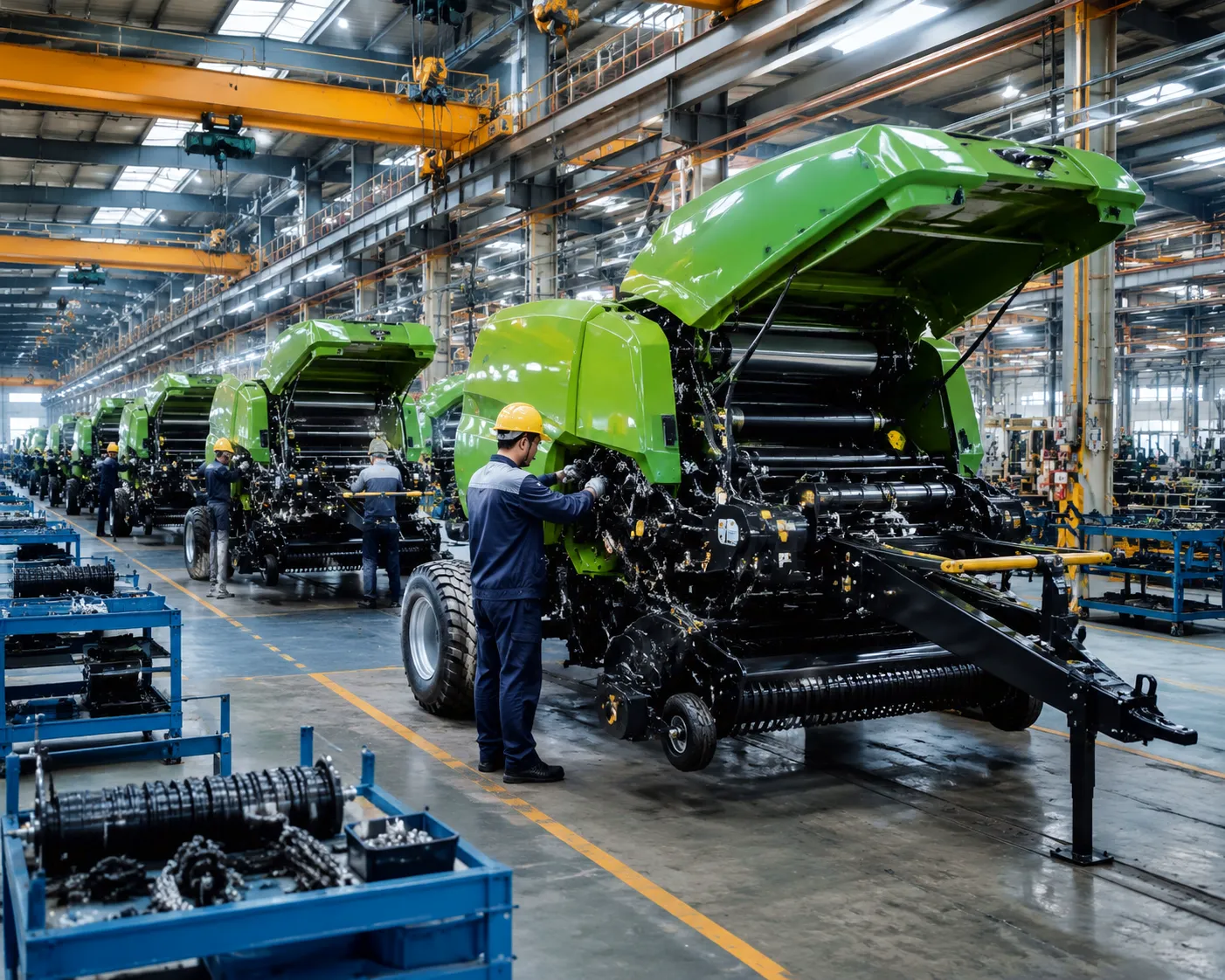
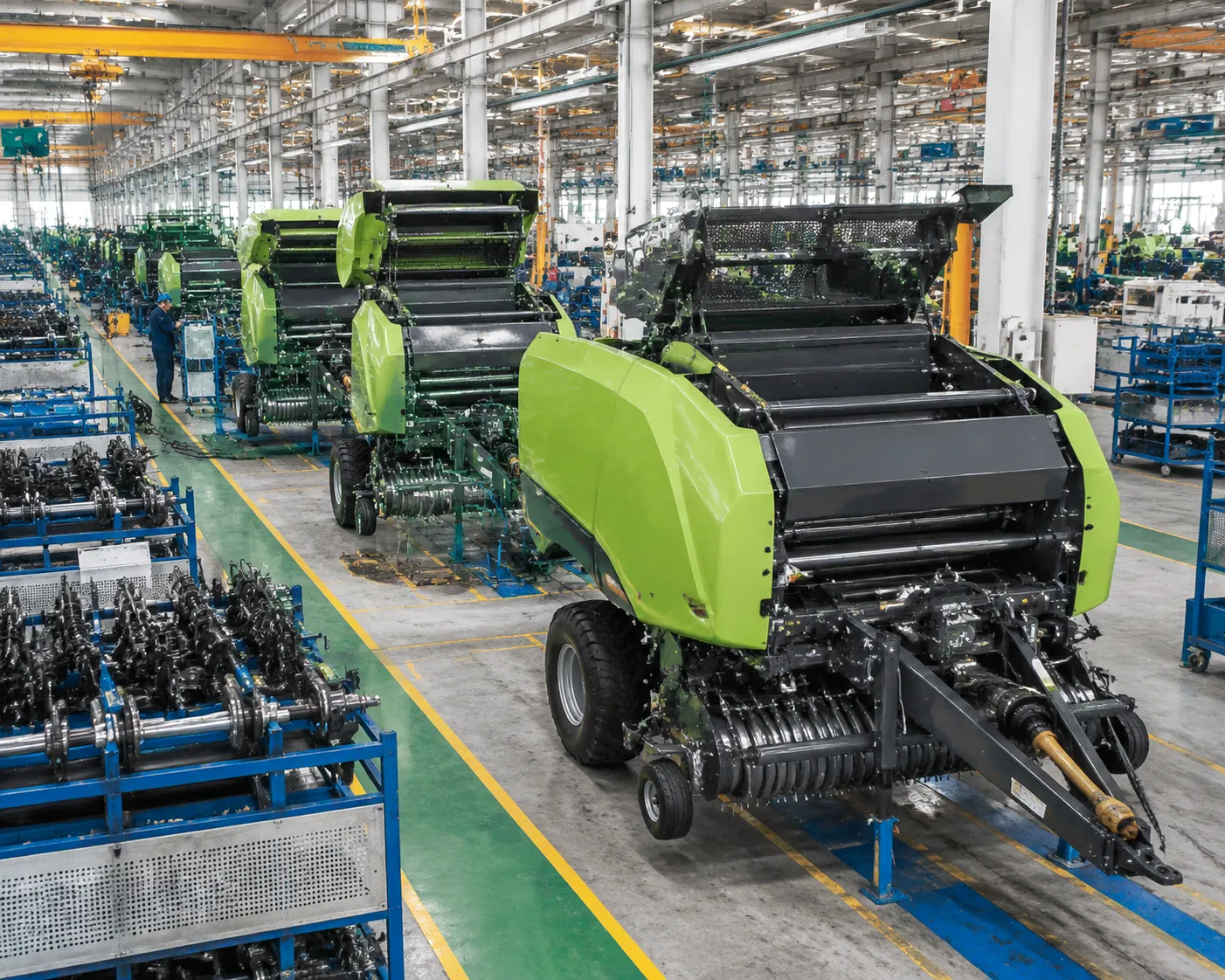
Ever Power operates a dedicated large-scale agricultural machinery manufacturing facility producing square balers to exacting dimensional and metallurgical standards that meet the practical demands of UK farm and industrial operations. The facility is equipped with CNC plasma and laser cutting centres, robotic MIG welding stations, precision CNC machining for all rotating and reciprocating components, and a controlled shot-blast and two-coat epoxy paint line that delivers the corrosion resistance essential for machinery operating in Britain’s wet Atlantic climate. Every major weldment undergoes visual and dimensional inspection at assembly, and knotter assemblies are function-tested on dedicated test rigs before installation in completed machines.
Where Ever Power genuinely distinguishes itself from commodity baler suppliers is in the depth and flexibility of its customisation capability. The engineering team works directly with UK importers, contractors, and farm businesses to specify machines around actual operational requirements rather than catalogue defaults. Bale chamber dimensions can be modified to produce bales precisely matched to a customer’s existing stacking infrastructure or lorry loading system. Pick-up width, tine pitch, and reel speed can be optimised for specific crop types — fine hay, coarse miscanthus, or hemp fibre each have distinct pick-up requirements that a one-size-fits-all design compromises. Knotting head configuration can be specified as twin, triple, or quad arrangement to suit bale width and required twine density. Drive train ratios can be matched to tractor PTO speed for operators running 1,000 rpm systems. Surface treatment options extend to hot-dip galvanising for particularly corrosive environments. Through an established supply chain of certified steel mills and precision component manufacturers, Ever Power maintains delivery lead times that are competitive with European alternatives while offering a build quality that is verifiable by inspection before shipment.
Discuss your custom square baler specification with Ever Power’s engineering team today.
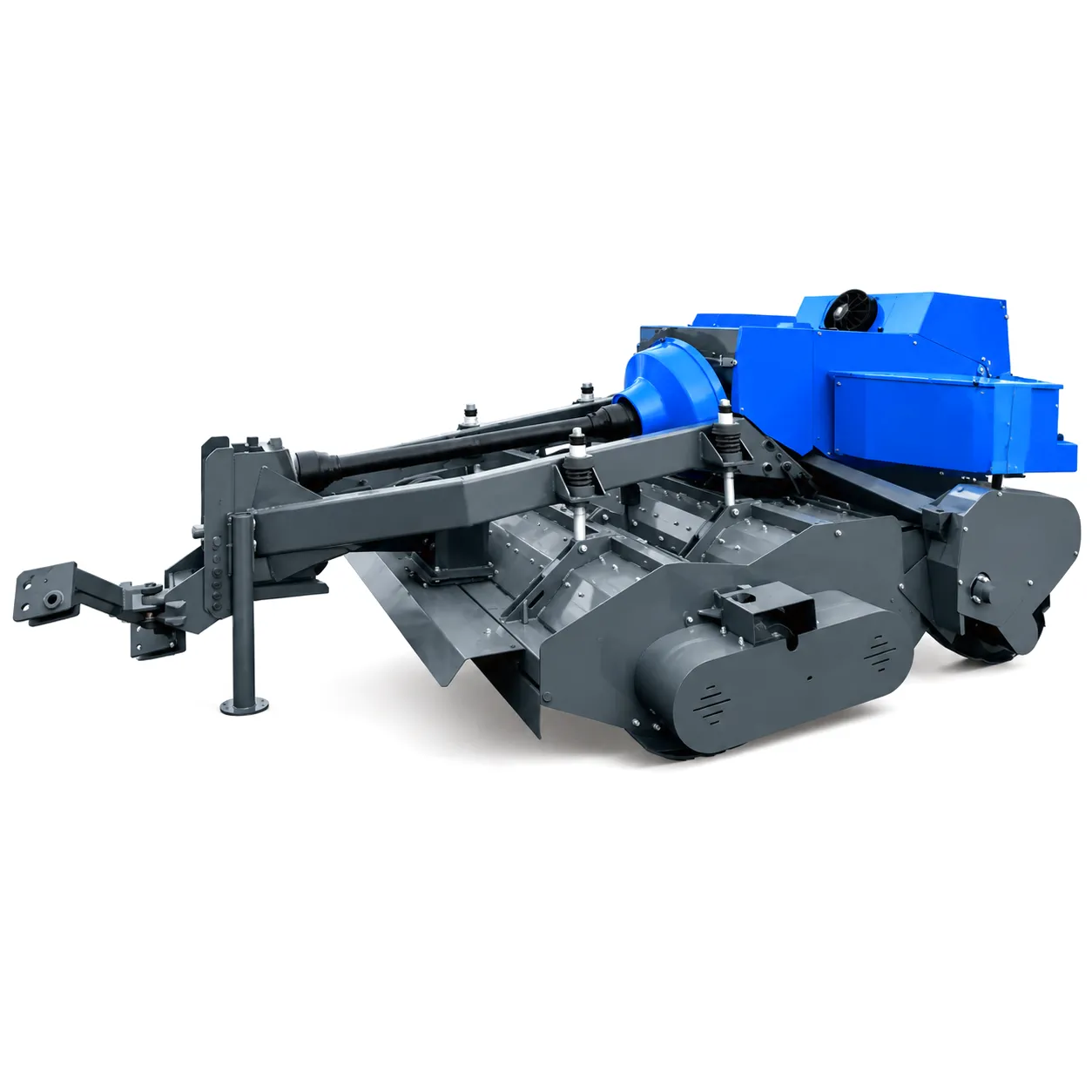
Dual Crushing Mechanism: Maximising Density on Difficult Materials
The dual crushing mechanism integrated into the 9YFS-2.2 operates by fracturing the cellular structure of coarse crop stems — particularly important for materials like miscanthus, hemp, and maize stover where the waxy outer cuticle would otherwise prevent adequate bonding between bale layers. Two counter-rotating crushing rollers positioned immediately upstream of the pre-compression chamber force material through a controlled nip gap, breaking stem rigidity and increasing surface area available for inter-fibre bonding during compression. The result is a measurably denser bale with better structural integrity under handling and storage loads, achieved with reduced plunger peak force and lower knotter stress. For UK biomass operators and industrial baling applications, this translates directly into fewer rejected bales at the delivery point and reduced mechanical downtime from knotter failures caused by density overload.
Marshfield Arable Services, Lincolnshire — Biomass Baling for Energy Supply Chain
Marshfield Arable Services, a family-run contracting and crop storage business operating across approximately 3,400 hectares of Lincolnshire fenland, had been managing a mixed income stream that included both cereal straw baling for bedding markets and an expanding miscanthus supply contract with a biomass electricity plant near Sleaford. The business had been running two ageing European-branded large square balers that were reaching end-of-economic life simultaneously, and the contracting director, James Thornton, needed a replacement pair that could handle both high-speed straw baling in peak harvest conditions and the denser, more abrasive miscanthus material without the regular knotter failures that had been the primary downtime source with the previous machines.
After reviewing several alternatives at a LAMMA exhibition and conducting a detailed technical review of Ever Power’s specification documents with the UK sales agent, Marshfield opted for two units of the Ever Power 9YF-2200 Square Baler, one configured with the standard twin-knotter arrangement for straw and one specified with the triple-knotter and extended pick-up for miscanthus. Ever Power’s engineering team worked directly with the Marshfield specification, adjusting the baling chamber pressure plate pre-load and drive chain gear ratios to match the particular miscanthus cutting length delivered by the harvesting contractor. Both machines were delivered and commissioned ahead of the miscanthus harvest window in spring, and Thornton’s team completed the first full miscanthus baling campaign without a single knotter failure — a marked contrast to previous seasons.
During the subsequent cereal straw season, the first machine achieved a seasonal throughput of approximately 4,200 tonnes across wheat, barley, and oilseed rape straw, running consistently at 105 strokes per minute behind a 130 hp Fendt. The bales produced met the Sleaford plant’s weight and density targets without exception, allowing Marshfield to bill at the contracted rate per tonne with no quality deductions — a financial outcome that fully justified the capital investment within the first eighteen months of operation.
“The knotter reliability on the miscanthus campaign was something we genuinely hadn’t experienced before. Ever Power’s willingness to adjust the chamber pre-load settings to our specific material was what made the difference — that’s not something a catalogue supplier does.”
“We hit 4,200 tonnes through the straw machine in the first season without a single unplanned stop. The bale weights were consistent enough that the biomass plant’s weighbridge was showing almost no variance — that consistency is where the money is in supply chain baling.”
“The materials specification on these machines is noticeably above what we saw on our previous European-branded equipment. The Hardox chamber wear plates in particular — after two full seasons there is no visible wear progression. Our previous machines needed chamber liner replacement every three years. At that maintenance cost difference, the Ever Power price point makes very strong economic sense.”
Round Balers for Mixed Operations
For UK farm operations managing mixed grassland and arable enterprises, Ever Power also manufactures a complementary range of round balers suited to silage wrapping and hay production where the cylindrical format is preferred. Choosing between square and round baling is fundamentally a downstream handling and storage question: square bales optimise transport density and automated processing integration, while round bales better suit silage-wrapped forage stored on concrete pads for winter feeding systems. Ever Power’s engineering team can advise on the right format or a combination of both formats for operations that span multiple crop and market types. Contact our team at [email protected] to discuss your requirements.
Frequently Asked Questions: Square Balers in UK Operations
Specify Your Square Baler with Ever Power’s Engineering Team
From standard configurations to fully bespoke chamber dimensions and drive train specifications — our technical team works with UK importers, farm businesses, and contracting operations to deliver the right machine for the application. Reach us at [email protected] for a detailed technical quotation.