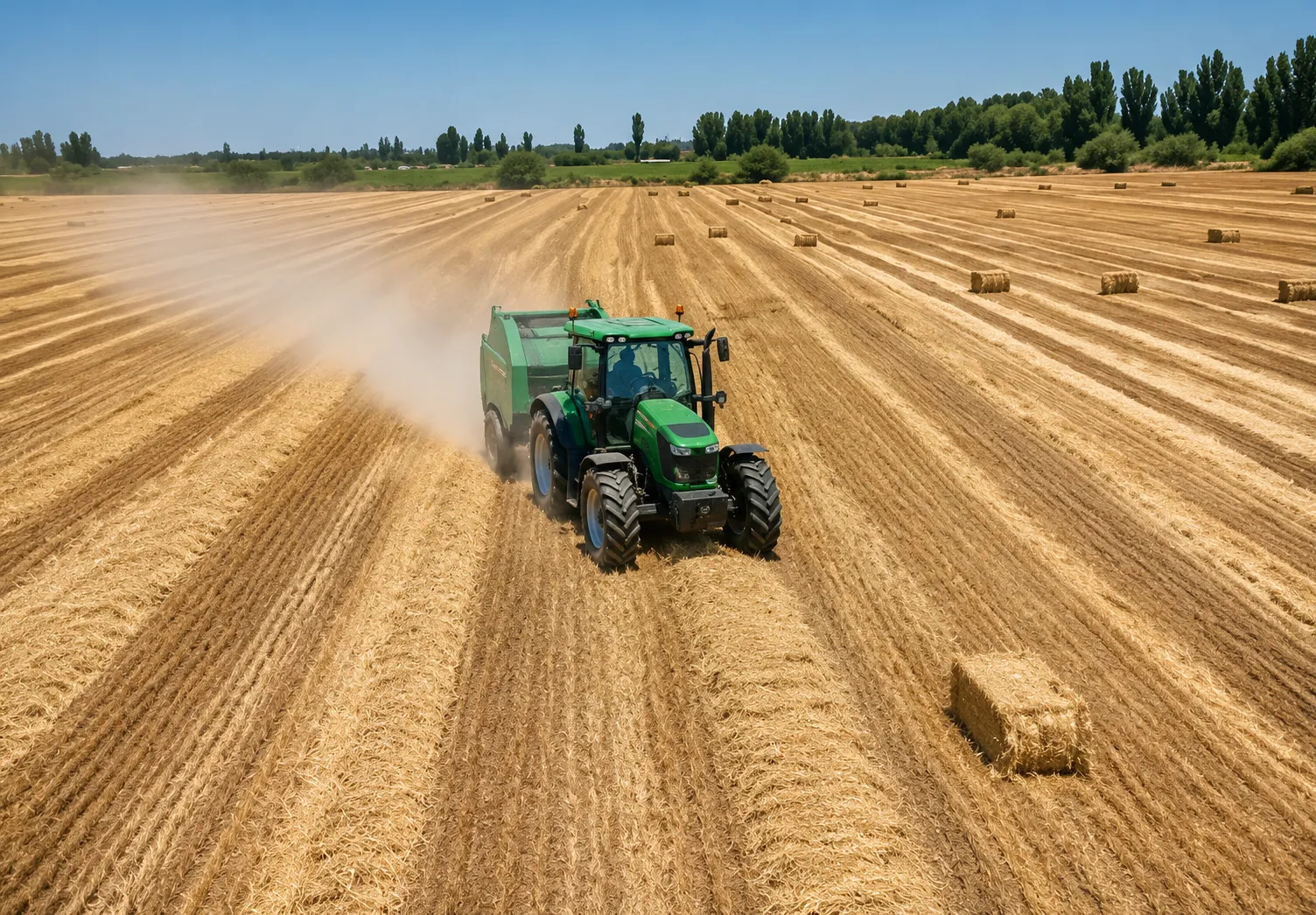
The square baler stands as one of the most mechanically demanding machines in modern agricultural contracting. From the rolling hills of Yorkshire to the arable plains of East Anglia and the livestock farms of mid-Wales, these machines operate in conditions that test every weld, every bearing, and every drive component to its absolute limit. Unlike a round baler, a square — or rectangular — baler must deliver consistent, precisely dimensioned bales that can be stacked, transported, and sold as a commodity product. That requirement alone places extraordinary demands on the engineering of the plunger mechanism, the tying system, the feeder auger, and the chassis frame. Agricultural contractors in regions such as the East Midlands and across Lincolnshire’s cereal belt have increasingly sought machines capable of sustained high-density output that aligns with the throughput demands of modern large-scale arable farming.
A contemporary square baler is not simply a compression device. It integrates real-time density sensing, electronically controlled knotting mechanisms, pre-compression chambers, and heavy-duty gearbox assemblies, all of which must function in synchronisation at harvesting speeds that can exceed 15 km/h across long field runs. The stakes are high: a single knotting failure on a 1,000-acre arable contract in Cambridgeshire or Nottinghamshire translates directly into lost revenue and costly downtime. Understanding the mechanics behind these machines — their internal geometry, material choices, and performance thresholds — is therefore not an academic exercise. It is a procurement and operational necessity for anyone serious about the UK hay, straw, and biomass harvesting industry.
How a Square Baler Works: The Full Mechanical Cycle
Working Principle · Compression Mechanics · Tying System
Crop Pick-Up & Pre-Compression
The process begins when the floating pick-up reel, fitted with spring-tine fingers, lifts windrow material from the ground surface and draws it into the intake channel. In modern machines, a feed auger or rotor then moves this loose crop material into a pre-compression chamber — a critical innovation that prevents fluffing and ensures a uniform charge is delivered to the main bale chamber with each plunger stroke. Without effective pre-compression, density variation along the bale length becomes unmanageable, resulting in bales that are too light at one end to meet the weight thresholds demanded by UK straw merchants and biomass buyers who require consistent product for automated handling lines.
Plunger Compression Stroke
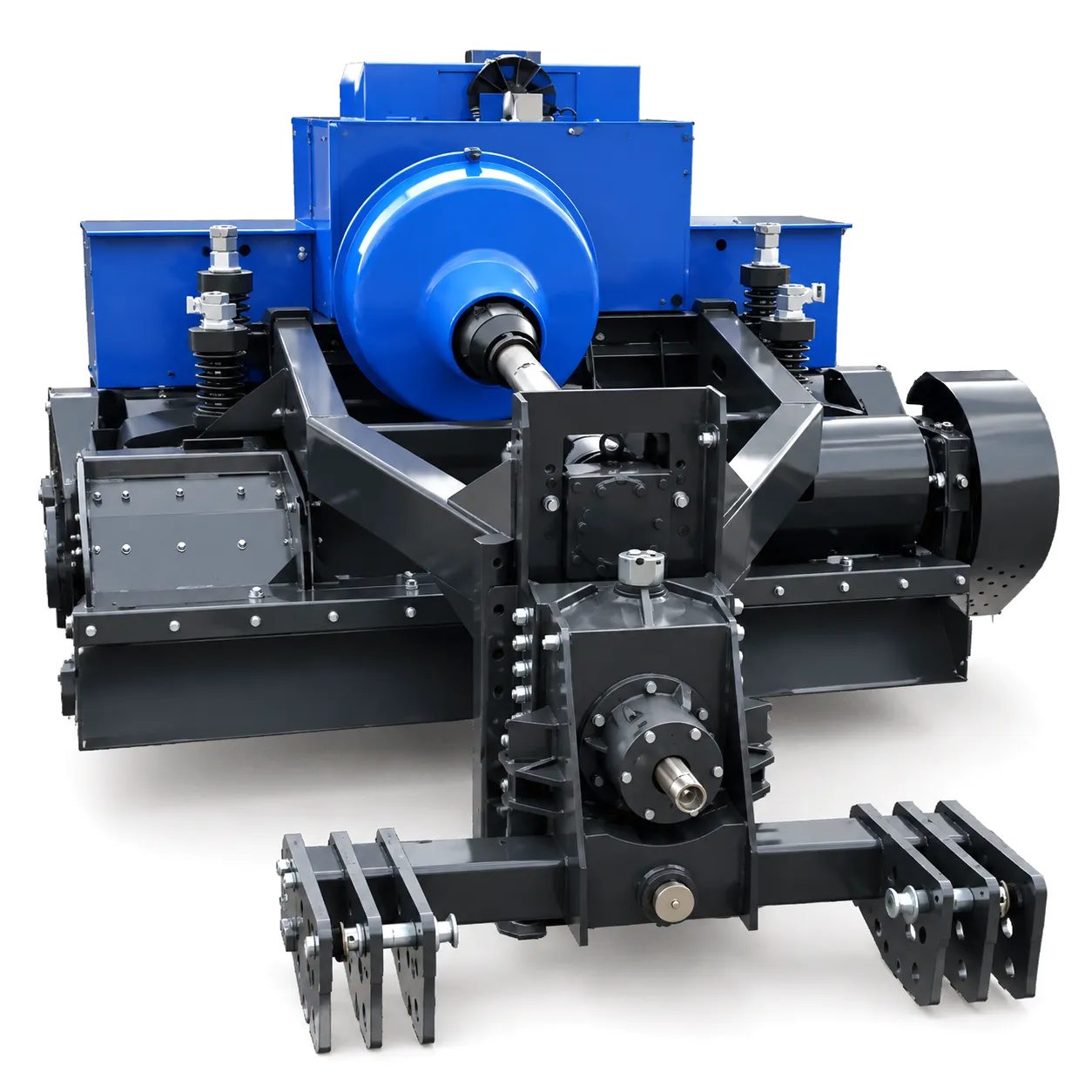
The reciprocating plunger is the heart of every square baler. Driven through a large-diameter crankshaft assembly — typically connected to the tractor PTO via a 1,000 rpm input shaft — the plunger advances into the bale chamber and compresses the accumulated crop material against the resistance of the previous bale. Compression force is controlled by adjustable side walls or by electronically monitored hydraulic tension on the chamber walls. A density-measurement sensor monitors resistance on each stroke, and the controller adjusts tying initiation accordingly. Plunger stroke rates on high-performance machines typically range from 36 to 56 strokes per minute, and the mechanical design must absorb the shock loads generated during each compression event without introducing resonant fatigue into the main frame or gearbox.
Knotting & Ejection
Once the bale reaches its target length — measured by a metering star wheel in mechanical contact with the bale surface — the tying cycle is initiated. Needle assemblies sweep twine through the bale channel and present it to the knotter bill hooks. Each bill hook rotates, wraps the twine around itself, captures the loop, and casts off the finished knot in a sequence that must complete within a single plunger retraction window, typically under 200 milliseconds. Modern double-knotter systems on large square balers handle up to six twine strands simultaneously, and any fault in timing or twine tension will produce either a missed knot or a misformed loop that fails under bale ejection forces. The completed bale is then pushed out of the rear of the bale chamber, ready for collection by a bale accumulator or stacking wagon.
Core Materials: What a Square Baler Is Built From
Structural Steel · Wear Surfaces · Drive Components
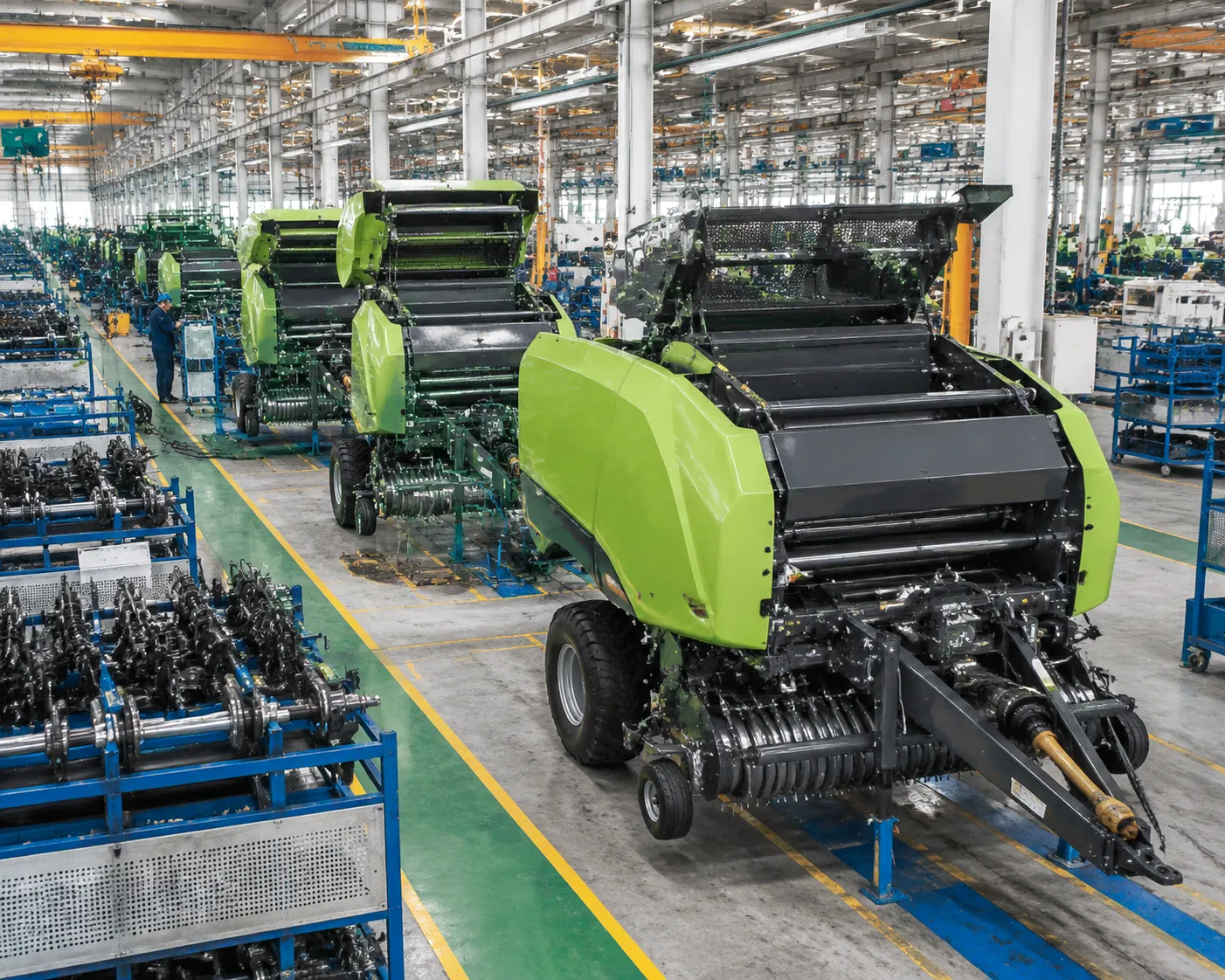
The main chassis of a well-engineered square baler is fabricated from high-tensile structural steel, with yield strengths in the 350–690 MPa range depending on the beam section in question. The primary chassis rails on larger machines — those handling bale sizes of 120 × 90 cm and above — are typically made from S355 or equivalent grade steel, laser-cut for dimensional precision before robotic MIG welding. Weld quality is paramount: fatigue cracking at weld toes is the most common cause of catastrophic chassis failure in machines that have accumulated high annual bale counts, a particular risk for UK contracting operations that may be running 40,000 or more bales per season across multi-farm contracts in regions like Herefordshire or Oxfordshire.
The bale chamber walls and plunger face, which absorb the full compression loading on every stroke, are typically lined with through-hardened wear plate steel — Hardox 400 or equivalent — running at 380–450 HBW surface hardness. This material is chosen for its combination of hardness (resisting abrasive wear from crop material containing soil particles and grit) and toughness (absorbing impact without brittle fracture). In machines operating in sandy or chalky soils common to areas of East Anglia and the South Downs, wear rates on unprotected mild steel liner plates can be extremely high, making the upgrade to genuine abrasion-resistant steel not merely a premium option but an operational necessity for cost-effective machine life.
The knotter assembly components — bill hooks, twine discs, knife blades, and strippers — are manufactured from case-hardened alloy steel, typically with a core of 20CrMo or 42CrMo4, carburised to a case depth of 0.8–1.5 mm and surface-hardened to 58–64 HRC. This combination provides the extremely precise geometry required for reliable knot formation while maintaining sufficient core toughness to resist the shock loads encountered when the knotter mechanism encounters a foreign object such as a piece of field stone or a wire fragment inadvertently collected with the windrow. Drive chains and sprockets are manufactured from precision roller chain components with surface-hardened pins and bushings, selected for fatigue life at the specific pitch forces generated by each drive line.
Core Technical Advantages of Modern Square Balers
Performance · Reliability · Efficiency
High-Density Bale Consistency
Electronic density management systems maintain bale weight within tight tolerances across varying crop conditions — a commercial necessity for UK straw merchants who contract on a per-bale weight basis. Consistent bale dimensions also enable efficient automated handling by grapple loaders and bale stacking robots increasingly used in large UK farm stores.
Reduced Maintenance Downtime
Modern square balers incorporate centralised greasing points, self-adjusting knotter tension systems, and long-life sealed bearings that significantly reduce daily maintenance time compared to older designs. During peak harvest windows in the UK — which may span only a matter of days before weather conditions deteriorate — any reduction in downtime directly translates into contracted area coverage and income protection.
Versatile Crop Compatibility
A well-designed square baler handles wheat straw, barley straw, oat straw, hay, haylage, hemp, miscanthus, and short-rotation coppice material with adjustments to the pick-up reel speed, pre-compression rotor configuration, and twine tension settings. This versatility is commercially valuable across the diversity of UK farm types — from the livestock hay operations of Cumbria and Devon to the energy crop producers of East Yorkshire.
Transport & Storage Efficiency
The rectangular geometry of a square bale allows near-perfect packing density in agricultural trailers, HGV curtainsider loads, and barn storage. Compared with a round bale, a square bale can achieve up to 30–40% better volumetric load efficiency on a flatbed trailer, which matters significantly when calculating delivery costs to biomass power stations or bedding distributors across the UK logistics network from Peterborough to Bristol.
Extended Service Life
Machines constructed with abrasion-resistant wear plate liners, hardened knotter components, and hot-dip galvanised or polyurethane-coated structural members demonstrate substantially extended working lives compared with budget alternatives. For UK agricultural contractors who amortise capital equipment over 5–8 year finance periods, the total cost of ownership difference between a well-built and a poorly-built square baler is often measured in tens of thousands of pounds.
ISOBUS & Precision Agriculture Compatibility
ISOBUS-compatible square balers integrate with tractor terminal systems to provide bale counting, density logging, knotter status monitoring, and GPS-tagged bale placement mapping. This data output is increasingly required by farm management systems used by UK arable businesses operating under Environmental Land Management scheme reporting requirements, where accurate yield and residue management records form part of subsidy compliance documentation.
Square Baler Technical & Performance Specifications
Reference data for procurement, compatibility assessment, and field planning
| 매개변수 | Small Square Baler | Medium Large Square Baler | High-Density Large Square Baler |
|---|---|---|---|
| Bale Cross-Section | 36 × 46 cm | 80 × 90 cm | 120 × 90 cm |
| Bale Length Range | 40–130 cm (adjustable) | 60–250 cm (adjustable) | 90–270 cm (adjustable) |
| Bale Weight (Straw) | 8–25 kg | 150–300 kg | 350–600+ kg |
| 플런저 스트로크 속도 | 60–100 strokes/min | 40–65 strokes/min | 36–56 strokes/min |
| PTO Input Speed | 540 rpm | 1,000 rpm | 1,000 rpm |
| Required Tractor Power | 40–80 hp | 140–200 hp | 220–320+ hp |
| Peak Plunger Force | 40–80 kN | 150–250 kN | 350–650 kN |
| Twine Count | 2 | 4–5 | 5–6 |
| 픽업 폭 | 1.4–1.8 m | 1.9–2.2 m | 2.0–2.4 m |
| Chassis Material | S275 / S355 structural steel | S355 high-tensile steel | S355 / Hardox 400 composite |
| Knotter Surface Hardness | 56–60 HRC | 58–62 HRC | 60–64 HRC |
| Productivity (Straw, t/hr) | 3–8 t/hr | 20–40 t/hr | 40–80+ t/hr |
| Operating Weight | 800–1,400 kg | 5,000–7,500 kg | 8,000–14,000 kg |
Industrial & Agricultural Application Scenarios
Where square balers deliver measurable value across UK sectors
Application Scenario 1: Large-Scale Cereal Straw Harvesting — East Anglia & Lincolnshire Arable Belts
Large-format square balers operating across the flat, open landscapes of Cambridgeshire, Lincolnshire, and Norfolk represent the most demanding single deployment environment for these machines. Field runs of 800 metres or more are common, working speeds can reach 14 km/h on well-conditioned straw, and the daily bale count on a contract machine can exceed 1,200 units. Arable contracting businesses operating in this environment need square balers capable of sustaining continuous high-density output with near-zero knotter failure rates across the full harvest window. The commercial value of straw in this region — sold variously as livestock bedding, mushroom substrate, and biomass fuel — means that bale quality and weight consistency are monitored closely by buyers.
Application Scenario 2: Livestock Hay & Haylage Production — Cumbria, Devon & Welsh Borders
In the mixed livestock farming regions of Cumbria, Devon, Herefordshire, and across much of Wales, the square baler remains the preferred tool for producing winter fodder hay and haylage bales. Small and medium large square balers are particularly valued here because their output bale dimensions suit the manual and mechanical handling capabilities of smaller farm enterprises that may not run dedicated telescopic handlers. The ability to handle high-moisture haylage — typically at 25–45% dry matter — requires careful plunger pressure management to avoid bale deformation and twine failure, and balers with electronic density control perform markedly better in this application than mechanical density adjustment systems.
Application Scenario 3: Biomass Energy Crop Baling — Miscanthus & SRC Willow in the East Midlands
The expansion of energy crop production — particularly miscanthus and short-rotation coppice willow — in the East Midlands and Yorkshire creates a specific and demanding application environment for large square balers. These materials present much higher bulk density, tougher stem structure, and more variable moisture content than cereal straw, placing extreme demands on the pick-up reel, pre-compression rotor, and plunger drive train. Machines specified for this application must be equipped with high-torque PTO shear bolt protection, rotor wear-plate inserts, and reinforced twine tensioner springs. The output square bales are delivered by road to biomass power facilities in the Midlands and Northern England, where consistent bale weight and dimensions are contractually specified.
Application Scenario 4: Industrial Hemp Baling — Yorkshire & East Riding Specialist Producers
Industrial hemp production for fibre, animal bedding, and construction material (hempcrete) is a growing sector across Yorkshire and the East Riding, and the square baler is the standard harvesting tool for this crop. Hemp presents unique challenges: the long, tough fibres can wrap around pick-up reel tines and feeder auger shafts if cutting or deflector features are not fitted, and bale density management is critical because hemp fibre compresses and springs back differently from cereal straw. Square balers configured for hemp typically require anti-wrap knife segments on the rotor, reinforced pick-up tine mounts, and extended-length bale chambers to accommodate the lower density of hemp stems before compression.
Application Scenario 5: Equestrian Bedding Straw — Specialist Small Square Baling in Surrey, Berkshire & Cheshire
The UK equestrian industry — a substantial commercial sector particularly active in the Home Counties, Cheshire, and Yorkshire — maintains strong demand for small square bales of clean wheat or barley straw, typically in the 20–25 kg range with consistent bale shape for easy handling in stable environments. This niche market requires small square balers that can produce bales of precisely controlled weight and density — tight enough to stack twelve layers high without sagging, but not so dense that the straw is crushed and loses its absorbency. Producers supplying equestrian suppliers and feed merchants in this sector command a significant price premium over bulk straw buyers and have clear specifications that a well-tuned square baler must meet consistently.
Ever Power Featured Square Baler Products
Purpose-engineered for UK and international B2B agricultural markets
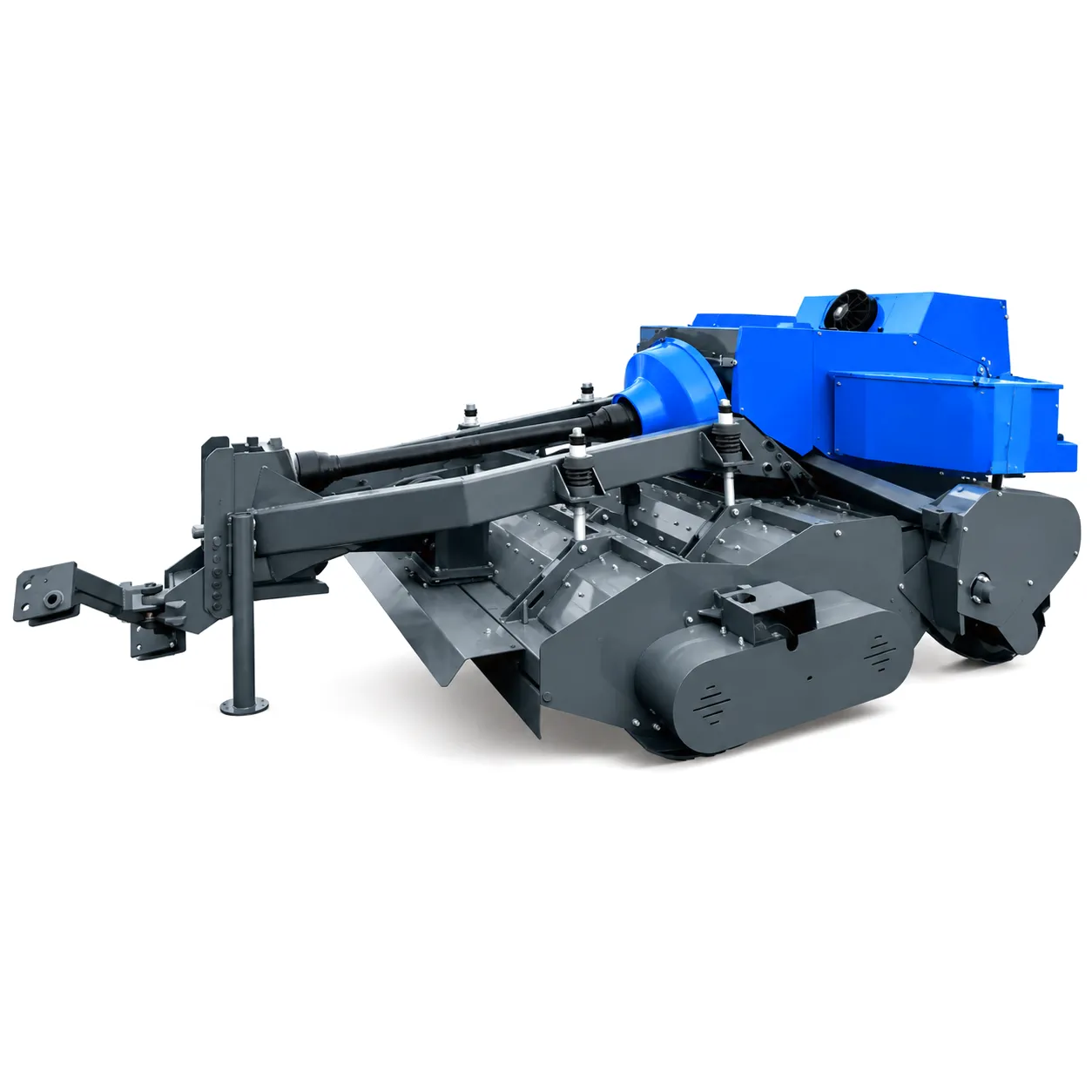
9YF-2200/1900/1700 사각 베일러
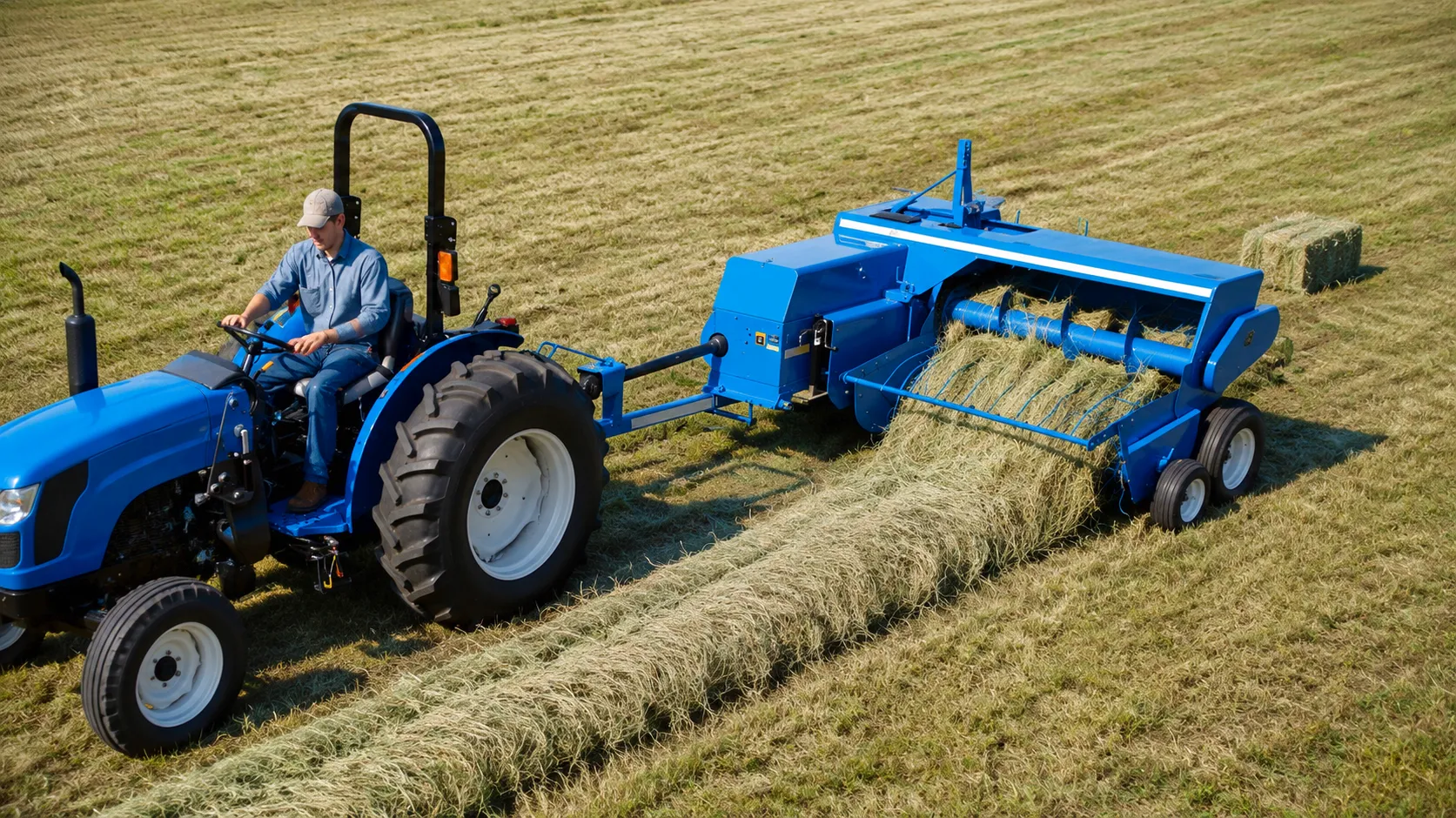
The Ever Power 9YF series covers three bale widths — 2,200 mm, 1,900 mm, and 1,700 mm — giving procurement teams the flexibility to match bale dimensions precisely to their downstream handling, transport, and storage infrastructure. The series is built around a heavy-duty crankshaft drive train, a pre-compression rotor with anti-wrap knife segments, and a dual-knotter system designed for sustained high-cycle reliability. These machines are well-suited to UK arable contracting operations requiring consistent, high-density output across long harvest days, and are configurable with ISOBUS connectivity for integration with modern tractor management systems.
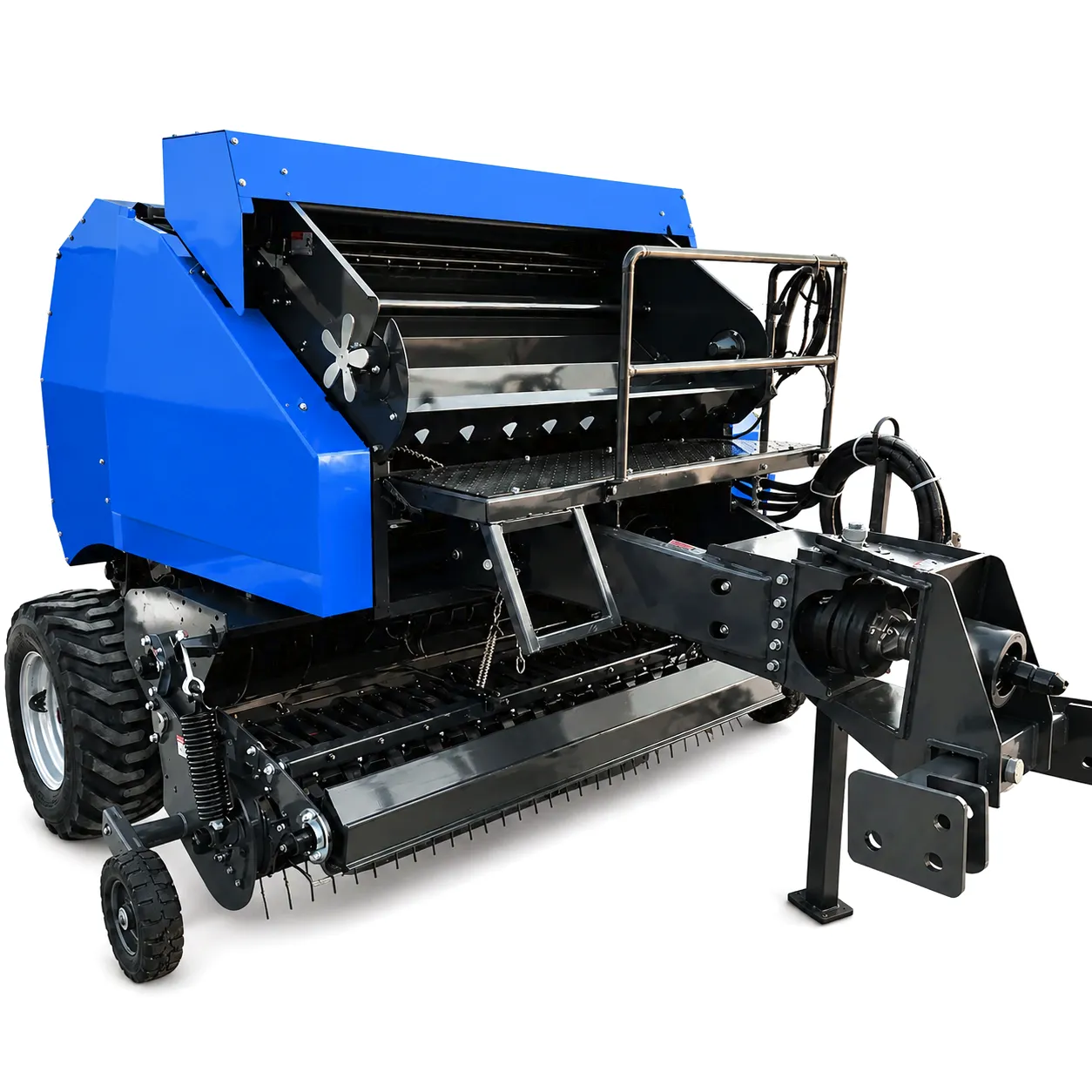
9YFS-2.2 이중 챔버 사각 베일러
The 9YFS-2.2 features a twin-chamber baling architecture that simultaneously produces two independently tied bales in a single pass, effectively doubling output per tractor hour compared with a conventional single-chamber configuration. The double-chamber design incorporates independent density sensing and knotter control for each chamber, ensuring that bale quality is maintained even when the crop flow across the pick-up width is uneven — a common condition in windrows that have been moved or conditioned multiple times. This machine is particularly suited to high-throughput UK straw and biomass contracting operations where tractor time cost is the primary limiting factor on seasonal profitability.
Ever Power: Manufacturing Excellence & Custom Engineering
Precision fabrication · End-to-end customisation · Supply chain reliability
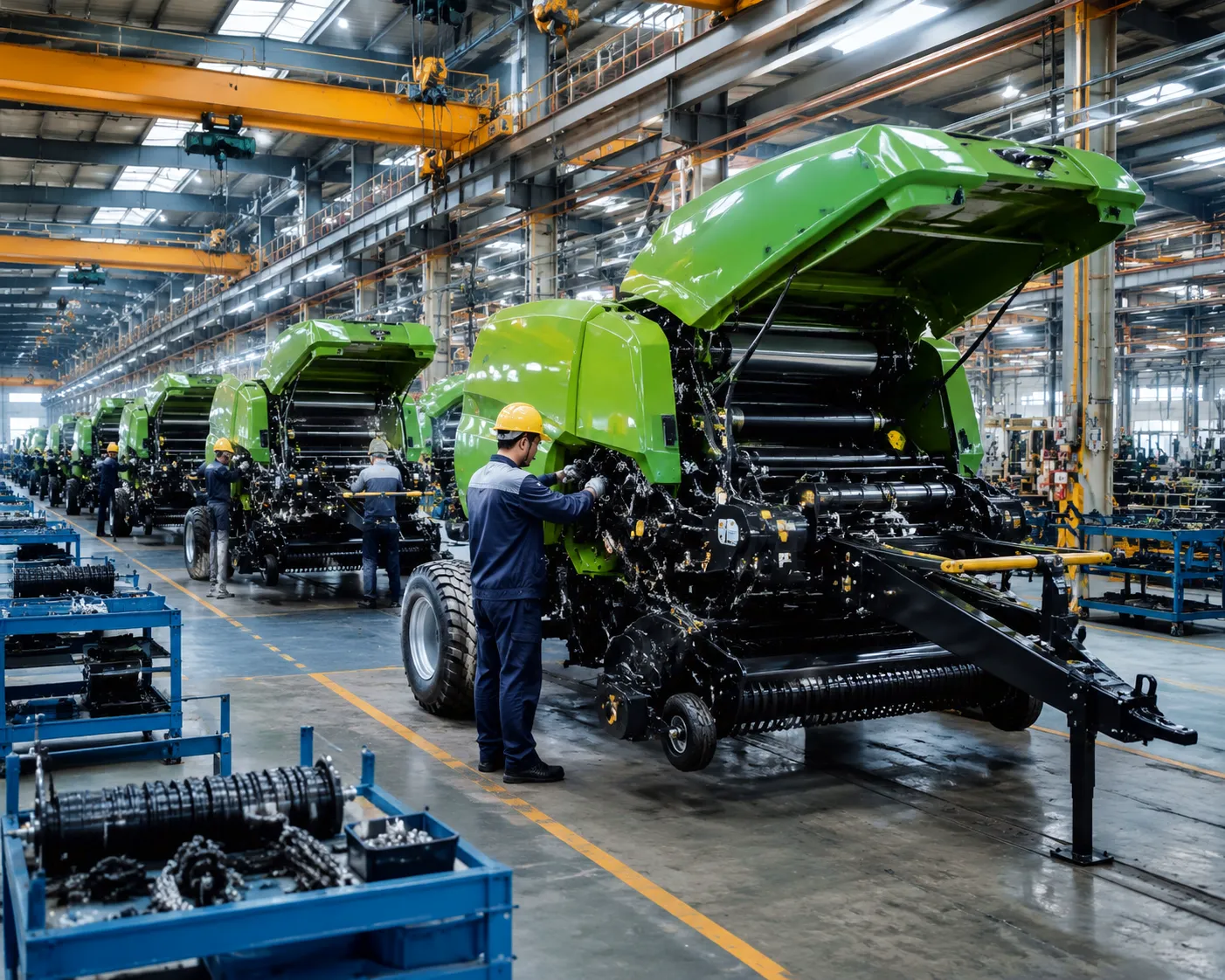
Ever Power operates one of the most technically advanced square baler manufacturing facilities in the industry, with a production footprint that spans precision laser cutting, robotic MIG welding, fully automated CNC machining for knotter and drive components, in-line coordinate measurement verification, and multi-stage surface treatment including epoxy primer and polyurethane topcoat. This investment in precision manufacturing infrastructure translates directly into dimensional accuracy and consistency across production batches that UK dealers and end-users can rely on when specifying replacement components or when comparing machine performance across fleet units.
What genuinely distinguishes Ever Power in the B2B international marketplace is the depth of customisation capability available to procurement teams. Rather than offering a fixed catalogue, Ever Power works with agricultural machinery importers, regional dealers, and large farming enterprises across the UK and Europe to develop application-specific configurations. This may include modified pick-up reel geometry for specific regional crop types, alternative bale chamber dimensions to suit non-standard storage infrastructure, reinforced drive train components for high-cycle biomass applications, or bespoke surface coatings for machine deployments in high-corrosion coastal environments such as those encountered in parts of Scotland and northern England. The supply chain behind each Ever Power square baler is rigorously managed, with critical components — knotter assemblies, crankshaft forgings, bearing housings — sourced from verified specialist suppliers and each batch subject to incoming quality inspection before assembly begins.
15+
Years of agricultural machinery manufacturing experience
40+
Countries served across international B2B export channels
100%
Custom configuration available to UK dealer specification
ISO
Quality-managed production with multi-stage inspection protocols
Customer Success Story: Fenwick Agricultural Contracting, Lincolnshire
Large-scale arable contracting · Cereal straw harvesting · Ever Power 9YF-2200
Fenwick Agricultural Contracting Ltd, based outside Sleaford in Lincolnshire, operates a fleet of harvesting and post-harvest machinery across a client base of 28 arable farms totalling approximately 9,500 acres of combinable crops. The business has been running cereal straw baling contracts since 2008 and expanded into biomass straw supply to a district heating network near Grantham in 2019, which increased their seasonal bale requirement from around 28,000 to over 55,000 units per year.
The business approached Ever Power after experiencing persistent knotter failure rates with the machines they had been running, which had risen to over 2% per 1,000 bales and were causing unacceptable delays during the critical post-harvest windows. They specified two units of the 9YF-2200 configured with reinforced knotter assemblies, extended-life Hardox liner plate in the bale chamber, and ISOBUS connectivity to integrate with their tractor fleet’s farm management terminals.
After the first full season, the business reported knotter failure rates below 0.3% per 1,000 bales, an improvement that translated into measurable reductions in on-field downtime and an increase in the number of farms they could service per harvest day. The ISOBUS bale count and density log data also proved valuable in generating the output documentation required under their biomass supply agreement with the district heating operator. Ever Power’s technical support team provided commissioning guidance before the first season and responded to a rotor adjustments query within 24 hours during the peak period, which the business noted as a significant improvement over previous supplier relationships.
고객들이 남긴 의견
“The knotter reliability on these machines is in a different league from what we were running previously. We completed over 30,000 bales in the first season without a single missed knot. For a contracting business that sells straw on weight, that kind of consistency goes straight to the bottom line. The density management system keeps every bale within 5 kg of target regardless of how the windrow varies across the field.”
James F. — Fenwick Agricultural Contracting, Sleaford, Lincolnshire
Cereal straw & biomass contracting | Ever Power 9YF-2200
“We run a specialist equestrian bedding straw business supplying yards across the Yorkshire Dales and North Yorkshire Moors, and bale appearance and consistency really matters to our customers. Ever Power configured the 9YF-1900 with exactly the bale length and twine tension range we needed. The ability to work with their technical team on the specification — rather than just picking from a fixed catalogue — made the whole procurement process much more straightforward.”
Rachel M. — Moorside Farm Supplies, Harrogate, North Yorkshire
Equestrian bedding straw supply | Ever Power 9YF-1900
“We evaluated three suppliers before placing an order for two 9YFS-2.2 double-chamber units. The custom configuration service was what set Ever Power apart — they were able to accommodate our specific bale dimension and twine type requirements, and they provided full documentation for our import and machinery registration process. Through our first season baling miscanthus in the East Riding, throughput per machine hour was well above what we had achieved with our previous equipment.”
David K. — Holderness Biomass Ltd, Beverley, East Riding of Yorkshire
Miscanthus biomass baling | Ever Power 9YFS-2.2
자주 묻는 질문
Practical guidance for UK agricultural contractors and procurement teams
Ever Power Square Baler Division · B2B Agricultural Machinery Export
Ready to discuss your square baler specification?
gzl님이 편집함