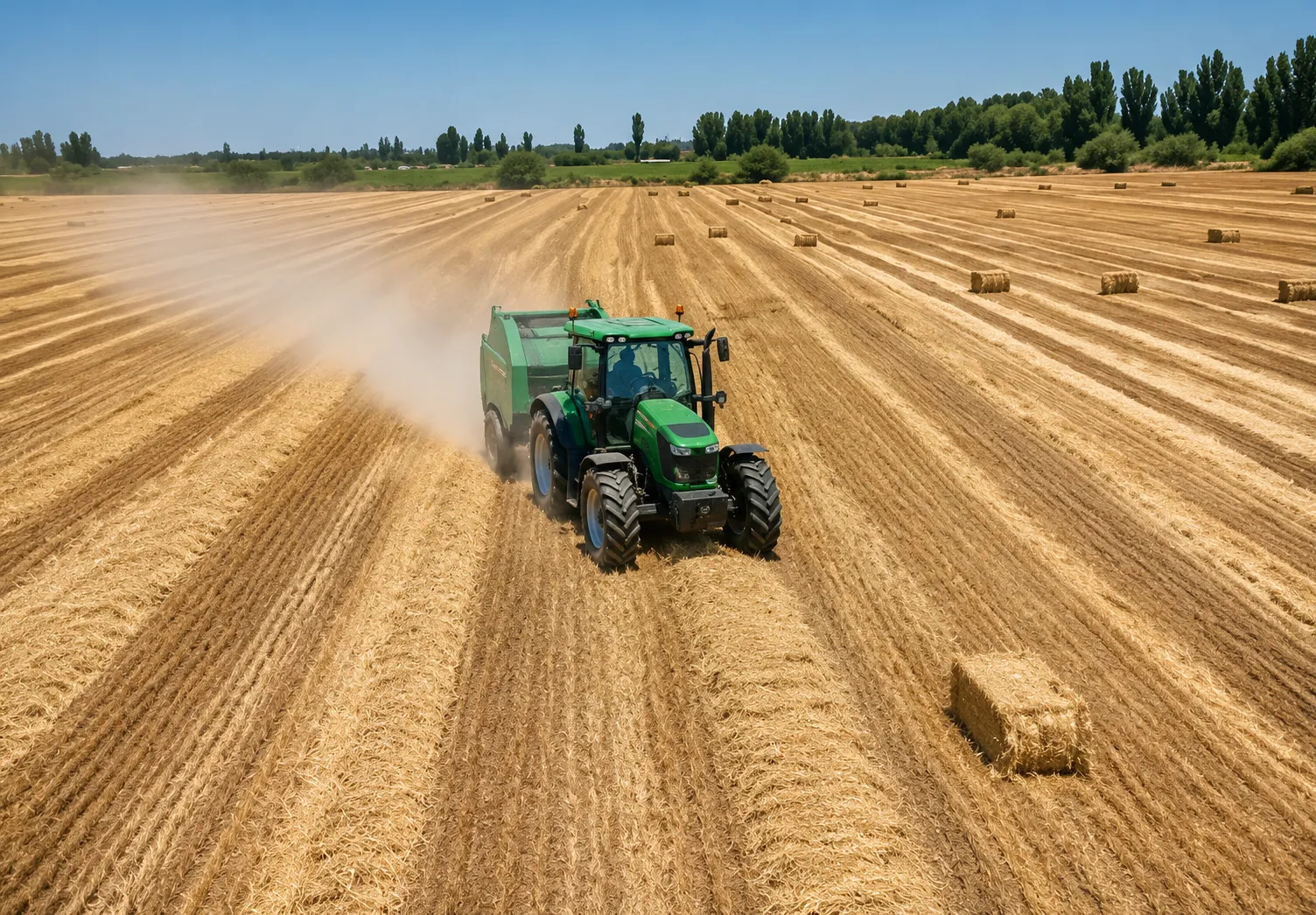
Walk any arable farm in Lincolnshire, scan the industrial estates of the West Midlands, or tour a biomass energy facility in Yorkshire, and the square baler machine has become an indispensable piece of capital equipment. Yet its apparent simplicity — a tractor-driven box that produces neat, stackable bales — conceals a remarkable degree of mechanical sophistication. The demands placed on modern square balers are genuinely extreme: continuous high-cycle compression at forces exceeding 200 kN, abrasive crop material flowing through tight tolerances, and the expectation of thousands of operational hours with minimal unplanned downtime. Understanding the engineering behind these machines is not merely academic. For purchasing managers at UK agricultural contractors, procurement leads at recycling facilities, and estate managers overseeing large mixed operations, a detailed grasp of square baler technology translates directly into better buying decisions, longer service intervals, and measurable improvements in throughput efficiency.
The global square baler market has evolved considerably since the fixed-chamber designs of the mid-twentieth century. Today’s machines integrate hardened steel alloy plungers, precision-welded channel frames, electronic knotter monitoring systems, and in some configurations, dual-chamber designs that effectively double output without increasing tractor horsepower demands proportionally. This guide draws on real engineering data, material science principles, and operational experience from across the UK agricultural and industrial sectors to give buyers, engineers, and technical managers the depth of information they need to evaluate, specify, and deploy square baler equipment with confidence.
How a Square Baler Works: The Mechanical Principle
① Crop Pick-Up & Pre-Compression
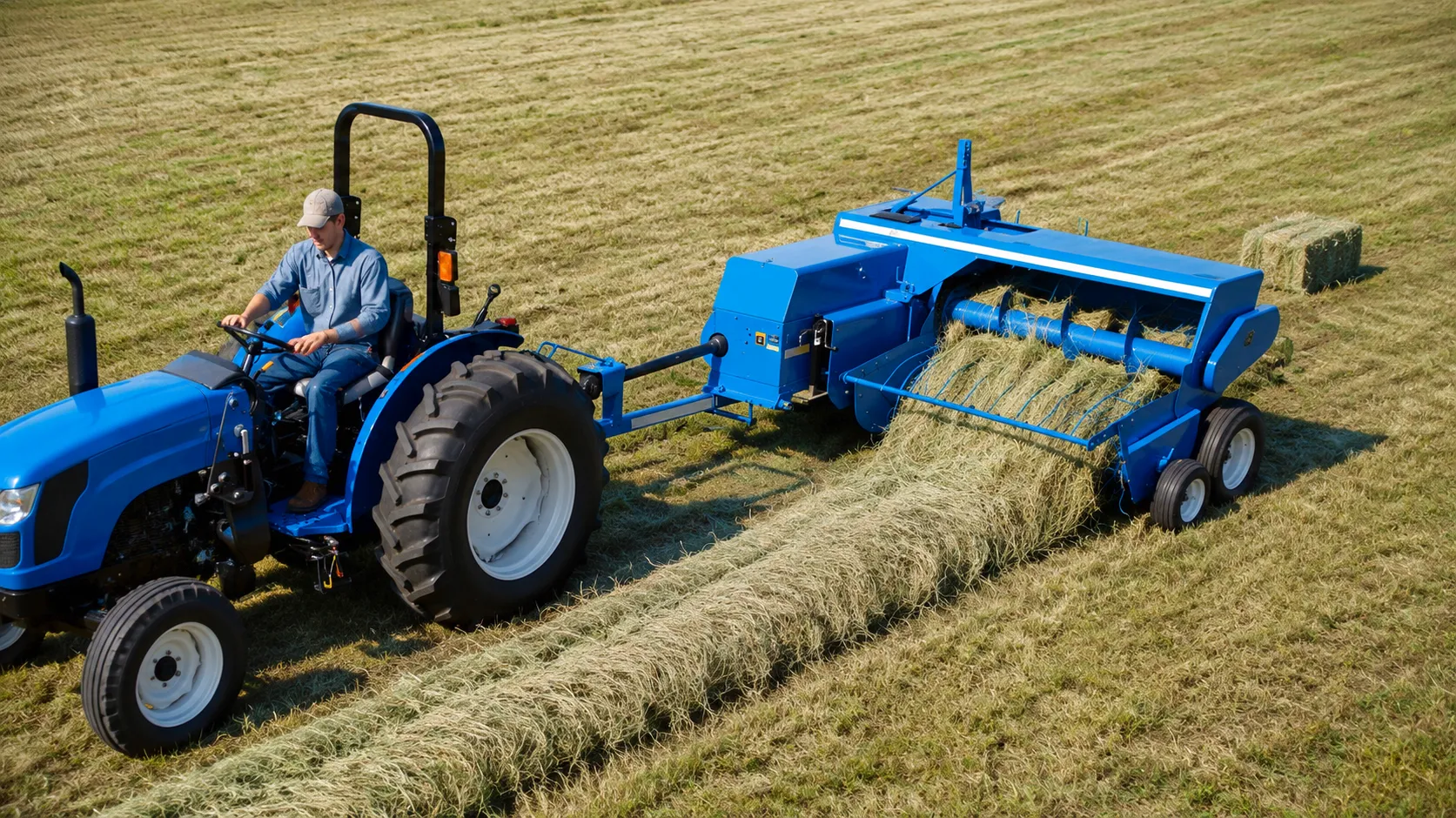
Power from the tractor’s PTO shaft — typically operating at 540 or 1,000 rpm — drives a flywheel that converts rotational energy into the reciprocating motion of the plunger. A rotating pick-up reel with spring steel tines lifts windrow material — whether straw, hay, silage, cardboard, or other fibrous waste — and feeds it through an auger or conveyor system into the pre-compression chamber. At this stage the material is gathered into a loose plug and packed transversely by a cross-conveyor before being pushed into the main bale chamber.
② Main Plunger Compression
The heart of any square baler is the plunger mechanism. A heavy-duty cast or fabricated steel plunger, connected to the flywheel via a pitman arm and crankshaft assembly, reciprocates within the bale channel at speeds ranging from 80 to 120 strokes per minute. Each stroke compresses the accumulated plug against the previously formed bale body, building up density incrementally. The compression force achievable by modern large square balers exceeds 200 kN per stroke, producing bale densities in the range of 170 to 250 kg/m³ depending on crop type and moisture content — figures that define how efficiently bales can be transported and stored.
③ Knotting & Tying System
Once the bale reaches its preset length — measured by a metering wheel or star wheel — the knotting system is triggered. Needles thread twine or cord through the bale channel, and a cam-driven knotter assembly forms a secure knot, cuts the twine, and releases the completed bale. This cycle takes a fraction of a second and must be repeated flawlessly many thousands of times per operational season. Knotter reliability is a frequent differentiator between machine brands; well-engineered knotters use hardened steel bill hooks, precisely machined disc cams, and corrosion-resistant retaining plates to maintain consistent knot geometry even as wear occurs over time.
Core Materials Engineering: What Makes a Durable Square Baler
Material Selection · Heat Treatment · Wear Performance
Frame & Bale Channel: High-Tensile Structural Steel
The primary chassis and bale channel walls are fabricated from S355 or equivalent high-strength structural steel, with yield strengths of 355 MPa or above. Channel sections are robot-welded to minimise heat distortion and ensure dimensional consistency across production runs. Side-wall wear plates in the bale channel are typically replaceable hardox 400 or hardox 450 liner panels — abrasion-resistant steels with Brinell hardness values of 370–470 HBW — allowing channel refurbishment without replacement of the main structure.
Plunger Assembly: Induction-Hardened Alloy Steel
The reciprocating plunger is perhaps the most mechanically stressed component in the machine. Fabricated from medium-carbon alloy steel (typically equivalent to EN24 or 42CrMo4), the plunger face and guide surfaces undergo induction hardening to achieve a surface hardness of 55–62 HRC while retaining a tough, ductile core. This dual-property approach — hard surface for wear resistance, tough core for impact absorption — mirrors the metallurgical strategy used in heavy-duty mining hammers and press tool inserts. Plunger guide bushings are bronze or sintered iron to minimise galling during the high-frequency reciprocating cycle.
Knotter Components: Case-Hardened Precision Steel
The knotter bill hook, disc cam, and stripping plates operate under combined bending and surface contact stresses with strict dimensional requirements. Case-hardening — typically carburising to a case depth of 0.8 to 1.5 mm followed by quench and temper to 58–62 HRC at the surface — provides the required wear resistance while the case geometry ensures knot formation accuracy is maintained across tens of thousands of cycles. Some manufacturers use 17CrNiMo6 for knotter bill hooks due to its combination of high core toughness and excellent case-hardening response.
Pick-Up Tines: Spring Steel & Polymer Tips
Pick-up tines face a demanding combination of cyclical bending fatigue and abrasive contact with soil, stones, and crop material. High-carbon spring steel — oil-hardened and tempered to approximately 42–47 HRC — provides the necessary fatigue life and deflection recovery. Nylon or ultra-high-molecular-weight polyethylene (UHMWPE) tip inserts on some designs reduce crop damage and noise while protecting the tine itself from small stone impacts. In recycling and biomass applications where foreign object content is higher, tine design becomes a critical reliability factor.
Core Technical Advantages of Modern Square Baler Machines
Why square baler technology outperforms alternative baling formats for high-throughput B2B operations
Uniform, Stackable Bale Geometry
Square bales produce a flat-sided, rectangular product with a consistent cross-section that stacks efficiently on pallets, in barns, on trailers, and in shipping containers. This is a decisive commercial advantage over round bales for operations involving mechanised handling equipment, indoor storage with strict space utilisation targets, or export logistics where container cubic capacity is a cost driver. UK merchants supplying hay and straw to equestrian centres across the Home Counties, for example, rely on the predictable pallet pattern of square bales to automate their loading and dispatch operations efficiently.
High Bale Density for Transport Efficiency
At bale densities of 180–250 kg/m³ for straw and 200–280 kg/m³ for hay, large square balers produce a product that maximises payload on every trailer or lorry movement. In an era of rising fuel costs and increasingly stringent road transport regulations, the transport efficiency of well-compressed square bales has a direct and quantifiable impact on the carbon footprint and operating cost of large-scale forage and biomass logistics operations across England, Scotland, and Wales. Biomass energy plants in Yorkshire and the East Midlands have reported meaningful reductions in haulage costs per tonne following a transition to large square baler formats.
Compatibility with Diverse Feedstocks
Modern square baler designs — particularly those featuring integrated pre-crop shredding or conditioning mechanisms — can process a wide range of fibrous materials beyond conventional cereal straw and hay. Miscanthus, hemp fibre, flax straw, cardboard, textile waste, and mixed agricultural residues can all be processed on appropriately specified machines. This versatility makes the square baler a genuinely multi-sector tool, relevant not just to arable farmers but also to recycling contractors, composting operations, and industrial waste management companies operating across Birmingham, Leeds, and the broader industrial Midlands.
Lower Cost-Per-Bale at High Output Rates
When field or factory throughput is measured against capital and operating expenditure, large square balers deliver a compelling cost-per-bale metric for operations producing 5,000 bales or more per season. Dual-chamber configurations, in particular, can achieve output rates exceeding 130 bales per hour under favourable conditions, effectively doubling throughput without a proportional increase in fuel, labour, or machine depreciation costs. For large arable contractors working across multiple farms in East Anglia or the Vale of York, this output advantage justifies the higher initial capital outlay within three to five seasons.
Square Baler Technical & Performance Specification Table
Representative data across large square baler categories — specifications vary by model and configuration
Industrial & Agricultural Application Scenarios
Where square baler machines deliver measurable value across the UK economy
Biomass Energy & Miscanthus — East Midlands, Humberside
Dedicated energy crops — miscanthus, short-rotation coppice, and reed canary grass — are increasingly baled for supply to biomass energy plants across Humberside and the East Midlands. These materials demand modified pick-up systems and channel liner specifications compared to cereal straw. The density and consistent bale dimensions produced by large square balers are specifically preferred by biomass plant operators because they simplify automated fuel handling and boiler feed systems. Ever Power’s custom-specification square balers have been optimised for miscanthus with reinforced pick-up tine mounts and uprated plunger sealing to handle the coarser stem structure of energy crops.
Cardboard & Paper Recycling — Birmingham, Manchester, Sheffield
Industrial and commercial cardboard recycling facilities across Birmingham, Manchester, and Sheffield use adapted square baler platforms with modified feed systems to compress cardboard and mixed paper waste into dense, sellable bales for the recovered fibre market. The requirement here is for extremely high compression force — often greater than that needed for agricultural straw — combined with robust safety interlocking, because the feed material is often supplied in irregular sheet form rather than the windrow format seen in agricultural use. Bale dimensions must align with commodity market specifications, and consistent bale weight is directly linked to invoice value in the recovered paper trade.
Hemp Fibre & Industrial Crop Processing — Norfolk, Dorset
The growing market for UK-grown industrial hemp — for fibre composites, insulation materials, and textiles — relies on effective baling of both the long stem bast fibre and the shorter hurds or shive core. Square balers equipped with appropriate conditioning and pre-compression systems are the preferred platform for hemp baling because the resulting bale is easier to handle at fibre processing facilities. Operations in Norfolk and Dorset have been among the earliest UK adopters of purpose-configured square balers for hemp, and the experience gained there is now informing specifications being deployed more broadly as the UK industrial hemp sector expands following regulatory modernisation.
Conservation Grassland Management — SSSI Sites, National Parks
Agri-environment schemes across England, Scotland, and Wales increasingly specify cutting and baling of hay meadows and conservation grassland as a condition of stewardship payments. On Sites of Special Scientific Interest and in National Parks, the requirement to remove cut material entirely — rather than mulch or leave it in situ — makes baling an ecological necessity, preventing nutrient enrichment of low-input swards. Small and medium square balers are often the practical choice in these sensitive environments because they can be operated by smaller tractors on soft ground without causing unacceptable compaction damage, and the smaller bale size facilitates hand-loading in field corners inaccessible to bale handlers.
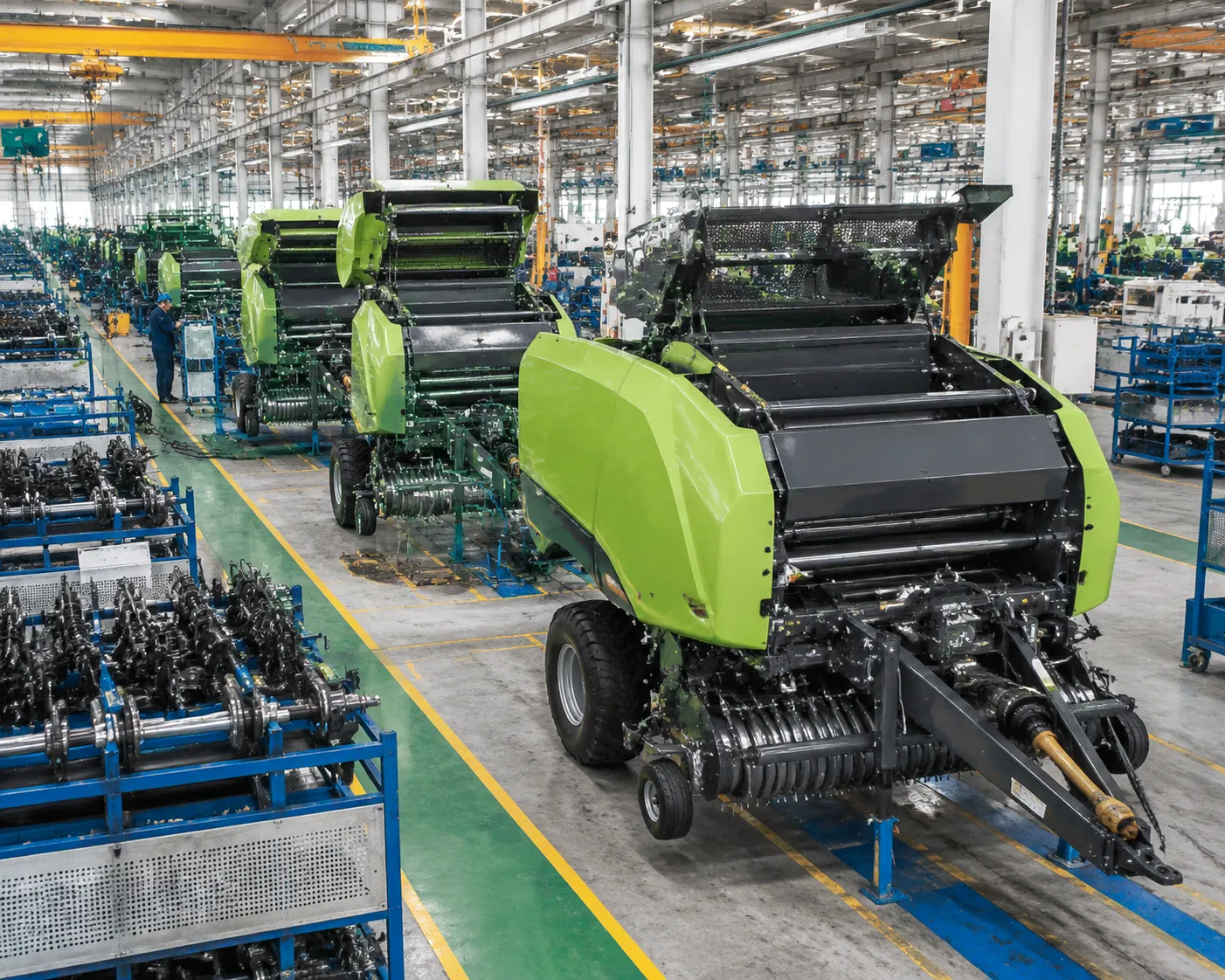
Featured Ever Power Square Baler Products
Engineered for demanding agricultural and industrial baling applications
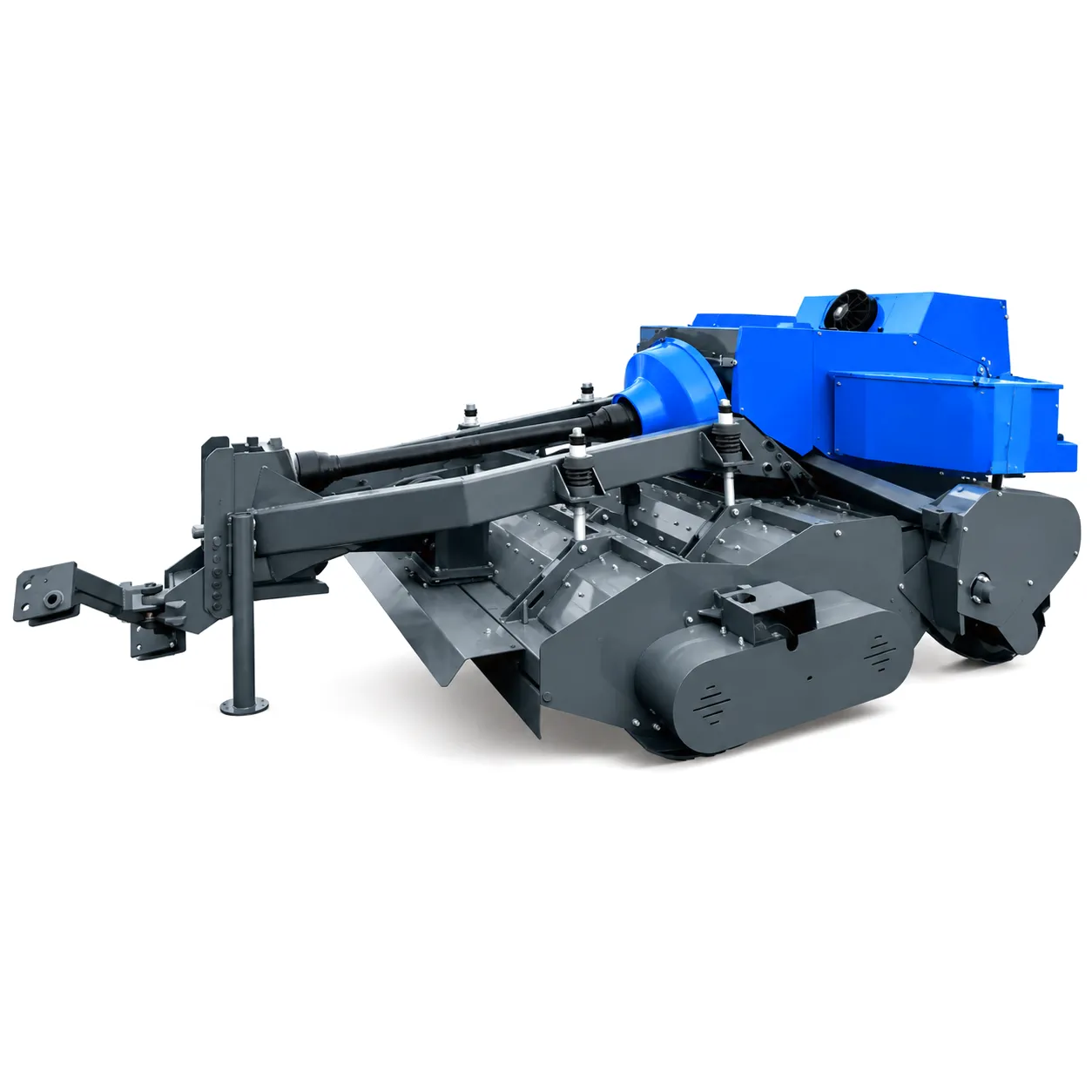
Pengikat Segiempat 9YF-2200/1900/1700
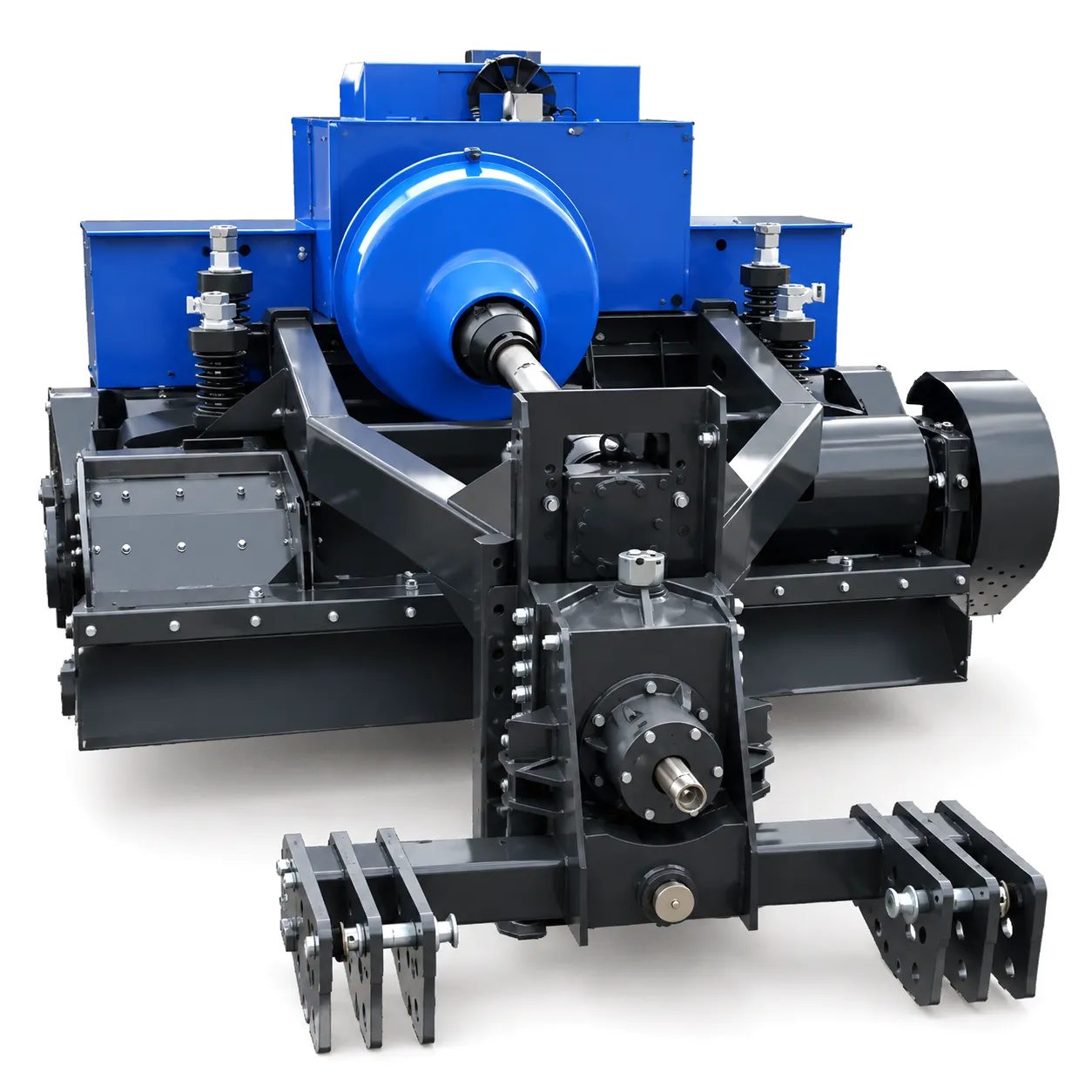
The 9YF series represents Ever Power’s flagship large square baler platform, available in three bale channel widths to match different tractor power and output requirements. The dual shredding mechanism configuration — visible in the illustrated model — pre-conditions crop material before compression, delivering significantly higher bale density and more uniform packing, particularly valuable in miscanthus, hemp, and long-straw applications. The robust S355 main frame with hardox 450 bale channel liners ensures extended service life even in abrasive conditions, and the fully adjustable density control system allows the operator to target specific bale weight across a wide range of crop types.
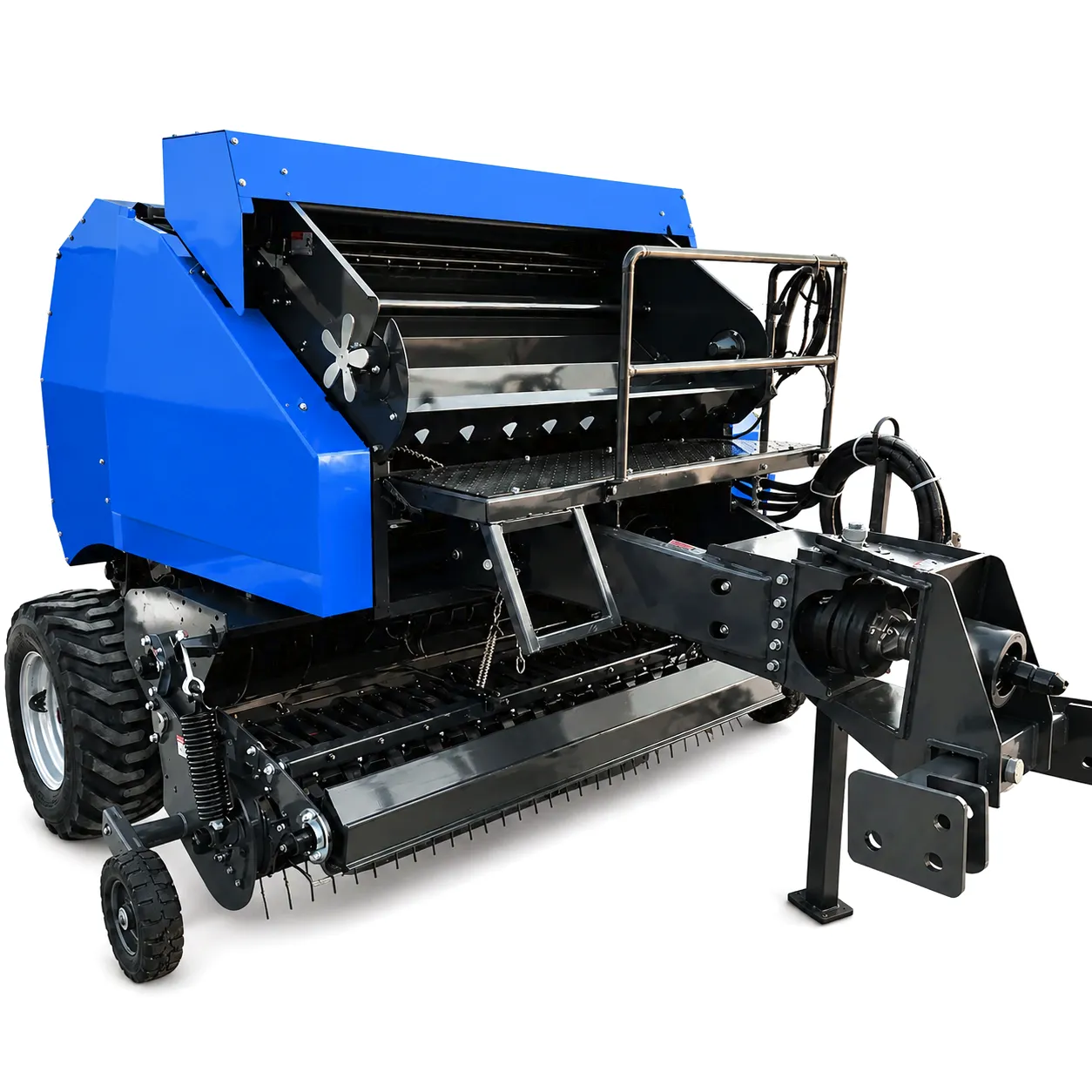
Baler Segiempat Dua Ruang 9YFS-2.2
The 9YFS-2.2 is Ever Power’s dual-chamber square baler, engineered for maximum-throughput arable and biomass operations where output per operational hour is the primary commercial driver. Two parallel bale channels operate simultaneously from a single PTO drive train, effectively doubling bale output without requiring a proportional increase in tractor power compared to running two separate machines. The dual-channel design is particularly well suited to the large-scale cereal straw operations of East Anglia and Lincolnshire, where contractors need to clear stubble fields rapidly and each hour of baling capacity has significant commercial value. The 9YFS-2.2 carries the full Ever Power customisation programme, including shredding mechanism options and hydraulic density control.
Customer Success Story: Yorkshire Biomass Contractor, Doncaster
How a South Yorkshire agricultural contractor transformed biomass baling operations
Green Fields Agricultural Contracting, based in Doncaster in South Yorkshire, operates a mixed arable contracting business serving some 35 farm clients across a broad area stretching from the Humber Estuary south to the Don Valley. For several years, their baling operation had relied on a combination of ageing European-brand large square balers running at increasing maintenance costs, with knotter problems in particular becoming a persistent seasonal frustration.
In 2024, the company director initiated a procurement review focused on adding two new large square baler machines capable of handling both wheat straw and miscanthus from a neighbouring energy crop enterprise. After evaluating several options, including refurbished European machines and an alternative direct-import offering, the team selected two Ever Power 9YF-2200 square balers configured with the dual shredding mechanism and hydraulic density control. Key factors in the decision were the technical specification of the machines — particularly the hardox 450 channel liners specified from the outset for miscanthus duty — the availability of rapid airfreight parts supply, and the competitive landed cost compared to equivalent European-manufactured platforms.
Through their first full baling season, the two Ever Power square balers processed over 48,000 bales across wheat straw, barley straw, and miscanthus operations. Achieved bale densities averaged 218 kg/m³ on miscanthus — significantly above the figures achievable on their previous machines — which directly reduced the number of trailer loads required for delivery to the biomass plant and improved the season’s transport cost per tonne. Knotter reliability was notably better than the team had experienced previously, with no lost-time knotter failures recorded during the miscanthus campaign despite the high-cycle demands of that crop type. The contracting firm reported an estimated annual saving of approximately £22,000 in combined transport, maintenance, and downtime costs against the previous season’s baseline.
★★★★★
“The bale density we are getting on miscanthus with the 9YF-2200 is genuinely impressive — consistently 210 to 220 kg/m³ across the whole season. That has cut our haulage cost to the biomass plant by nearly 15% compared to last year. The Ever Power team were also very responsive when we had a question about density settings during the first week — they had a video call arranged with their factory engineer the same day.”
— T. Hargreaves, Operations Director, Green Fields Agricultural Contracting, Doncaster
★★★★★
“We had zero knotter failures through the entire cereal straw campaign — something that has never happened before with our previous machines. The hardox liners in the bale channel are holding up well too. I was initially sceptical about choosing a less widely known brand, but the engineering quality is clearly there, and the price difference compared to the main European brands made the decision straightforward for us.”
— M. Patterson, Farm Manager, Vale Farm Enterprises, Thirsk, North Yorkshire
★★★★★
“The dual-chamber 9YFS-2.2 has been a step change for our operation. We are getting close to 130 bales per hour in good conditions — that is output that simply was not available to us before at a cost that made commercial sense. Ever Power’s customisation team worked with us on the channel dimensions and the twine arrangement before manufacture, which meant the machine arrived exactly as specified. Parts support has been reliable — fast airfreight on knotter components when we needed them.”
— J. Wormald, Director, Wormald Brothers Agricultural Ltd, Selby, East Yorkshire
Frequently Asked Questions: Square Baler Machines for UK Operations
Voice-search optimised answers to the questions UK buyers and operators actually ask
How much does a large square baler cost to buy from a UK supplier or direct import in 2025?
Large square baler pricing varies significantly with specification. European-branded large square balers typically list in the £80,000–£140,000+ range new. Direct import options from quality manufacturers like Ever Power — with equivalent engineering specifications — can be sourced at substantially lower landed costs, often in the £25,000–£55,000 range depending on configuration, with customisation adding to that figure. The total cost of ownership calculation — factoring in parts cost, service network, and financing — is the appropriate framework for this comparison rather than sticker price alone. Contacting Ever Power directly for a current quote with your specific configuration requirements is the most reliable way to get an accurate price.
Which square baler machine is best for baling miscanthus in the UK, and what specifications should I look for?
Miscanthus places specific demands on a square baler: the coarse, rigid stems require robust pick-up tine design, a pre-conditioning or shredding mechanism to break stem structure before compression, and hardox-grade channel liners to handle the abrasive material. A plunger compression force of at least 180 kN is generally recommended for achieving commercially acceptable miscanthus bale densities. Ever Power’s 9YF-2200 configured with the dual shredding mechanism and hardox 450 liners is a well-proven combination for UK miscanthus operations, delivering consistent bale densities in the 200–225 kg/m³ range on well-managed energy crop stands.
Where can I find a reliable square baler supplier who offers custom specifications and ships to the UK?
Reliable supply of custom-specification square balers to the UK market requires a manufacturer with in-house engineering capability — not just a trading operation — combined with experience in UK export compliance including CE marking, operator manual translation, and pre-shipment inspection. Ever Power meets all of these criteria and has an established track record of supplying UK agricultural contractors and biomass operations. Reaching out via email to request a specification discussion and quotation is the recommended starting point; an engineering review call can typically be arranged within a few working days.
What is the difference between a single-chamber and a dual-chamber square baler, and when is the upgrade worth the price?
A single-chamber square baler operates one bale channel from a single PTO-driven plunger system, producing one bale at a time. A dual-chamber machine runs two parallel channels simultaneously, roughly doubling output for a given tractor power and ground speed. The dual-chamber configuration carries a higher purchase price — typically 35–60% above a comparable single-channel machine — and a higher operating weight. The upgrade is commercially justified for contracting operations producing 8,000 or more bales per season, where the increased output rate reduces the seasonal time pressure, lowers cost per bale, and may allow the operation to handle more client work without adding a second tractor and operator.
How long does it take to get a custom square baler shipped and delivered to a farm in Yorkshire or the Midlands?
For standard-specification Ever Power square balers, the typical timeline from confirmed order to ex-factory despatch is 45–75 days. Custom-engineered variants — with non-standard channel dimensions, upgraded shredding mechanisms, or bespoke hydraulic systems — are quoted individually at the engineering review stage but commonly run 60–90 days to production. Ocean freight from China to UK ports (Felixstowe, Southampton, or Hull) adds approximately 25–35 days. Buyers should therefore plan procurement to allow 90–130 days from order confirmation to machine arrival on farm, noting that pre-harvest ordering for a late summer baling season requires very early engagement — ideally in the first quarter of the year.
Who should I contact to get a quote for a square baler machine that meets UK CE safety requirements?
CE marking under the relevant EU Machinery Directive — which the UK retained for the purposes of GB market access until further regulatory development — requires the manufacturer to compile a technical file demonstrating conformity with applicable health and safety requirements and to provide a Declaration of Conformity. Ever Power provides CE-marked square balers for UK market export, with full documentation. To request a quote and confirm CE documentation availability for your specific configuration, contact the Ever Power export team directly by email. They can also clarify the current position regarding UKCA marking requirements, which are subject to ongoing UK regulatory development post-Brexit.
Ready to specify your square baler?
Talk to the Ever Power engineering team about your crop types, output targets, and customisation requirements. Get a detailed technical proposal and competitive price within 48 hours.
© Ever Power Agricultural Machinery — Technical specifications subject to engineering updates. All figures are representative of the product range; confirm specific model data with our engineering team. edit by gzl