Agricultural Engineering · UK Market Edition
Square Balers: Complete Technical Guide to Performance, Design & Industrial Application
Engineered Precision · UK Agricultural & Industrial Supply · Ever Power Manufacturing
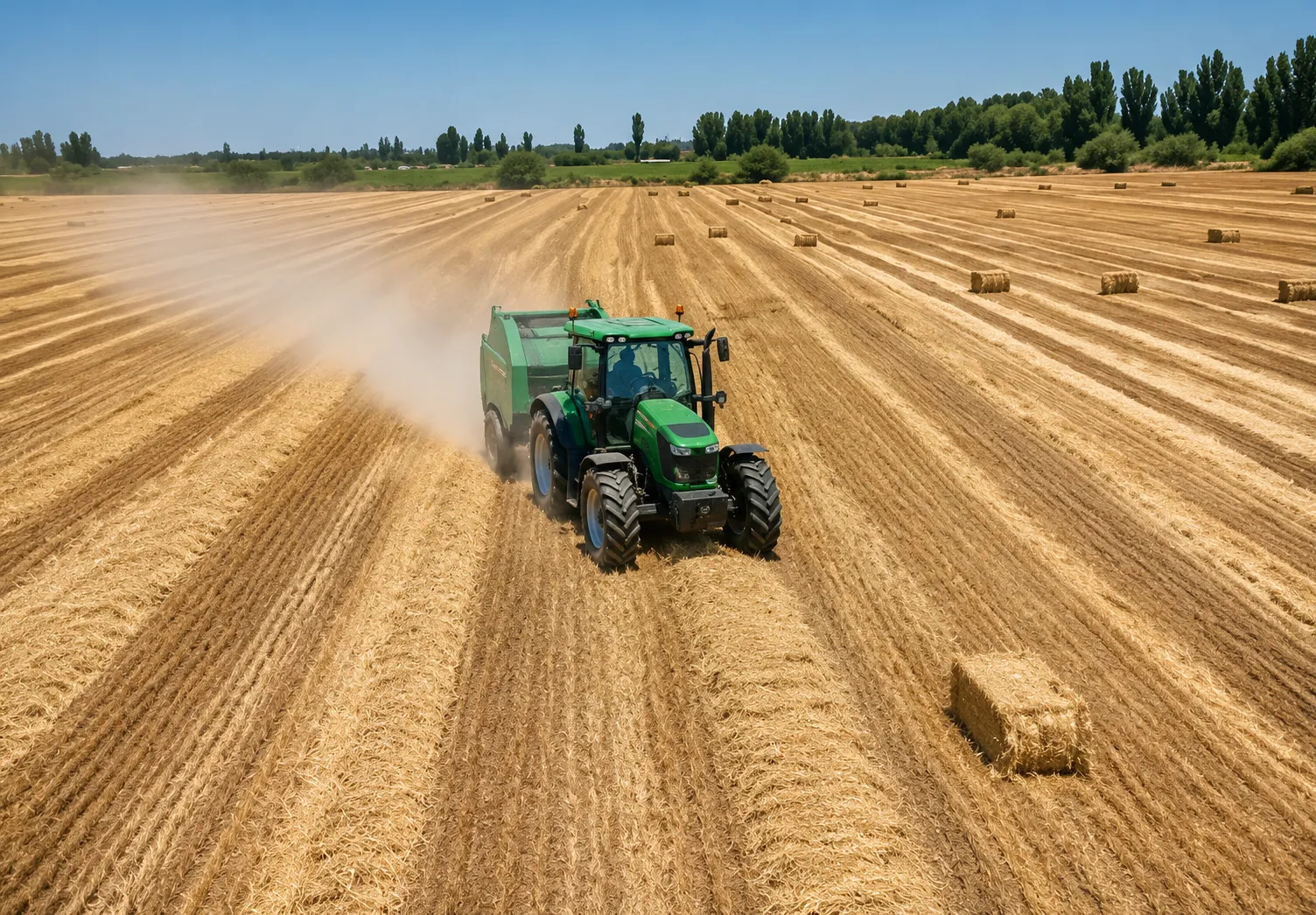
The square baler stands as one of the most commercially consequential machines in modern agricultural and industrial materials handling. Whether compressing hay, straw, silage, recycled paper, or biomass waste, a well-engineered square baler converts loose, bulky material into dense, uniformly shaped rectangular bales that are easy to store, transport, and sell. Across the UK — from the broad arable plains of Lincolnshire and Norfolk to the livestock farms of Yorkshire and Devon — square balers are an indispensable part of both harvest operations and year-round crop residue management. In an era of rising logistics costs and sustainability pressure, the ability to compress material at source reduces haulage frequency, lowers carbon footprint per tonne moved, and improves barn storage density considerably. The machinery category spans compact single-chamber designs suited to small-to-medium holdings all the way to high-capacity double-chamber systems capable of processing over two tonnes of material per hour without interruption. Understanding what distinguishes a quality machine from an average one begins with the core engineering principles and the material choices that underpin durability in heavy-field conditions.
How a Square Baler Works: Core Operating Principle
Stage 1 — Pickup & Feed
The square baler begins its cycle at the pickup reel, a rotating drum fitted with spring-steel tines that lift windrow material cleanly from the ground. Crop is then channelled by a feed rotor or auger into the pre-compression chamber. At this stage, material density is managed to prevent blockages and ensure an even feed rate into the baling chamber. On higher-specification machines, a double-roller pre-compression system distributes crop evenly across the full chamber width, which is particularly important when handling mixed-density materials such as oilseed rape straw — a common challenge on farms across East Anglia and the East Midlands. Consistent feeding is the single most important variable in achieving uniform bale weight and density throughout a working day.
Stage 2 — Compression Stroke
The heart of the baler is the reciprocating plunger, which is driven by a robust crankshaft mechanism connected to the tractor PTO shaft. As material accumulates in the bale chamber, the plunger executes a high-force compression stroke — typically delivering between 75 and 200 kN of compressive force depending on machine class. This repeated impact compacts the material in successive layers, each stroke adding density to the forming bale. The plunger speed, usually expressed in strokes per minute (SPM), directly governs throughput capacity. Heavy-duty commercial balers operate at 80 to 100 SPM, allowing sustained high-volume processing. The geometry of the bale chamber itself — its cross-section, its side wall construction, and the friction characteristics of its lining plates — all influence final bale density and consistency.
Stage 3 — Knotting & Ejection
Once the bale reaches its target length — measured by a star-wheel metering system — the knotting mechanism is triggered. Twine is threaded through needles that carry it around the compressed bale, and a pair of knotters tie two or more secure knots simultaneously. The quality of the knotter assembly is frequently cited by UK contractors as the defining reliability factor of any square baler. After knotting, the completed bale is pushed rearward by each successive compression stroke until it exits from the tail chute. Some advanced models include a bale accumulator or chute extension that groups bales in the field for easier collection. The ejection cycle is continuous, which is why bale density consistency across a full working day — not just at the start of a run — is the true test of a square baler’s engineering quality.
Material Science Behind Square Baler Construction
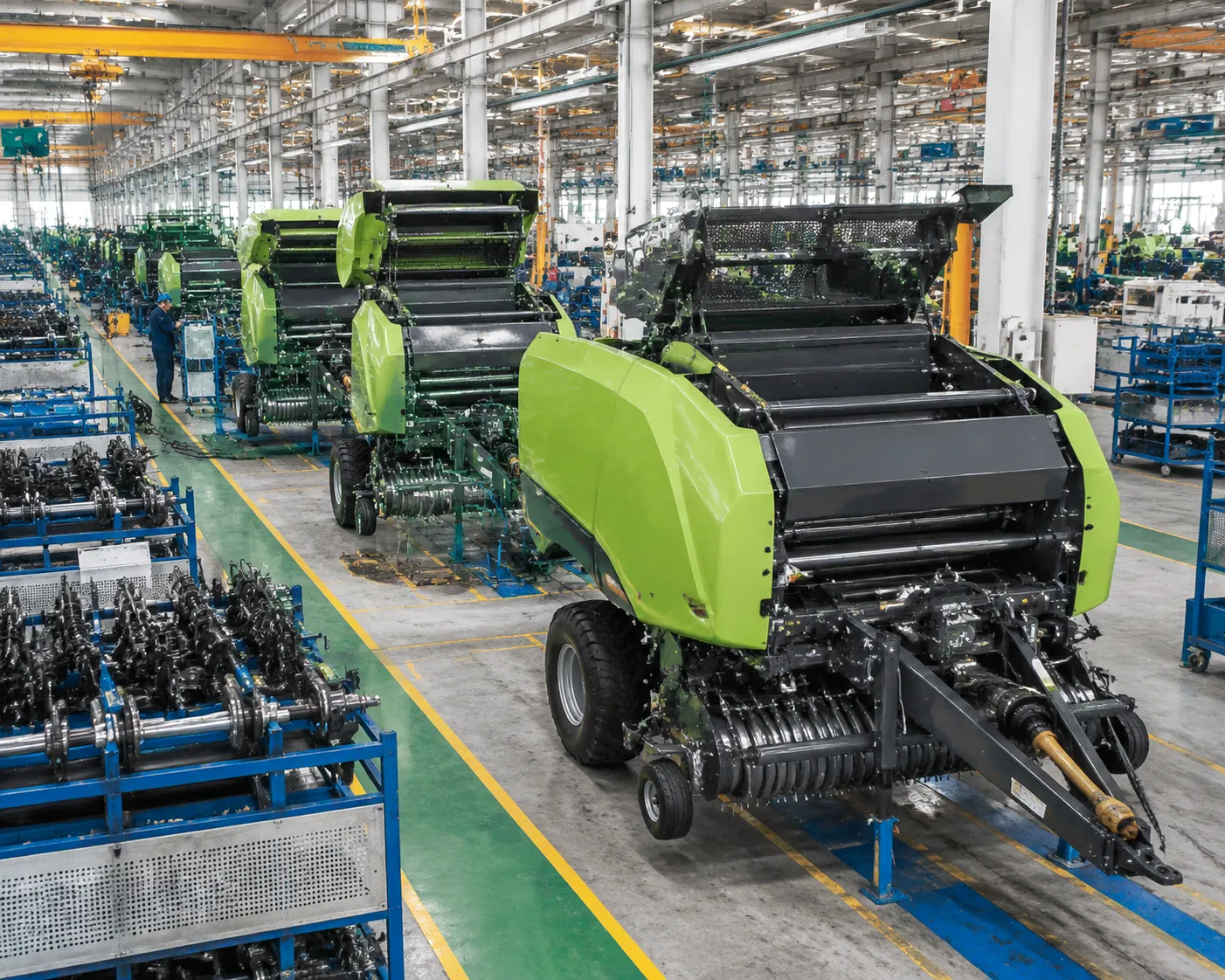
The structural integrity of a square baler is directly determined by the quality of steel specified at the design stage. The main chassis and bale chamber frame are fabricated from high-tensile structural steel — in most commercial-grade machines this is S355 or equivalent grade, with a minimum yield strength of 355 MPa. This level of strength is necessary because the chassis absorbs both the reciprocating shock loads of the plunger drive and the torsional stresses transmitted through PTO-connected drivelines, which can spike significantly when crop conditions vary. Weld quality at chassis junctions is rigorously controlled: ever power’s manufacturing process employs CO2 shielded arc welding with pre-weld stress relieving on critical joints, reducing the risk of fatigue cracking that commonly affects competitor machines after three to five seasons of heavy use. The bale chamber itself is lined with replaceable wear-plate sections manufactured from Hardox 400 or equivalent abrasion-resistant steel, which has a Brinell hardness of approximately 370–430 HBW. These liners are designed for field replacement without specialist tooling, significantly reducing machine downtime during peak season.
The plunger face and connecting rod assembly demand particularly close attention. The plunger itself is commonly machined from EN24T (817M40) alloy steel, a nickel-chromium-molybdenum grade with excellent impact resistance and a tensile strength in the region of 850–1000 MPa after appropriate heat treatment. Bearing housings throughout the drivetrain are manufactured from GG25 or equivalent grey cast iron, which provides excellent vibration damping — an important consideration for a machine where vibration accumulates over thousands of operating hours. The knotting mechanism components — the most precision-critical parts of the entire machine — are investment-cast from alloy steel and then heat-treated to achieve specific surface hardness, typically 55–60 HRC at the working faces, with a softer, tougher core to resist impact fracture. The twine tensioning springs are cold-coiled from EN47 silicon-chrome steel, selected for its combination of fatigue resistance and elasticity retention over extended cycling.
Core Technical Advantages of Modern Square Balers
⚙
Superior Bale Density Control
Hydraulic density control systems allow operators to adjust bale weight in real time from the tractor cab. This is particularly valuable in the UK’s variable summer conditions, where morning dew can alter crop moisture dramatically between one pass and the next. Maintaining consistent bale weight in the 300–500 kg range is essential for transport compliance and stack stability.
📈
High Throughput Capacity
Dual-chamber and high-speed single-chamber designs enable throughput rates of 1.5 to 2.5 tonnes per hour for hay and straw, and up to 3 tonnes per hour for lighter crop residues. This throughput efficiency dramatically reduces contractor cost per tonne and allows harvesting operations to be completed within the narrow weather windows typical of UK summers.
🔗
Precision Knotting Reliability
A missed knot costs far more than the lost bale: it disrupts the entire harvesting rhythm and may require the operator to stop and manually clear tangled twine from the chamber. Modern knotters on well-engineered square balers achieve miss-knot rates below 1 in 2,000 bales under normal conditions, with cam profiles and timing optimised across an extensive field testing programme before release.
🔧
Low Maintenance Architecture
Centralised lubrication systems — either manual or automatic — reduce daily servicing time significantly. Replaceable wear components are designed for fast field swap, with standardised bolt patterns across the bale chamber liner system. This philosophy means a skilled operator can replace a full set of chamber liners in approximately four hours, rather than the eight-to-twelve hours needed on older designs.
🌍
Multi-Crop Versatility
Adjustable pickup reel height and variable chamber pressure allow a single square baler to handle radically different crops and materials — from fine grass hay to coarse wheat straw, from silage to cardboard baling in industrial recycling applications. This flexibility is a commercial asset, particularly for agricultural contractors who serve diverse farm types across a single county or region in England.
Product Technical & Performance Parameters
Industrial Application Scenarios: Where Square Balers Deliver Results
Application Scenario 1 — Arable Cereal Straw Management (East Midlands, Lincolnshire)
Cereal straw baling is the traditional heartland of the square baler’s commercial relevance in the UK. After combine harvesting across Lincolnshire’s vast cereal acres or Cambridgeshire’s fenland fields, straw is left in windrows that can stretch for miles. Square balers operating in this context must handle coarse, abrasive wheat and barley straw at high throughput rates to stay ahead of deteriorating weather. Bale weights in the 300–450 kg range are preferred here because they suit the standard flat-bed trailers used by English merchants, and because timber-frame stack stability requirements from livestock farms and biomass energy suppliers demand uniform bale geometry. The square baler’s ability to produce consistently sized bales — unlike round balers, which produce variable-diameter bales depending on crop conditions — gives it a clear commercial edge in supply chains that require stacking and palletising for road haulage.
Application Scenario 2 — Silage & Forage Production (Yorkshire, Cumbria)
In the livestock-heavy districts of North Yorkshire, the Lake District edge lands, and the Pennine valleys of Cumbria, square balers handle high-moisture forage crops including ryegrass, clover leys, and whole-crop wheat for silage. This application demands different engineering priorities than dry straw baling. The bale chamber must resist the corrosive effect of fermentation acids present in moist crop, which means chamber surfaces are either coated or manufactured from stainless-clad or powder-coated steel in the most exposed areas. Bale density in silage applications is critical for the anaerobic fermentation process: bales that are too loose allow air penetration, which destroys nutritional value. Machines configured for silage work are typically set to maximum chamber pressure and use specialist high-UV-resistant film tie rather than conventional twine, though the knotter mechanisms are retained for initial compression before wrapping.
Application Scenario 3 — Biomass Energy Feedstock (Birmingham, Nottinghamshire)
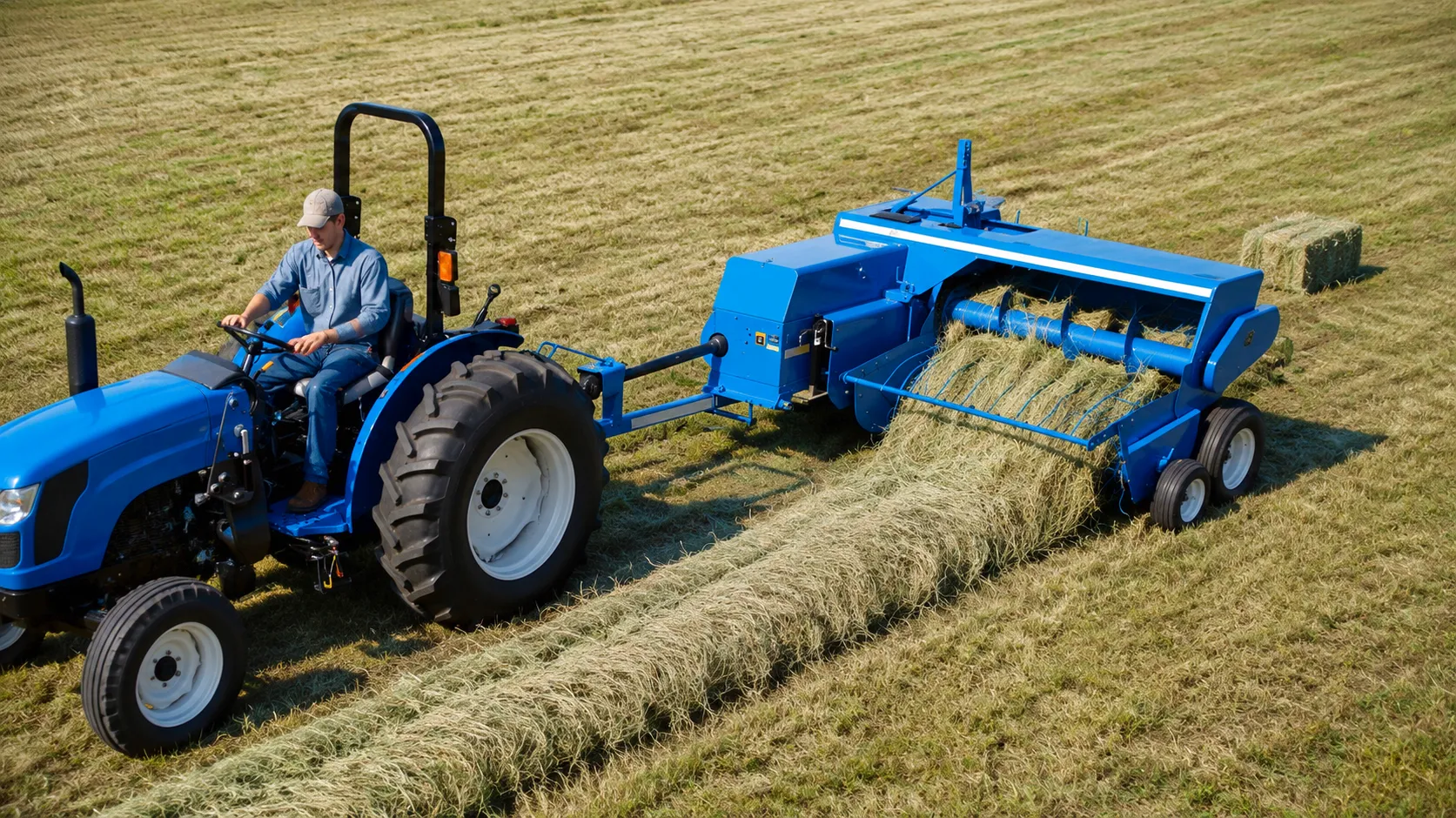
The growth of biomass-fired energy generation in the Midlands and across the East Midlands has created a substantial commercial demand for consistently dense, moisture-controlled biomass bales. Miscanthus grass, short-rotation coppice willow stems, and energy-crop blends are processed by square balers adapted for high-silica abrasive crop streams. In this application, the bale must meet precise dimensional specifications set by biomass plant operators — often 500 x 700 x 1200 mm — to fit automated infeed systems at the combustion facility. Deviation from these dimensions causes costly downtime at the plant. The square baler’s dimensional repeatability, made possible by the rigid mechanical bale chamber length sensing system, is a key reason biomass producers favour them over large round balers for this supply chain. Contractors operating near Nottingham, Coventry, and the West Midlands energy-from-waste facilities regularly operate fleets of two or three square balers in convoy to meet energy company daily intake quotas.
Application Scenario 4 — Industrial Waste Fibre & Recycled Material Baling (Sheffield, Manchester)
In the industrial heartlands of South Yorkshire and Greater Manchester, adapted square baler technology is increasingly applied to the densification of industrial fibre waste — including cardboard, PP bag offcuts, and non-woven textile materials from manufacturing operations. Sheffield’s steel-sector supply chain generates significant quantities of packaging waste that, when compacted into standardised bales, commands a higher recycling commodity price and reduces waste management costs. This application differs from agricultural use in two important respects: the feed system is typically a conveyor-fed hopper rather than a pickup reel, and the machine frame must handle the more abrasive, irregular nature of industrial materials. Ever Power supplies customised stationary baling press configurations derived from its mobile square baler platform for exactly this type of application, with reinforced throat liners and adjustable infeed geometry.
Application Scenario 5 — Horse Bedding & Premium Hay Supply (Surrey, Kent, Home Counties)
The equestrian industry in the Home Counties, Surrey, and Kent represents a distinct and premium market segment for square baler output. Horse bedding straw and competition-quality hay must be presented in small, manageable bale sizes — typically the compact class bale around 360 x 460 mm cross-section — that can be lifted by a single person. Dust content is a critical quality concern for this market: square balers configured for equestrian use often include a crop-conditioning pre-processor that fractures the crop to release and expel dust particles before compression. Bale presentation, with clean, straight edges and tight twine lines, also commands a price premium in retail channels. Ever Power’s compact-class square baler range is particularly well-suited to small-acreage equestrian hay producers across the South East of England who need a reliable machine for relatively low annual tonnages but high-value output.
Our Square Baler Products
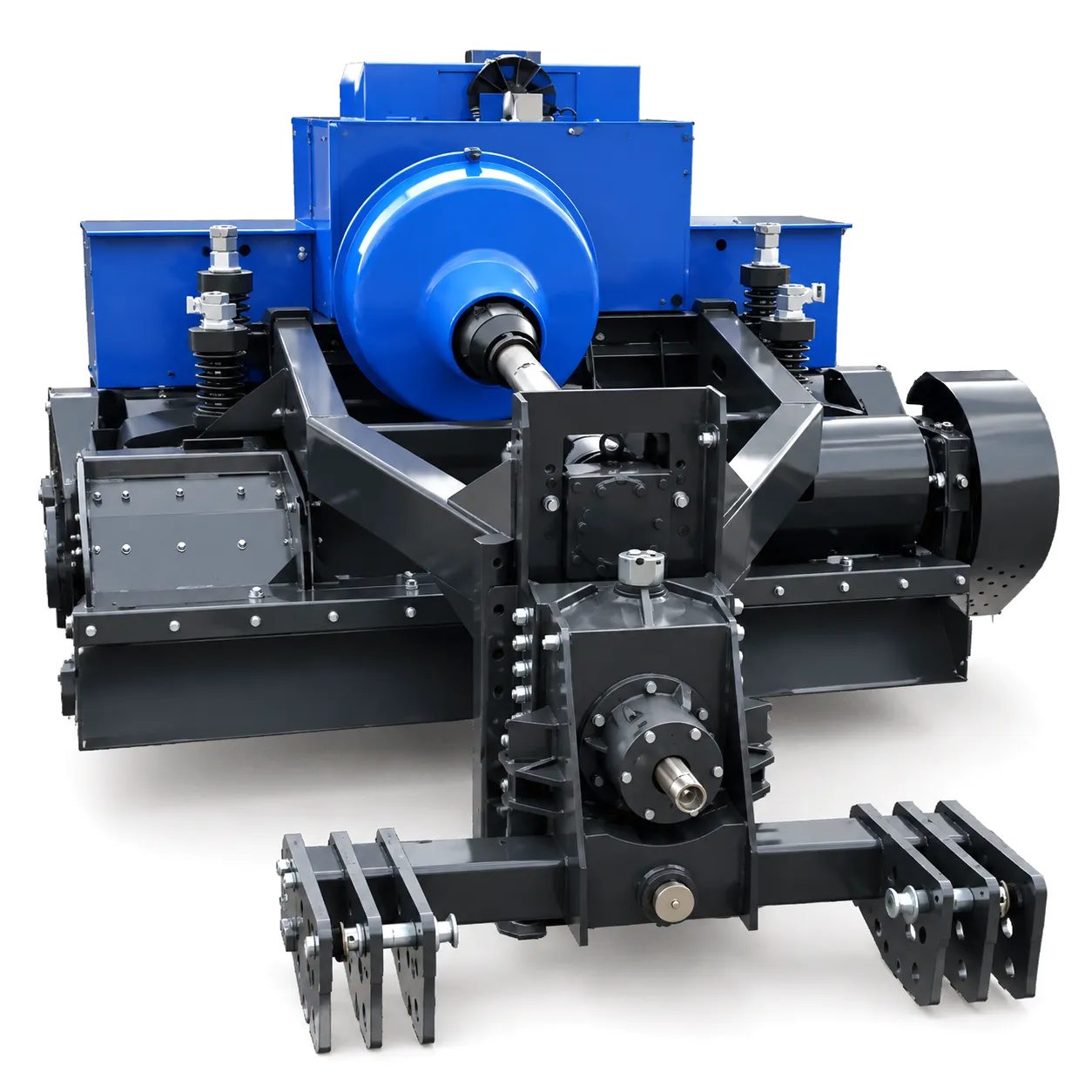
Prasa kostkująca 9YF-2200/1900/1700
A versatile high-performance square baler with pickup widths of 1700, 1900, or 2200 mm to suit farms from small to large commercial scale. Engineered for exceptional plunger force and a robust knotter system, the 9YF series handles wheat straw, hay, ryegrass, and biomass crops with equal reliability. Ideal for UK arable contractors seeking a dependable workhorse for high-output seasons.
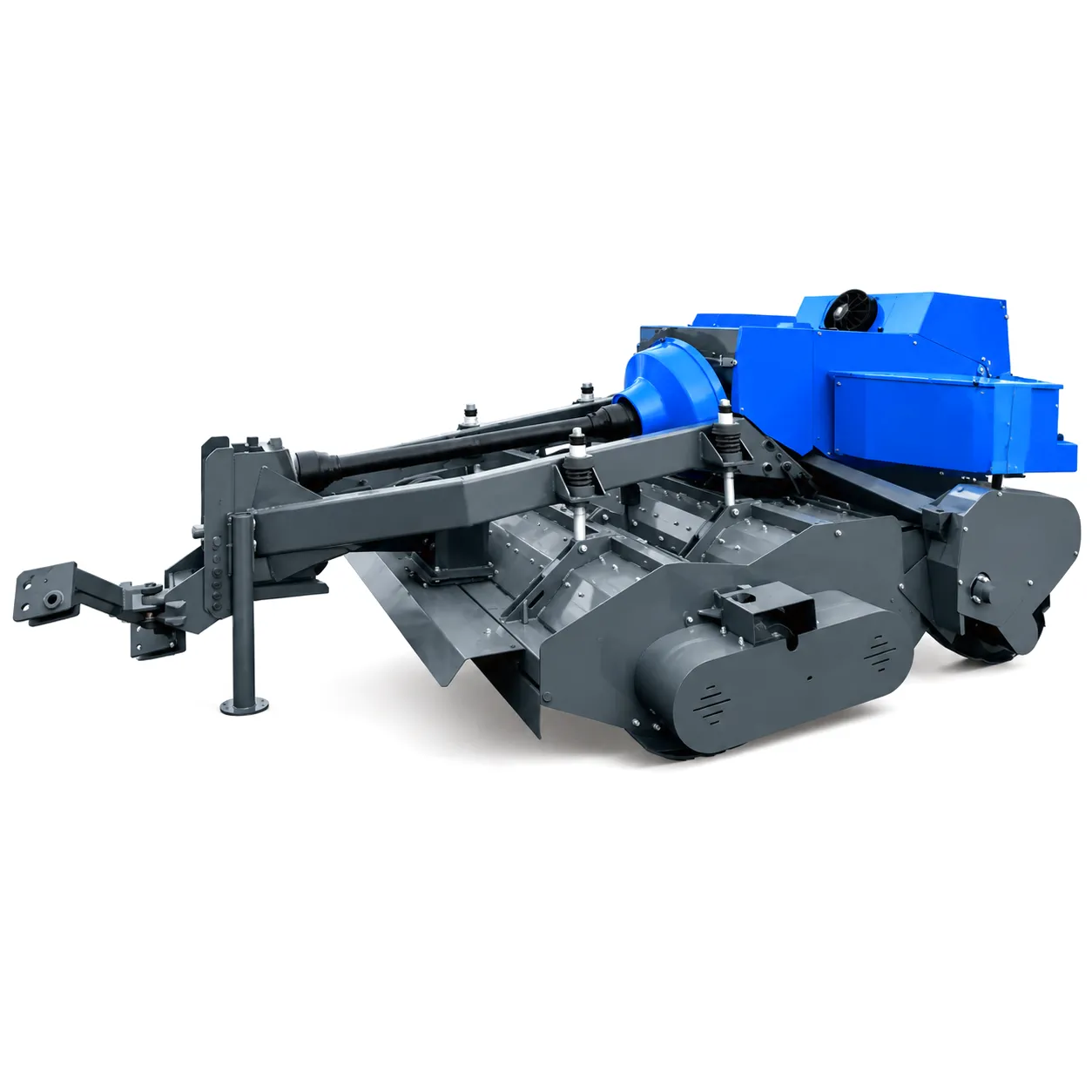
9YFS-2.2 Dwukomorowa prasa kostkująca
The 9YFS-2.2 takes the same proven platform and adds a dual pre-compression chamber system that dramatically improves throughput consistency at high working speeds. By pre-compressing crop before it enters the main bale chamber, this model reduces plunger overload events and maintains a more uniform bale density across the full range of crop conditions. Particularly suited to high-volume arable operations and biomass contractors who need sustained output across long working days.
Ever Power: Precision Manufacturing & Customisation Capability
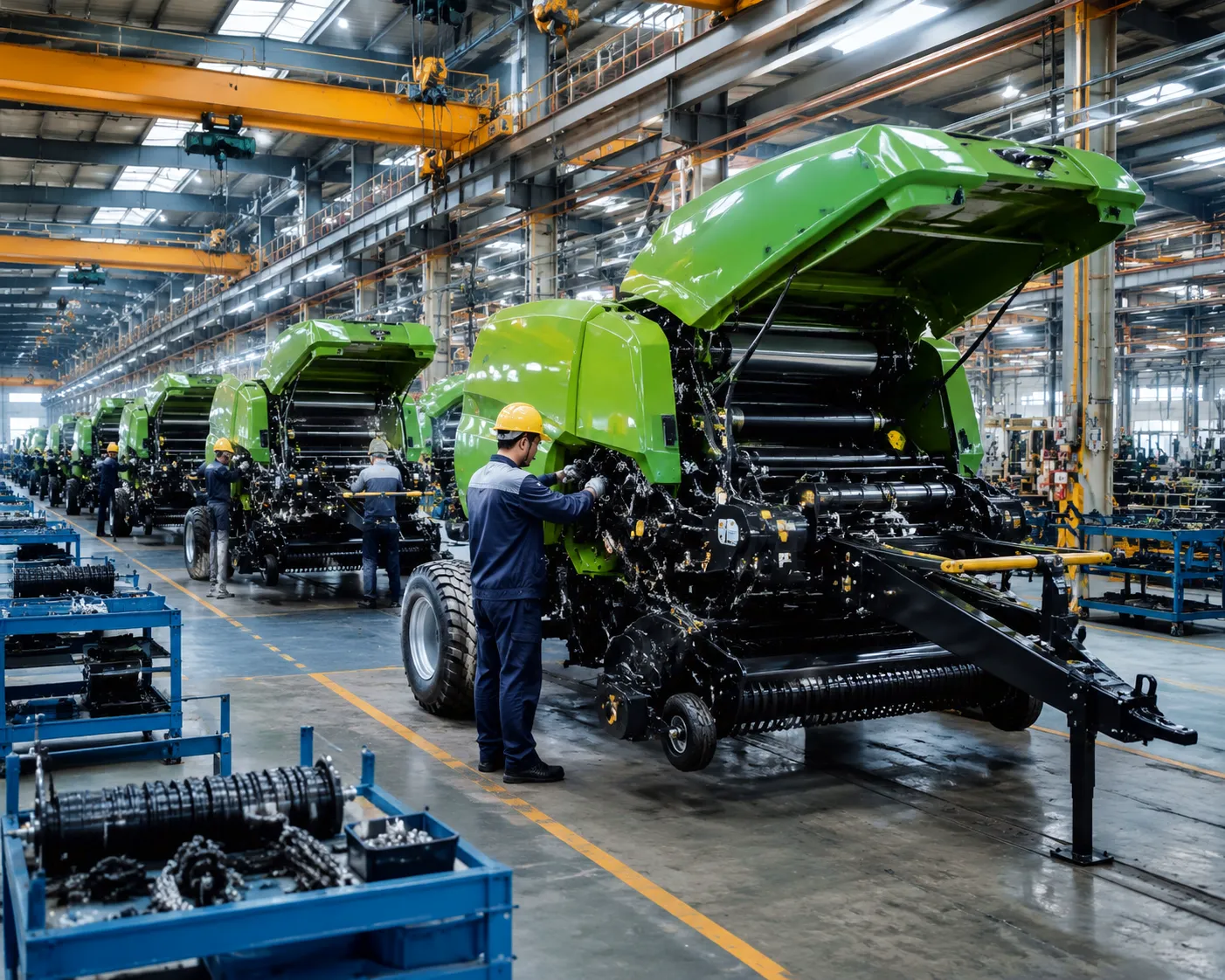
Ever Power operates a purpose-built manufacturing facility dedicated to agricultural and industrial baling equipment, with an installed production capacity that supports both standard product lines and fully engineered-to-order custom projects. The facility runs CNC machining centres, robotic welding cells, and a dedicated heat-treatment workshop — infrastructure that supports the tight dimensional tolerances required for knotter mechanisms and plunger drive components. Quality is managed through an ISO-aligned process with in-process dimensional inspection at every fabrication stage, and finished machines undergo a full dynamic test cycle before despatch. This manufacturing discipline means that when a customer specifies a non-standard bale chamber cross-section, a particular pickup reel width, or a specialist crop-conditioning pre-processor, Ever Power’s engineering team can translate that requirement into a production-ready design within an agreed timeframe — typically four to ten weeks depending on complexity. For UK importers, distributors, and large agricultural contracting businesses seeking a reliable supply partner, Ever Power offers volume pricing frameworks, customised pre-delivery inspection programmes, and full technical documentation packages in English.
✅ Custom Chamber Sizing
Non-standard bale cross-sections and lengths engineered to buyer specification for industrial supply chains
✅ OEM & White-Label Supply
Full OEM badging and colour scheme customisation available for distributor and dealer network partners
✅ Spare Parts Supply Chain
Comprehensive spare parts catalogue with fast-order fulfilment and UK-targeted stock-holding arrangements
✅ Technical Support
English-language installation, commissioning, and operator manuals supplied with every unit
Customer Success Story: Hargreaves Agri-Contracting, North Yorkshire
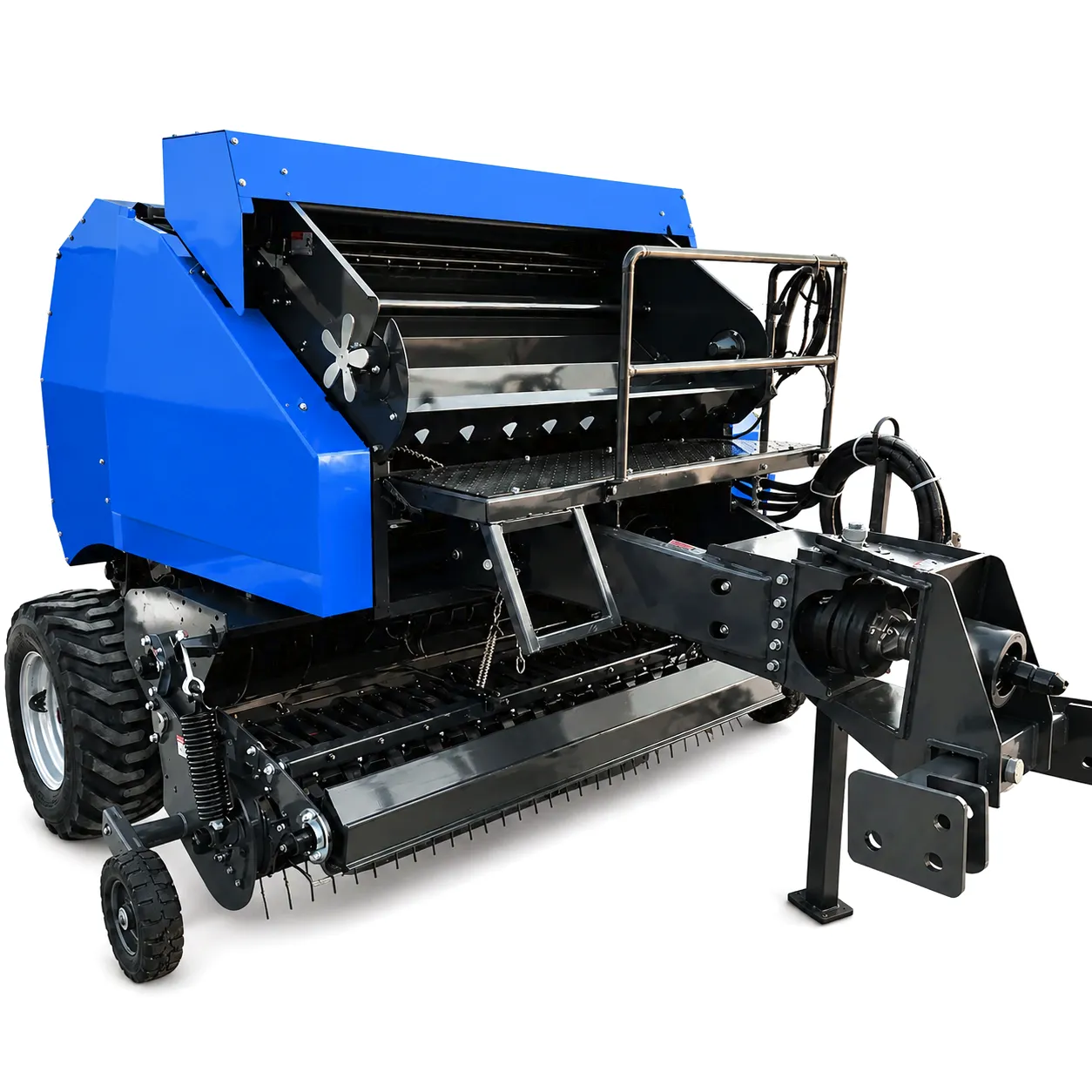
Hargreaves Agri-Contracting operates across the Vale of York and the lower Wolds, serving a mixed client base of arable farms, livestock holdings, and a biomass energy enterprise near Selby. Before sourcing from Ever Power, the business ran a fleet of three ageing square balers that together required over 280 hours of workshop time per season to maintain — a figure that reflected not just wear, but the difficulty of sourcing affordable replacement parts for machines that were no longer in active production. The team’s operations manager, speaking in the autumn following their first full season with two Ever Power 9YF-2200 machines, described the transition as transformative in practical terms.
In the first season, the two square balers processed a combined total of approximately 4,800 tonnes of wheat straw, barley straw, and miscanthus biomass across 38 client farms. Total machine downtime across both units amounted to less than nine hours — primarily scheduled knotter inspection and lubrication, rather than unplanned breakdowns. The plunger force and density control system on the 9YF-2200 allowed the team to maintain consistent bale weights within a narrow window even as crop moisture fluctuated through August and into the second cut of ryegrass in late September. The biomass energy buyer near Selby reported zero rejected loads on dimensional grounds across the entire season — a first for the contracting business, which had previously seen occasional rejections due to bale length variation from older machinery.
Ever Power’s technical support team provided remote commissioning guidance at the start of the season and shipped a comprehensive pre-season spare parts kit — including a full replacement knotter set, chamber liners, and pickup tine batches — which arrived within twelve days of order. The contracting business now holds Ever Power as its preferred square baler supplier and has placed an advance order for a third unit ahead of the following season.
★★★★★
“The density control on the 9YF-2200 is genuinely impressive. We ran the machine for six weeks straight during the straw harvest and bale weights stayed within plus or minus eight kilos of our target. That kind of consistency is what keeps the biomass yard happy.”
— Operations Manager, Hargreaves Agri-Contracting, Selby, North Yorkshire
★★★★★
“Ever Power sorted a custom pickup width for us — 2200 mm to match our wider cutting passes — and the turnaround from spec agreement to delivery was nine weeks. No other supplier we spoke to could get close to that lead time for a modified machine. The knotter reliability has been outstanding.”
— Fleet Manager, Broadacre Contracting Ltd, York
★★★★★
“We needed chamber liners replacing after our second season and the Ever Power spare parts kit arrived before I expected. The chamber liner swap took less than five hours with two men. On our old machine the same job used to take most of a day. Good product, sensible pricing, and a parts service that actually works.”
— Director, Pennine Agricultural Services, Harrogate, North Yorkshire
Często zadawane pytania
Q. How much does a commercial-grade square baler typically cost to buy from a UK supplier, and what should I budget for delivery and commissioning?
Commercial square baler prices in the UK market vary considerably depending on specification and origin. Compact class machines suitable for small farms typically start from around GBP 15,000–25,000 ex-works for new units sourced directly from a manufacturer. Mid-range and high-capacity machines from quality manufacturers like Ever Power, configured for contractor or commercial farm use, commonly fall in the GBP 35,000–80,000 range depending on pickup width, chamber size, and included options. Delivery to a UK port and onward transport to site should be budgeted separately — typically GBP 1,500–3,500 for sea freight plus UK haulage. Commissioning and initial operator training can be arranged through your local dealer or via Ever Power’s technical support team. For an accurate price specific to your required specification, contact [email protected] directly.
Q. Which square baler model is best suited for a large arable farm in Lincolnshire that needs to process wheat and barley straw at high volume each season?
For a high-volume arable operation in Lincolnshire where throughput during the short harvest window is the priority, the 9YF-2200 or the 9YFS-2.2 Double-Chamber are the natural candidates. The 2200 mm pickup width covers more ground per pass, reducing the number of field passes required and cutting fuel costs per tonne. The double-chamber version adds a pre-compression stage that maintains consistent density even when windrow weight varies — as it commonly does when different crop varieties and field conditions are encountered across a large farm estate. Both machines are designed to pair with 1000 RPM PTO output tractors, which are standard in arable operations of this scale.
Q. Where can I find a reliable square baler supplier in the UK who can provide spare parts quickly and offer technical support after purchase?
Ever Power supplies square balers to the UK market with a comprehensive spare parts programme designed to minimise downtime during critical harvesting periods. Parts orders are fulfilled from our manufacturing facility with priority despatch available for urgent requirements. Full technical documentation in English is supplied with every machine, and our support team is accessible for commissioning guidance and troubleshooting. UK-based distributors and dealers who hold Ever Power products can offer faster parts access during peak season — contact [email protected] to discuss the nearest stockist arrangement for your county or region.
Q. What tractor horsepower do I need to run a large square baler effectively on UK farm conditions and heavy crop volumes?
For compact class square balers the minimum recommended tractor power is around 60 HP (45 kW), but sustained high-throughput operation in heavy straw is more comfortable from 75 HP upward. Mid-range machines require 100–148 HP for optimal performance, and high-capacity commercial balers — including the larger configurations of the 9YF-2200 series — should be paired with a minimum of 160 HP (120 kW) to handle sustained plunger loads without power dip events that reduce throughput or cause missed knots. Many UK large-farm tractors in the 160–220 HP range are well-matched to high-capacity balers. PTO shaft compatibility and safety guarding should be verified before pairing any machine with a specific tractor model.
Q. Can Ever Power customise a square baler to a non-standard bale size for my biomass energy supply contract, and how long does a custom order take to deliver to the UK?
Yes — Ever Power’s engineering team regularly handles non-standard bale chamber specifications for industrial and biomass supply chain customers. The design and quotation process for a custom bale size typically requires your dimensional specification and a description of the primary crop material, after which Ever Power provides a formal engineering quotation. Lead times for custom orders range from six to twelve weeks depending on the complexity of the modification and current production scheduling. Sea freight transit to UK ports adds approximately four to six weeks. Contact [email protected] with your specification and we can provide a realistic timeline and price at the outset.
Q. When is the best time of year to service and inspect a square baler to make sure it is ready for UK harvest season?
Pre-season inspection should ideally be completed in April or May — well before the earliest harvest operations begin in late June or July in the south of England. The knotter mechanism, needle timing, and twine tensioner should be checked first, as these are the most likely sources of harvest-season frustration. Chamber liner wear, plunger face condition, and bearing clearances in the crankshaft assembly should all be assessed. Any replacement parts identified during this inspection should be ordered in April to allow time for shipping and to avoid the peak summer spare parts demand period. A full lubrication service and PTO shaft inspection should be completed immediately before first use.
edytuj przez gzl