Square Balers: Engineering Principles, Performance Specs & Industrial Applications Across the UK
A comprehensive technical guide for agricultural machinery buyers, contractors, and procurement managers sourcing high-performance baling equipment in the United Kingdom.
How a Square Baler Actually Works: The Mechanical Cycle in Detail
Princípio de funcionamento
1 — PTO-Driven Flywheel & Crank Mechanism
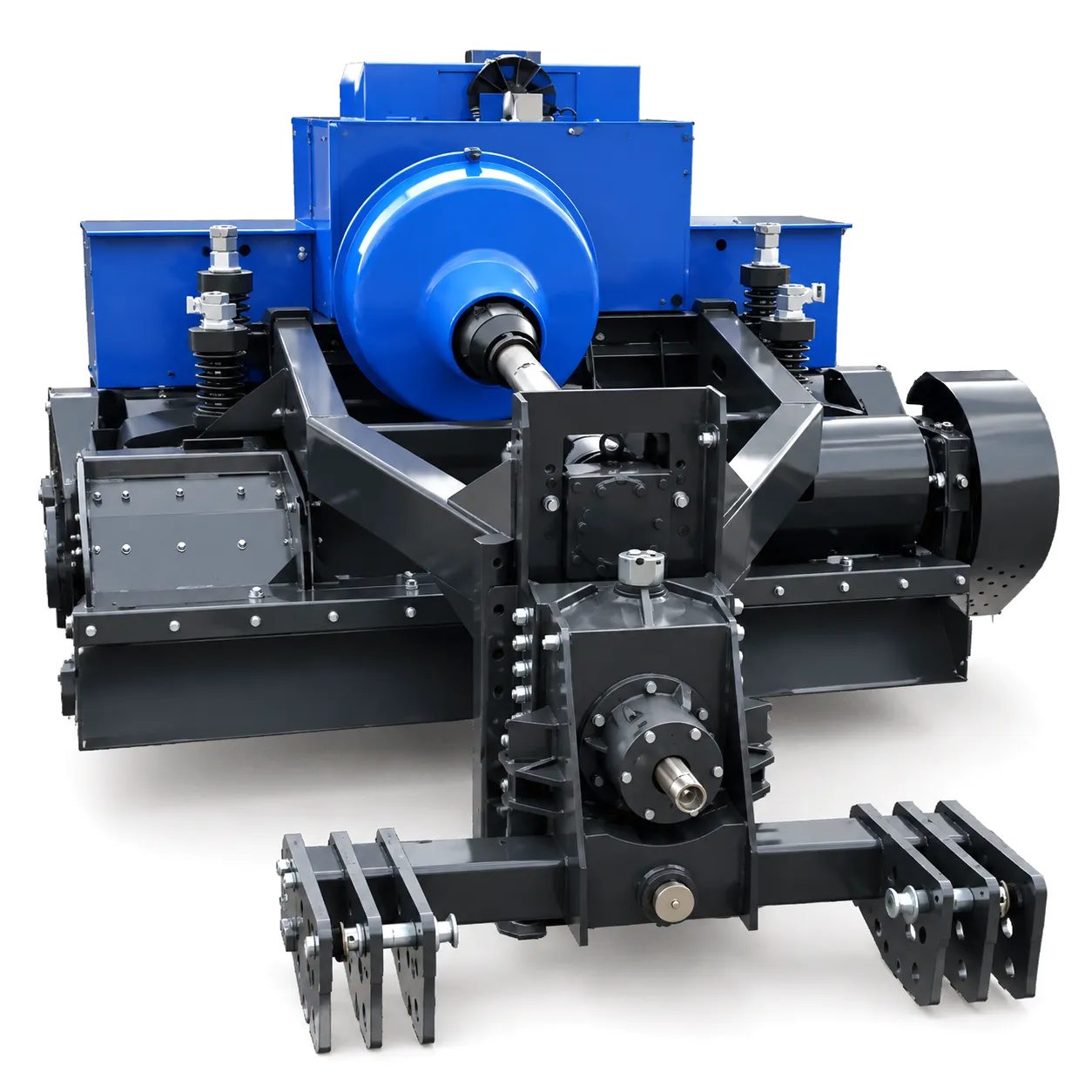
Power from the tractor PTO — typically at 540 rpm or 1,000 rpm — is transferred via a driveline shaft to a heavy flywheel mounted on the main gearbox. This flywheel, usually weighing between 180 and 320 kg depending on baler class, serves as a kinetic energy reservoir. Its rotational momentum smooths out the massive peak loads generated during each compression stroke, protecting the tractor’s transmission from shock loading. A crankshaft converts the flywheel’s rotation into the reciprocating linear motion of the plunger. The crank throw — typically 280 to 450 mm — determines the length of each compression stroke, directly influencing bale density and throughput capacity. The mechanical advantage built into the crank geometry means the plunger exerts force many times greater than the torque available at the flywheel shaft.
2 — Pick-Up, Auger & Pre-Compression Chamber
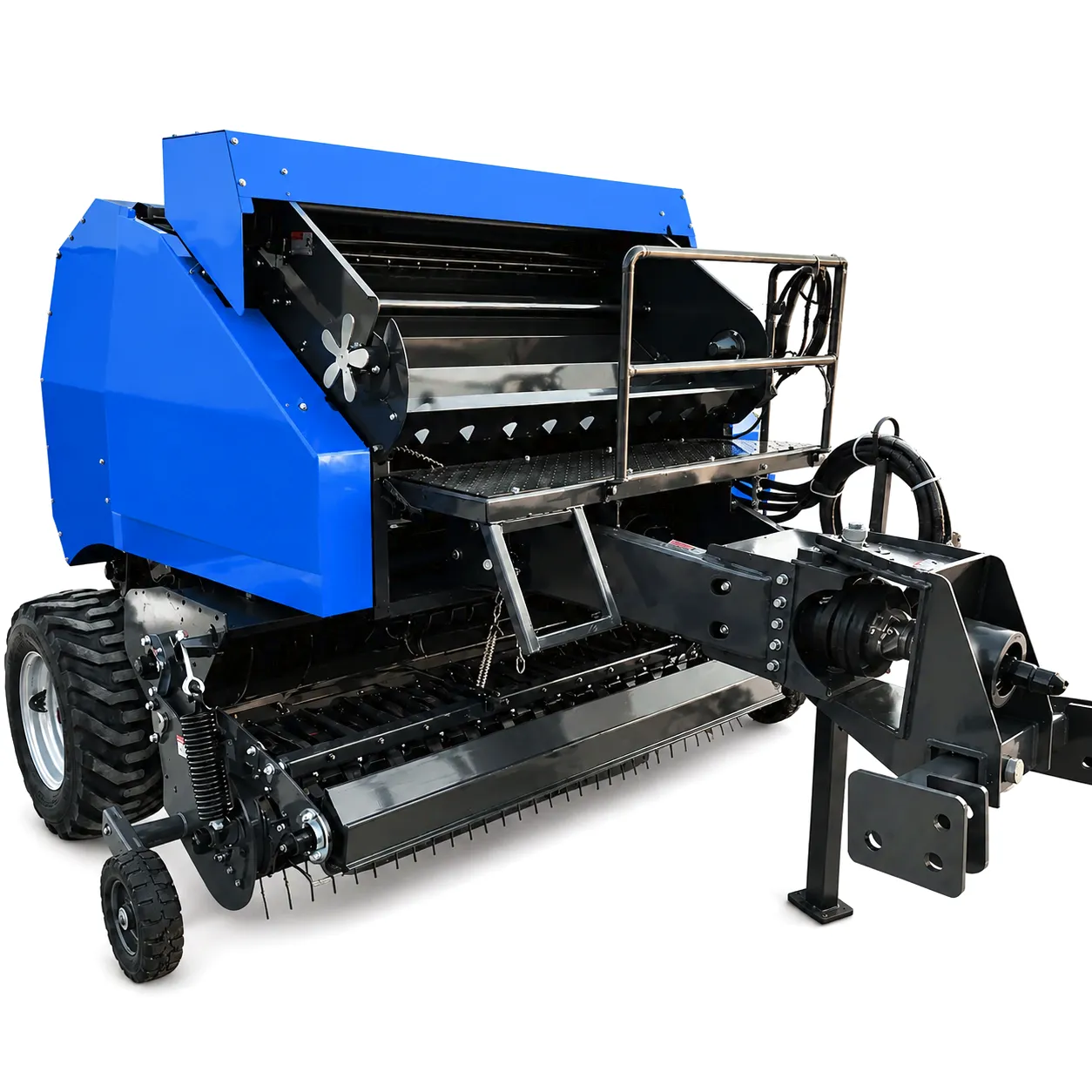
At the front of the machine, a spring-tine pick-up reel — typically 1.7 m to 2.2 m wide — lifts crop from the windrow and feeds it toward the auger or cross-conveyor. The pick-up cylinder rotates at high speed, its tines precisely shaped to grab material cleanly without bunching or wrapping. On wider-throat machines designed for high-output applications in Lincolnshire or the Norfolk grain belt, a double-auger pre-compression system begins consolidating the crop even before it enters the main bale chamber. This pre-compression reduces the volume of material that the plunger must handle in each stroke, allowing for more consistent slice thickness and ultimately more uniform bale density across the entire bale length — a factor that becomes commercially critical when bales are sold by weight or processed on automated feeding systems.
3 — Plunger Compression & Knotter Tying Cycle
Each forward stroke of the plunger compresses the crop slice against the previously formed bale face, applying pressures that can reach 250 to 320 bar in heavy-duty fixed-chamber models. A needle system threads twine beneath the bale and presents it to the knotter mechanism — usually a double-knot Knotec or cam-driven billhook style — which ties and cuts the twine in a single fluid motion timed precisely to coincide with the plunger’s return stroke. The accuracy of this timing is critical: a mis-timed knot causes a failed tie, resulting in bales that shed material during handling and create safety hazards on farm. Modern electronic knot-monitoring systems, now available as standard on premium machines, use inductive sensors to verify every knot cycle and alert the operator via cab display before a failed bale leaves the chamber.
4 — Bale Length Control & Ejection
As the bale forms inside the chamber, a bale length measuring wheel — or on advanced machines, a digital encoder — counts the number of plunger strokes or tracks the bale’s forward travel. When the pre-set length is reached, typically between 0.9 m and 1.3 m for large square balers, the tying cycle is triggered automatically. After tying, the bale is ejected from the rear of the machine under the push of incoming material. Rear chutes or pivoting bale slides control the drop, reducing impact damage on straw bales that may be harvested at 15–18% moisture — a common late-season scenario in the wetter western counties of England and Wales. The ejected bale is then either left in the field for later collection or directed onto a trailing bale accumulator for grouped placement.
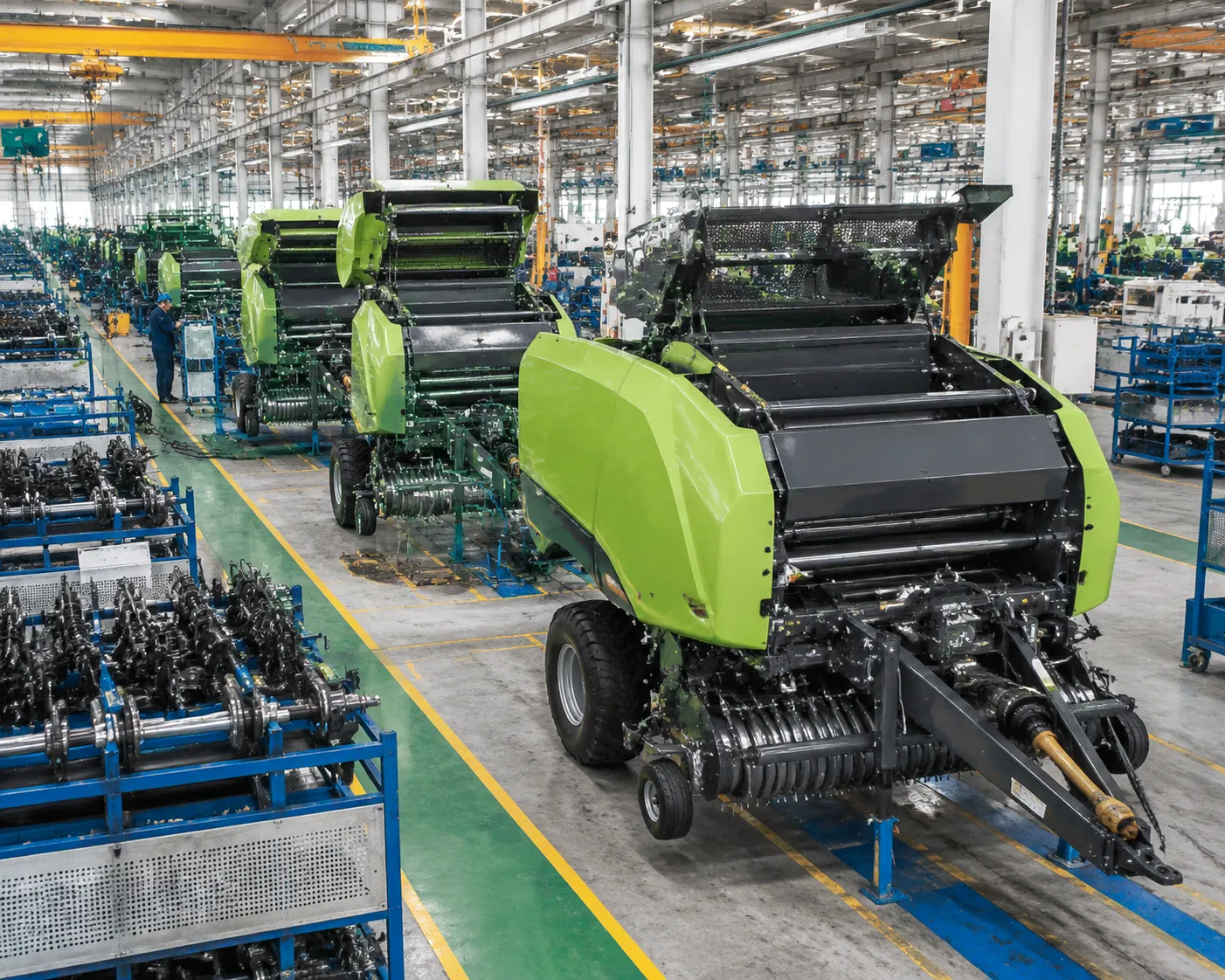
Technical & Performance Parameters: Square Baler Specification Table
Reference Specifications by Machine Class
| Parameter | Mid-Range Class (9YF-1700 / 1900) | High-Output Class (9YF-2200) | Double-Chamber (9YFS-2.2) |
|---|---|---|---|
| Bale Chamber Size (W × H) | 460×360 mm / 480×400 mm | 500×420 mm | 2 × 460×360 mm |
| Max Bale Weight (wheat straw) | 260–350 kg | 420–550 kg | 2 × 260–350 kg |
| Required PTO Power (kW / hp) | 55–75 kW / 75–100 hp | 90–130 kW / 120–175 hp | 110–150 kW / 148–200 hp |
| Velocidade da TDP | 540 rpm | 540 / 1,000 rpm | 540 / 1,000 rpm |
| Pick-Up Width | 1,700 / 1,900 mm | 2,200 mm | 2,200 mm |
| Plunger Strokes per Minute | 46–52 spm | 38–46 spm | 38–44 spm |
| Max Compression Force | 180–220 kN | 280–340 kN | 2 × 200–260 kN |
| Twine Capacity (balls) | 8–12 | 12–16 | 16–20 |
| Frame Material | S355 structural steel | S460 high-tensile steel | S460 high-tensile steel |
| Bale Length Range | 0.9–1.2 m (adjustable) | 0.9–1.3 m (adjustable) | 0.9–1.2 m per chamber |
| Machine Weight (approx.) | 2,600–3,200 kg | 4,200–5,100 kg | 5,600–6,400 kg |
| Wear Chamber Lining | Hardox 400 | Hardox 450 | Hardox 450 |
* Specifications are indicative ranges. Contact Ever Power for application-specific configuration and certified data sheets.
Core Technical Advantages of Modern Square Balers
Why Square Format Outperforms Round in Commercial Applications
Higher Packing Density per Transport Unit
Square bales tessellate perfectly, filling the cubic volume of lorry trailers, ISO containers, and covered storage buildings without the dead air space that characterises round bale stacking. In practice this translates to 18–24% more crop weight per haulage load on a standard 13.6 m flat-bed trailer — a significant cost saving when moving hay or straw across distances between farms in Norfolk or contract-hauling biomass to a CHP plant in the Midlands. For UK operators subject to standard 44-tonne road train limits, maximising payload per run directly affects margin per tonne hauled.
Automation Compatibility in Feed & Biomass Processing
Square bale geometry is a fundamental enabler of automated handling systems. Robotic bale clamps, conveyor-fed bale shredders, and automated feeding wagons all depend on predictable bale dimensions and consistent face presentation that round bales simply cannot provide reliably. Biomass power stations operating in the East Midlands and Yorkshire typically specify large square bales precisely because their automatic infeed conveyors are dimensionally engineered around the flat-face profile. Any variation in bale shape from poor field conditioning or worn pick-up components translates directly to feed system jams, unplanned downtime, and penalty clauses in biomass supply contracts.
Reduced Moisture Ingress in Outdoor Storage
The flat top face of a square bale, when stacked correctly, sheds rainfall more effectively than the curved surface of a round bale, where water can pool at the crown and wick into the bale’s inner layers. In the UK’s characteristically wet autumns — particularly west of the Pennines and throughout Wales — this matters considerably for outdoor-stored hay bales destined for winter livestock feed. Properly formed square bales with adequate surface density show demonstrably lower spoilage rates in the outer 100–150 mm layer compared to equivalent round bales stored in similar conditions without weatherproof wrapping, protecting both feed quality and the farmer’s investment through the storage period.
Dual-Chamber Configuration for Double Output Per Pass
Double-chamber square baler models — such as the Ever Power 9YFS-2.2 — allow two separate bale chambers to operate simultaneously from a single pass across the windrow, effectively doubling output without increasing field time or the need for a second tractor and operator. This configuration is particularly attractive to contracting businesses operating in high-throughput cereal regions like the Fens or the Vale of York, where the harvest window for dry straw may be compressed to just three or four working days. The ability to clear a field in half the passes reduces ground pressure damage on lighter soils and allows faster rotation of the contracting fleet to the next customer.
Shredding Mechanism Options for Improved Feed Integration
Several square baler models in the current Ever Power range incorporate integrated crop shredding or chopping mechanisms upstream of the bale chamber. These systems — available as single or dual shredding configurations — cut crop stems to shorter lengths before compression, which increases bale density, reduces the effective fibre length for cattle and sheep rumen processing, and lowers the risk of mat formation that impedes airflow in loose feed troughs. The dual-shredding mechanism variant, particularly suited to long-stemmed grasses and hay crops, improves packing efficiency by 12–18% and is increasingly specified by dairy farms in Lancashire and Cheshire where high-output baling of precision-managed sward is a regular requirement.
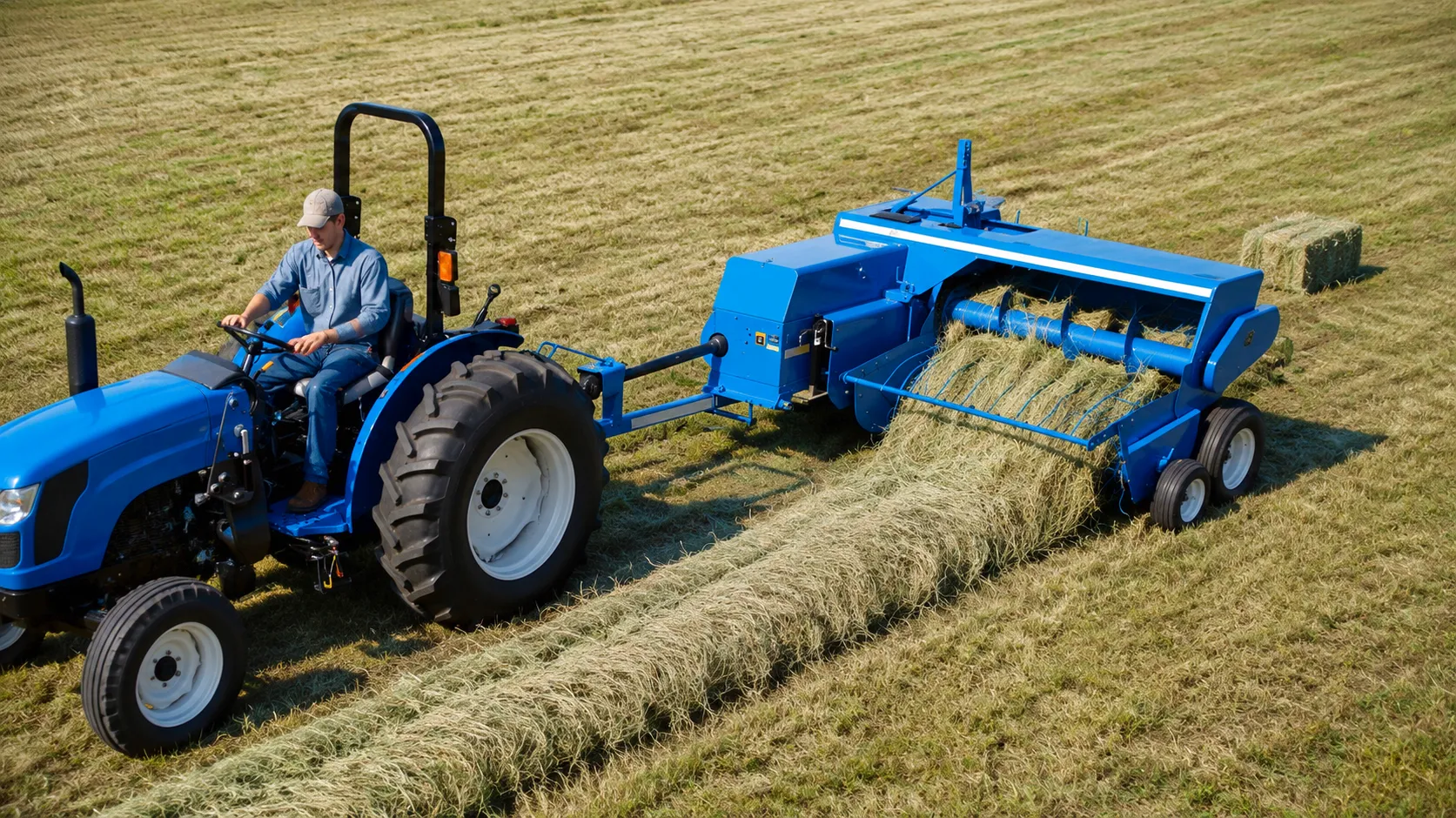
Ever Power Square Baler Product Range
Two Flagship Models — Built for UK Commercial Operations
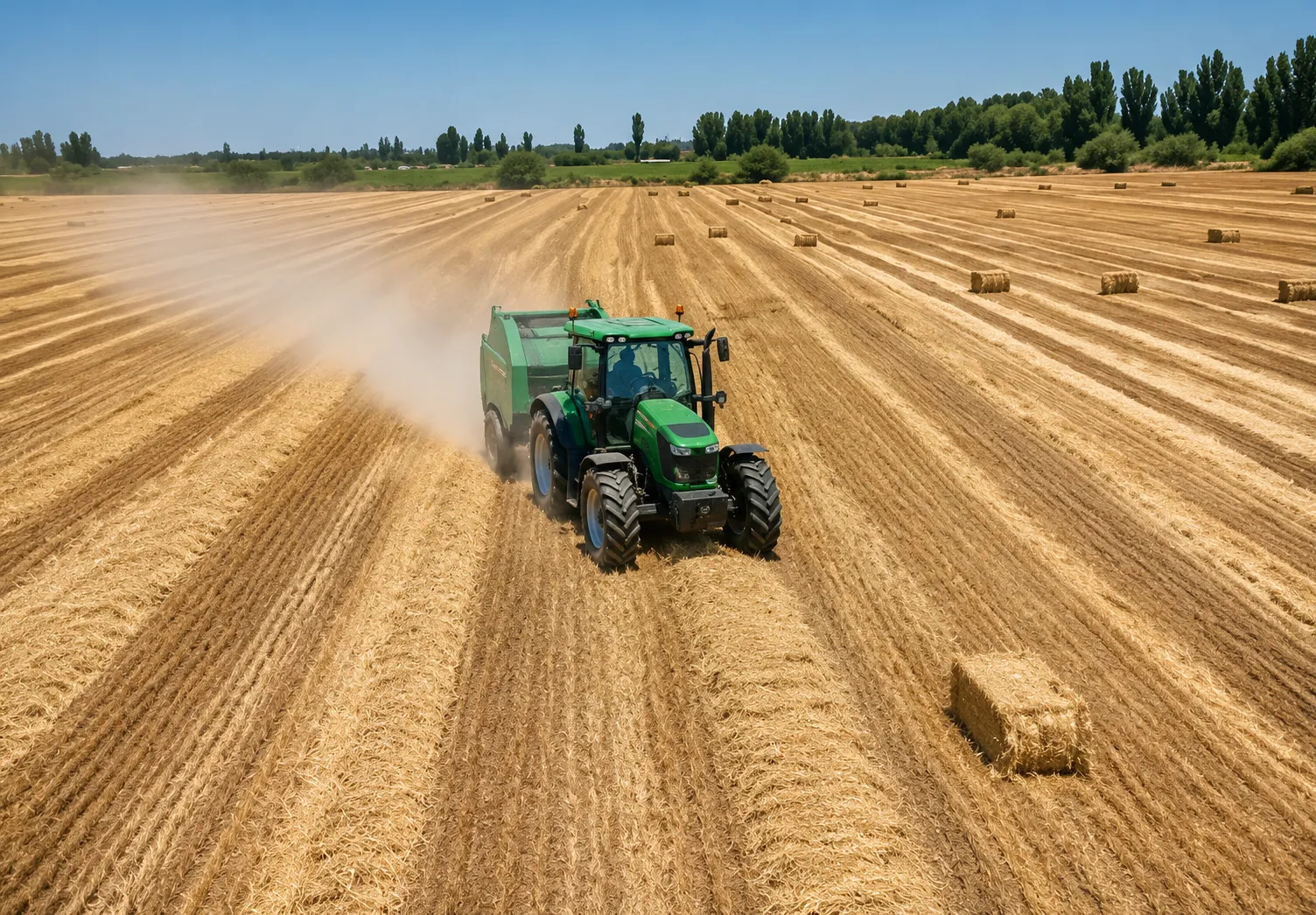
Enfardadeira quadrada 9YF-2200/1900/1700
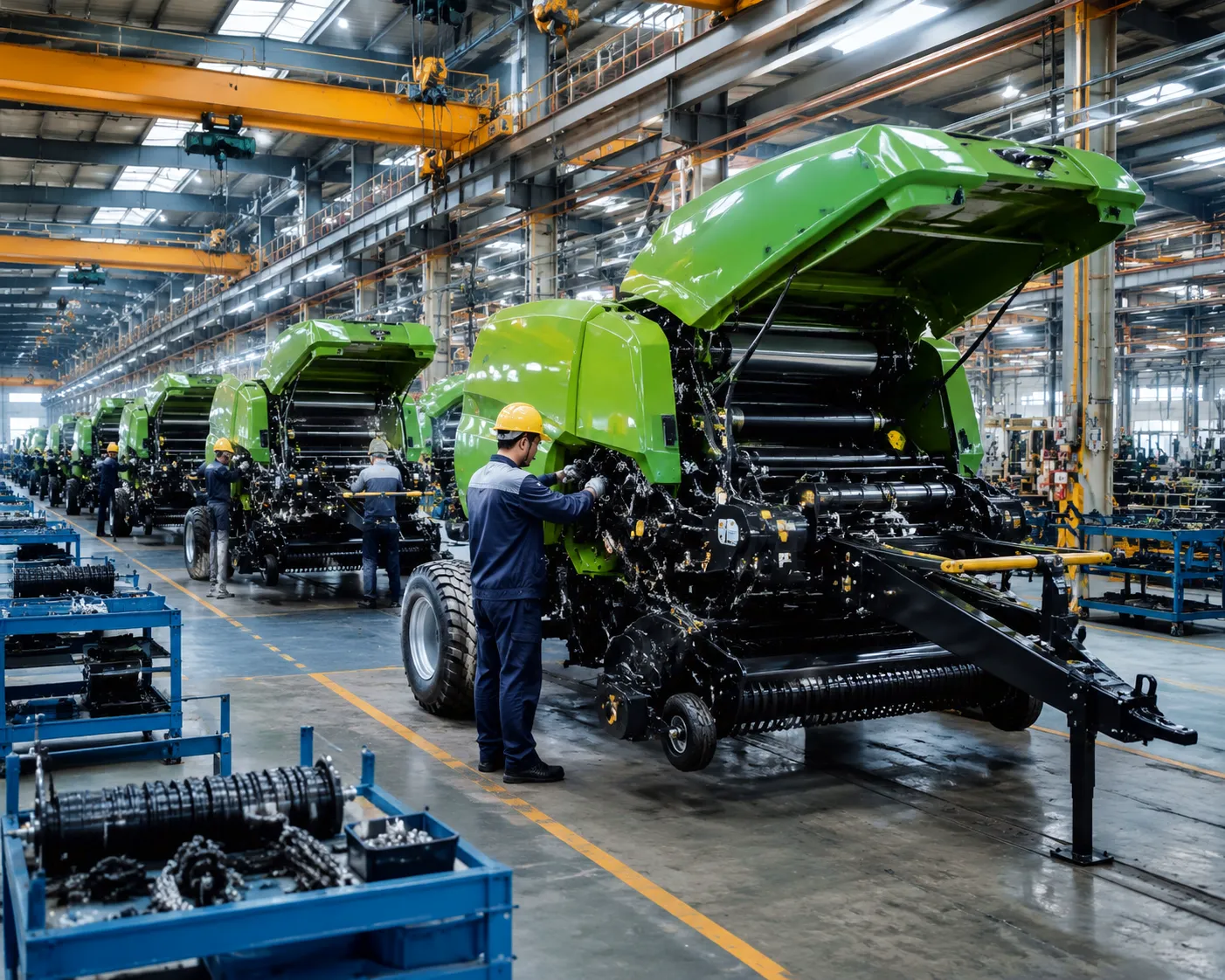
A versatile, high-performance single-chamber square baler available in three pick-up widths — 1,700 mm, 1,900 mm, and 2,200 mm — to match field conditions and windrow widths across the full range of UK arable and grassland operations. The 2,200 mm wide-throat variant is the preferred choice for contracting businesses in Lincolnshire and Norfolk handling high-volume cereal straw. Robust S460 frame construction, Hardox-lined chamber walls, and a proven double-knot tying system deliver the reliability that harvest-season operations demand.
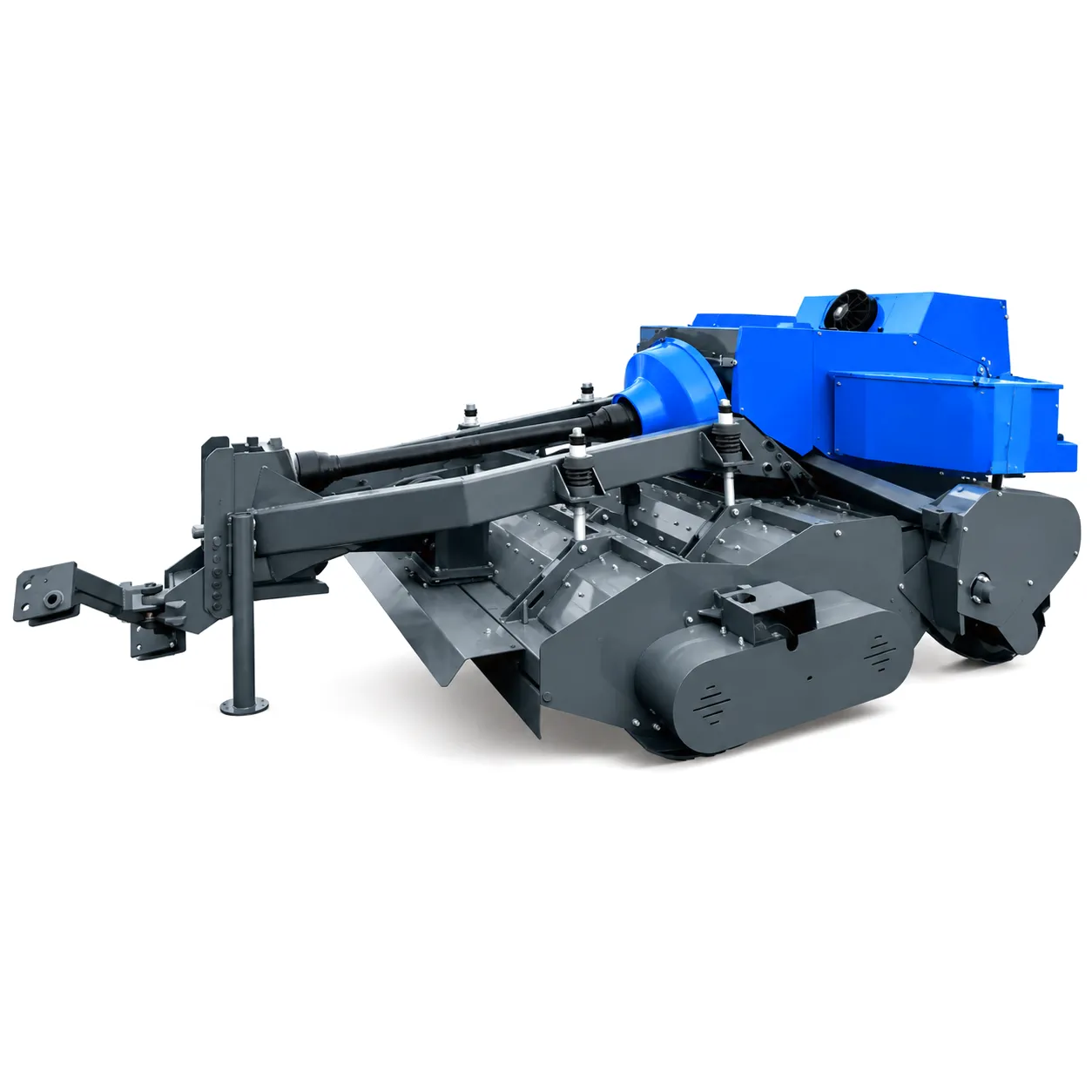
Enfardadeira quadrada de câmara dupla 9YFS-2.2
The 9YFS-2.2 doubles baling output from a single field pass by operating two independent compression chambers from one pick-up pass. For agricultural contractors and large-scale arable operations where maximising acreage during the narrow UK harvest window is commercially critical, this machine effectively halves the field time required to clear a given area of straw. The 2,200 mm pick-up supplies both chambers via a dual-feed auger arrangement, and independent bale length control allows each chamber to be set separately according to end-user requirements. Optional dual-shredding mechanisms ahead of the chambers add feed quality benefits for livestock-supply operations.
Customer Success Story: Fenland Contracting, Spalding, Lincolnshire
Real-World Performance in UK Commercial Baling Operations
“The 9YF-2200 ran clean through 280 hours of our harvest season without a knotter failure — that kind of reliability is what keeps the harvest schedule intact when you’re covering four farms in seven days. The bale density on wheat straw was noticeably better than our old machines, which made a difference to our biomass contract tonnage per load.”
“Ever Power’s customisation process was straightforward — we specified a wider pick-up to match our combine’s straw management system and they confirmed the configuration in three days. The centralised lube points cut our daily service check from 25 minutes to about eight, which matters when you’re trying to make the most of a dry window in this part of Lincolnshire.”
“We priced three suppliers before placing the order. Ever Power came in competitively on the initial unit cost, but the deciding factor was the parts availability commitment and the quality of the technical documentation they provided upfront. When you’re running machines 16 hours a day during harvest, you need to know you can get a knotter bill hook next day, not wait three weeks from a European warehouse.”
Frequently Asked Questions: Square Balers for UK Operations
Voice-Search Friendly · Buyer & Technical Queries
How much does a large square baler cost to buy from a supplier in the UK, and what should I budget for import and delivery charges?
Pricing for large square balers sourced direct from a manufacturer varies by specification, but mid-range single-chamber machines in the 2,200 mm pick-up class typically land in the £38,000–£62,000 range (ex-works, before UK import duties and freight). Double-chamber units carry a premium of roughly 35–45% over single-chamber equivalents of the same pick-up width. Import duties applicable to agricultural machinery sourced from China are currently subject to UK Global Tariff schedules, so prospective buyers should confirm the current commodity code tariff rate with a licensed freight forwarder before finalising a purchase decision. Ever Power can provide detailed landed cost estimates for UK delivery on request — contact [email protected] for a tailored quote.
What tractor horsepower do I need to run a high-output square baler efficiently on a large UK arable farm?
For a 2,200 mm wide-throat large square baler operating in heavy wheat straw at target densities above 400 kg per bale, a minimum of 120–130 hp at the PTO is the practical working floor, with 150–175 hp providing a comfortable working margin on stony soils or in damp conditions where crop flow is irregular. Running a high-output square baler at the margin of its power requirement dramatically increases driveline shock loading on both the tractor and the baler’s own gearbox, accelerating wear on couplings, shaft bearings, and the flywheel key. If you are uncertain whether your existing tractor is an adequate match for a particular baler specification, Ever Power’s technical team can review your tractor’s rated PTO output and continuous operating torque figures against the machine’s demand curve before you commit to a purchase.
Where can I get spare parts for a large square baler quickly if something breaks down during the harvest season in the East of England?
Ever Power maintains a parts inventory at its manufacturing facility, and a growing number of agricultural machinery dealers in Lincolnshire, Cambridgeshire, and Norfolk stock recommended wearing parts — knotters, billhooks, pick-up tines, gearbox oil seals — for the 9YF series. For non-standard or emergency orders, DHL Express and TNT freight services running from the manufacturer’s location can typically deliver critical components to UK addresses within 72–96 working hours. Ever Power strongly recommends that customers operating during peak harvest purchase a harvest-season spare parts kit at the point of machine delivery: this kit covers all statistically high-probability wearing items and removes the lead-time risk from the most commercially vulnerable period of the year.
Which type of square baler is best for baling miscanthus and energy crops in Yorkshire for biomass supply contracts?
Miscanthus presents specific challenges: high stem stiffness when dry, significant moisture variation across a standing crop canopy, and silica content in the stems that accelerates wear on pick-up tines and chamber lining. The recommended configuration for miscanthus baling in Yorkshire biomass applications is a 2,200 mm wide-pick-up machine with Hardox 450 or equivalent wear-steel chamber lining, heavy-duty spring tines on the pick-up cylinder, and a high-tension knotter arrangement suited to the coarser twine grades recommended for high-density biomass bales. The double-chamber 9YFS-2.2 is increasingly specified for large-scale miscanthus operations because it clears the standing area in fewer field passes, reducing ground traffic on the shallow, moisture-sensitive soils typical of the lower Vale of York and the Humber floodplain margins.
How can I get a competitive price quote from an overseas square baler manufacturer who can supply to the UK with reliable after-sales support?
Requesting a written quotation from Ever Power via [email protected] is the most direct route. The company’s export sales team is experienced in preparing UK-specific documentation including pro-forma invoice, packing list, CE-equivalent test certification, and full specification datasheets in English. Ever Power can arrange CIF UK port pricing inclusive of marine insurance, or quote on an FOB basis if the customer prefers to manage their own freight forwarding. A typical quotation response time is three to five working days from initial technical enquiry, and the company’s UK-orientated export process includes post-delivery support arrangements covering technical documentation, service training resources, and access to the parts team via email with English-language correspondence as standard.
When is the best time of year to order a square baler for delivery to a UK farm or contracting business so it arrives before the harvest season?
Lead times from confirmed order to UK port delivery typically run 8 to 14 weeks depending on production scheduling and shipping route. For UK harvest readiness — where the primary cereal straw baling window generally runs from mid-July through to early September — orders placed before the end of March give the best assurance of pre-harvest delivery and allow time for pre-season commissioning and any operator familiarisation. Orders placed in April or May carry an increasing risk of late delivery during peak production periods when the manufacturer’s order book is fullest, though express sea-freight options can sometimes compress the transit time from the standard 28–35 days to 18–22 days at additional freight cost. Ever Power’s export team can provide a realistic delivery schedule at the time of quotation based on current production availability.
Ready to Source Square Balers for Your UK Operation?
Contact the Ever Power export team for a detailed specification review, competitive pricing, and delivery schedule tailored to your farm or contracting business requirements.
editado por gzl