Square Balers: Technical Insights, Buying Guide, and Applications for UK Agricultural Operations
Engineering insight, performance specifications, and procurement guidance for buyers across the United Kingdom
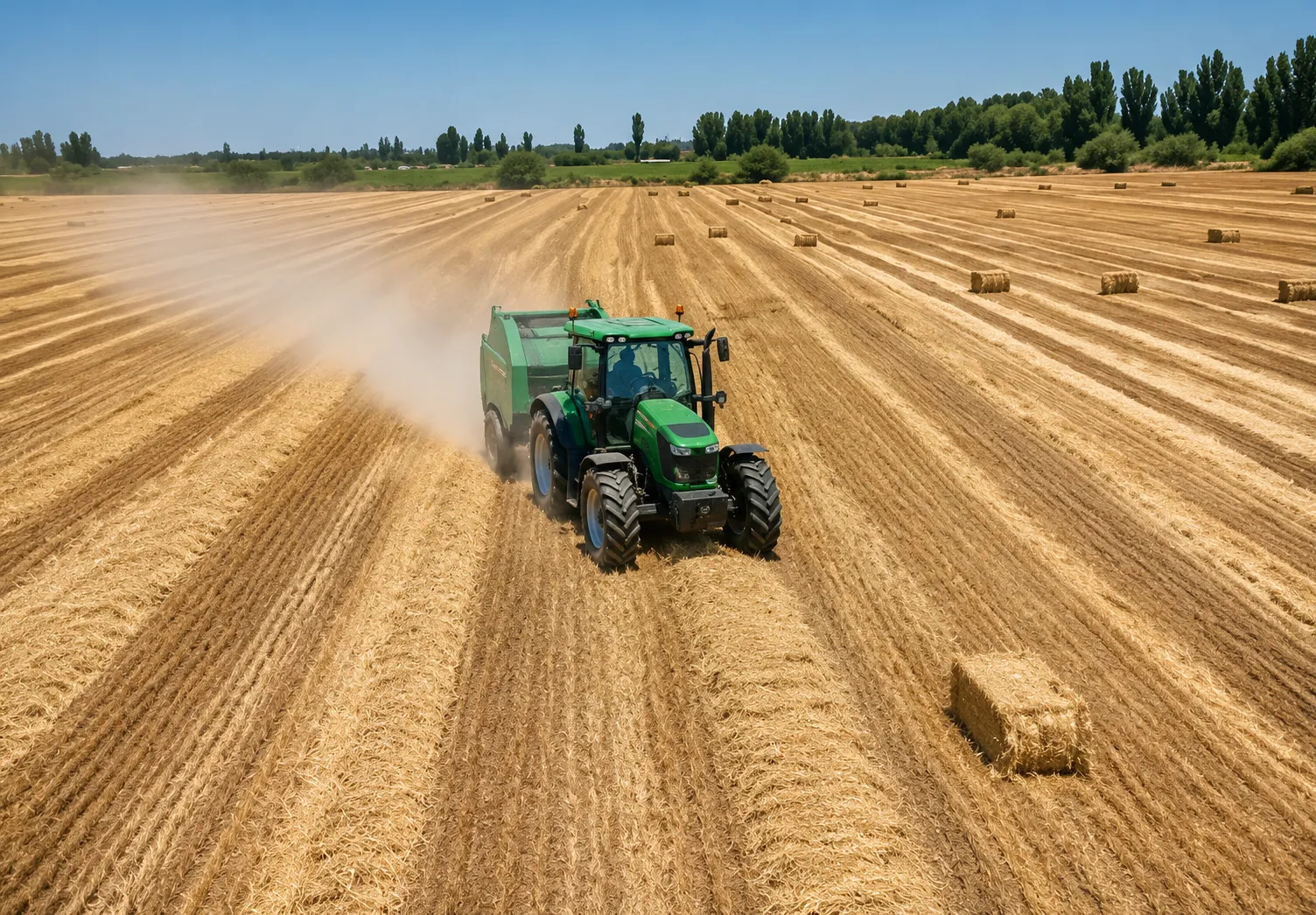
The square baler — known interchangeably as a rectangular baler in professional circles — represents one of the most mechanically demanding and operationally critical machines in modern agricultural and industrial materials handling. From the rolling lowlands of East Anglia to the upland farms of Yorkshire and the silage fields of Scotland, square balers perform the essential function of compressing loose crop material into dense, manageable bales that can be stored, transported, and sold with maximum efficiency. The machine’s influence extends well beyond farming: waste paper recyclers in Birmingham, straw-processing plants in Lincolnshire, and biomass energy producers across Wales all depend on reliable square baler performance to meet throughput targets and keep logistics costs under control.
Understanding how a square baler works — its feeding mechanism, plunger dynamics, knotting system, and chamber geometry — is not merely an academic exercise. Operators who grasp the engineering rationale behind each subsystem can make better procurement decisions, reduce unplanned downtime, extend machine service life, and negotiate more confidently with suppliers. This guide provides that depth, drawing on practical field experience and precision engineering principles to give UK buyers the knowledge they need before committing to capital expenditure.
How a Square Baler Works: Engineering Principles Explained
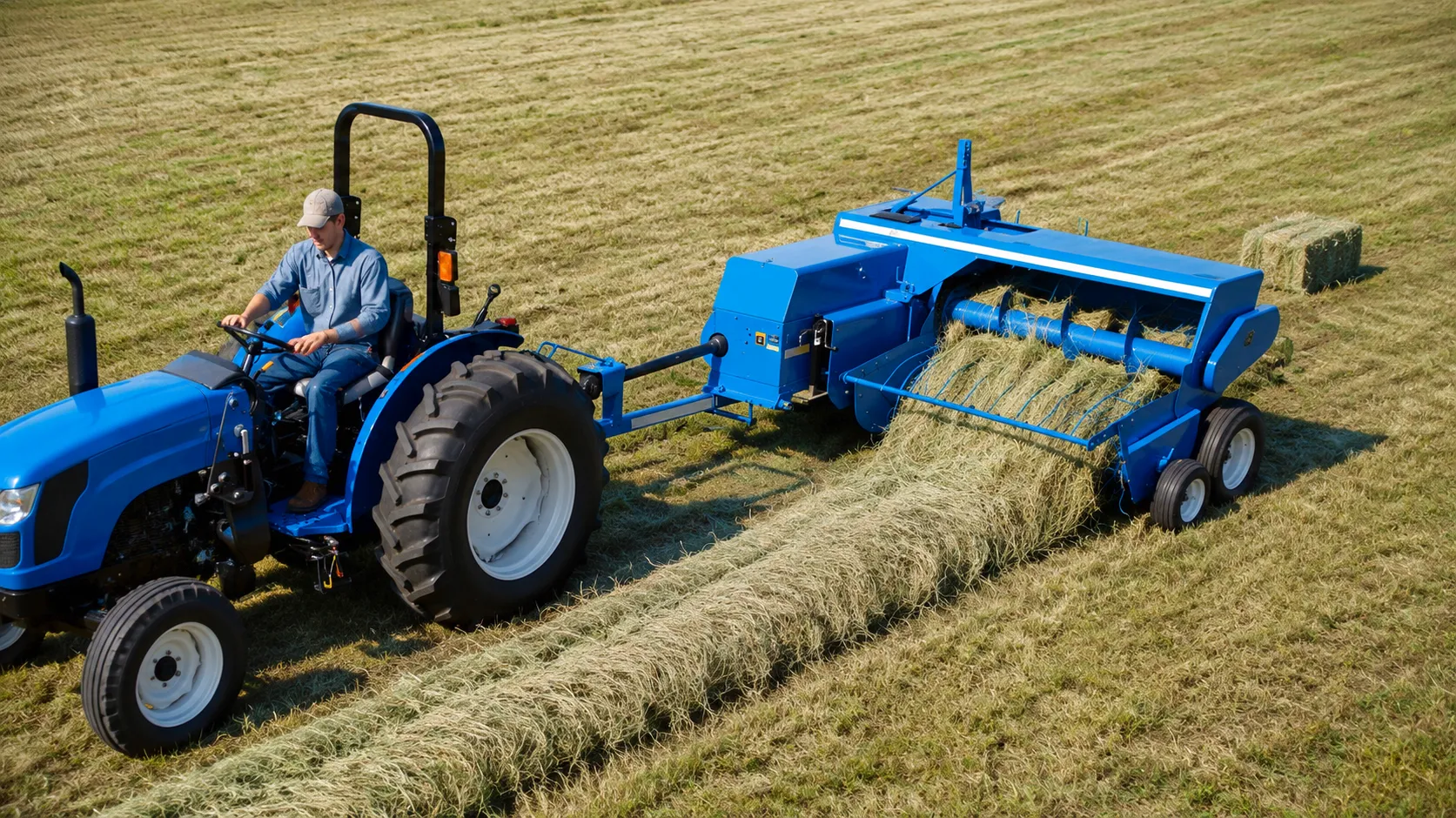
The operational cycle of a square baler begins the instant the pickup reel engages windrow material lying on the field surface. A series of spring-steel tines rotate continuously, lifting loose straw, hay, or crop residue from ground level and feeding it into the pre-compression channel. From there, a rotating auger or finger-wheel consolidates the material laterally before the stuffer mechanism pushes a metered charge into the main bale chamber.
Inside the bale chamber, the plunger — driven by a robust crankshaft and connecting rod assembly — reciprocates at rates typically between 70 and 100 strokes per minute depending on model and ground speed. Each plunger stroke compresses the incoming charge against the partially formed bale ahead of it. As the bale advances through the chamber under the resistance created by the density adjusters (hydraulically or mechanically controlled side and top cheeks), individual charges are fused into a coherent, dense block. When the bale reaches the target length, detected by a metering wheel or star wheel on the chamber wall, the knotting system is triggered.
The knotter — arguably the most mechanically complex component on the entire machine — executes a precise sequence in under one second. Needle arms swing through the bale chamber, threading twine from the base needles up to the bill hooks mounted at the top of the chamber. The bill hook rotates to capture the twine loop, a knife severs the standing length, and the tucker mechanism pushes the formed loop free, leaving the bale secured with two or more twine loops depending on chamber width. Knotting reliability is the single greatest determinant of operational throughput: a missed knot wastes the entire bale charge and can jam subsequent feeding cycles.
Core Materials Used in Square Baler Manufacturing
The main chassis, bale chamber walls, and plunger frame are fabricated from S355 or equivalent high-yield structural steel with minimum yield strength of 355 MPa. This specification resists the high-cycle fatigue loading imposed by thousands of plunger strokes per operating hour. Heavy-duty welds are produced using MIG or submerged arc welding processes with full penetration joints at stress-critical locations.
Bill hooks, needles, and plunger knife blades are manufactured from case-hardened alloy steel — typically 20CrMnTi or equivalent — with surface hardness reaching HRC 58–62 after heat treatment. This combination of a hard wear surface over a tough core provides the resistance to abrasion and impact required to maintain knotting accuracy over extended seasons without premature edge failure.
Pickup tines are formed from boron-alloyed spring steel, typically 65Mn or 50CrV4, offering excellent fatigue resistance under continuous cyclical deflection. Tines must flex over stones and uneven ground without permanently deforming, yet return to their exact pitch angle to maintain consistent crop feeding. Tine finish is normally electrophoretic primer plus polyurethane topcoat to resist moisture corrosion in the UK’s frequently wet operating conditions.
Crankshaft bearing housings use spherical roller bearings in cast iron housings, sized to handle the radial and axial loads generated during high-density baling. Pivot points throughout the knotter mechanism use oil-impregnated bronze bushings that provide self-lubrication over extended service intervals — an important feature for farmers working long harvesting shifts in remote locations far from dealer support networks.
Core Technical Advantages of Modern Square Balers
Modern square balers deliver bale densities of 130–200 kg/m³ for hay and 180–280 kg/m³ for straw depending on moisture content and machine settings. Uniform rectangular bale geometry enables efficient stacking in trailers, containers, and storage buildings — a critical factor for UK hauliers working to maximum payload under Road Vehicles (Construction and Use) Regulations. Dense, well-shaped bales also reduce the risk of spontaneous combustion during storage by minimising internal moisture pockets.
Contemporary flywheel design and optimised crankshaft geometry allow throughput rates of 18–30 tonnes per hour with tractors in the 80–130 hp range. The energy stored in the flywheel between plunger strokes smooths power demand, reducing peak PTO torque spikes that would otherwise cause tractor hesitation or clutch slip. This efficiency advantage translates directly into lower diesel consumption per tonne of baled material — an increasingly important metric for UK contractors managing tight operating margins.
Hydraulic density adjustment on professional-grade machines allows operators to change bale weight without stopping the machine. Bale length can be set from the cab or manually via the metering wheel trigger arm. This flexibility is invaluable for mixed-enterprise farms in the Scottish Borders or Welsh uplands that need to switch between producing lightweight small bales for manual handling and maximum-weight bales for export or biomass contract sales within the same working day.
Shear bolt clutches on the PTO driveline and rotor-mounted slip clutches on feeding mechanisms protect gearboxes and crankshafts from damage when foreign objects enter the pickup. Replacement shear bolts are inexpensive and field-swappable in minutes, keeping downtime minimal during the critical harvest window. Some higher-specification models use torque-limiting friction clutches that reset automatically after an overload event, eliminating even the brief delay involved in changing a shear bolt.
Square Baler Technical & Performance Specifications
Escenarios de aplicación industrial y agrícola en todo el Reino Unido.
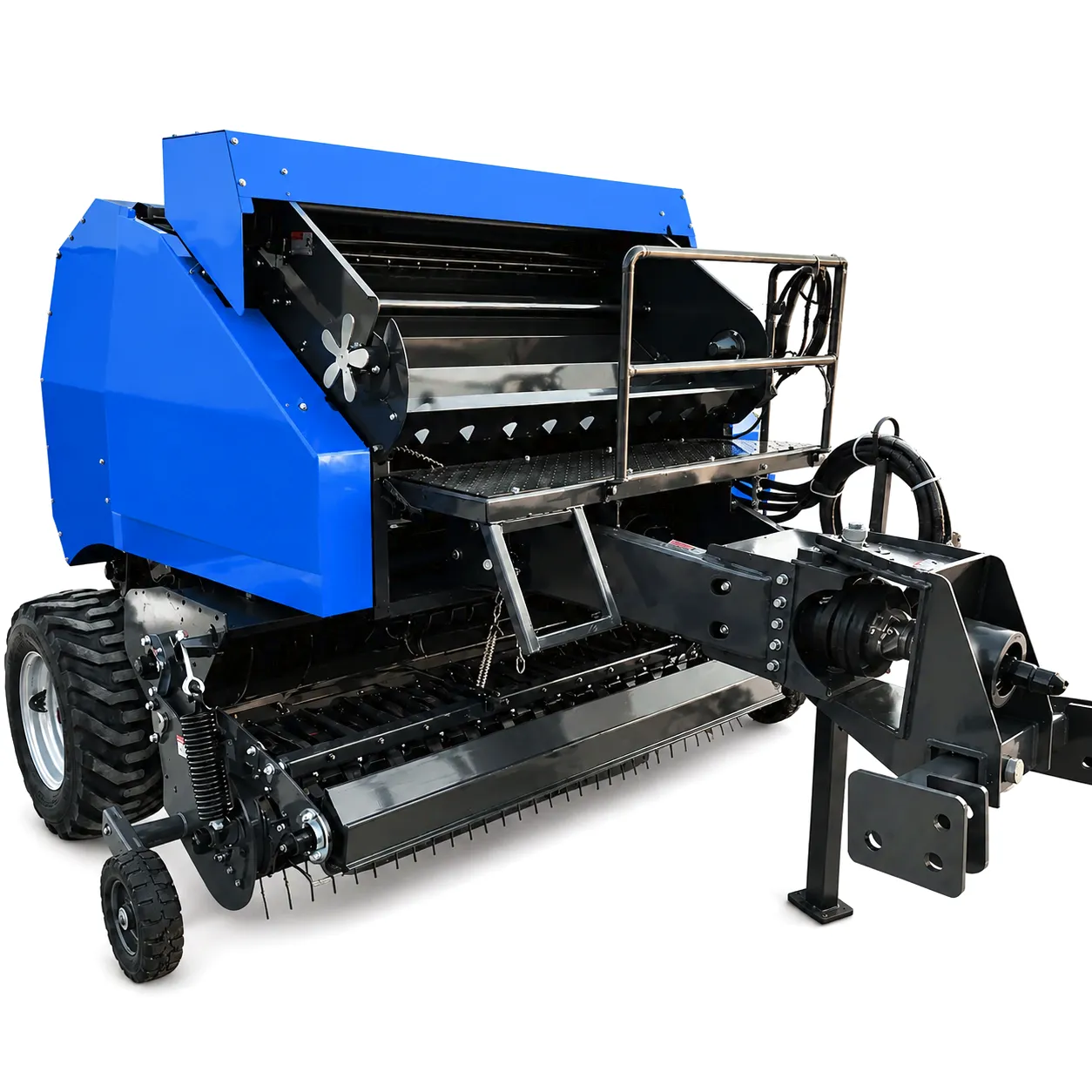
In the cereal belt stretching across Lincolnshire, East Yorkshire, and Cambridgeshire, square balers are deployed primarily for wheat and barley straw baling after combine harvesting. The dense rectangular bales produced are ideal for bedding livestock through the winter months, supplying mushroom cultivation facilities with a growing medium, or shipping to biomass power stations such as those operating in the Humber estuary region. Contractors in this corridor typically run large square balers attached to 150 hp-plus tractors to maximise daily throughput across very large arable fields where field efficiency is paramount.
In the hay and silage belt covering the Welsh Marches, Somerset Levels, and the Scottish Lowlands, medium-specification square balers serve dairy and beef enterprises that need high-density hay bales for long-term storage and precision-fed TMR systems. The consistent weight of square bales — unlike the variable density sometimes encountered with round bales — simplifies ration formulation and makes it straightforward to calculate dry matter intake per animal per day. Operators in these wetter upland areas particularly value machines with wide pickup headers that can handle damp, heavy windrows without blocking.
Recycling sorting facilities in Birmingham’s Tyseley Environmental Enterprise District and across the West Midlands conurbation depend on stationary square baler configurations to process waste paper, corrugated board, and mixed fibre. These industrial-grade machines produce bales weighing 400–600 kg for onward sale to paper mills in the UK and export markets. Downtime in this application has an immediate commercial cost, making robustness of the feeding mechanism and knotting reliability critical procurement criteria.
Hemp cultivation has expanded significantly across North Yorkshire and the East Riding as domestic demand grows for natural insulation materials and CBD hemp production. Square balers adapted with cutting rotors — sometimes called shredding-chamber balers — are used to pre-process the fibrous stalks into compact bales suitable for decortication lines. The cutting mechanism reduces average stalk length from 1,800 mm to under 100 mm, dramatically increasing fill density and improving bale uniformity for downstream processing.
Power stations and district heating schemes operating under Renewable Heat Incentive and Contract for Difference support mechanisms in Scotland and northern England source substantial volumes of baled energy crops — Miscanthus, Short Rotation Coppice, and reed canary grass — from dedicated contractors. These suppliers require square balers capable of producing bales to tight weight tolerances so that fuel energy content per load meets the specification of the offtake agreement. Very high bale densities (180+ kg/m³) reduce transport cost per GJ of delivered energy.
The concentration of livery yards, studs, and competition yards across Surrey, Hertfordshire, and Berkshire creates demand for small and medium square bales of premium dust-extracted, precision-dried hay. Buyers in this sector pay a significant premium for consistent bale weight (18–22 kg for small bales), perfect string tension, and zero shatter loss during handling — all of which depend on careful calibration of chamber density adjusters and knotting system maintenance schedules throughout the baling season.
Featured Square Baler Models from Ever Power
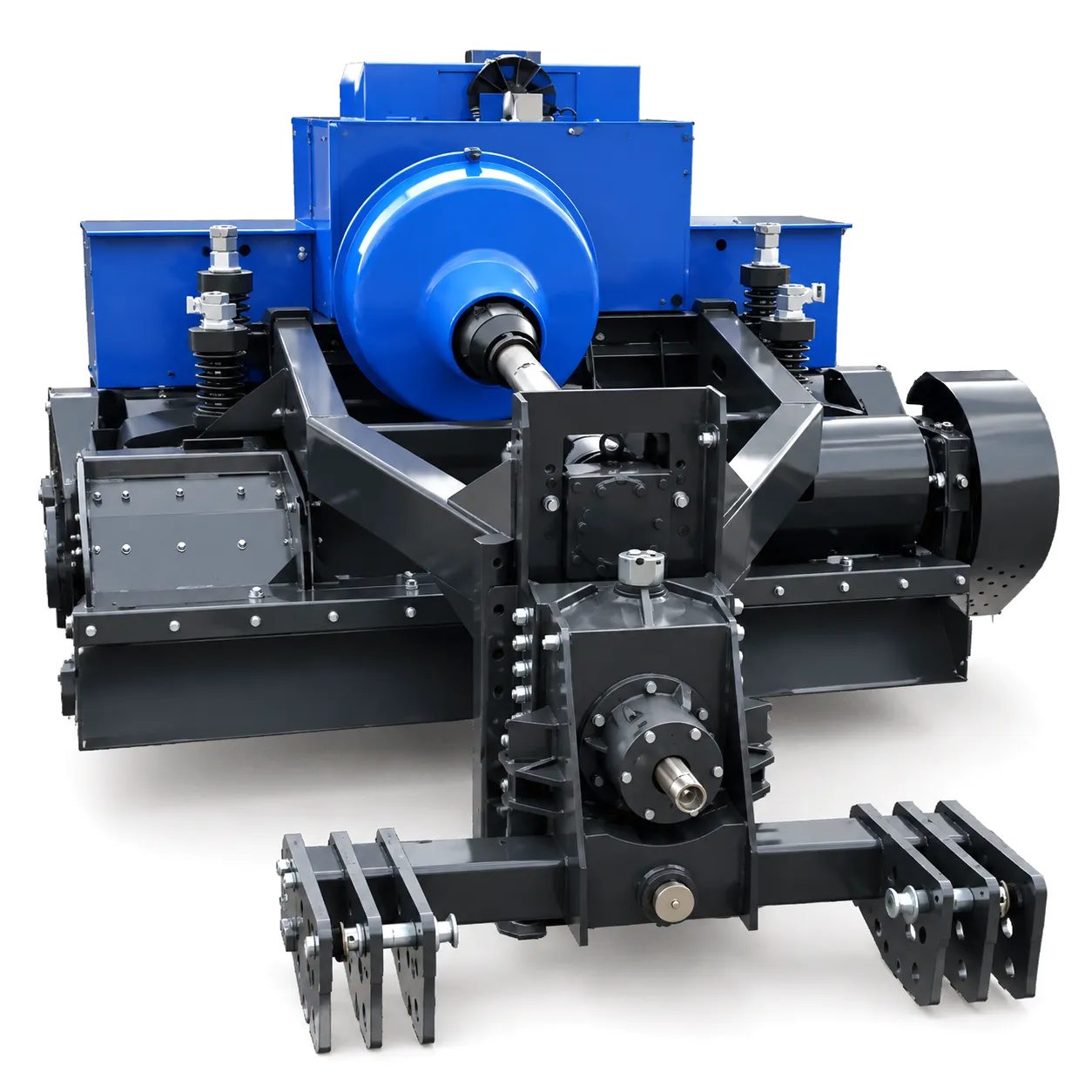
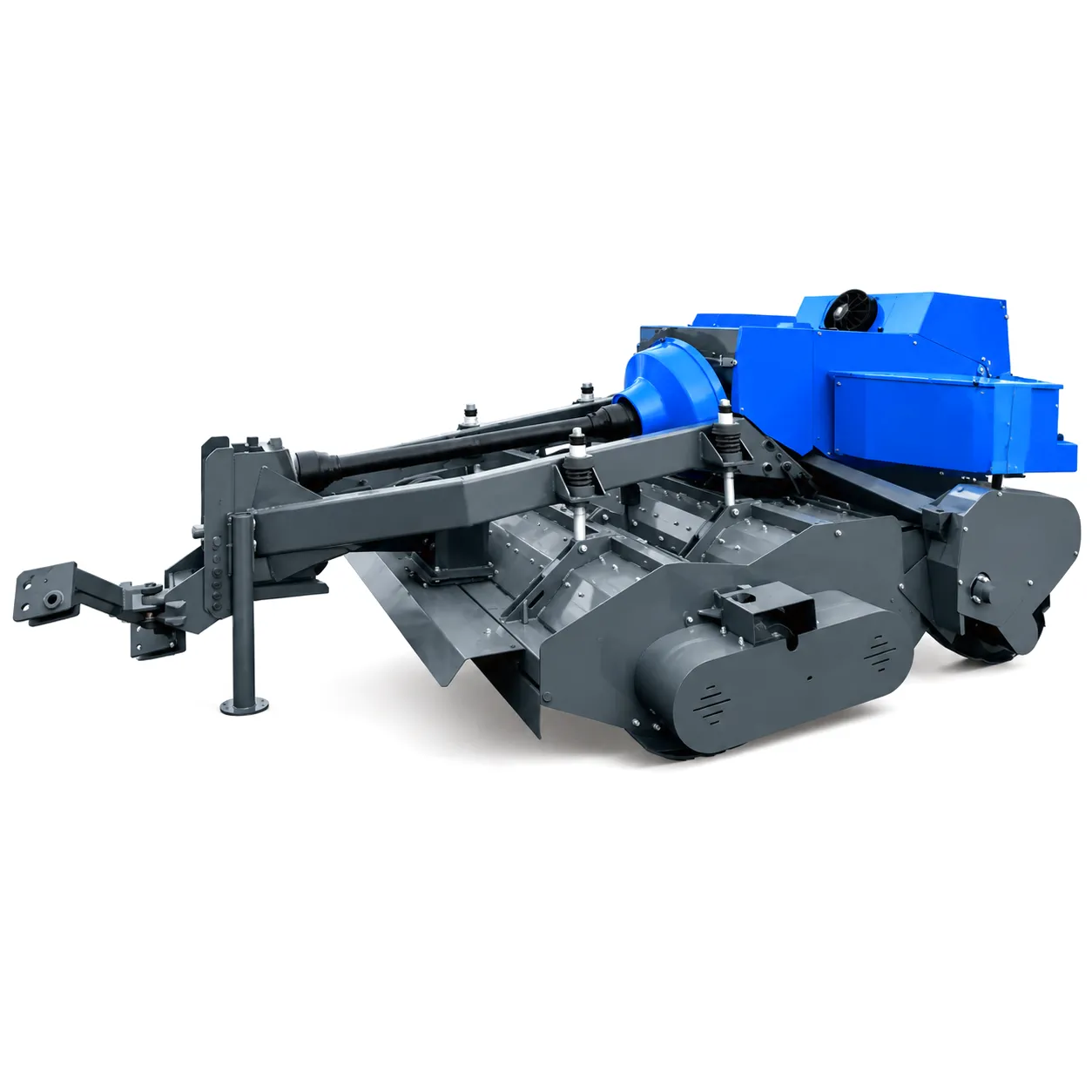
The 9YF series covers pickup widths of 1,700 mm, 1,900 mm, and 2,200 mm, making it the workhorse choice for UK cereal farms and contracting businesses. Available with optional single or dual shredding mechanisms for hemp, Miscanthus, or straw processing, the series runs on tractors from 80 hp upward and delivers bale densities suitable for both domestic livestock bedding markets and export shipping containers.
The double-chamber configuration of the 9YFS-2.2 allows simultaneous production of two separate bale streams, effectively doubling output per PTO horsepower-hour compared with single-chamber machines of equivalent pickup width. Targeted at large-scale contracting operations and biomass fuel producers needing maximum daily tonnage, this model features dual independent knotting systems and separate density adjustment on each chamber — giving operators full flexibility when switching between crop types or bale weight specifications mid-field.
Ever Power Manufacturing: Precision Engineering & Custom Solutions
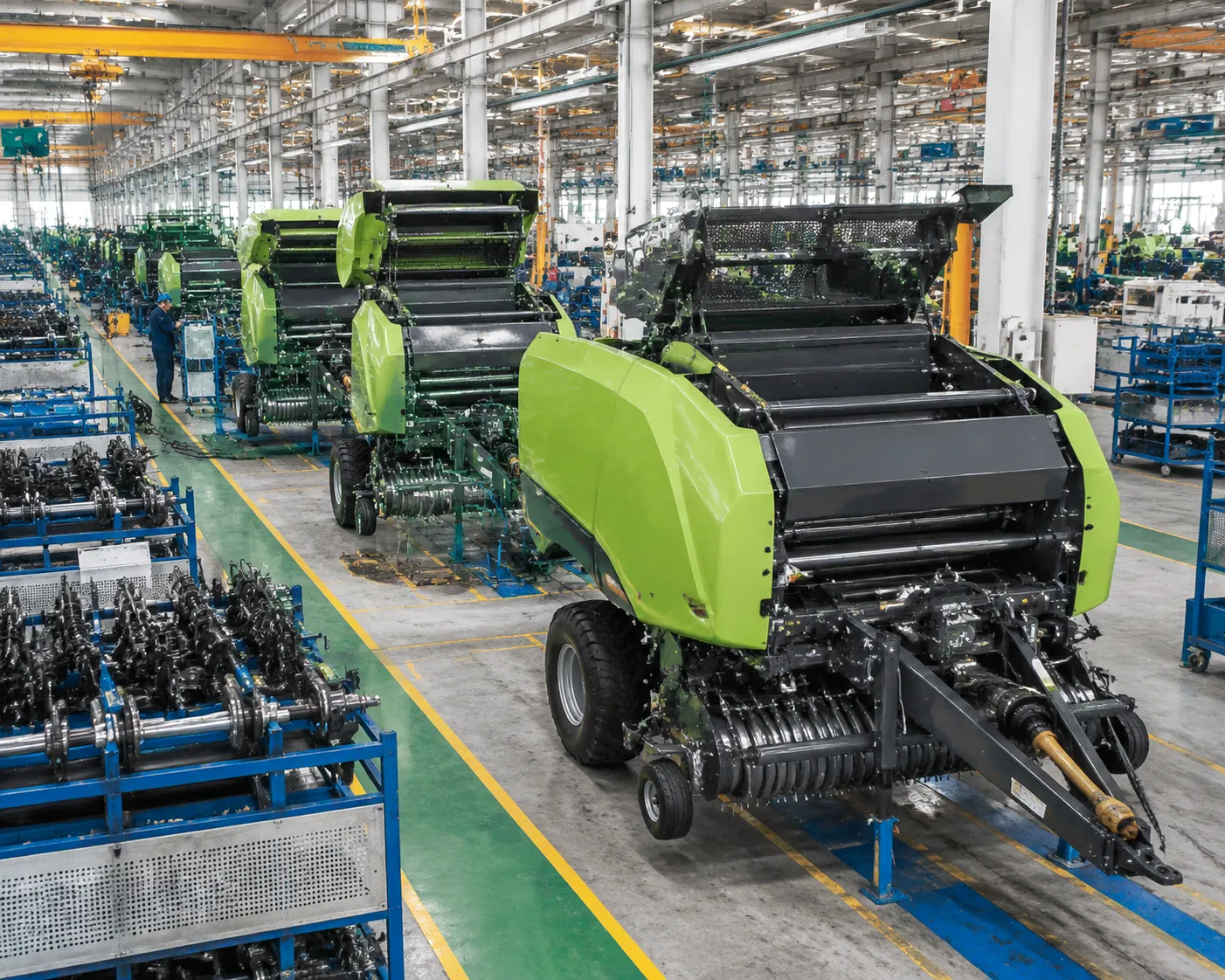
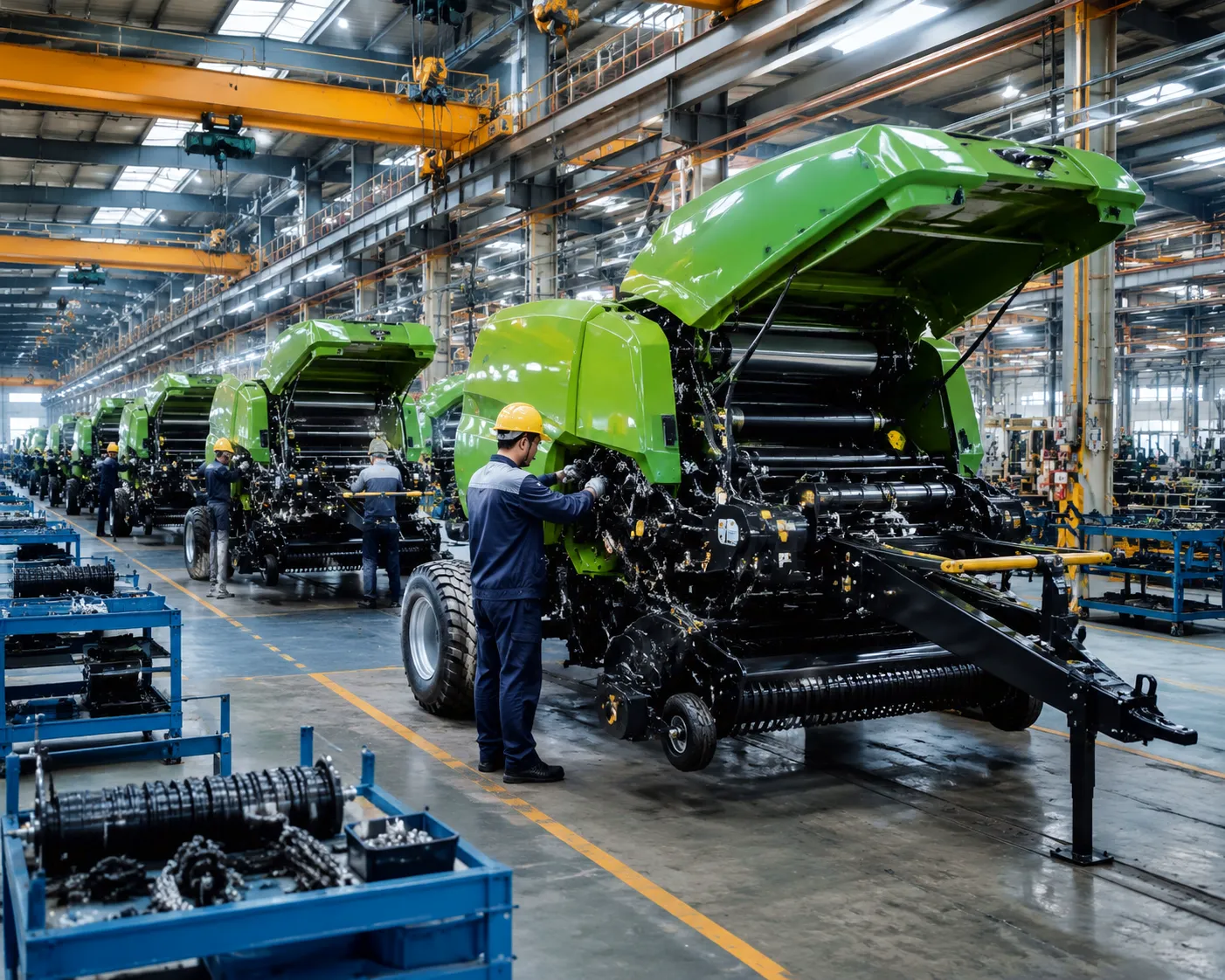
Ever Power’s manufacturing operation combines decades of accumulated engineering knowledge with modern production infrastructure. The factory houses CNC laser cutting and plasma profiling lines capable of producing chassis components to tolerances of ±0.5 mm, while the fully automated welding cells use robotic MIG welding stations programmed to follow FEA-optimised weld sequences that maximise joint fatigue life. Every structural weld on a bale chamber produced at the Ever Power facility undergoes magnetic particle or dye penetrant inspection before the assembly moves to the next station — a quality discipline that many competitors reserve only for their top-tier models.
What distinguishes Ever Power most clearly in the global marketplace is the depth and responsiveness of its customisation capability. Whether a UK buyer needs a wider-than-standard pickup to handle the particularly thick windrows left by modern 9-metre combine headers, a non-standard bale chamber geometry to fit a patented bale handling system, a specialised cutting rotor specification for processing reed or miscanthus at a particular chop length, or a modified hydraulic circuit to integrate with a tractor’s electronic control system, Ever Power’s engineering team can take that requirement from specification through prototype testing and into series production faster than most Western European manufacturers could respond with a formal quotation.
Supply chain depth is a further strength. Ever Power maintains long-term supply agreements with certified steel mills, bearing manufacturers, and seal suppliers, providing consistent raw material quality across production batches and insulating customers from the spot-market price volatility that can affect smaller manufacturers. Finished machines are pre-inspected, full-function tested on the factory floor, and shipped with comprehensive parts documentation to support UK distributor and end-user service teams.
Customer Success Story: Expanding Throughput in the Humber Biomass Supply Chain
Greenline Agricultural Services, a specialist biomass crop contractor based near Goole in East Yorkshire, was contracted in 2024 to supply 8,000 tonnes of baled Miscanthus over the winter season to a district heating scheme in Hull. With an existing single-chamber machine already at capacity and the contract window tight — just 11 weeks between late-October harvest and December delivery deadline — the business needed to add throughput quickly without the long lead times typical of European machinery suppliers.
After contacting Ever Power through their UK distribution partner, Greenline received a full technical proposal within 48 hours, including a bespoke specification for a 9YF-2200 fitted with a dual shredding rotor configured for Miscanthus stems averaging 2.2 metres in length. The machine was manufactured, pre-tested, and shipped with all documentation within the agreed lead time, and cleared UK customs with supporting documentation that expedited the process through the Yorkshire border facility.
In operation, the Ever Power square baler produced consistent bales averaging 238 kg at a density of 204 kg/m³ — within the ±5% weight tolerance required by the offtake agreement’s energy content specification. Greenline’s two-driver team completed the 8,000-tonne contract in 9.5 weeks, leaving buffer time before the biomass plant’s final intake gate closure. Total fuel cost per tonne of baled crop came in 12% below their previous season’s benchmark with the smaller machine, attributable to the higher throughput rate and the flywheel efficiency of the 2,200 mm pickup model.
“The 9YF-2200 handled our heaviest Miscanthus windrows without a single missed knot across the entire campaign. Ever Power’s pre-delivery technical support was genuinely outstanding — they walked our team through the rotor settings before the machine even arrived on-site.”
“We’ve run several brands over the years and the density consistency from the Ever Power machine is the best we’ve seen at this price point. Our biomass buyer commented immediately that every bale weighed within 8 kg of the others — the invoicing process has never been simpler.”
“Ever Power responded to our enquiry about a custom pickup width modification in less than 24 hours and provided engineering drawings within the week. No European manufacturer we spoke to could match that speed. The customisation capability is a real differentiator for buyers who need something outside the standard catalogue.”