Square Balers: Engineering, Performance & UK Industrial Applications
A comprehensive technical reference for procurement engineers, farm managers, and industrial buyers across the United Kingdom
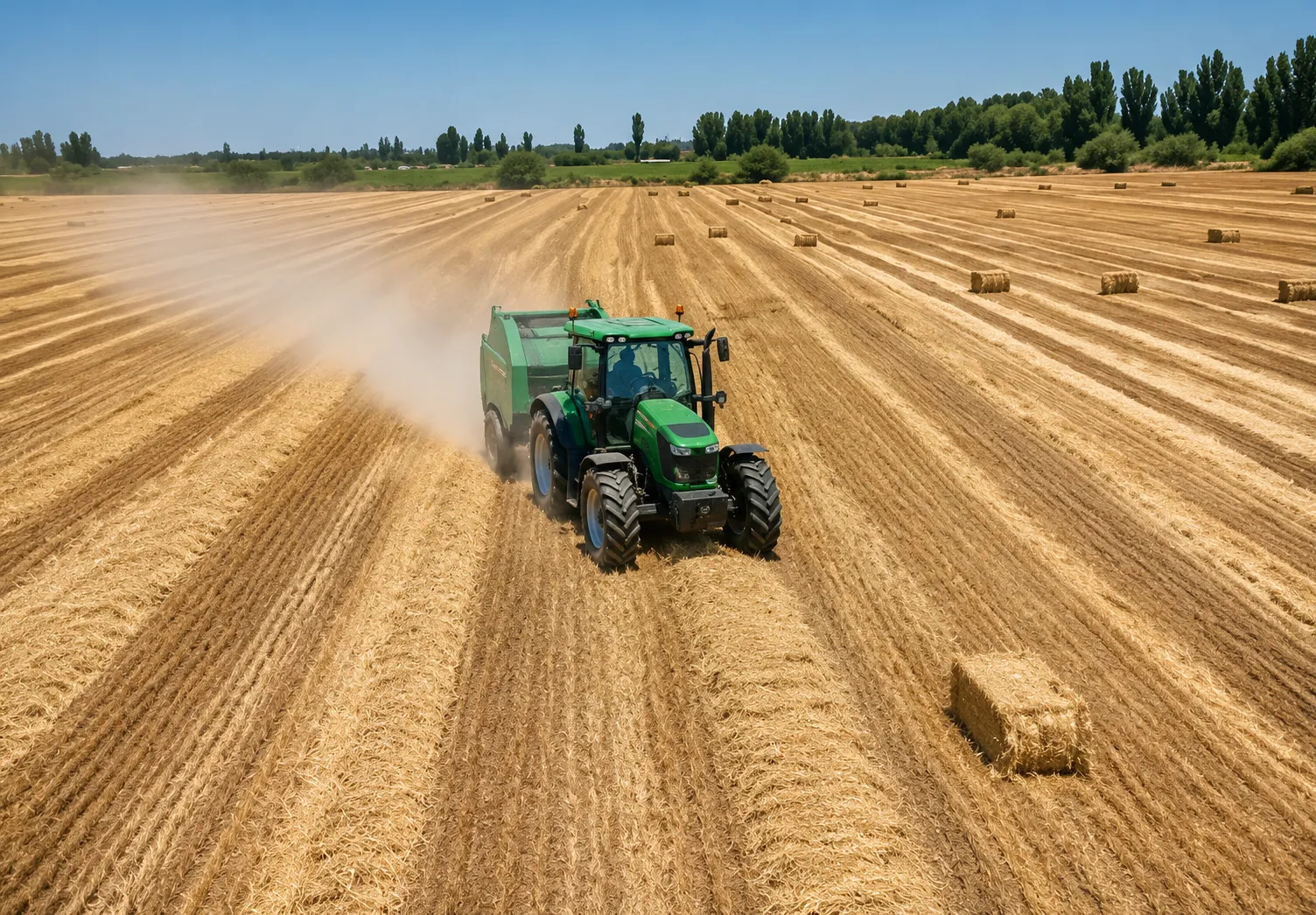
How a Square Baler Actually Works: The Mechanical Sequence
The pick-up reel — a rotating assembly of spring-tine fingers — lifts windrows of cut crop from the ground. Finger pitch and reel diameter are calibrated for throughput rates typically between 20 and 80 tonnes per hour depending on crop density. An auger or cross-conveyor then channels the gathered material towards the pre-compression chamber, maintaining a consistent feed rate to prevent blockages and ensure uniform bale density.
Before reaching the main bale chamber, crop is accumulated and pre-compressed in a holding zone. Rotor-based pre-compression systems — found on high-capacity square balers — shred and consolidate the material, reducing void space and enabling a more uniform density across each bale cross-section. This stage significantly reduces variation in finished bale weight, a critical quality metric for commercial hay and silage operations supplying equestrian yards and feed merchants across the UK.
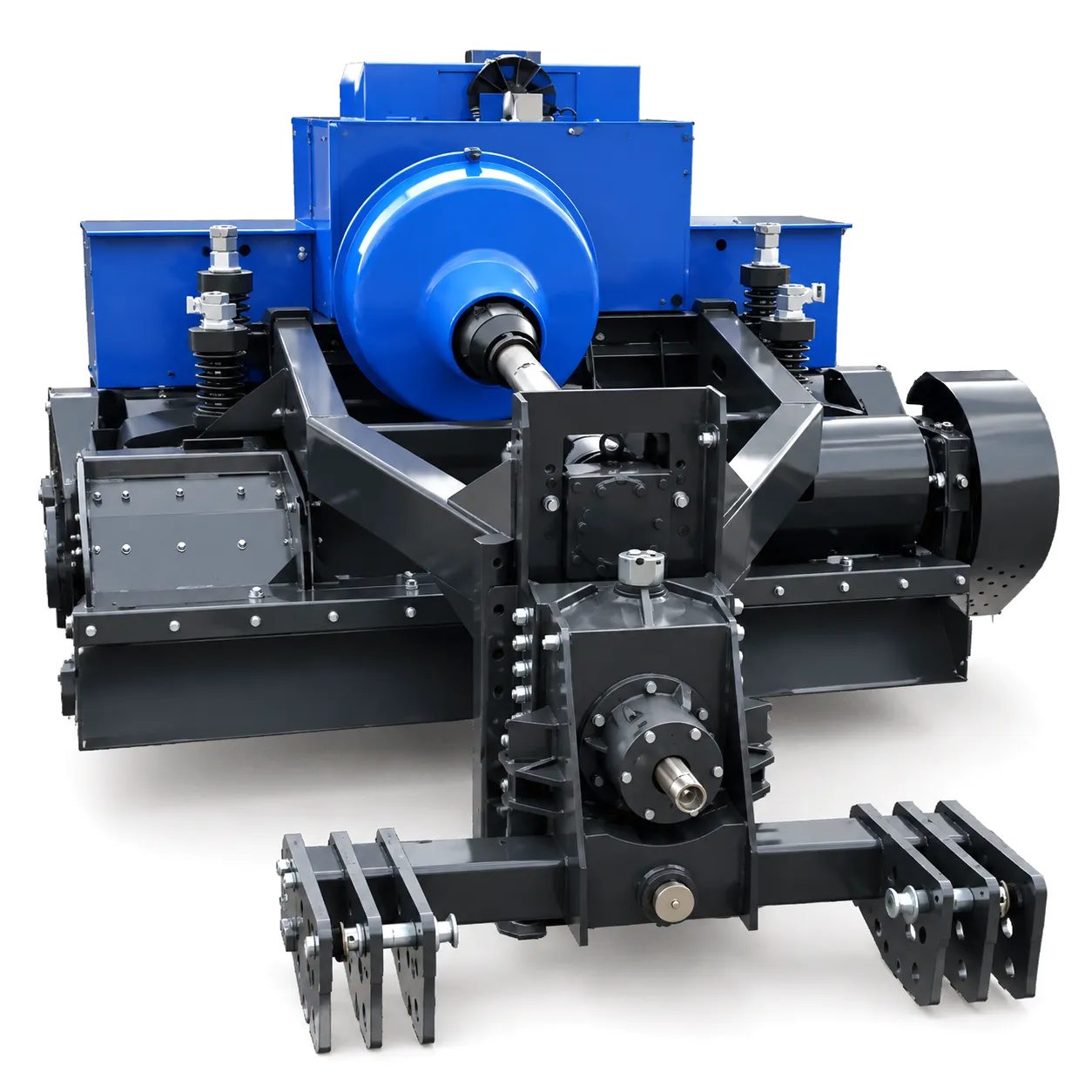
The plunger is the heart of the square baler. Driven by a heavy-duty crankshaft mechanism, it reciprocates within the bale chamber, compressing each charge of material to the desired density. Plunger stroke rates typically range from 35 to 100 strokes per minute, and the flywheel — often weighing 300 kg or more — stores kinetic energy to maintain momentum through the compression peak. Flywheel mass directly influences the smoothness of power draw from the tractor PTO and is a key engineering parameter in high-output machines.
The knotter is arguably the most mechanically sophisticated component in the entire baler. Twine is presented to the needle, which carries it around the completed bale charge; the knotter then forms a reliable overhand or reef knot and severs the twine cleanly before the plunger resets. Knotters on commercial-grade machines are typically set in pairs or multiples — four, six, or even eight — allowing bales tied with multiple bands for structural integrity. Knotter timing, twine tension, and bill hook geometry are all critical to achieving consistent knot quality under wet, dusty, or high-throughput field conditions.
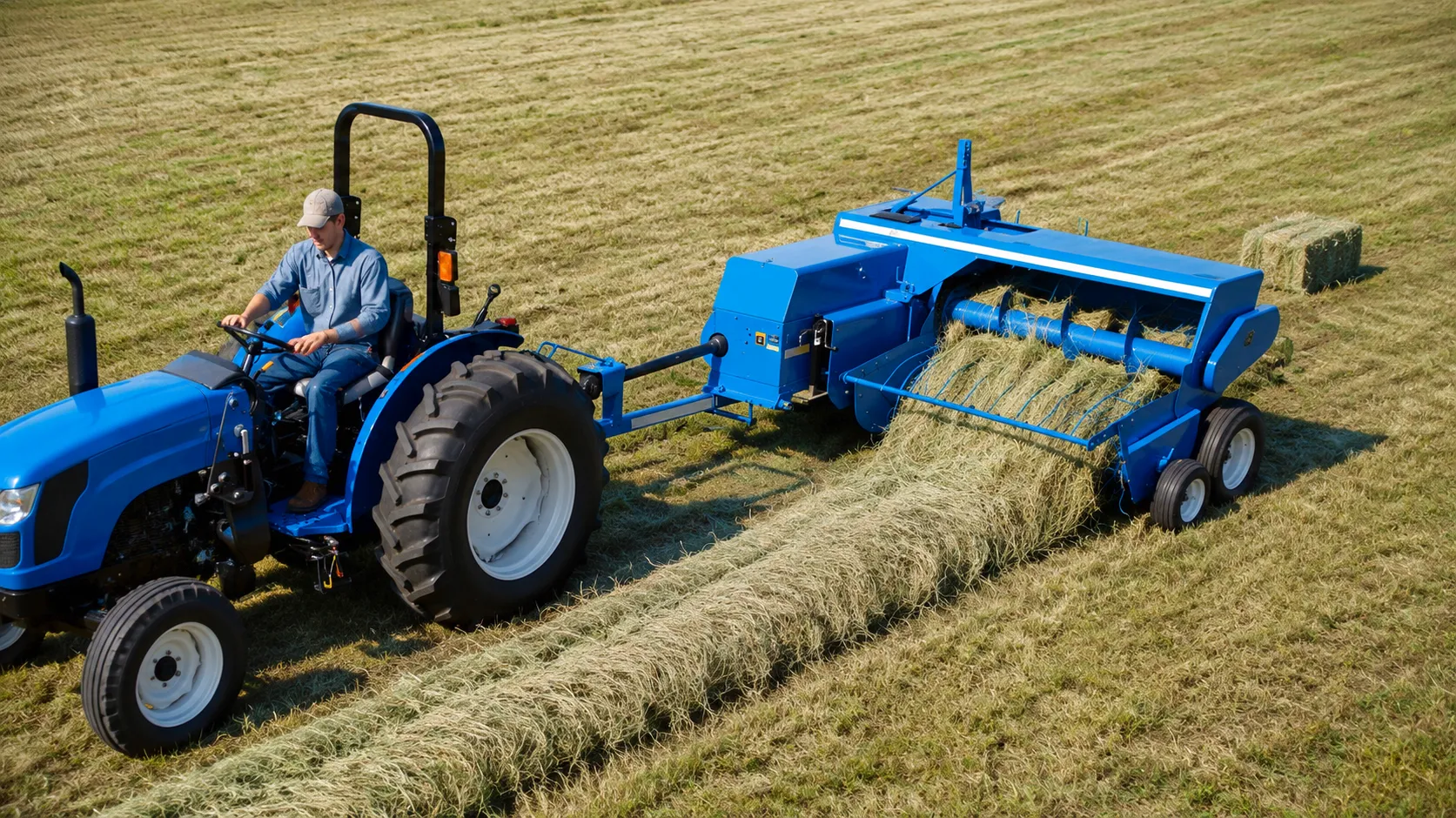
A star wheel or encoder measures bale length as the tied section advances through the chamber. When the set length is reached, the needle mechanism activates, completing the knot sequence. The finished bale is ejected from the rear of the machine under the force of subsequent bale formation. On machines equipped with a bale chute or accumulator, finished bales can be grouped and deposited in field patterns to simplify collection by telescopic handlers — an important practical feature for large-acreage farms in Lincolnshire or Cambridgeshire where field collection logistics are a significant cost driver.
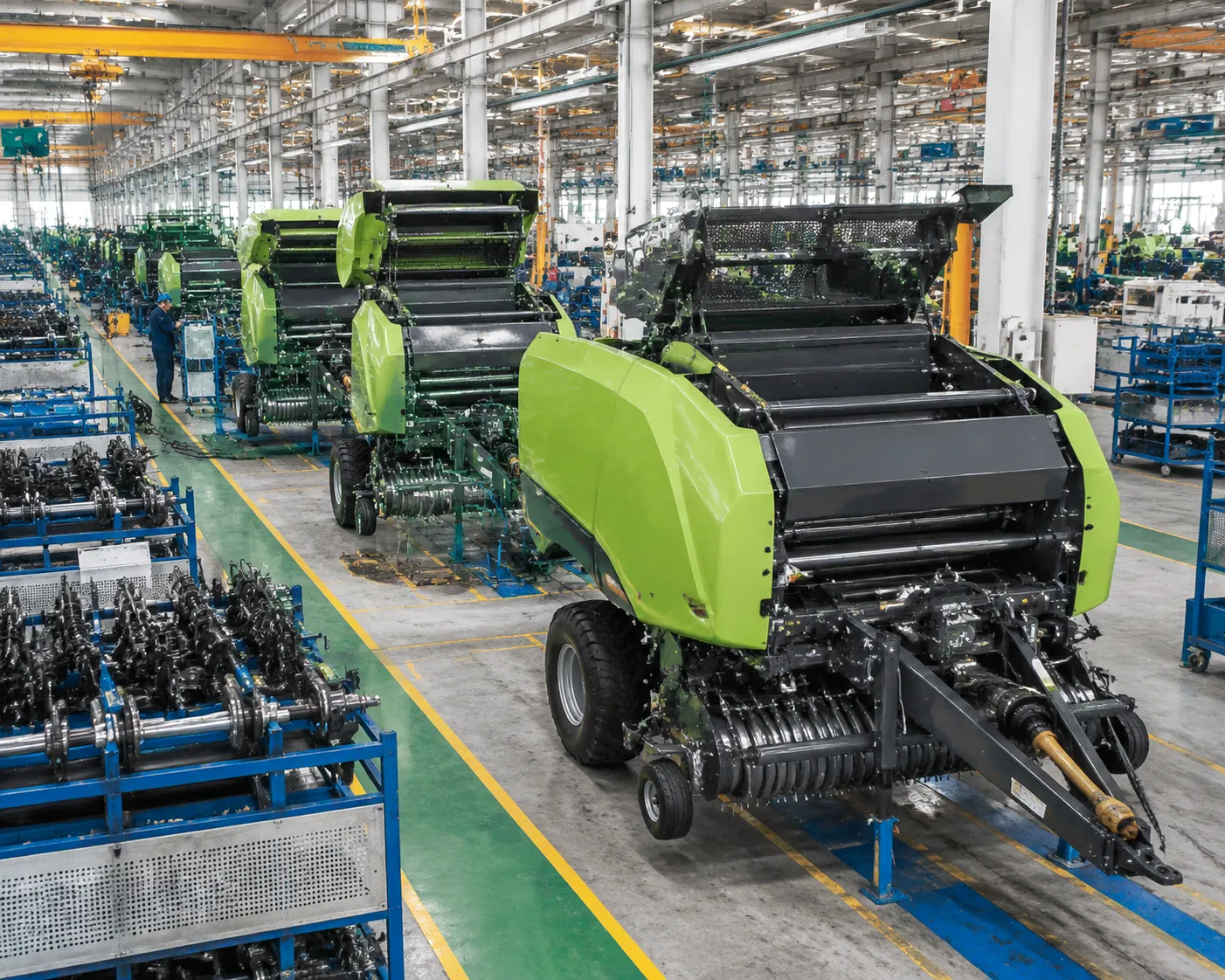
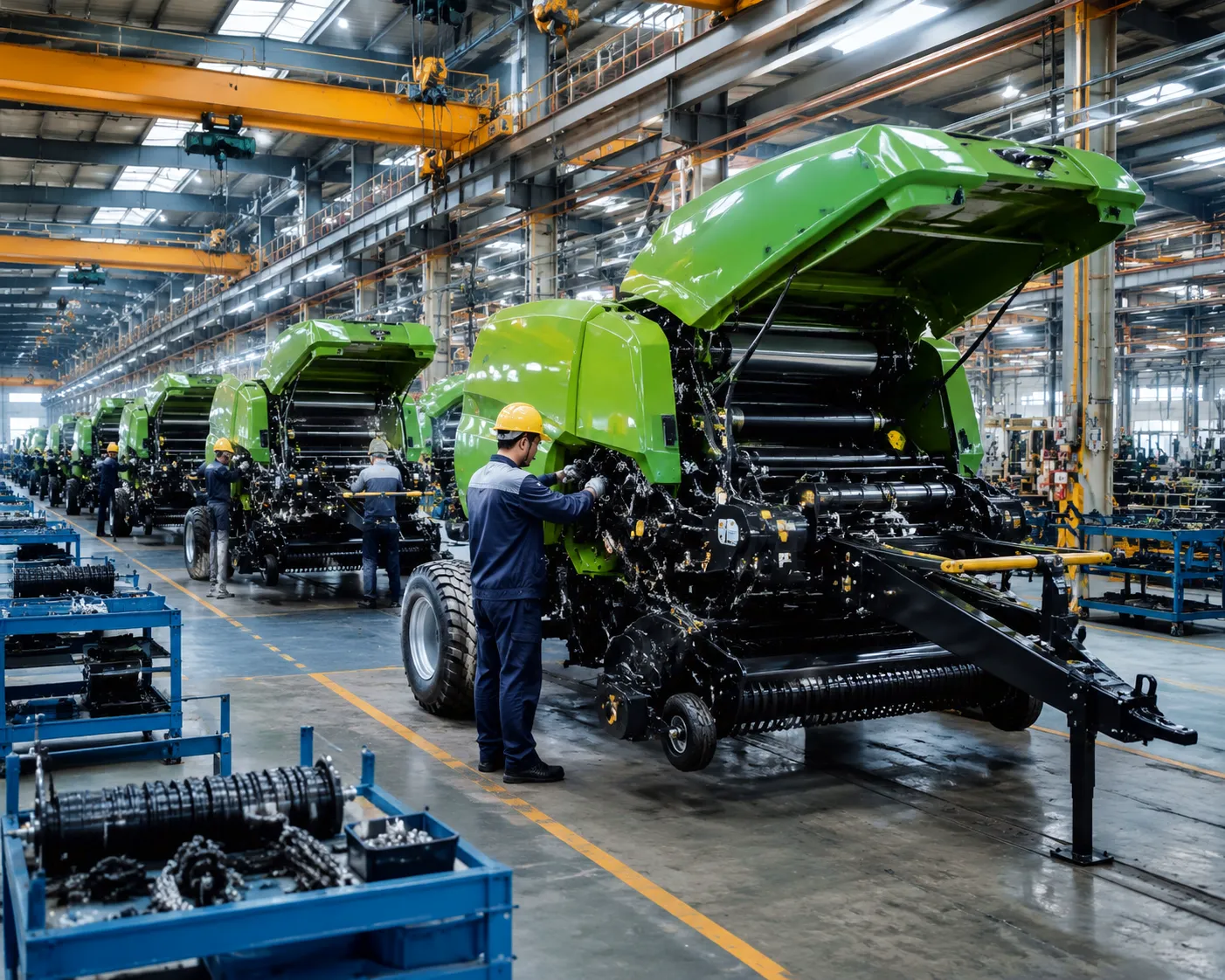
Ever Power precision manufacturing facility — heavy-duty baler assembly line
Core Materials: What a High-Performance Square Baler Is Made Of
Hardened and ground case-carburised gears (material: 20CrMnTi or 20MnCr5), housed in cast iron or ductile iron casings. Shaft bearings are tapered roller units rated for heavy radial and axial loads, lubricated with high-load EP grease on defined service intervals.
Precision-cast malleable iron or SG iron knotter frames, with bill hooks and twine discs machined from tool steel and surface-treated (nitriding or chrome plating) for wear resistance. Needle tips are hardened to resist abrasion from crop grit and soil contamination.
Spring-steel tines (65Mn spring steel strip) formed to close geometry tolerances for consistent crop engagement. Tine mounting bars are galvanised mild steel or powder-coated alloy steel; the reel shaft is a solid EN8 or EN24T bar, journal-turned and dynamically balanced to avoid vibration at operational speeds.
Given the UK’s high-humidity, high-rainfall environment, surface protection is a practical necessity rather than an aesthetic choice. Structural steelwork is shot-blasted to Sa 2.5 standard before priming with two-pack epoxy primer and a polyurethane topcoat. Fasteners in exposed positions are zinc-plated or stainless steel grade A4-70.
Core Technical Advantages of Modern Square Balers
Rectangular bales produced by a properly adjusted square baler maintain dimensional repeatability to within ±15 mm in length and ±5 mm in cross-section. This uniformity enables stable palletised stacking in warehouses and storage barns, optimising volumetric utilisation and eliminating the reshaping labour required with round bales. Feed merchants, thatching straw suppliers, and biomass fuel processors in the UK benefit directly from this consistency when selling by the bale or by weight.
A standard HGV trailer measuring 13.6 m can carry approximately 20–24 large square bales (120 × 90 × 240 cm) in a neat double-deck configuration, versus the irregular stacking imposed by round bales. For agricultural businesses operating under UK transport legislation — where gross vehicle weight limits and load security requirements are strictly enforced — this translates to measurably lower cost per tonne-kilometre on deliveries to farms in Shropshire, Herefordshire, or the Scottish Borders.
Modern large square balers are capable of output rates exceeding 100 bales per hour under optimal conditions. When operated with an appropriately matched tractor (typically 150–300 hp for large square formats), the cost per bale produced — accounting for fuel, twine, and wear parts — is substantially lower than both small square and round bale alternatives at equivalent throughput. For contract baling operations covering hundreds of hectares across multiple Midlands farms each summer, this cost advantage is significant across the season.
Square balers offer a wide range of adjustable density settings, typically controlled by varying the side wall resistance or the plunger compression force. This flexibility allows the same machine to produce soft-packed straw bales — preferred by equestrian bedding suppliers in Surrey or Cheshire — and firm, high-density hay bales for export markets. Variable density also allows operators to optimise for moisture content, preventing bale heating in high-moisture crops while achieving maximum density in dry conditions.
A well-maintained square baler from a reputable manufacturer should deliver 20,000 to 40,000 operational hours over its working life, with periodic overhaul of knotters, plunger slippers, and pick-up tines accounting for the majority of maintenance expenditure. The engineering principle of accessible, modular wear parts — where the highest-wear components can be replaced without major disassembly — is a key differentiator between premium and budget machines. Ever Power designs all baler assemblies with this service life philosophy from the outset.
Beyond traditional hay and straw, modern square balers handle silage crops (with modified bale wrapping workflows), wheat and barley straw, miscanthus, hemp fibre, cardboard and industrial fibre materials in specialist configurations. This versatility makes the square baler a genuinely multi-purpose capital investment, particularly valuable for UK farms pursuing diversification into energy crops, industrial fibre, or specialty organic markets where bale quality and traceability commands a premium.
Product Technical & Performance Specifications
The table below summarises typical technical parameters for the Ever Power range of square balers. Specific values are configurable to customer requirements — contact our engineering team for bespoke specification options.
Industrial Application Scenarios: Where Square Balers Deliver
The UK equine sector is substantial — over 1.3 million horses are kept in Britain, and the demand for quality bedding straw and hay is significant and year-round. Small to mid-size square balers are ideally suited to this market because they produce bales of a manageable weight (15–25 kg) that can be handled manually by livery yard staff without mechanical equipment. The rectangular format also stacks neatly in traditional stable storage — a practical consideration in the many converted farm buildings used by equestrian businesses in the Home Counties, Hampshire, and the Cheshire Plain.
Hay quality and consistency are paramount in this segment. Horse owners and yard managers are knowledgeable consumers who recognise and reject bales that are dusty, loosely packed, or variably dried. Square balers with pre-compression rotors — which shred and blend the crop before compaction — produce a more uniform, less stratified bale that retains less surface moisture and is perceived as higher quality in this market. The ability to adjust density between bale runs also allows producers to offer both soft bedding straw and firmer hay within the same operational season.
Yorkshire and the Humber is home to several large-scale biomass power stations and district heating schemes that consume significant quantities of baled agricultural and energy crop material — including miscanthus, short-rotation coppice residues, and cereal straw. Square balers feeding these supply chains must meet demanding specification requirements: minimum bale density targets set by combustion engineers, consistent moisture content windows, and clean, well-tied bales that resist breakdown during bulk storage and mechanical handling at the plant intake. Conveyors and hydraulic handling systems at power facilities are calibrated to standard square bale dimensions, so dimensional consistency from the baling operation is an engineering requirement, not merely a preference.
Baling contractors supplying Yorkshire biomass plants often operate large square balers with GPS tracking and bale counting systems, allowing precise traceability from field to plant gate — a compliance requirement under ISCC and other sustainability certification schemes relevant to Renewable Obligation Certificate (ROC) eligibility. Ever Power machines can be specified with bale-counting output interfaces compatible with precision agriculture data systems.
Beyond agriculture, specialist variants of the square baler are deployed in industrial settings to compact and bale non-crop materials — cardboard, textile waste, industrial hemp fibre, and packaging residues. In the Birmingham manufacturing area and the industrial zones of Sheffield and Rotherham, recycling and waste processing operations use high-pressure balers derived from agricultural square baler engineering principles to produce dense, stackable bales of secondary materials for onward sale to paper mills, textile processors, and waste-to-energy facilities.
These industrial applications place different demands on the machine — longer operating duty cycles (often 24/7 in automated systems), finer density control for mixed-density waste streams, and specific bale dimensions set by the downstream customer. Ever Power’s bespoke engineering capability enables machines to be configured with modified pre-compression chambers, reinforced bale channels for higher-pressure operation, and customised knotter configurations to handle non-standard tying materials including wire and polyester strap.
Ever Power Square Baler Product Range
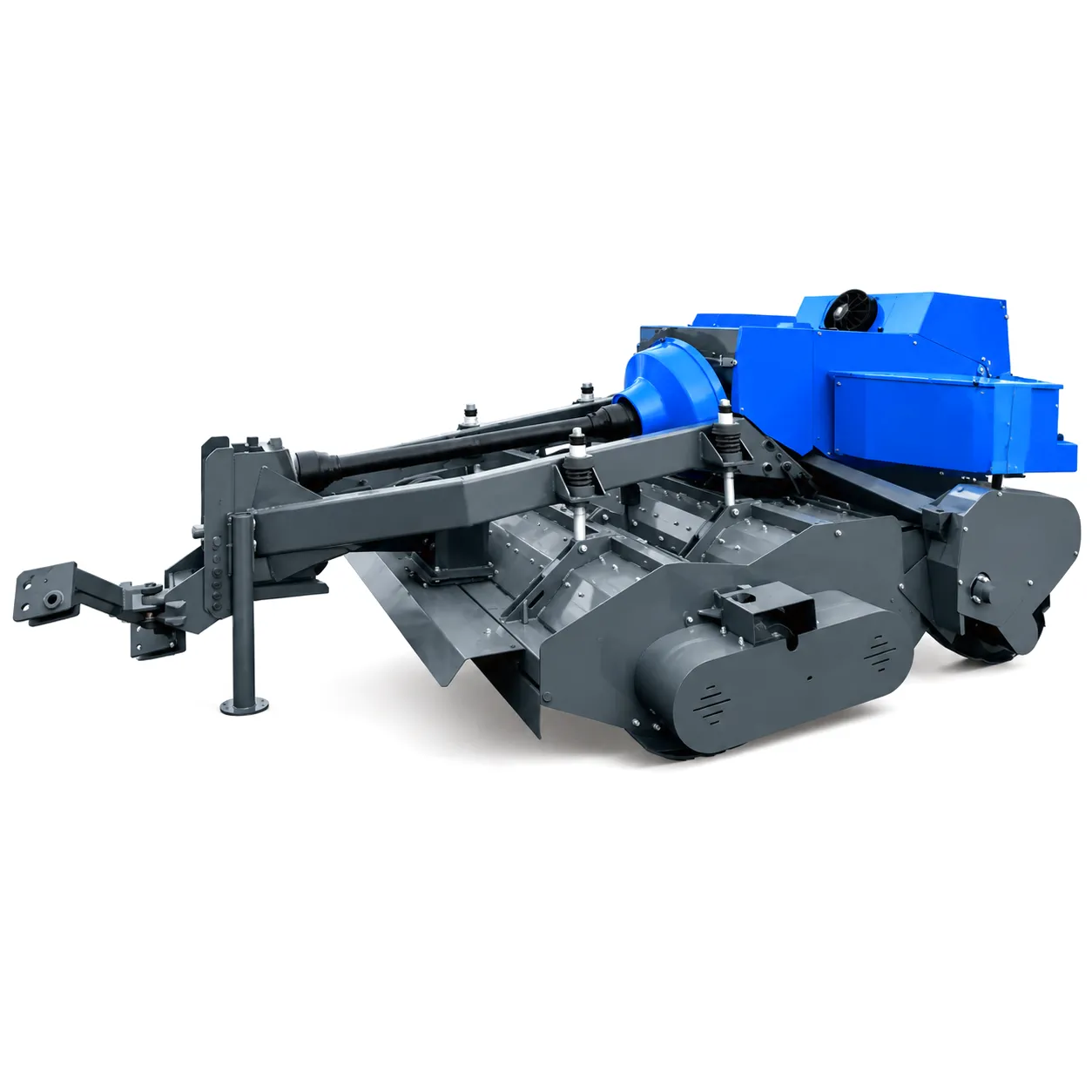
A versatile mid-to-large square baler series available in three working widths (1700 mm, 1900 mm, and 2200 mm). Built for high-throughput commercial operations, this series features a robust flywheel-driven plunger system, dual-rotor pre-compression for uniform bale density, and a proven six-knotter tying mechanism. Suitable for wheat straw, hay, silage pre-wilted material, and energy crops. Ideal for contract baling operations across the East Midlands and East Anglian cereal belt.
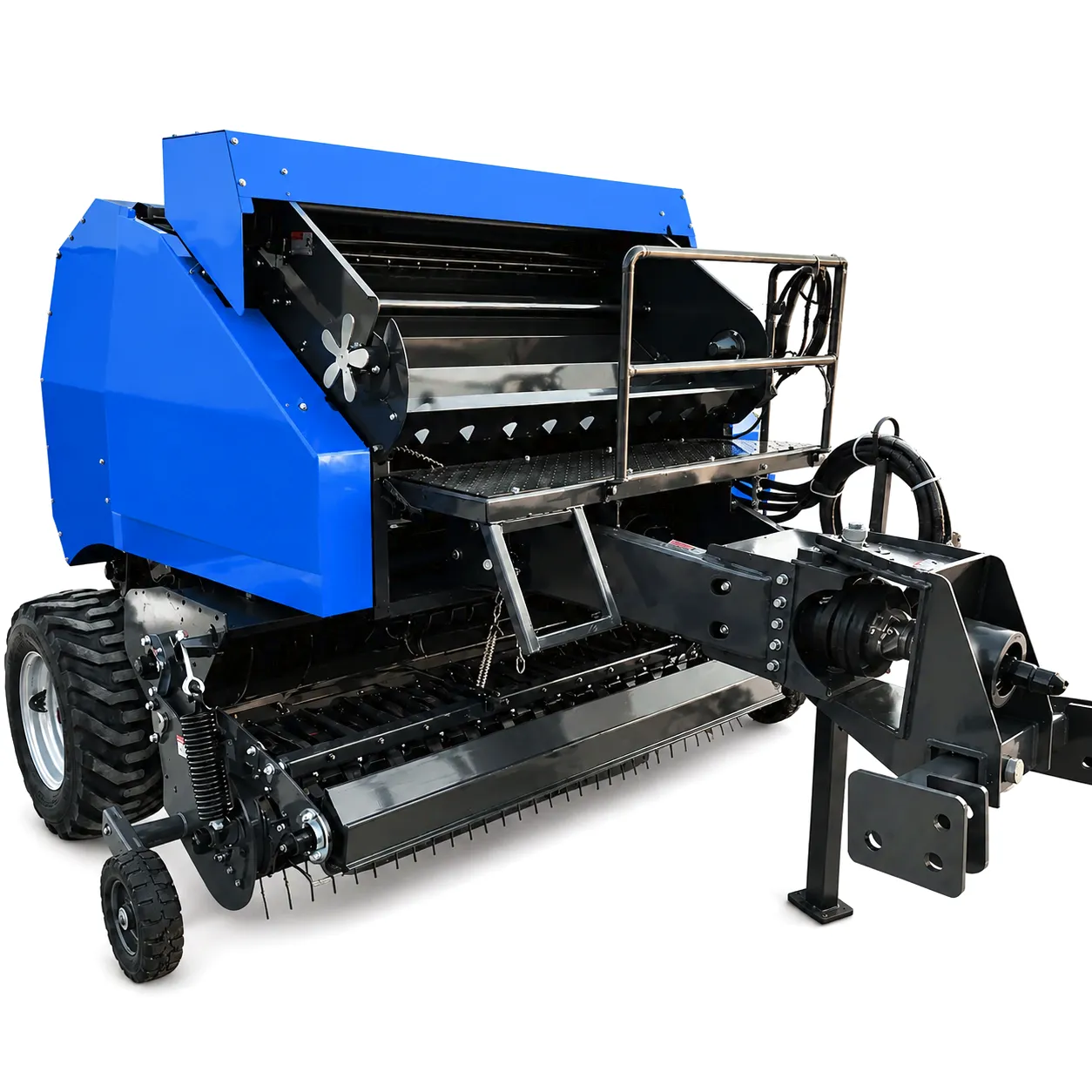
Ever Power’s flagship double-chamber square baler, designed for operations requiring maximum volumetric output per hour. The twin-chamber design allows simultaneous bale formation and knotting cycles, significantly increasing output compared to conventional single-chamber units. With a 2200 mm working width, independent pre-compression rotors in each chamber, and a reinforced chassis rated for high-density heavy-crop baling, this machine is built for the most demanding commercial harvesting and contract baling operations in the UK market.
Ever Power: Manufacturing Excellence & Customisation Capability
Ever Power maintains strategic raw material stock covering six months of production capacity, insulating customers from global steel price volatility and supply disruption. Delivery lead times for standard configurations are 45–90 days ex-works; expedited slots are available for confirmed orders.
A comprehensive spare parts programme ensures that consumable and wear items — knotters, tines, slippers, twine holders, gearbox shafts — are available ex-stock with despatch within 48 hours worldwide. All parts are labelled with the original drawing reference for traceability, and parts availability is guaranteed for ten years from the date of machine manufacture.
UK and European agricultural machinery distributors can access Ever Power’s manufacturing capacity under OEM or private label arrangements. Full colour, decal, and operator manual localisation is supported. Minimum order quantities for OEM supply start at five machines per model variant per year.
Ready to discuss your baling requirements with our engineering team? We respond to all technical enquiries within 24 hours.
Customer Success Story: Peterborough Arable & Biomass, Cambridgeshire
Peterborough Arable & Biomass Ltd is a mid-scale agricultural contracting business operating across approximately 4,200 hectares of cereal and energy crop farmland in Cambridgeshire and North Lincolnshire. With supply contracts to a biomass district heating plant near Peterborough and a straw export merchant at Sutton Bridge, the business faces the demanding combination of tight seasonal windows, high volume throughput targets, and strict bale specification requirements from both customers.
Prior to working with Ever Power, the business had operated two large square balers from a European OEM. While the machines performed adequately under light conditions, the operation regularly experienced knotter failures during high-throughput periods — particularly in thick, slightly damp barley straw — resulting in costly field delays and rejected bale loads. The company’s contracts specify a minimum bale density of 155 kg/m³ and a maximum moisture content of 15%, and failure to meet these parameters had resulted in financial penalties from their biomass customer.
After engaging Ever Power through their UK distribution contact, the business specified two units of the 9YF-2200 Square Baler series with dual rotor pre-compression, reinforced six-knotter configuration, and a customised bale density monitoring system with operator cab display. Ever Power’s engineering team provided detailed pre-delivery documentation including PTO drive shaft sizing recommendations for the customer’s John Deere 8R tractors, torque loading curves for the pre-compression rotor drive, and a full knotter timing setup guide for the specific twine specification used in the UK.
The machines were commissioned in April and entered service during the May grass silage round. By the time the main cereal straw harvest began in July, the operators had accumulated sufficient familiarity to run both units consistently at their rated throughput. The result across the season: 38,400 bales produced across both machines, with a recorded knotter failure rate of 0.04% — compared to the industry benchmark of approximately 0.15–0.25% — and zero rejected loads from the biomass plant. The business has since placed a follow-on order for a third unit and estimates a net return on the capital investment within three harvesting seasons.
Ulasan Pelanggan
“The knotter performance on the 9YF-2200 has been exceptional — we went through the entire barley harvest without a single missed knot. That’s simply not something we’d experienced with our previous machines. The pre-compression rotor makes a real difference to bale uniformity; our biomass buyer commented immediately on the improvement in load consistency.”
“What sets Ever Power apart is their willingness to engage technically before the sale. They asked detailed questions about our PTO drive shaft configuration, our twine supplier, and the average density spec from our export customer — and then they built a machine that actually met those requirements out of the box. The custom density monitoring display was a particular bonus; our operators can now maintain target density within 5 kg/m³ throughout a shift without guesswork.”
“The after-sales parts support has been genuinely impressive. We ordered replacement knotter bill hooks mid-season after accidentally running over a fence post — they were on a pallet at our depot within three working days from the other side of the world. The parts are also clearly labelled with drawing numbers, which makes workshop identification straightforward. It’s the kind of detail that tells you a manufacturer takes the long view on their customer relationships.”
Soalan Lazim
▸
How much does a large square baler cost to buy in the UK, and what factors affect the final price?
The price of a large square baler in the UK varies considerably depending on output capacity, pre-compression type, knotter configuration, and optional automation features. Entry-level large square baler configurations from Asian manufacturers typically start in the £35,000–£55,000 range; premium European-built machines can exceed £150,000. Ever Power offers competitive pricing for high-specification machines, with bespoke quotations available from [email protected]. Always request a total cost of ownership analysis — including twine consumption, wear parts costs, and expected service intervals — alongside the purchase price when comparing suppliers.
▸
Which square baler supplier in the UK can offer the best combination of price, performance, and after-sales support for a commercial farm operation?
For UK commercial farms weighing up price against reliability, the key evaluation criteria should be knotter failure rate (target below 0.1%), availability of spare parts within 48 hours, and access to a technical support team who can provide setup guidance remotely. Ever Power consistently meets these benchmarks, backed by a dedicated parts despatch service and an engineering team available for direct technical consultation. Buyers in the East Midlands, East Anglia, and Yorkshire have found the total value proposition — machine quality plus service — to be highly competitive against better-known European brands.
▸
What tractor horsepower do I need to run a large square baler effectively for high-volume wheat straw baling in Yorkshire?
For large square baler formats (90 × 120 cm or 90 × 130 cm chamber), a minimum of 180 hp at the PTO is recommended for general operation in wheat straw. For peak throughput with dual rotor pre-compression in dense or slightly damp crops — which is common in Yorkshire’s wetter climate — 220–280 hp gives meaningful headroom and prevents the power delivery drops that cause bale density inconsistency. Always cross-reference the baler manufacturer’s PTO torque curve against your tractor’s PTO output curve to confirm compatibility before purchase.
▸
Where can I get a fast quote for a custom-specification square baler shipped to a UK farm in the East Midlands?
Ever Power responds to all technical and commercial enquiries within 24 hours via email at [email protected]. For UK orders, please include your target bale chamber size, desired bale density range, primary crop type, and delivery postcode in your initial enquiry — this allows the team to provide an accurate specification and CIF UK port price in the first response. UK import duty classification and shipping logistics to ports including Felixstowe, Southampton, or Hull can be discussed directly.
▸
How often do square baler knotters need to be serviced or replaced, and what does knotter maintenance typically cost per season?
On a large square baler operating in commercial arable conditions, the knotters should be inspected and timed at the start of each season and at least once mid-season after 10,000 bales. Key wear items — bill hooks, twine discs, and knife blades — typically need replacement every 25,000–50,000 bales depending on crop abrasivity. A full knotter rebuild kit for a six-knotter machine costs in the region of £600–£1,200 depending on brand and specification. Ever Power provides parts cost schedules at the time of machine quotation so buyers can forecast maintenance expenditure accurately.
▸
What is the difference between a single-chamber and a double-chamber square baler, and when does the double-chamber design offer better value?
A single-chamber square baler forms one bale at a time — the plunger cycles, the bale advances, and the knotter ties on a sequential basis. A double-chamber baler, such as the Ever Power 9YFS-2.2, forms two bales simultaneously through parallel chambers, effectively doubling output at equivalent PTO input speed. The double-chamber design offers the best value for operations where field time is the limiting constraint — large contractors working to tight seasonal windows, or operations where the tractor and fuel costs per hour exceed the amortised cost of the additional machine capacity. For most farm-scale operations, a single-chamber machine at maximum throughput is sufficient.
▸
Who should I contact to get a bespoke square baler specification for biomass fuel supply in Sheffield or the wider South Yorkshire area?
For biomass fuel supply applications in South Yorkshire — including operations supplying the various district heating and combined heat-and-power installations in the Sheffield and Rotherham industrial corridor — contact Ever Power directly at [email protected]. Provide details of your target feedstock (crop type, moisture range), the bale density specification from your end customer, and any certification requirements (ISCC, FSA). The engineering team can specify a machine with the correct pre-compression and density control features for your application.
© Ever Power Industrial Equipment — Precision Agricultural Machinery for Global Markets | [email protected]
suntingan oleh gzl