Selecione a página

Ever Power · Technical Insight

Square Balers: Engineering Principles, Performance Data & Agricultural Applications in the UK
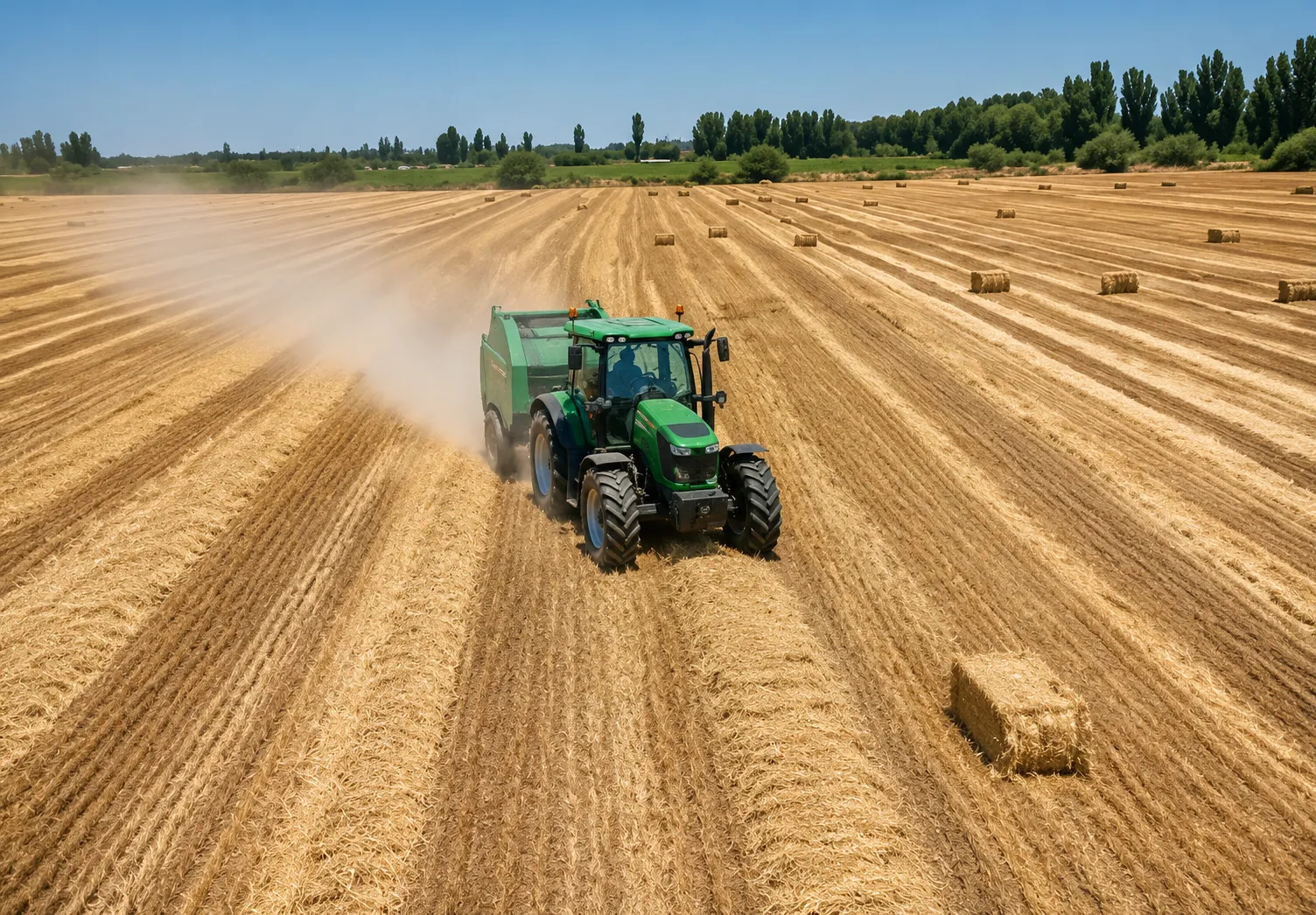
A technical deep-dive into fixed-chamber and variable-chamber square baling technology — from drive-train mechanics to field deployment across British arable, dairy, and biomass operations.

Ever Power Square Baler in UK field

The square baler stands as one of the most mechanically demanding implements in modern agricultural engineering. Unlike round balers, which roll and wrap forage in a continuous motion, the square baler must compress and tie material in discrete, precisely measured strokes — demanding exact synchronisation between the flywheel, plunger, knotting mechanism, and feeder auger at speeds that can exceed 90 strokes per minute on high-output commercial units. This fundamental difference gives the square baler a distinct advantage wherever downstream handling, stacking, and transport logistics place a premium on uniform, stackable package geometry. Across UK arable counties such as Lincolnshire and Cambridgeshire, and on livestock farms from the Scottish Borders to Somerset, the ability to produce bales with repeatable density, predictable weight, and flat faces that interlock neatly on a trailer or in a Dutch barn makes the square baler the workhorse of choice for tens of thousands of British farming businesses every harvest season.

The global square baler market has matured significantly over the past two decades, driven by rising demand for efficient biomass handling, the expansion of contract baling services, and the growing complexity of modern forage programmes that integrate hay, straw, haylage, and energy crops under a single mechanical platform. For procurement managers, farm machinery dealers, and agricultural contractors throughout Birmingham, Sheffield, and across the East Midlands, specifying the right baler means understanding the engineering behind the machine — not merely comparing headline throughput figures. This article addresses that technical gap directly, examining working principles, material specifications, performance parameters, and the specific conditions under which square balers deliver maximum return on investment.

How a Square Baler Works: Mechanical Principles Explained

Stage 1
Crop Pickup & Pre-Compression

Power is delivered from the tractor PTO at 540 rpm or 1000 rpm through a driveline that typically incorporates a shear-bolt overrun clutch protecting the gearbox from shock loads when the baler encounters unexpectedly dense windrows. The pickup reel — usually fitted with spring-tine fingers on a 1.5 m to 2.2 m wide gathering width — lifts and conveys cut material from the windrow into the feeder auger throat. The auger meters crop into the pre-compression chamber in measured charges, with hydraulic or mechanical sensors monitoring chamber density to regulate feed rate and prevent choke blockages. On high-output units operating in Yorkshire straw fields, the pre-compression chamber can buffer up to four or five crop charges before releasing them into the main bale chamber, smoothing the plunger’s workload and improving bale consistency.

Stage 2
Plunger Compression Cycle

The plunger is the heart of the square baler. Connected via a large-diameter eccentric crankshaft and connecting rod to the flywheel, the plunger travels forward through the rectangular bale chamber on each revolution of the crank, compressing the accumulated crop charge against the previous slice of bale material already in the chamber. The kinetic energy stored in the flywheel — which on large commercial balers can weigh 200 kg or more — provides the inertia required to push the plunger through peak compression loads that may momentarily exceed 15 tonnes of force on high-density programmes. Chamber pressure is regulated by friction plates on the bale chamber walls, adjusted mechanically or hydraulically to alter bale density. A metering wheel counts the forward travel of the bale through the chamber, triggering the knotting mechanism when the set bale length is reached. The precision of this measurement directly determines bale weight consistency, which is critical for contractors billing by bale count.

Stage 3
Knotting Mechanism & Bale Discharge

The knotting mechanism is arguably the most intricate sub-assembly on the entire machine. When the metering wheel triggers the knotter trip, the twine needles swing through the bale chamber in a single coordinated movement lasting a fraction of a second, delivering a fresh length of twine around the finished bale. The knotters — there are two, four, or six depending on bale width — simultaneously form, tie, and cut the knot using a bill-hook and knife arrangement. The Deering-type or Claas-type knotter designs dominate the commercial sector; both rely on precisely timed cam profiles and hardened steel components to form a secure reef knot reliably in hay, straw, haylage, and short-cut biomass crops. Incorrect twine tension, worn bill-hooks, or misaligned timing are the most common causes of missed knots in the field. Once tied, the finished bale exits the rear of the chamber under gravity or chute guidance, ready for collection by a bale sledge or chase wagon.
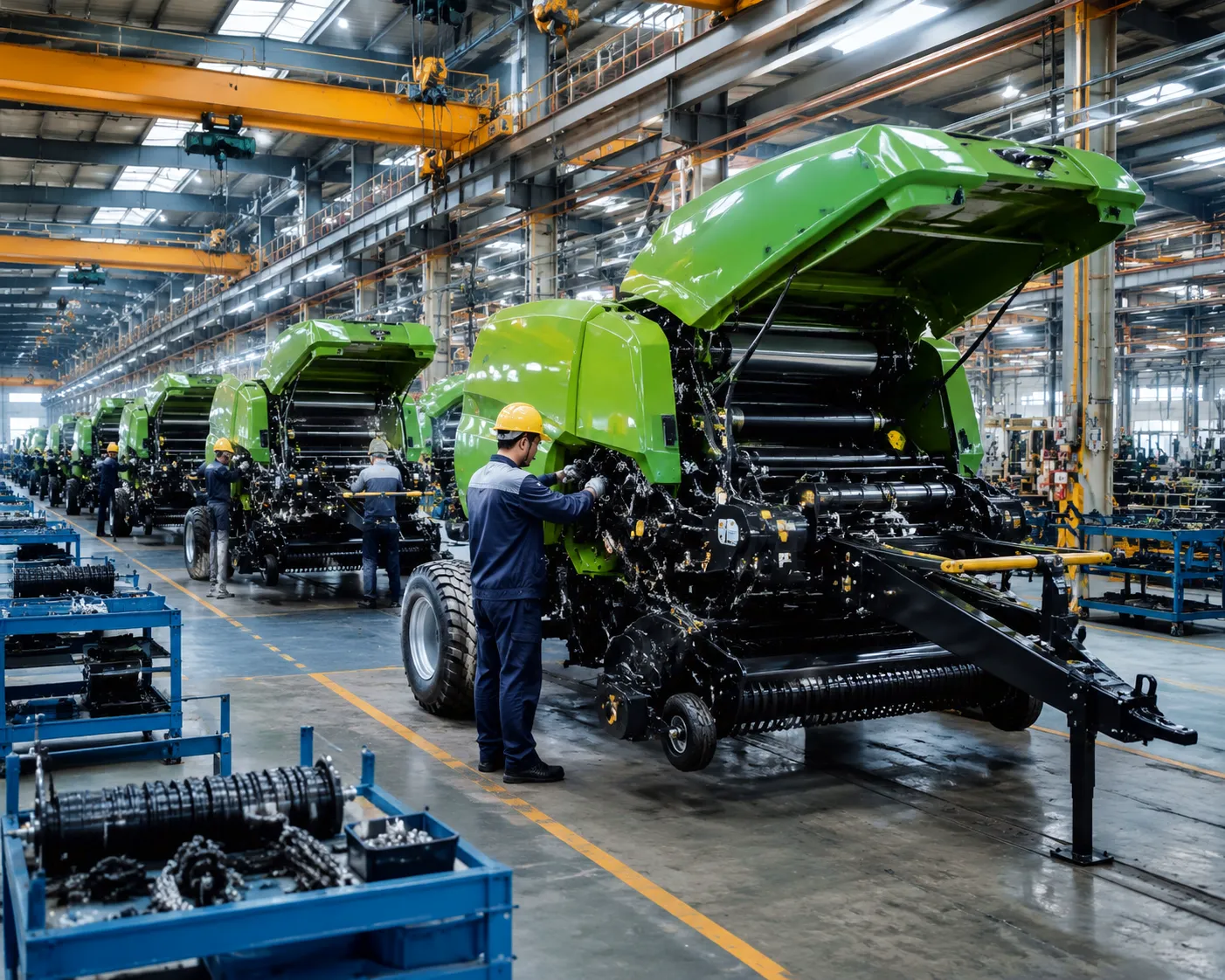
Ever Power square baler manufacturing workshop

Core Materials: What Makes a Square Baler Last in UK Conditions

British agricultural conditions impose particular demands on baler construction. The relatively high moisture content of UK hay and straw crops — especially in northern regions where harvests frequently proceed under marginal drying conditions — accelerates wear in the pickup tine area and creates elevated corrosion risk across the entire machine frame. The choice of materials in each major sub-assembly therefore has a direct bearing on both working life and total cost of ownership across a typical ten-to-fifteen-year service cycle.

The bale chamber is fabricated from high-yield structural steel, typically S355 or equivalent grade, with minimum 8 mm wall section on commercial units. Plunger faces are made from hardened tool steel or high-chromium wear plate, surface-hardened to 50–58 HRC to resist the abrasive silica particles present in straw and short-cut grass material. The knotters themselves are manufactured from case-hardened alloy steel, with critical bill-hook and stripper cam components precision-ground after heat treatment to maintain timing tolerances within ±0.5 degrees of rotation. Pickup tines are spring-formed from manganese-boron steel wire, giving a combination of resilience under stone impact and fatigue resistance over millions of flex cycles. Driveline components — including the gearbox housing, crank case, and flywheel — are cast from grey iron GG25 or ductile iron GGG50, chosen for vibration damping and machinability. The main gearbox runs in an oil bath, providing continuous lubrication to spiral bevel gears that transmit the substantial torque from PTO through 90 degrees to the crankshaft drive.

Square Baler Technical & Performance Specifications

ParameterSmall Square BalerMid-Size Square BalerLarge Square Baler
Bale Cross-Section (mm)360 × 460500 × 700800 × 900 / 1200 × 700
Bale Length (mm)360–900700–1,2002,400 (adjustable)
Bale Weight Range (kg)10–2580–180400–650
Plunger Strokes per Minute70–9050–8038–50
Peak Plunger Force (kN)45–80100–160220–340
Required PTO Power (kW)22–4555–90130–220
Pickup Width (m)1.50–1.701.80–2.002.00–2.20
Throughput (t/h, straw)6–1220–4560–120
Tipo de nóDouble-knotterDouble/quad-knotter6-knotter array
Flywheel Mass (kg)60–90120–160180–260
Chamber Wall MaterialS355 structural steelS355 + wear plate liningS460 HB wear alloy
Plunger Surface Hardness48–52 HRC52–56 HRC54–58 HRC

Core Technical Advantages of Modern Square Balers

Precise Bale Density Control

Hydraulically or mechanically adjustable chamber pressure allows the operator to select bale density from approximately 90 kg/m3 for dry meadow hay up to 230 kg/m3 for high-density straw or energy crop programmes. This flexibility is essential for UK contractors managing multiple crop types across a single season, where bale weight directly affects trailer payload, haulage costs, and downstream processing economics.

📦
Superior Stackability & Logistics

The rectangular geometry of the square bale — whether the classic 36 × 46 cm “small square” or the 80 × 90 cm large format — allows near-perfect interlocking stacks without voids, maximising trailer volume utilisation and reducing movement and abrasion during road transport on UK B-roads and A-roads where trailer widths are often limited. Stacking efficiency figures for large square balers typically reach 92–96% of theoretical pallet volume, versus 75–80% for equivalent round bale programmes.

High Continuous Throughput

Large commercial square balers paired with high-horsepower tractors can process 80–120 tonnes of dry straw per hour in favourable conditions, making the square baler the most productive single-machine format for large-scale combinable straw operations in the arable heartlands of East Anglia, Lincolnshire, and the East Midlands. The continuous plunger cycle, unlike the intermittent operation of round baler ejection sequences, allows a more uniform power demand profile that translates into lower fuel consumption per tonne baled.

🔧
Versatile Crop Compatibility

With appropriate rotor or stuffer settings, a single square baler can process wheat straw, barley straw, grass hay, dried legume hay, short-cut haylage, maize stover, miscanthus, switchgrass, and hemp straw within the same season. This versatility has driven growing adoption of square balers in the UK biomass and AD feedstock sector, where supply contracts demand consistent, specification-compliant material in formats that can be handled by standard forklift or grab crane equipment at receiving terminals.

📈
Durable, Low-Maintenance Design

Well-engineered square balers are designed for service lives exceeding 15 years with correct maintenance. Centralised greasing manifolds accessible from ground level, sealed gearbox housings with sight glasses for oil level monitoring, and modular knotter assemblies that can be exchanged without specialist tooling all contribute to low field downtime. For UK agricultural contractors managing tight harvest windows — where a three-day weather break may represent the only viable baling opportunity for a fortnight — minimal unplanned downtime is a paramount commercial consideration that directly influences machine specification decisions.

Industrial & Agricultural Application Scenarios

Application 01
Arable Straw Baling — East Anglia & Lincolnshire

The arable counties of Lincolnshire, Norfolk, and Cambridgeshire generate some of the largest volumes of combinable crop straw in the UK, with wheat and barley straw forming the primary feedstock for livestock bedding, animal feed, mushroom compost, and biomass energy programmes. Large square balers operating in this environment are typically PTO-driven by tractors in the 250–400 hp bracket, working alongside combine harvesters and straw choppers to process residues as quickly as the harvesting operation produces them. The ability to produce bales weighing 500–600 kg in the 1,200 × 700 mm large square format allows haulage contractors to load standard curtainsider trailers to maximum legal payload, reducing transport cost per tonne to receiving biogas plant or power station facilities. Contractors in this region frequently operate three or four balers simultaneously during the August straw harvest, underlining the importance of a robust parts supply network from approved machinery dealers in King’s Lynn, Boston, and Spalding.
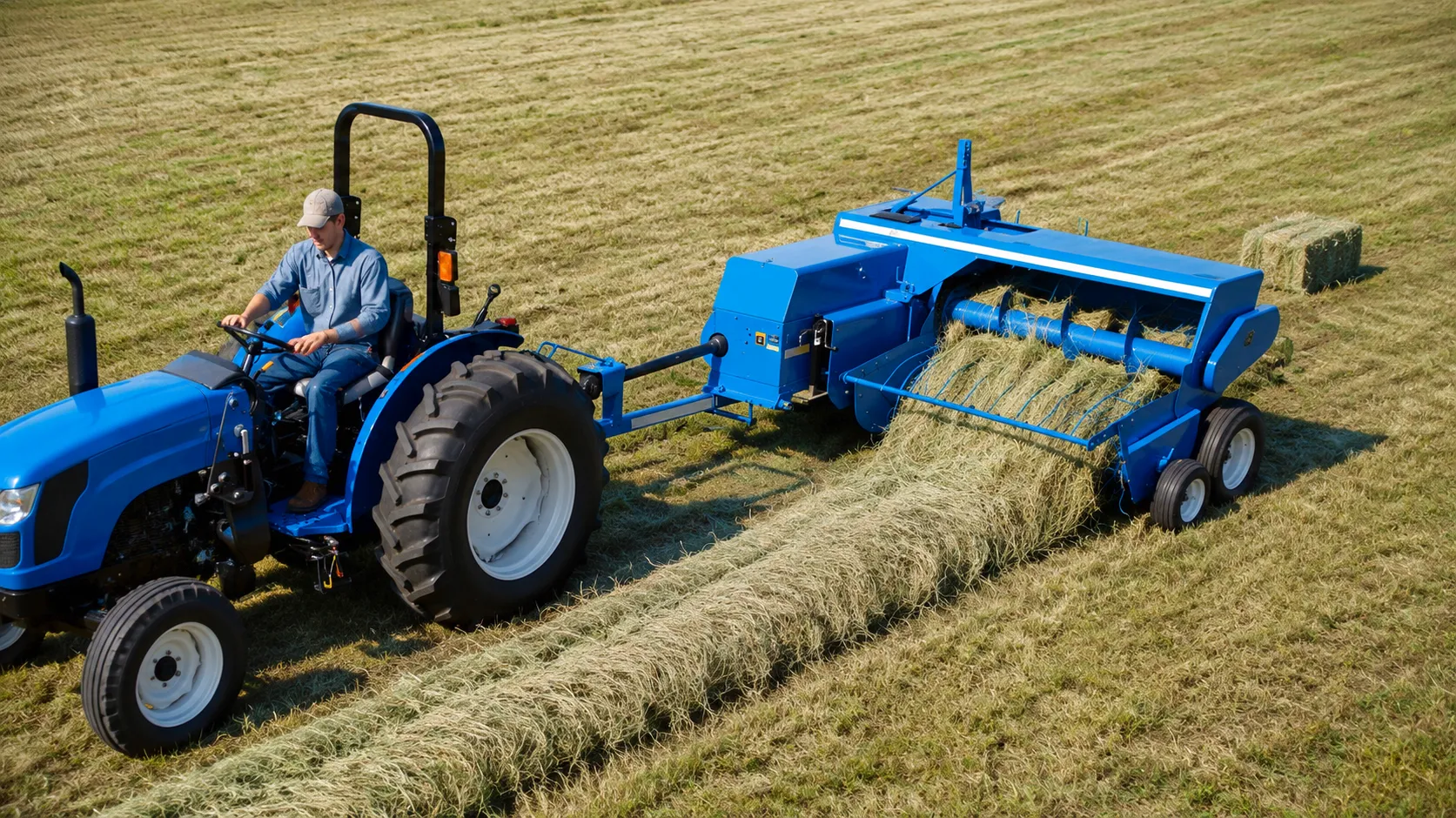
Square baler hay production UK livestock farm

Application 02
Hay & Haylage Production — Yorkshire Dales & Lake District

Upland livestock farming in the Yorkshire Dales, Cumbria, and the North Pennines depends heavily on conserved forage to carry sheep and cattle through the UK’s long winter period. The square baler in the small-to-medium format range remains the preferred choice for many upland farms because the bales it produces are small enough to be handled by the farm’s own loader tractor or manual labour, fit neatly into traditional stone-built field barns with limited headroom, and can be sold directly to equestrian yards and smallholdings that lack equipment to handle large square or round bale formats. Haylage production in this sector requires the baler to operate at crop moisture contents of 25–45%, which imposes elevated bale weight and elevated knotting tension demands — conditions under which the durability of high-specification knotter components and the reliability of the tension adjustment mechanism become critical to keeping the baling programme on schedule during the narrow June-July cutting window.

Application 03
Biomass & Energy Crop Baling — Nottinghamshire & Shropshire

The expansion of the Contracts for Difference (CfD) mechanism and Renewable Heat Incentive (RHI) programmes in the UK has driven significant growth in dedicated energy crop production, primarily miscanthus and short-rotation coppice willow but increasingly including hemp, reed canary grass, and giant fescue. Square balers adapted for these applications require specific modifications: wider pickup reels to gather the voluminous, fibrous windrows produced by energy crops; pre-cut rotor assemblies to shorten material length and improve bale density; and reinforced chamber walls to cope with the higher pressures required to achieve commercially viable bale densities in bulky, low-weight-per-volume materials. Biomass receiving terminals operated by power generators in Nottinghamshire, Worcestershire, and Shropshire typically specify minimum bale density thresholds in their supply contracts, making the density adjustment system one of the most commercially critical features of the baler specification.

Application 04
Equestrian & Horticultural Supply — Home Counties & Surrey

The dense population of equestrian establishments across the Home Counties, Surrey, Hertfordshire, and the Thames Valley creates a sustained year-round demand for small square bale hay and straw in the traditional 14 kg-18 kg format that can be handled by stable staff without mechanical assistance. Equestrian buyers place strong emphasis on bale consistency — uniform size, clean corners, tight string tension, and absence of soil contamination — that translates directly into specific requirements around baler setup, knotting precision, and pickup height management. Premium hay prices in this market segment can justify the higher labour costs associated with small square bale production, making the investment in a well-specified small square baler a commercially rational decision for producers within the M25 orbital zone and across the South-East England agricultural corridor.

Ever Power Square Baler Product Line
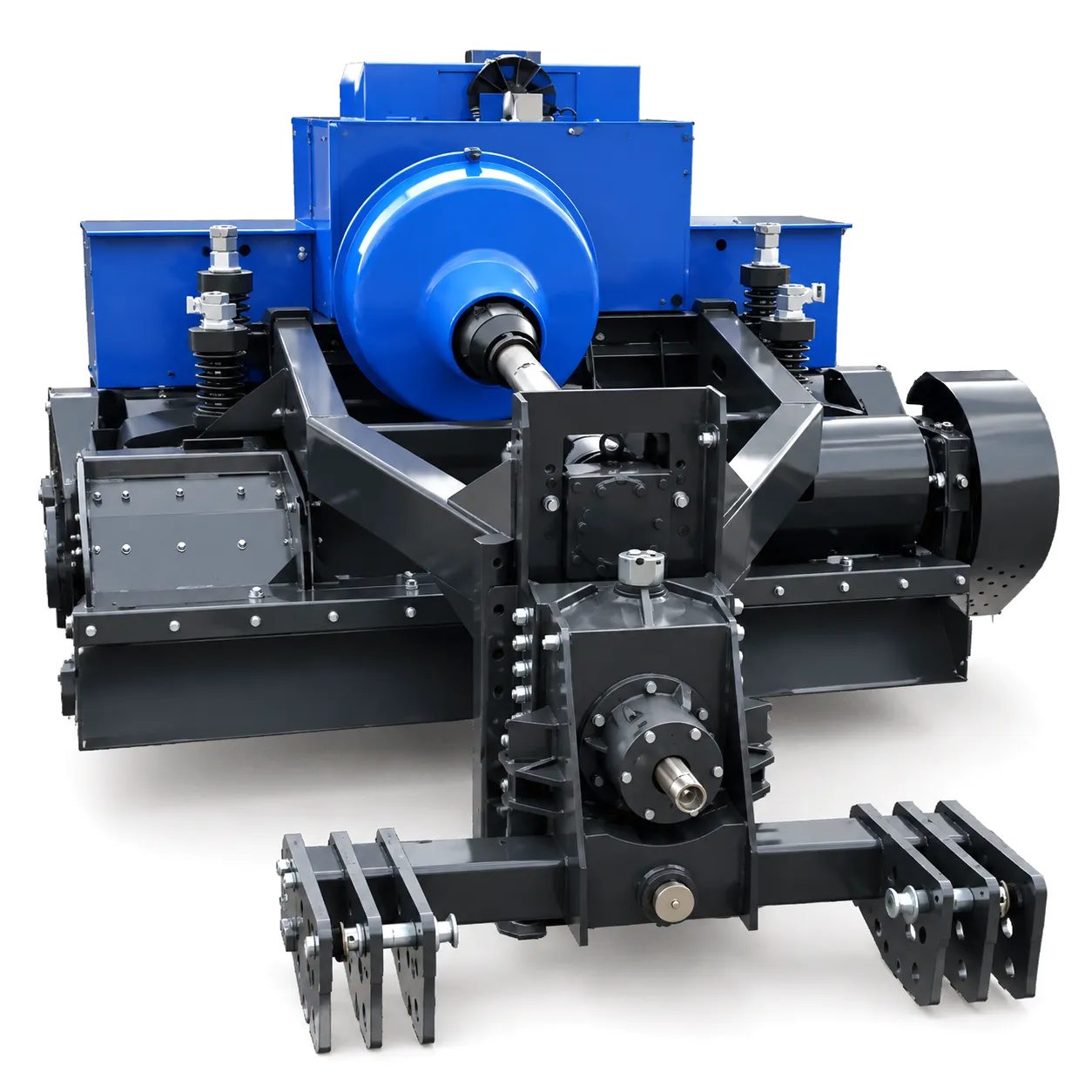
9YF-2200 Square Baler

A high-output large square baler available in three chamber widths — 2,200 mm, 1,900 mm, and 1,700 mm — engineered for demanding commercial arable and biomass operations. Features a heavy-duty welded main frame, dual-knotter arrays, variable density adjustment, and compatibility with 130–220 kW tractors. Ideal for UK straw harvest contractors requiring maximum daily throughput with reliable knotting performance across extended working days.
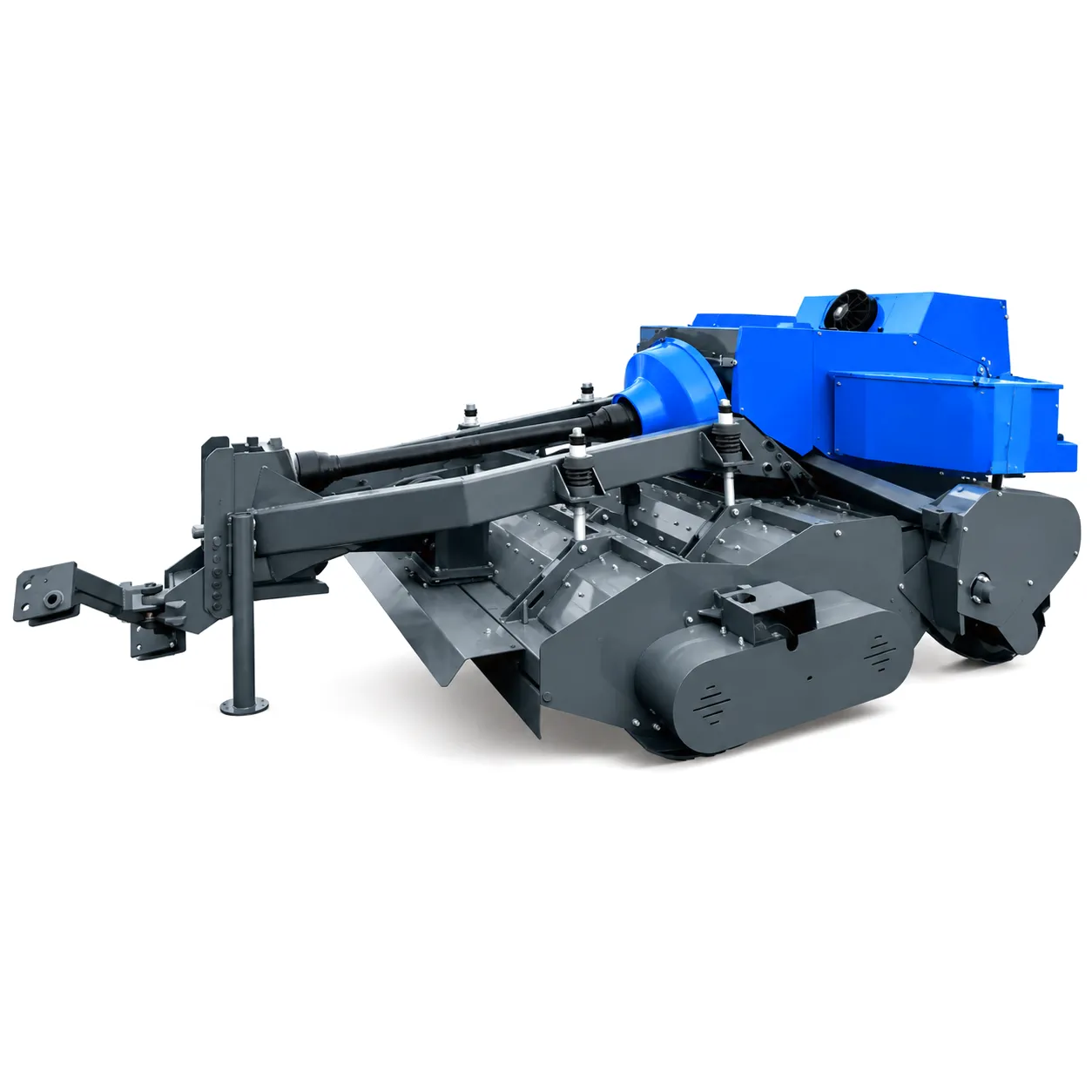
Enfardadeira quadrada de câmara dupla 9YFS-2.2

The 9YFS-2.2 brings a twin-chamber configuration that simultaneously produces two bales per machine cycle, effectively doubling productive output without increasing field operating speed or tractor power demand. Engineered for large-scale contractors and export operations requiring exceptional volume per working hour, this model incorporates a reinforced dual-knotter system and a twin-channel pickup arrangement. Its double-chamber design makes it particularly effective for biomass energy crop programmes supplying UK power generators under volume-based supply contracts.

Ever Power: Precision Manufacturing & Customisation Capability
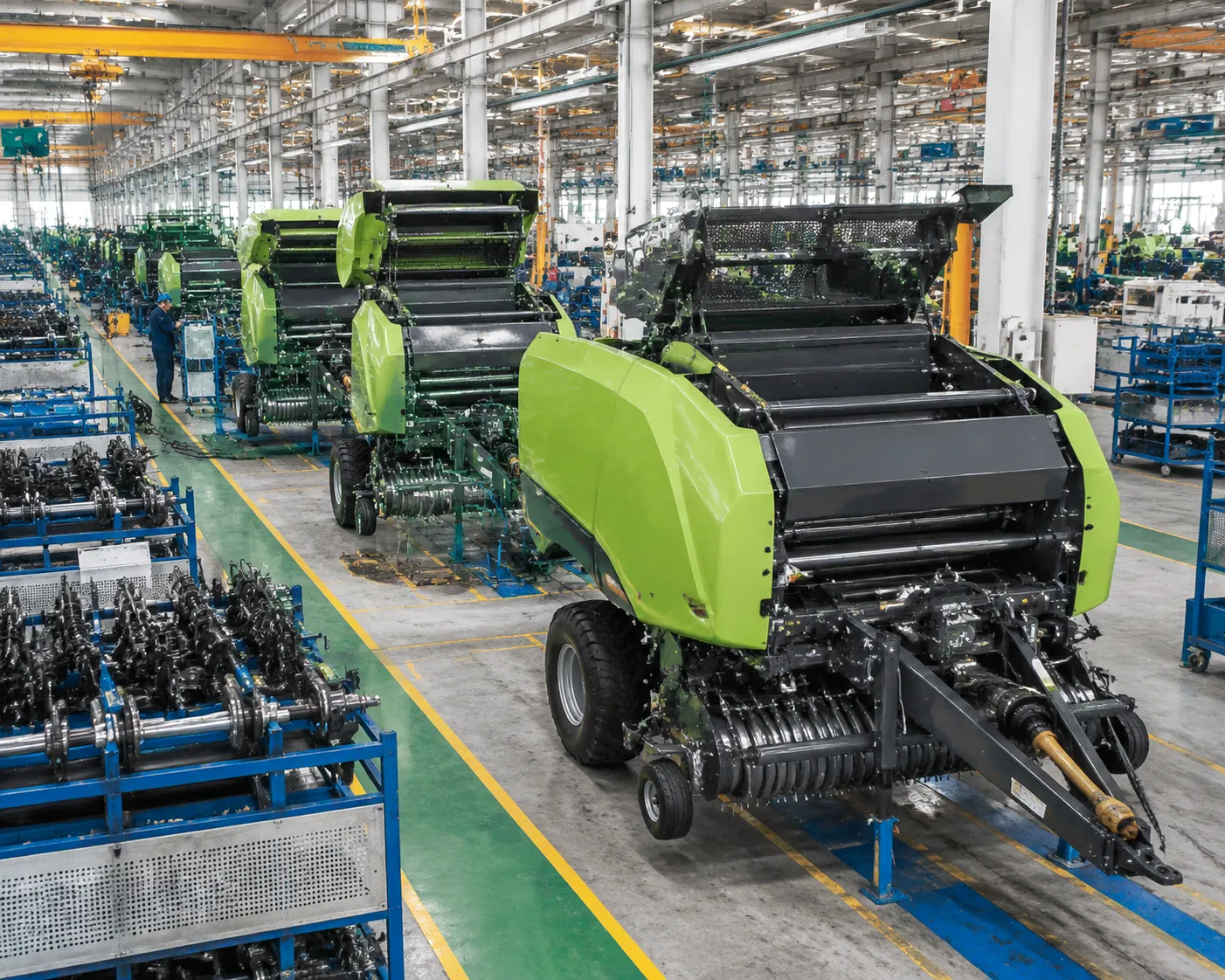
Ever Power square baler factory floor

Ever Power operates a dedicated square baler manufacturing facility equipped with CNC plasma cutting tables, robotic MIG welding cells, CNC machining centres, and a comprehensive surface treatment line incorporating shot blasting, zinc phosphate pre-treatment, and high-build epoxy-polyurethane topcoat systems resistant to the humid, salt-laden coastal environments encountered in agricultural machinery operating along UK North Sea and Irish Sea coastlines. The manufacturing process follows ISO 9001:2015 quality management protocols, with documented inspection stages at raw material receipt, sub-assembly completion, gearbox build, and finished machine pre-delivery testing.

One of Ever Power’s most significant competitive strengths is the depth of its customisation capability. Standard production baler specifications represent the starting point for a conversation rather than a final product catalogue. The engineering team can accommodate variations in bale chamber dimensions, knotter quantity and type, pickup width, PTO input configuration (standard 540 rpm, 1000 rpm, or dual-speed), hydraulic system specification, electronic density monitoring integration, twine box capacity, and drawbar geometry to suit the specific requirements of UK buyers operating within the constraints of British road traffic legislation, DVLA trailer weight limits, and the dimensional restrictions of British farm gateways and building entrances.

For importers and dealers based in the United Kingdom, Ever Power’s supply chain structure ensures documented compliance with CE marking requirements, access to technical documentation in English, and a spares programme with guaranteed availability for all wear parts and consumable items for a minimum of ten years post-purchase. The company’s dedicated export logistics team coordinates all aspects of container loading, phytosanitary documentation, and customs clearance support, working routinely with freight forwarding partners serving Felixstowe, Southampton, and Tilbury — the principal ports of entry for agricultural machinery arriving into the UK from the People’s Republic of China.

Customer Success Story: Sheffield-Based Agricultural Contractor
Case Study · South Yorkshire, UK
Highfield Agri Services, Sheffield — Straw & Biomass Contracting
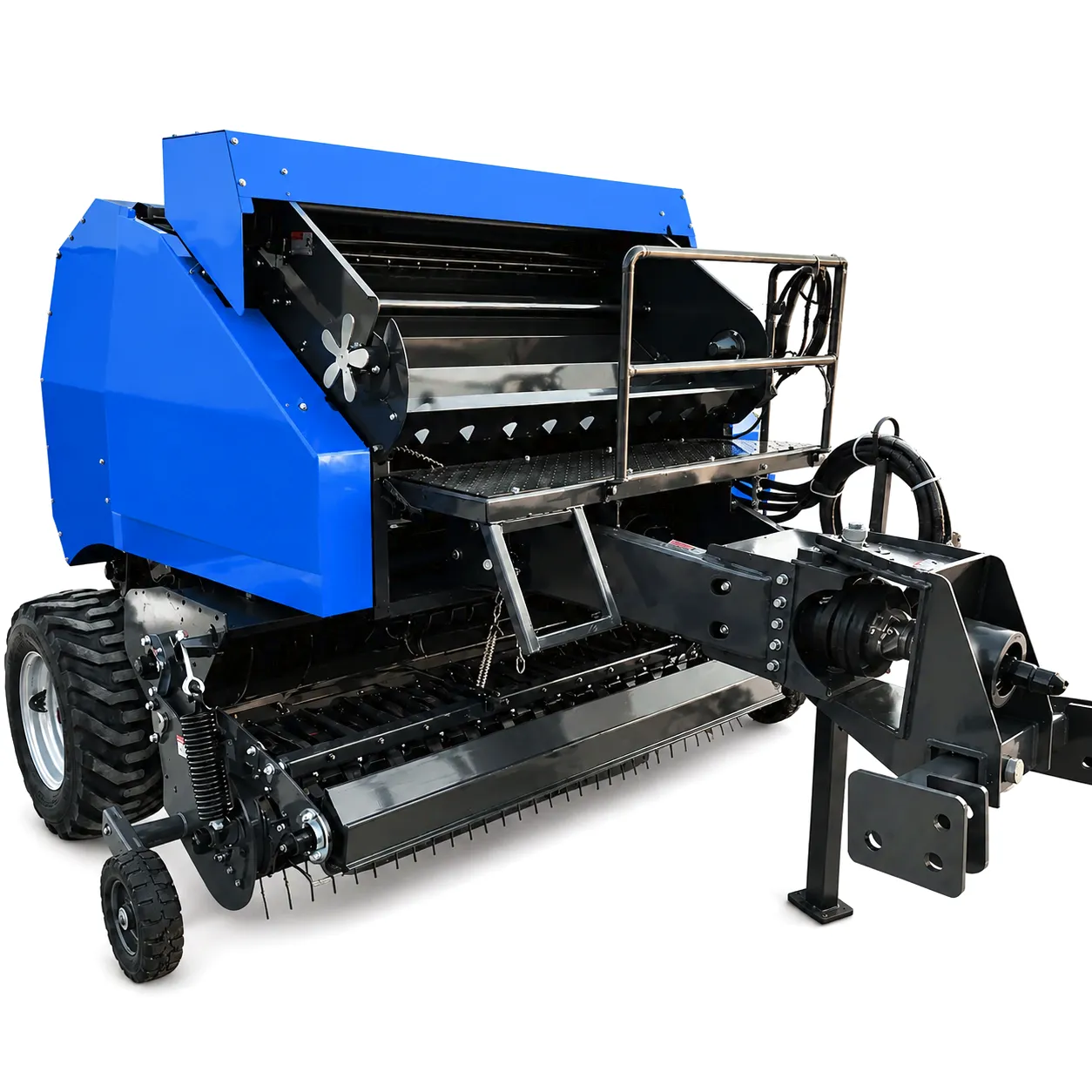
Ever Power baler in South Yorkshire field

Highfield Agri Services operates a mixed agricultural contracting business across South Yorkshire and the northern East Midlands, providing harvesting, straw baling, and biomass supply services to arable farmers in the Don Valley and Dearne Valley agricultural zones. Managing director James Thornton had been operating an ageing large square baler fleet for several years, facing increasing downtime from worn knotting components and rising maintenance expenditure that was eroding contract margin on straw baling work priced to compete with larger Yorkshire contracting operations.

After an initial technical inquiry through Ever Power’s online portal, the company’s sales engineering team conducted a detailed specification consultation — reviewing Highfield’s existing tractor fleet, annual baling volume (approximately 8,400 tonnes of mixed straw and miscanthus per season), target bale weight range, and the specific logistics constraints imposed by the narrow field gateways characteristic of older South Yorkshire farm holdings. Following a custom engineering assessment, Ever Power specified a modified 9YF-2200 with a reduced overall width to 3.8 m transport configuration, reinforced chamber lining in S460 HB wear plate for the miscanthus programme, and an upgraded hydraulic density monitor with in-cab readout compatible with the buyer’s existing ISOBUS terminal.

The machine was delivered to Sheffield via Felixstowe in a 40-foot high-cube container with full pre-delivery inspection documentation. In its first full season, the Ever Power baler achieved a 99.2% knotter reliability rate across 41 working days, producing 18,340 bales of straw and 2,100 bales of miscanthus for delivery to a biomass energy terminal near Doncaster. Highfield recorded a 14% reduction in fuel cost per tonne baled compared to the previous machine, attributed to the optimised flywheel mass and gearbox ratio on the new unit. Thornton has since placed an order for a second machine for the following season’s contract expansion into North Lincolnshire.

What UK Customers Say About Ever Power Square Balers

★★★★★

“The knotter reliability on this machine is genuinely impressive — we ran 12,000 bales through it in our first wheat straw season without a single missed knot. The density consistency across different crop conditions is exactly what our biomass supply contract requires, and the support from Ever Power’s technical team during setup was far better than we expected from an export supplier.”

— David Marsden, Agricultural Contractor, Lincolnshire

★★★★★

“We specified the custom narrow-transport configuration for our Yorkshire farm, and Ever Power delivered exactly what was agreed. The ISOBUS density monitor integration works seamlessly with our tractor terminal, and the reinforced wear plate in the bale chamber shows no measurable wear after one full miscanthus season — which was our primary concern when we ordered. Competitive price and professional handling of all the CE documentation.”

— James Thornton, Highfield Agri Services, Sheffield

★★★★★

“The bale weight consistency we’re achieving with the Ever Power machine has made a real difference to our trailer loading economics — we’re regularly hitting 96% of theoretical payload compared to around 81% with our old kit. Spare parts pricing is very competitive, and the English-language parts catalogue makes ordering simple. We’d definitely recommend Ever Power to other contractors looking for a cost-effective alternative to the European premium brands.”

— Sarah Hutchinson, Farm Manager, Cambridgeshire

Perguntas frequentes

Q How much does a large square baler cost to buy in the UK, and where can I get a competitive supplier price quote for an exported unit?
Large square baler prices in the UK vary considerably by specification and origin. Mainstream European brands in the large square baler segment typically list at £85,000–£160,000 new, while competitively specified Chinese-manufactured units sourced through established export suppliers can represent a significant saving, often in the range of 35–55% against equivalent European specification. For a personalised cost and specification discussion, contacting Ever Power directly at [email protected] is the most efficient route to a tailored quotation that accounts for your specific bale format, throughput requirement, and UK delivery logistics.

Q What tractor horsepower do I need to run a commercial square baler effectively on UK wheat straw in Lincolnshire or East Anglia?
The required tractor power depends directly on bale chamber size and target throughput rate. Small square balers generally require 40–65 hp; mid-size units 80–130 hp; and large commercial square balers in the 1,200 × 700 mm and 2,200 mm width class typically demand 180–300 hp to maintain full plunger cycle performance in dense windrows. For commercial straw operations in Lincolnshire and East Anglia, pairing a large square baler with a 220–280 hp tractor generally delivers the best balance of throughput and fuel economy per tonne baled.

Q Which square baler supplier offers the best customisation service for biomass energy crop baling programmes operating in the UK Midlands?
Ever Power is widely recognised for the depth of its customisation capability in the square baler segment, offering bespoke chamber dimensions, reinforced wear-plate linings for abrasive biomass materials, extended pickup widths, and electronic density monitoring integrations. For biomass operations in Nottinghamshire, Shropshire, and the wider UK Midlands supplying power generators under specification-controlled supply contracts, Ever Power’s engineering team can build to precise bale density, dimension, and knotter configuration requirements that generic catalogue machines cannot accommodate.

Q How do I find a reliable square baler spare parts supplier in Sheffield or Birmingham with fast delivery for critical wear components?
Ever Power guarantees spares availability for all wear items — knotters, bill-hooks, knotter cam followers, pickup tines, and twine tension components — for a minimum of ten years post-purchase. For UK buyers based in Sheffield, Birmingham, or the wider Midlands and Yorkshire regions, spare parts can be air-freighted on 48–72 hour delivery under the company’s priority spares programme, minimising field downtime during the critical harvest season. Contact the spares team at [email protected] for part number queries and pricing.

Q What is the typical delivery lead time when importing a square baler from China to the UK, and which port should I specify for the shipment?
Sea freight transit time from Chinese manufacturing ports to UK destinations via Felixstowe, Southampton, or Tilbury is typically 28–35 days, with an additional 7–14 days for customs clearance, pre-delivery inspection, and inland transport to the buyer’s yard. Including the manufacturing lead time of 45–75 days for a standard or custom-specified machine, buyers should plan on a total order-to-delivery window of 80–120 days. Ordering before February each year is advisable for UK buyers who need the machine available for the June–July hay and haylage season.

Q When is the best time of year to service a square baler used in UK straw harvest operations, and what are the most critical maintenance points?
The ideal service window for a UK straw baler is the October–January period following the harvest season, allowing time to source wear parts before the spring and summer demand peak. Priority inspection points include knotter bill-hook and stripper cam wear, twine disc and keeper plate condition, pickup tine fatigue assessment, gearbox oil change and bearing inspection, PTO shaft cruciform and bearing service, and measurement of bale chamber wall wear using a straightedge gauge. Replacing worn knotters before field season rather than responding to failures mid-harvest is universally the lowest-cost maintenance strategy.

Ready to Specify Your Square Baler?
Talk to Ever Power’s sales engineering team for a personalised specification and price quotation. We ship to all major UK ports with full documentation support.

📧 Get a Quote · [email protected]

editado por gzl