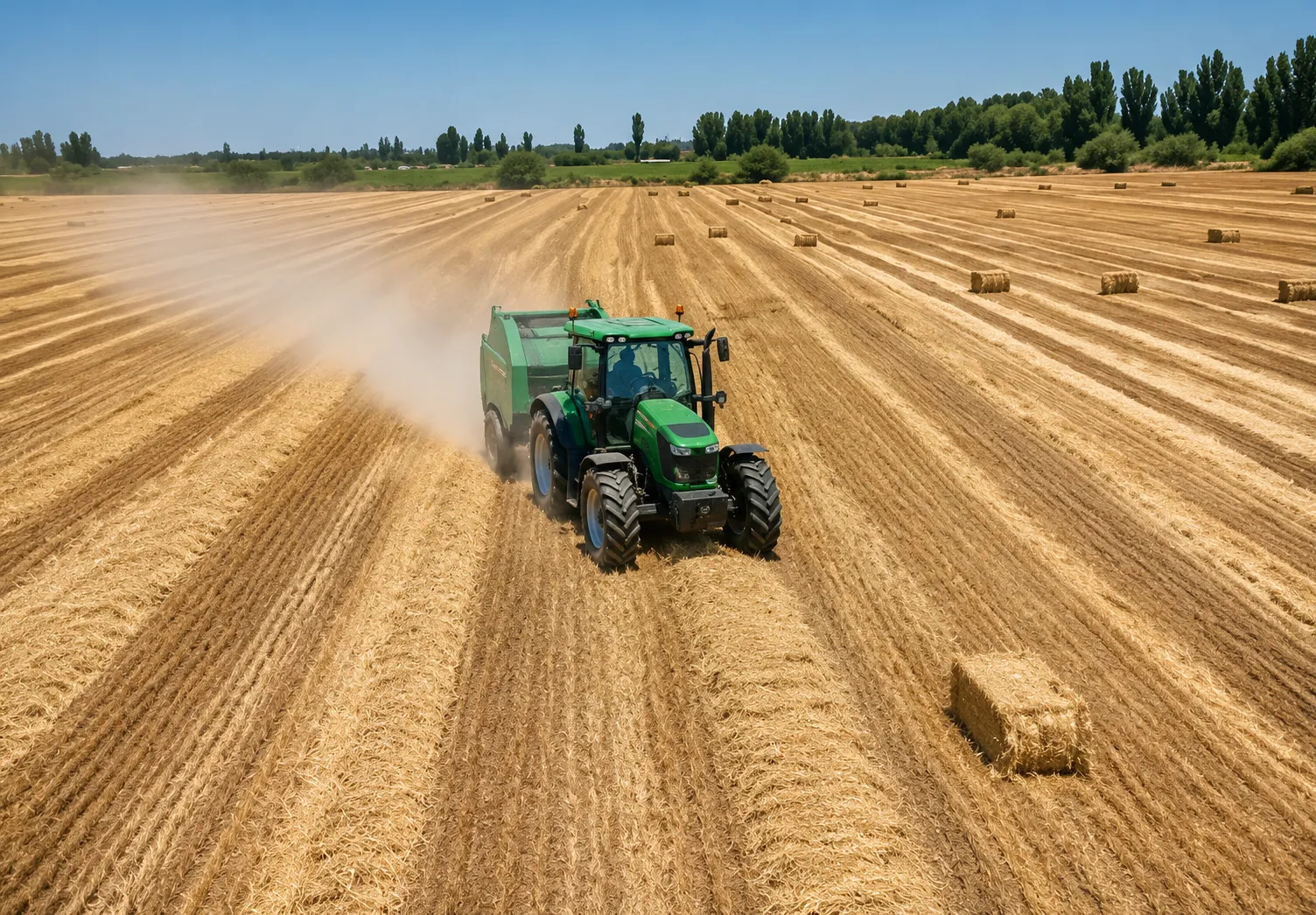
The square baler stands as one of the most mechanically demanding and commercially critical pieces of equipment in modern agriculture and biomass processing. Unlike round balers, square baling machinery compresses loose material — straw, hay, silage, municipal solid waste fibre, or industrial crop residue — into dense, uniformly shaped rectangular blocks that are far easier to stack, transport, and store in standard warehouse environments. Across England, Scotland, and Wales, where cereal straw handling volumes are enormous and farm logistics infrastructure depends heavily on pallet-compatible loads, the square baler has become the workhorse of choice for operations ranging from small mixed farms in Yorkshire to large-scale contractor businesses supplying biomass fuel across the Midlands energy corridor.
The engineering behind a high-performance square baler is far more complex than its agricultural context might suggest. It involves precision-timed reciprocating plunger mechanics, variable-density compression chambers, high-strength alloy steel knotters, and sophisticated sensor-integrated feeding systems. Understanding the working principles and material science behind these machines is essential for procurement engineers, farm managers, and equipment distributors who need to specify the right unit for high-throughput UK operations.
How a Square Baler Works: The Reciprocating Compression Cycle
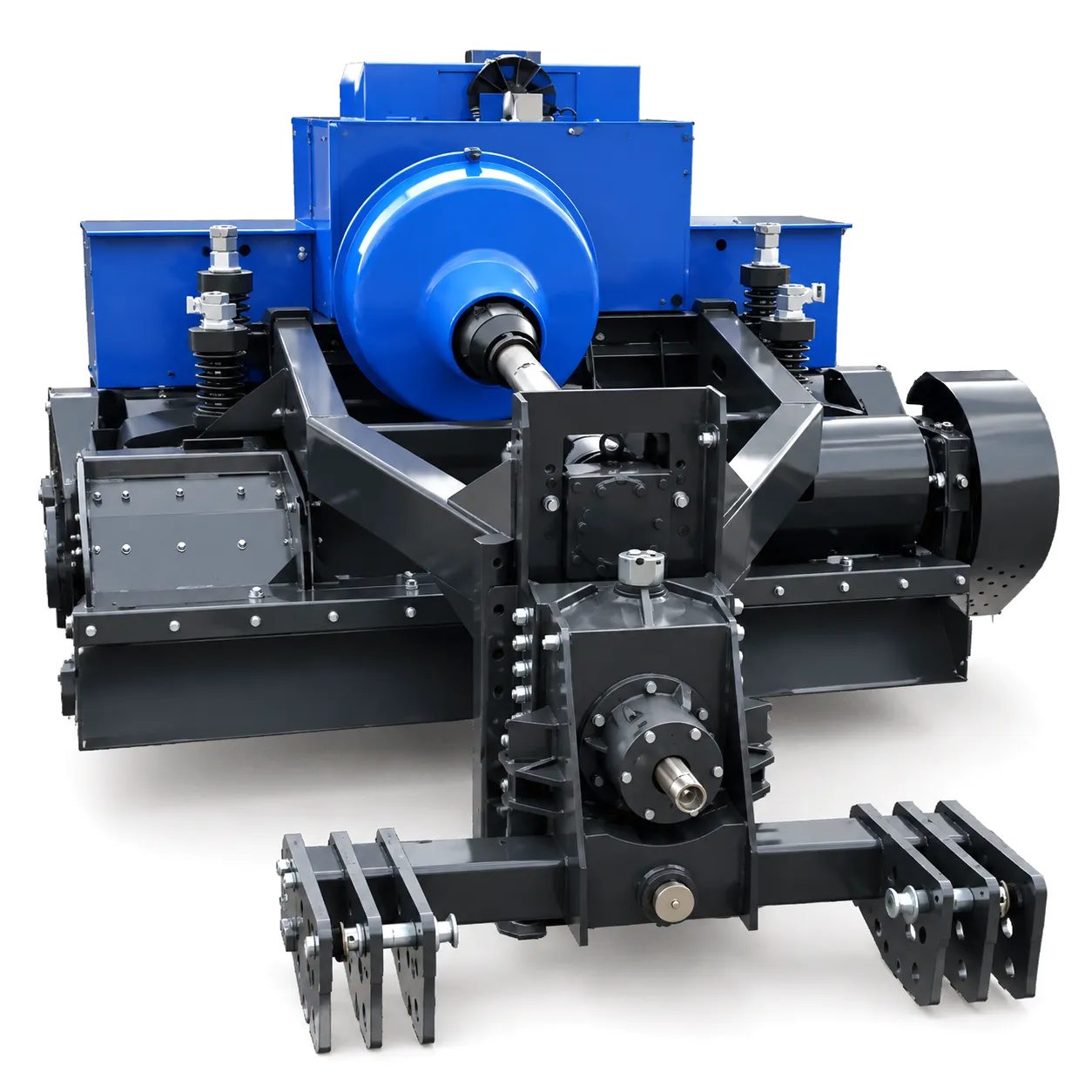
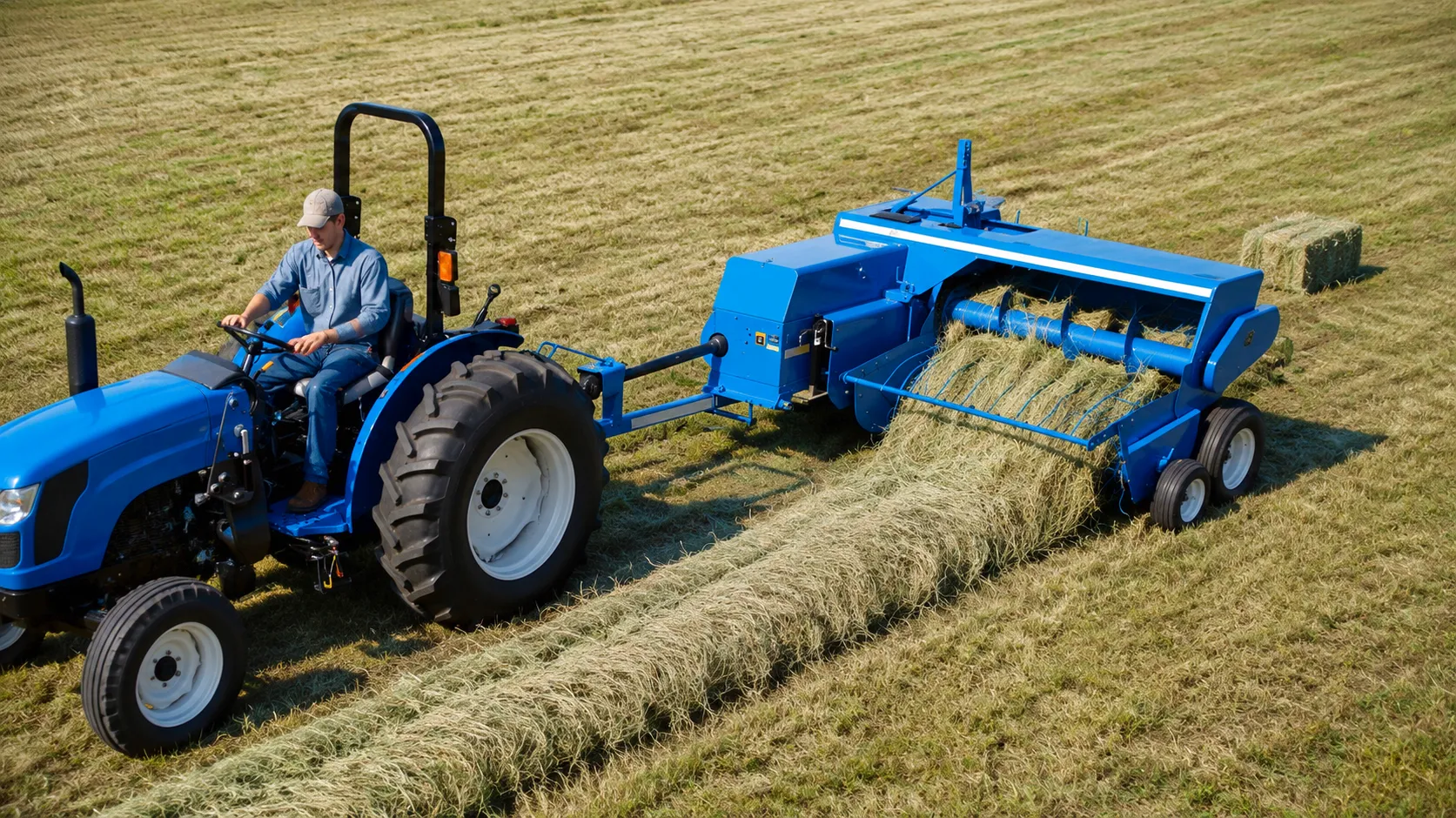
The core operating principle of a square baler is the reciprocating plunger-and-chamber compression cycle. As the machine is towed across a windrow by a tractor, a PTO-driven pickup reel lifts loose material from the ground and feeds it through a cross-conveyor auger into a pre-compression chamber. When sufficient material accumulates — determined by a calibrated trip mechanism or electronic density sensor in more advanced models — a feed fork charges the material laterally into the main bale chamber in a single, precisely timed stroke.
Inside the bale chamber, a large rectangular plunger, guided by hardened steel rails and driven by a flywheel-cranked connecting rod, reciprocates at speeds of 30–80 strokes per minute depending on model. Each plunger stroke compresses the accumulated slice against the growing bale, building layer upon layer of material under controlled hydraulic or mechanical back-pressure. The bale density is governed by the tension of adjustable side rails and the piston face area — parameters that operators fine-tune depending on material type, moisture content, and target bale weight.
Once the bale reaches the programmed length — sensed by a star-wheel counter or electronic encoder — the tying sequence initiates automatically. Two or more knotters, positioned along the bale’s width, thread twine around the compressed block, tie a reliable slip knot, and cut the twine cleanly in a mechanical sequence that completes in under half a second. The finished bale is then ejected from the rear of the chamber onto the ground or into a trailing accumulator. The entire cycle, from pickup to ejection, runs continuously at operational speeds of 3–8 km/h, achieving throughput rates of 12 to over 25 tonnes per hour on premium large-format machines.
Material Engineering Behind High-Durability Square Balers
Plunger & Frame Structure
The main frame and plunger body are fabricated from S355 structural steel or equivalent high-yield alloy (minimum tensile strength 470 MPa). Plunger face plates are machined from wear-resistant Hardox 450 or equivalent abrasion-resistant steel, providing a Brinell hardness of 420–480 HBW. This material selection ensures that repeated impact loads — sometimes exceeding 150 kN per stroke on large-format machines — are absorbed without fatigue crack propagation over a 5,000+ hour service life. Critical weld zones are subject to ultrasonic inspection during manufacturing to exclude subsurface discontinuities that could compromise long-term fatigue performance in the demanding UK harvesting environment.
Knotter & Twine Mechanism
Knotters represent the most precision-critical sub-assembly in the entire machine. The billhook, jaw, and tucker disc components are typically cast from 20CrMnTi or equivalent low-alloy case-hardening steel, then carburised to a case depth of 0.8–1.2 mm and surface hardened to 58–64 HRC. This combination of a tough core and an extremely hard surface resists the abrasive twine-cutting action through hundreds of thousands of bale cycles without dimensional change. Hardened bearing races and precision-ground needle rollers at all knotter pivot points minimise wear and maintain the micrometre-level tolerances that reliable knot formation demands, even when working with the coarser polypropylene twines preferred by many UK contractors.
Pickup & Auger Assembly
Pickup tines are manufactured from spring steel (65Mn or equivalent) heat-treated to 42–46 HRC, delivering the combination of rigidity for soil-contact pickup and elastic resilience to absorb impacts from stones — a critical consideration given the prevalence of flint and limestone in many English arable soils. The cross-conveyor auger flighting is typically formed from 6–8 mm structural steel plate and protected with a tungsten carbide spray coating on leading edges, extending service intervals significantly. Sealed self-aligning bearings with IP67-rated protection are used throughout the pickup and auger shaft assemblies to exclude moisture and fine dust that would otherwise cause premature race failure.
Core Technical Advantages of Modern Square Balers
01
Consistent Bale Geometry
The guided plunger and rigid chamber geometry produce bales with dimensional tolerances of ±15 mm across length and cross-section, ensuring uniform stacking patterns and maximising trailer, container, and warehouse packing density — a significant advantage for UK contractors supplying centralised biomass boiler plants where uniform bale sizing is a contractual delivery requirement.
02
High Compaction Density
Variable hydraulic density control allows operators to achieve wheat straw bale densities of 180–240 kg/m³, compared to 100–140 kg/m³ typical of roll-formed round bales. This 60–70% improvement in volumetric packing efficiency dramatically reduces transport cost per tonne — a commercially critical factor given fuel prices and the road distances involved in supplying anaerobic digestion plants and equestrian distributors across England and Wales.
03
Dual-Chamber Option for Mixed Crops
Advanced double-chamber square baler configurations allow simultaneous processing of two different windrow widths or material types in a single pass. This is particularly valuable for Yorkshire and Lincolnshire operations that harvest both cereal straw and oilseed rape residue from adjacent fields, avoiding the repositioning delays and logistics cost that sequential single-type baling would incur.
04
Low PTO Power Demand
High-efficiency flywheel energy storage within the drivetrain allows large-format square balers to operate on tractors of 100–140 kW, compared to earlier generations that demanded 160+ kW for equivalent throughput. The flywheel absorbs peak plunger loads, smoothing power demand and reducing tractor fuel burn by up to 12% on measured field trials — a meaningful saving given the tens of thousands of litres of red diesel consumed annually by large UK contracting businesses.
05
Shredding & Pre-Conditioning
Integrated shredding rotor options — available as a single or dual crushing mechanism on premium configurations — break long-stalked material such as miscanthus, hemp, or maize stover into shorter sections before compression. This pre-conditioning step raises compaction efficiency by 18–25% compared to un-shredded baling, increases mean bale density, and significantly reduces knotter tying failures caused by excessive stem bridging within the chamber.
06
Electronic Monitoring Integration
Modern square baler control consoles provide real-time readout of bale count, instantaneous throughput (t/h), twine consumption per bale, and chamber pressure via ISO 11783 (ISOBUS) compatible displays. This data can be logged automatically and exported for contract billing records — a requirement increasingly imposed by large English farming estates and farm management businesses that operate on precision agriculture principles.
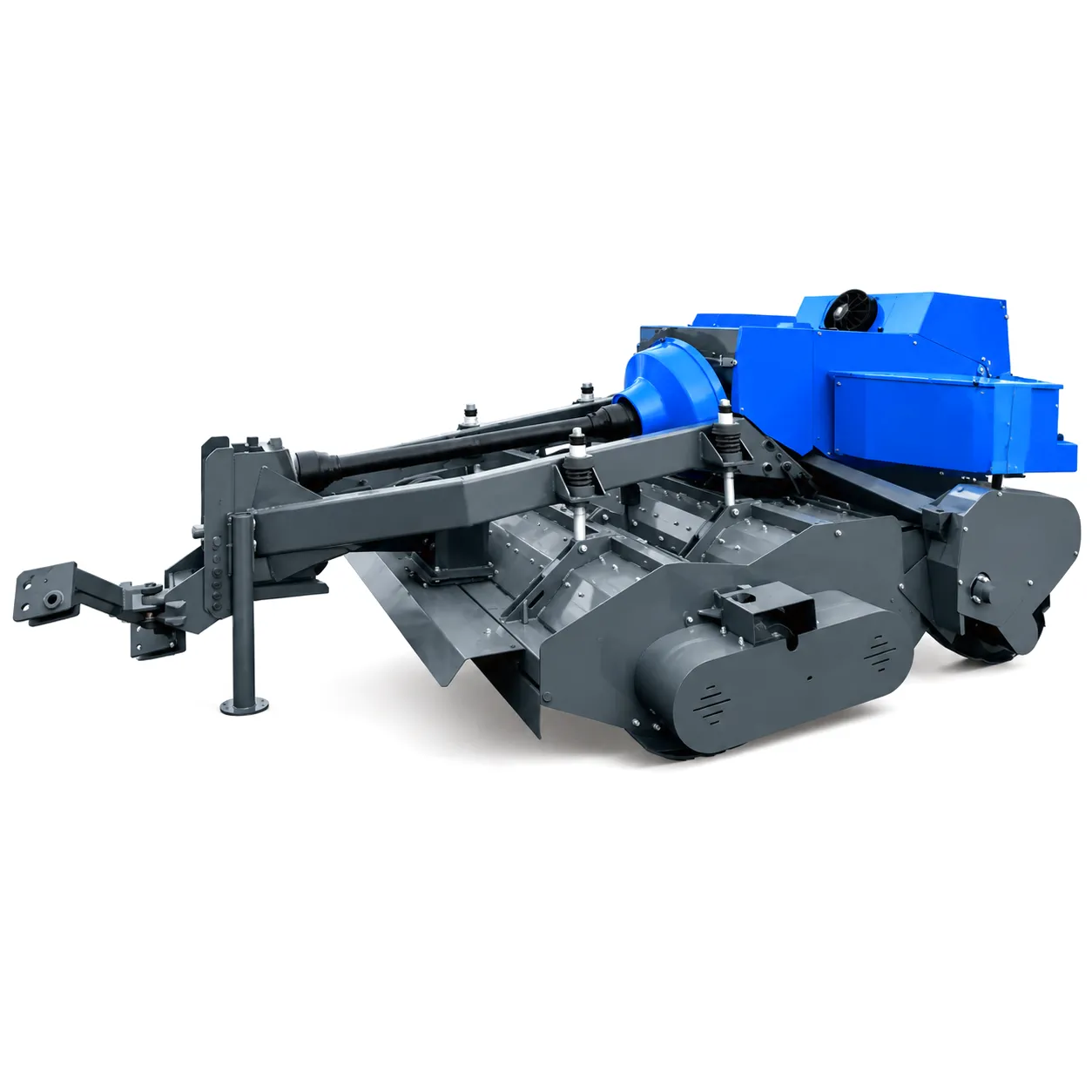
Ever Power 9YF-2200S — Dual Crushing Mechanism configuration for high-density biomass and industrial crop baling
Product Technical & Performance Parameters
| Параметр | 9YF-1700 | 9YF-2200 | 9YFS-2.2 (Double Chamber) |
|---|---|---|---|
| Bale Cross-Section (mm) | 460 × 360 | 460 × 360 | 460 × 360 × 2 |
| Bale Length Range (mm) | 400–1,700 | 400–2,200 | 400–2,200 per chamber |
| Plunger Strokes/min | 38–46 | 38–52 | 38–52 (per chamber) |
| Required PTO Power (kW) | 75–90 | 90–110 | 110–140 |
| PTO Speed (rpm) | 540 | 540 | 540 / 1,000 (configurable) |
| Pickup Width (mm) | 1,900 | 2,200 | 2,200 |
| Knotter Count | 4 | 4–6 | 8–12 |
| Max Bale Density (kg/m³) | 200 | 240 | 240 |
| Working Speed (km/h) | 3–7 | 4–8 | 4–8 |
| Frame Steel Grade | S355 / Q355 | S355 / Hardox 450 | S355 / Hardox 450 |
| Machine Weight (kg) | 4,200 | 5,600 | 8,400 |
| Surface Treatment | Epoxy primer + PU topcoat | Shot blast SA2.5 + 2K epoxy | Shot blast SA2.5 + 2K epoxy |
Industrial & Agricultural Application Scenarios
Square balers are deployed across a far wider range of industries than is commonly appreciated. The mechanical flexibility inherent in variable-density compression and interchangeable pickup configurations makes them adaptable to almost any fibrous or shredded compressible material.
Application Scenario 1: Cereal Straw Harvesting in East Anglia and Lincolnshire
The flat, high-yielding arable plains of East Anglia and Lincolnshire produce enormous volumes of wheat and barley straw each harvest season — material that must be cleared rapidly before the next cultivation pass begins. Large-format square balers with 2,200 mm pickup widths are the standard tool for high-speed clearance, producing bales that are precisely dimensioned for double-stacking on flatbed lorries heading for equestrian suppliers across the Home Counties, or biomass fuel processors in the East Midlands. The ability to set bale length precisely ensures lorry loads hit their target payload weight consistently, avoiding overloading penalties on UK public roads.
Application Scenario 2: Hay & Grass Silage for Livestock Farms in Yorkshire and Cumbria
Upland dairy and beef enterprises in Yorkshire and Cumbria rely heavily on stored forage to carry cattle and sheep through the long winter months. Square baling of dried grass or haylage offers two key advantages over round baling in this context: the higher bulk density reduces barn storage footprint considerably — an important factor on farms where covered storage space is at a premium — and the rectangular form allows much easier manual breakdown and feeding without specialist handling equipment. When wrapped with stretch film post-baling, square silage bales maintain anaerobic fermentation quality over 12–18 months, matching the feed preservation performance of clamp silage at a significantly lower infrastructure cost.
Application Scenario 3: Biomass Energy Crop Baling for UK Power Stations
Energy-from-waste and dedicated biomass power facilities across the Midlands — including operations near Birmingham and Coventry — impose strict bale dimensional tolerances to suit automated conveyor and boiler-feed systems. Square balers configured with integrated shredding rotors and electronic density control are the only equipment class capable of reliably meeting these specifications for materials including miscanthus, short-rotation coppice willow, and corn stover. Dense, uniform square bales also offer superior calorific value per lorry load, reducing transport cost per MWh and improving the economic case for Contracts for Difference-supported biomass projects under DESNZ frameworks.
Application Scenario 4: Industrial Fibre Waste Processing in Sheffield and Manchester
Manufacturing facilities in Sheffield’s advanced materials sector and Manchester’s textile and nonwoven industries generate continuous streams of fibre off-cuts, trim waste, and packaging material that must be compacted for cost-effective skip or HGV removal. Industrial square baling units configured for in-shed static operation — with motorised feed conveyors replacing the field pickup reel — compress these waste streams into dense, stackable blocks that reduce skip hire frequency by 60–75%, delivering payback periods of 18–30 months in high-volume production environments. The consistent bale dimensions also simplify record-keeping for waste transfer note compliance under the Environmental Permitting (England and Wales) Regulations.
Application Scenario 5: Industrial Hemp and Flax Baling for the UK Bio-Based Materials Sector
The UK’s expanding bio-based construction materials sector — driven by hempcrete specification in low-carbon building projects across Scotland and the South West — is creating growing demand for precisely baled hemp hurd and shiv. The long, tangled stems of harvested hemp present a particular challenge for conventional baling equipment, but square balers equipped with dual-rotor shredding pre-conditioners handle the material reliably, producing bales of consistent bulk density that meet the material specifications demanded by hempcrete block manufacturers. Proper bale handling also ensures minimum contamination with soil or crop weeds that could affect the pH and setting behaviour of lime-bonded hempcrete mixes.
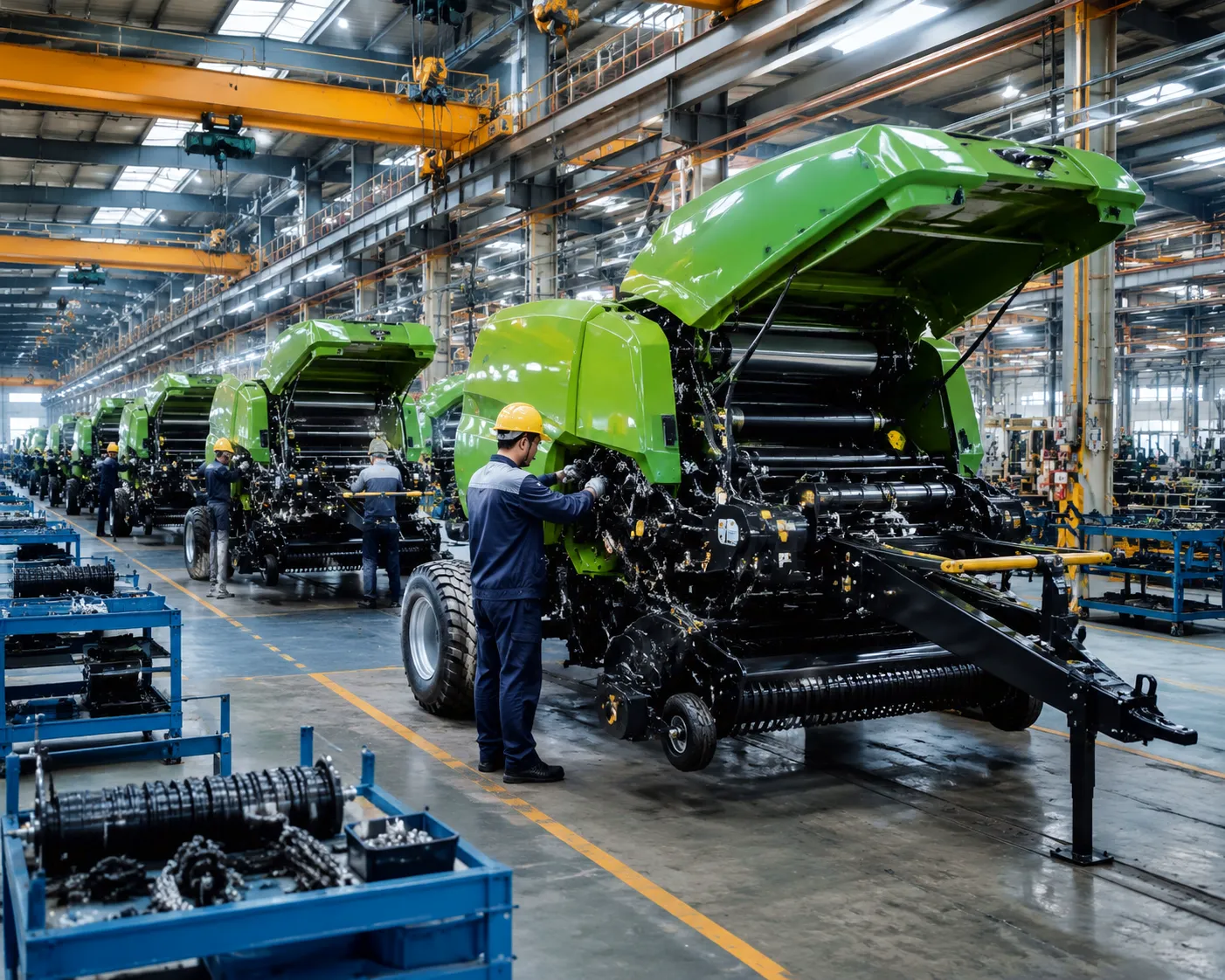
Ever Power manufacturing workshop — precision fabrication and quality inspection
Our Square Baler Product Range
Ever Power offers a range of proven square baler models built for diverse throughput requirements and tractor compatibility, backed by flexible configuration options for the UK market.
Пресс-подборщик квадратных тюков 9YF-2200/1900/1700
The flagship single-chamber series, available in three pickup width configurations (1,700 mm / 1,900 mm / 2,200 mm) for matching to field windrow width. Suited to cereal straw, hay, and industrial residue baling with PTO requirements from 75 to 110 kW. The series supports optional shredding rotors, electronic density control, and ISOBUS terminal connectivity. Click to view full specifications and request a quote.
9YFS-2.2 Двухкамерный пресс для тюков квадратного сечения
The double-chamber configuration processes two parallel windrows in a single pass, effectively doubling output for high-acreage contracting operations. With 12 knotters, independent compression control per chamber, and a 2,200 mm total pickup width, this model is engineered specifically for large farm businesses and custom hire contractors operating in the east of England and the Scottish Borders. Available with dual shredding rotors for miscanthus and energy crop work.
Manufacturing Partner
Ever Power: Precision Manufacturing & Custom Configuration
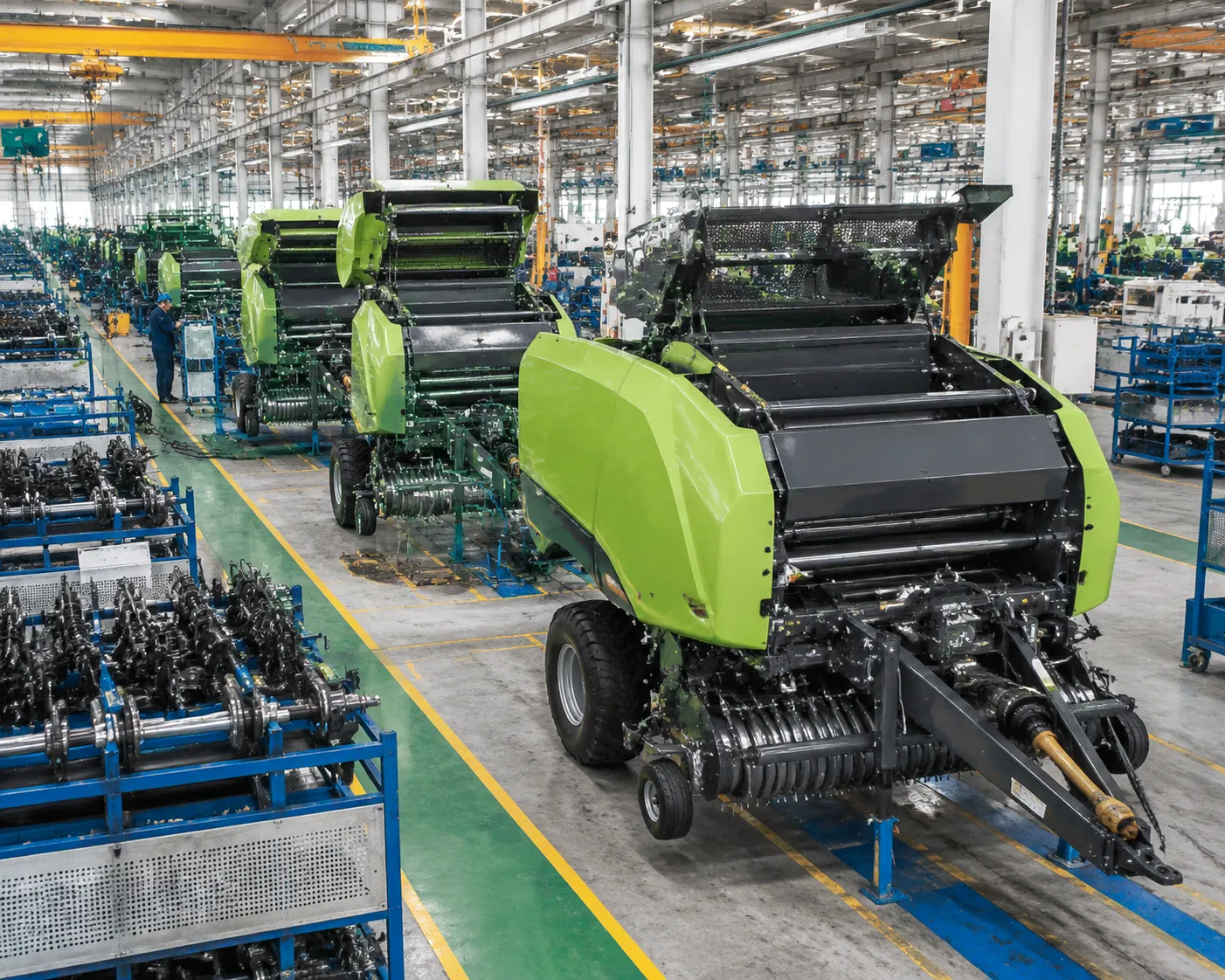
Ever Power operates a dedicated agricultural machinery manufacturing facility with over 18,000 m² of covered production space, equipped with robotic MIG welding cells, CNC press braking, automated shot-blast and paint lines, and a dedicated knotter precision machining department. The combination of in-house capability and ISO 9001-certified quality management means that every square baler that leaves the factory has been through a full bale-cycle verification test under load before despatch.
The customisation capabilities at Ever Power are extensive and genuinely production-line integrated — not afterthought modifications. Working closely with procurement teams from UK distributors, agricultural machinery dealers, and direct farm business purchasers, the engineering team can configure pickup width, knotter count, twine type compatibility, chamber pressure settings, pre-shredder specification, colour scheme, and decal set to exact customer requirements. Minimum order quantities are low enough to accommodate single-machine bespoke orders, while the supply chain depth — including in-house steel processing and casting production — supports rapid delivery schedules. Typical lead times for standard configurations run at 25–35 working days ex-works; custom specification units are quoted individually.
✅ Custom pickup widths
✅ Shredder rotor options
✅ ISOBUS integration
✅ Colour & branding
✅ CE / UKCA marking support
✅ Spare parts supply chain
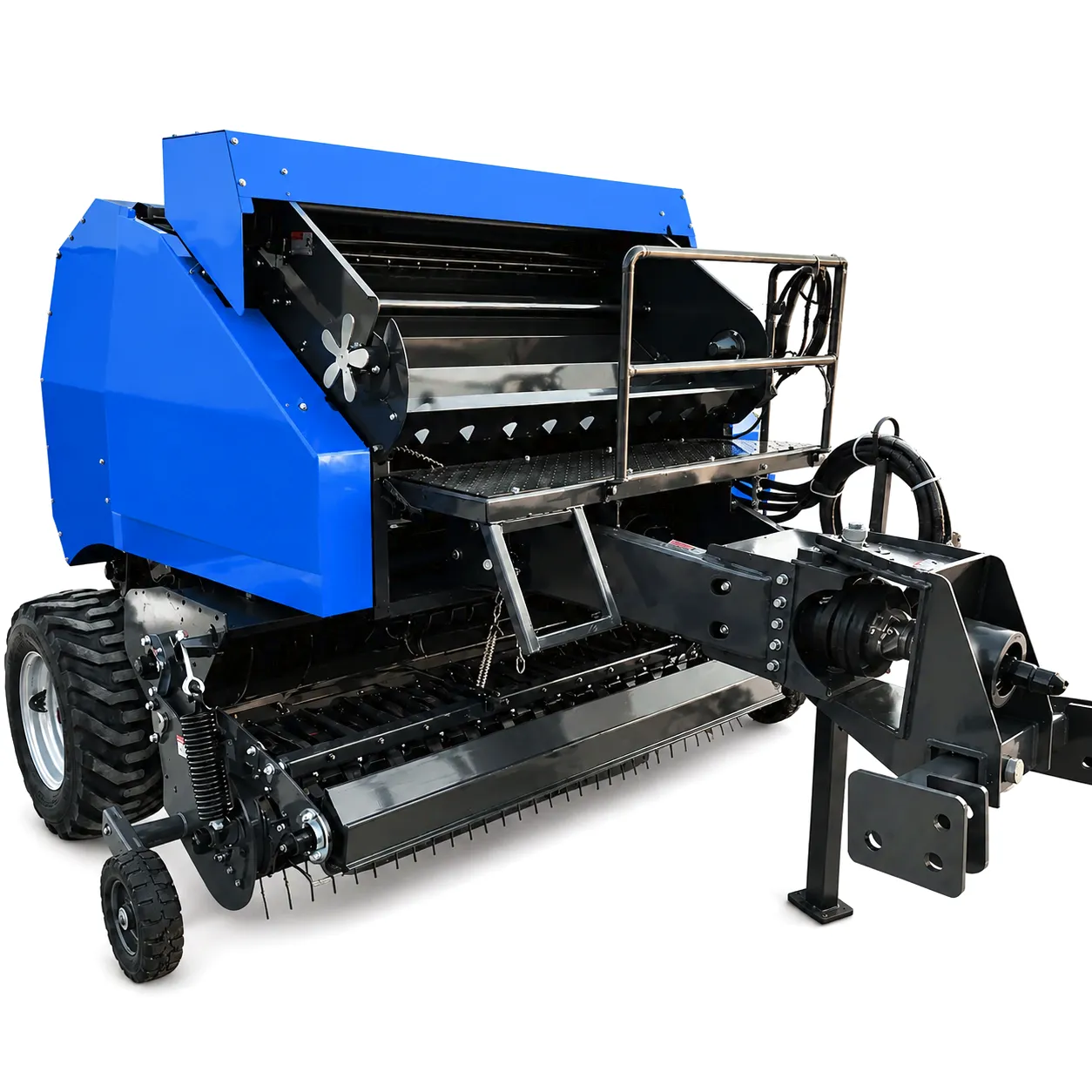
Customer Success: Sheffield-Based Agricultural Contractor Scales Biomass Operations with Ever Power
Hargreaves Countryside Services, a family-run agricultural contracting business operating from Rotherham on the outskirts of Sheffield, came to Ever Power in 2024 facing a specific commercial challenge: a three-year supply contract with a South Yorkshire biomass combined heat and power facility required them to deliver 18,000 tonnes of cereal straw and miscanthus per season in bales conforming to maximum dimensional tolerances of ±20 mm. Their existing fleet of ageing European-brand square balers was producing inconsistent bale lengths — a problem that caused repeated automated conveyor jams at the power plant, leading to penalty deductions on invoices and strained customer relations.
After detailed technical discussions with the Ever Power export sales team, Hargreaves specified two units of the 9YF-2200 fitted with single shredding rotors, electronic bale length sensors, and 1,000 rpm PTO drives to match the high-output tractors already in their fleet. Following a factory acceptance test in which both machines completed 200 bale cycles producing length variation of less than 12 mm at the target density of 215 kg/m³, the units were shipped to Humber Port and arrived ready for the following harvest season. In the first full season of operation, Hargreaves processed over 9,400 tonnes without a single knotter failure and eliminated all bale-length penalty deductions from the power station account — restoring a commercial relationship that had been under serious strain.
What Our UK Customers Say
★★★★★
“The bale length consistency on the 9YF-2200 is genuinely in another class to anything we’ve run before. We supply three biomass sites in South Yorkshire and none of them has raised a dimensional complaint since we switched. The knotter servicing interval is also much longer than we were used to — we’re getting 8,000 bales between adjustments without a single tie failure.”
— James H., Operations Director, Hargreaves Countryside Services, Rotherham
★★★★★
“We run the double-chamber unit for miscanthus work in Cambridgeshire and the productivity difference compared to single-chamber baling is remarkable — we’re clearing 35% more area per day with the same tractor. Ever Power’s technical team was excellent at specifying the rotor configuration for our crop, and the parts supply has been fast whenever we’ve needed anything.”
— Sarah W., Farm Manager, Fenland Energy Crops Ltd, Ely, Cambridgeshire
★★★★★
“We specified the 9YF-2200 with custom green livery to match our contractor fleet and the finish quality from Ever Power’s paint line was excellent — proper two-pack epoxy, not the thin single-coat finish you get on some Chinese machines. After two full seasons in Yorkshire harvest conditions the frame shows no corrosion at all. The price-per-tonne worked out dramatically cheaper than European-manufactured alternatives we’d previously run.”
— David R., Director, Northern Harvest Contractors Ltd, Thirsk, North Yorkshire
Часто задаваемые вопросы
Ready to Specify Your Square Baler?
Talk to the Ever Power technical sales team about your throughput requirements, tractor specification, and UK delivery timeline. We respond within two working days with a full technical proposal and competitive pricing.
Get a Quote · [email protected]
Ever Power · Precision Agricultural Engineering · Serving UK Distributors & Farm Businesses
отредактировано gzl