Square Balers: Complete Technical Guide for UK Agricultural & Industrial Operations
Engineering precision meets field-proven performance — everything you need to know about square baler technology, specifications, and procurement for the UK market.
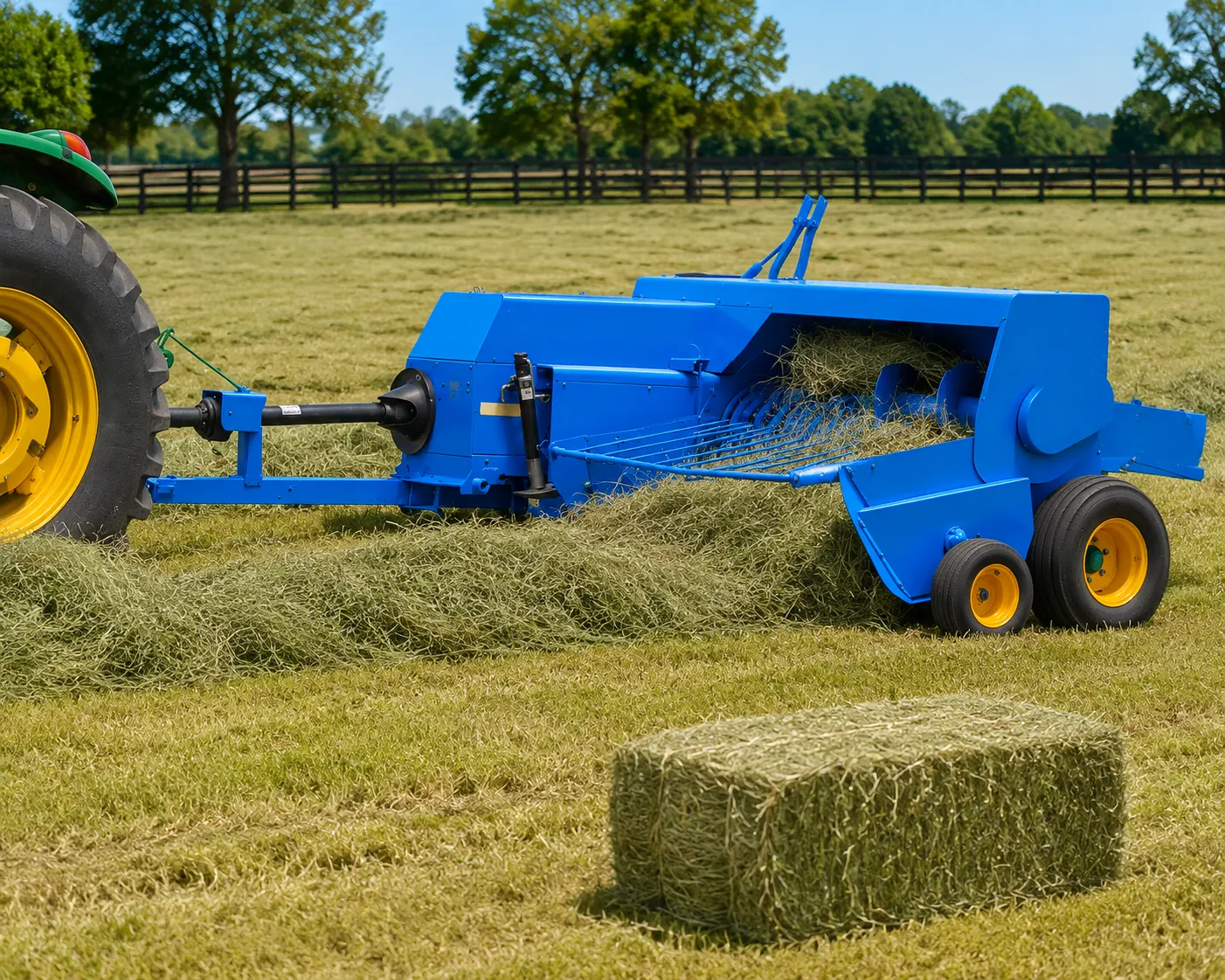 Across the rolling farmland of Yorkshire, the industrial estates of Birmingham, and the agricultural belts stretching through East Anglia, efficient material compression and baling has become a non-negotiable part of both farming and light manufacturing logistics. The square baler — sometimes called a rectangular baler — stands at the centre of this operation, transforming loose crop residues, straw, silage, and industrial fibre into dense, stackable, transport-ready units that dramatically cut storage footprints and haulage costs. Whether you manage a large arable holding in Lincolnshire, run a recycling facility outside Sheffield, or coordinate materials handling at a logistics hub near Manchester, the right baling machine determines how efficiently your operation runs through every season.
How a Square Baler Works: Mechanical Principles Explained
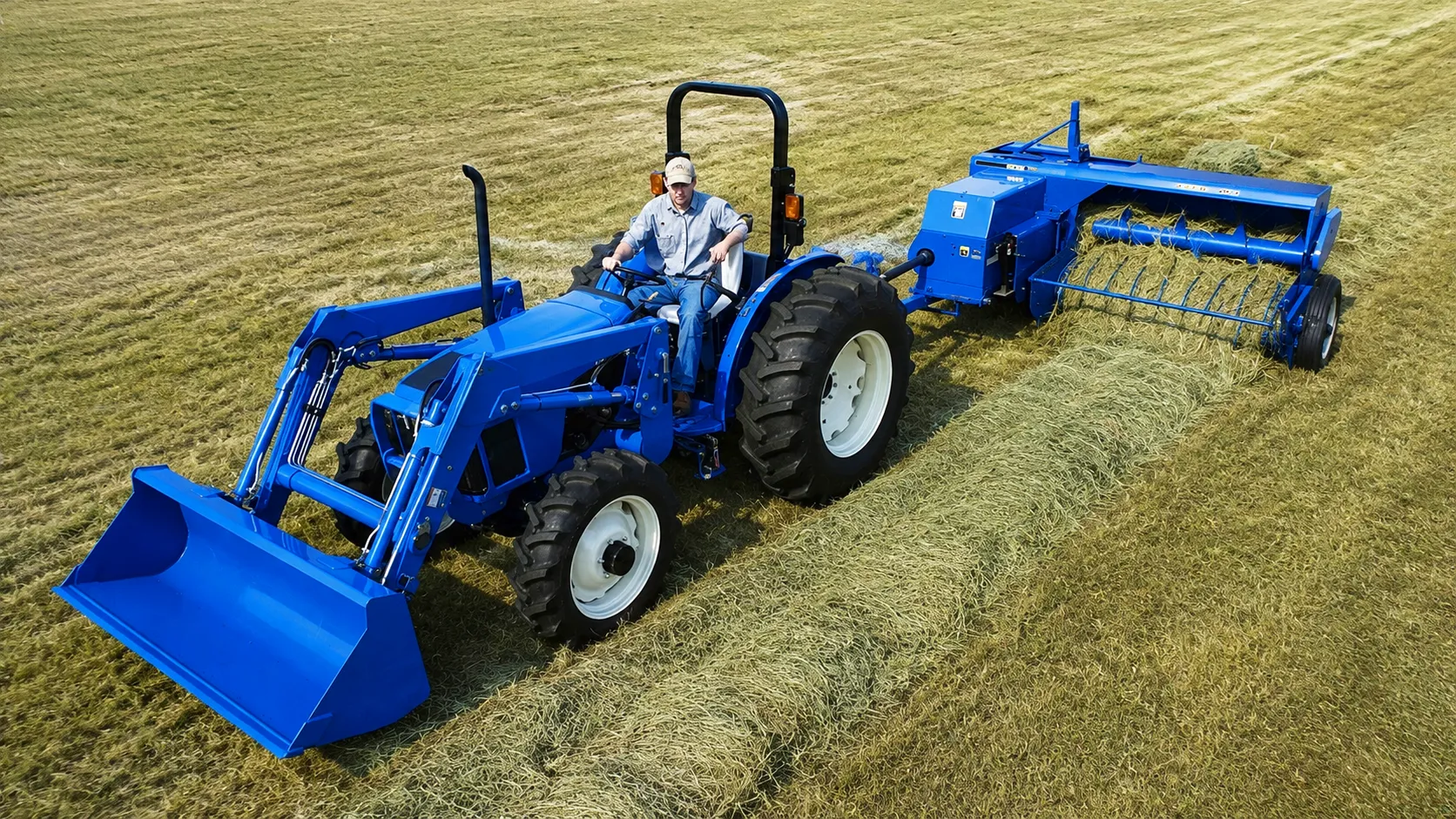
A rotating tine reel at the front of the machine lifts windrow material off the ground continuously as the baler moves forward. The pick-up width — typically between 1.6 m and 2.4 m depending on model — determines throughput capacity per pass. Tine spacing and rotation speed must be matched to crop density to prevent blockages, particularly when handling heavy wheat straw or damp silage in the wetter seasons common across Wales and the North of England.
Material is channelled from the pick-up assembly through an auger or stuffer mechanism into the pre-chamber. This stage pre-compresses the crop and regulates the flow of material entering the main bale channel. Correct pre-chamber geometry is critical: an undersized chamber starves the main plunger cycle of material, while oversizing leads to irregular bale density. Ever Power’s engineering team optimises this geometry specifically for the crop types prevalent in UK arable farming, including oilseed rape, barley straw, and hay.
The plunger — driven by a heavy flywheel via a robust crankshaft-and-pitman-arm mechanism — delivers the core compression force. Each plunger stroke drives a measured charge of material into the bale chamber, progressively building up the bale density layer by layer. Flywheel mass is engineered to store sufficient kinetic energy between strokes so that peak compression forces do not stall the PTO drive. Plunger stroke frequency typically ranges from 45 to 95 strokes per minute, and this directly governs machine output in bales per hour under a given field speed.
When the bale reaches its target length — measured by a mechanical or electronic star wheel — the knotting system activates. Twin or quadruple knotters draw twine around the bale and tie a Deering or Flemish knot, binding the bale securely before the next compression cycle pushes it rearward and out of the machine. Knotter reliability is arguably the single most operationally critical sub-system in any square baler, and it accounts for the majority of field downtime when it fails. High-grade knotter components machined to tight tolerances are what separate consistently reliable machines from those that frustrate operators across a long harvest day.
Core Materials Engineering: What Goes Into a Durable Baler
Product Advantages: Why Square Balers Outperform the Alternatives
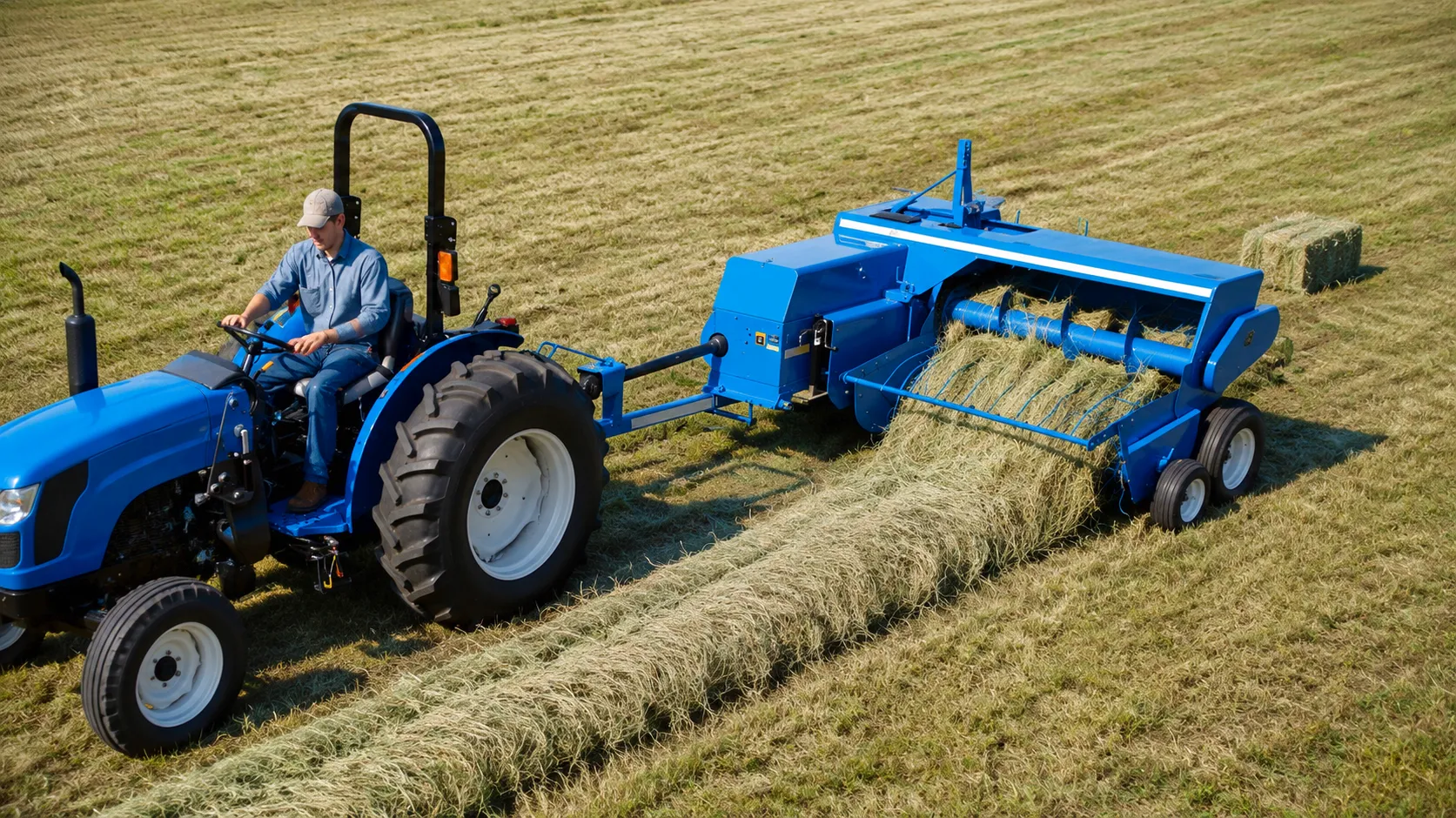
The rectangular geometry of a square bale allows precise stacking six to eight bales high without instability, maximising cubic storage per square metre of barn floor. In high-cost storage markets like the South East of England, this directly translates into reduced fixed costs per tonne of stored material. Round bales, by contrast, leave unavoidable air gaps between units that reduce effective storage density by 20–30% compared with a well-stacked square bale arrangement.
Square balers produce bales of highly repeatable dimensions and weight — a critical advantage when loading curtainsider trailers or flatbed lorries for road haulage across the UK. Consistent 300–500 kg bale weights allow transport contractors to load to legal gross vehicle weight limits with far greater accuracy than is possible with round bales, which vary more in actual density between batches. This predictability streamlines weighbridge declarations and reduces the risk of overloading penalties on A-road and motorway hauls from rural collection points to processing facilities.
Modern mid-size square balers operating at field speeds of 6–9 km/h can produce 80–120 bales per hour, making them far more productive per operator hour than manual or semi-mechanised alternatives. Running costs per bale — factoring in twine consumption, fuel, and routine maintenance — are substantially lower than for big square baler packages on smaller farm operations, making the mid-range square baler the optimal economic unit for UK holdings of 200–600 hectares of arable ground.
Compared with round balers that rely on complex belt or roller systems, a well-designed square baler’s mechanical drivetrain is far more accessible for on-farm maintenance. Knotter service intervals, plunger wear inspections, and pick-up tine replacement are all tasks a competent farm mechanic can complete without specialist dealer support — a significant advantage in rural areas of Scotland, Northern Ireland, and mid-Wales where agricultural dealerships can be an hour’s drive away and downtime during a weather window costs real money.
A square baler configured with the appropriate chamber clearance and pick-up settings can handle not only agricultural straw and hay but also grass silage, hemp fibre, miscanthus energy crops, and certain recycled industrial materials such as cardboard and non-woven textiles. This versatility makes the square baler an attractive multi-purpose investment for mixed farm and industrial recycling operations — particularly in the Midlands and the North, where agricultural and light industrial activity often coexist on the same site.
Technical & Performance Parameters
The table below sets out the key technical parameters for Ever Power’s square baler range. All values represent nominal specifications under standard operating conditions; actual field performance varies with crop type, moisture content, and PTO speed.
| Parameter | Compact Series | Mid-Range Series | Commercial Series |
|---|---|---|---|
| Bale Chamber (W × H) | 360 × 460 mm | 460 × 560 mm | 600 × 700 mm |
| Max Bale Length | Up to 900 mm | Up to 1,100 mm | Up to 1,400 mm |
| Plunger Stroke Rate | 45–65 strokes/min | 60–80 strokes/min | 75–95 strokes/min |
| Pick-Up Width | 1,600 mm | 2,000 mm | 2,400 mm |
| PTO Requirement | 540 rpm / 40–60 kW | 540/1,000 rpm / 60–90 kW | 1,000 rpm / 90–140 kW |
| Target Bale Weight (straw) | 120–200 kg | 200–320 kg | 300–500 kg |
| Output (bales/hour, straw) | 50–80 | 80–110 | 100–140 |
| Knotter System | Twin knotter | Triple knotter | Quadruple knotter |
| Bale Channel Material | S355 structural steel | S355 + wear-plate lining | S355 + Hardox 450 lining |
| Flywheel Mass | 85–110 kg | 130–180 kg | 200–280 kg |
| Knotter Component Hardness | 58–60 HRC | 60–62 HRC | 60–62 HRC |
| Machine Weight (approx.) | 1,800–2,400 kg | 2,800–3,800 kg | 4,500–6,500 kg |
Industrial & Agricultural Application Scenarios Across the UK
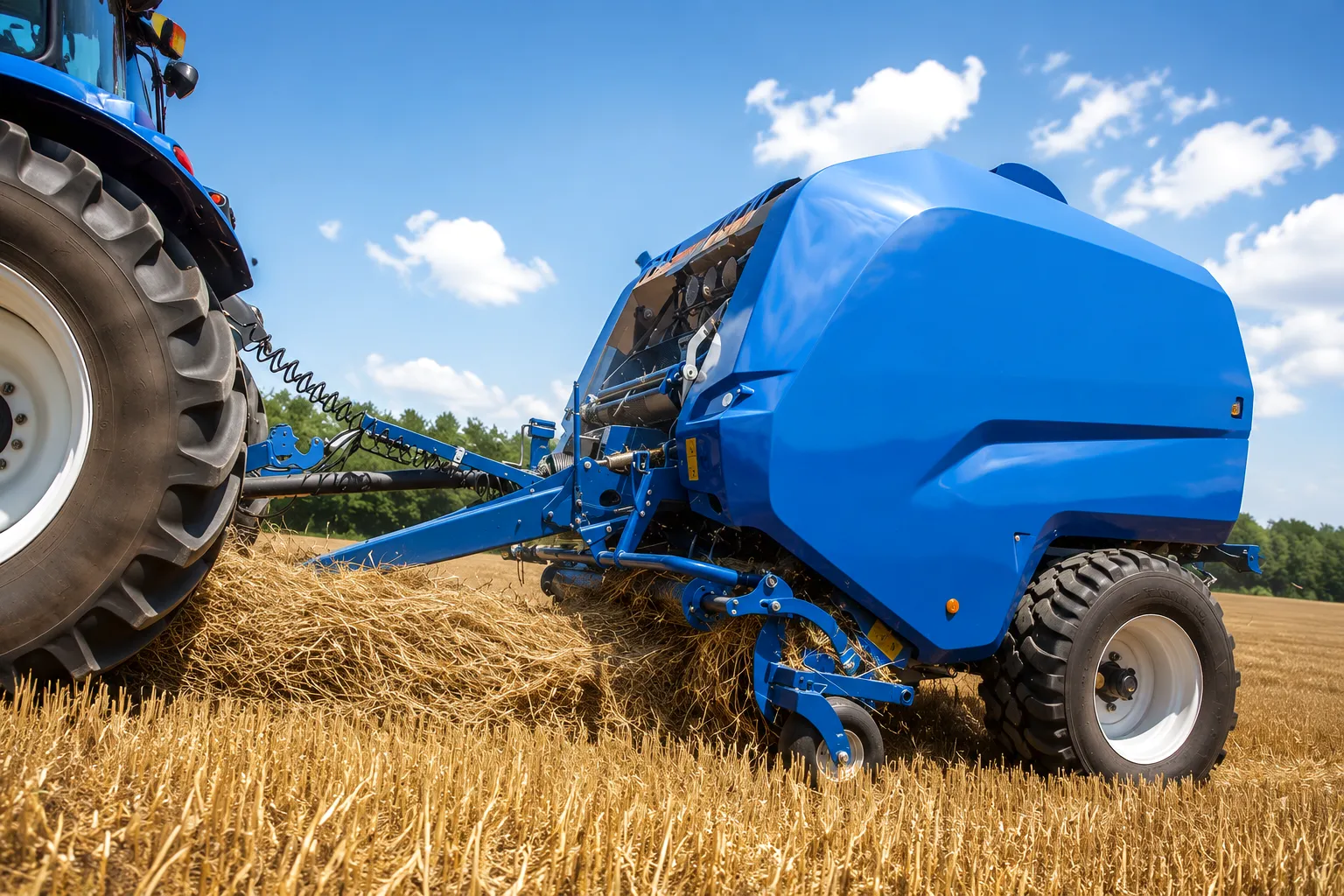
The large, flat cereal-growing counties of Norfolk, Suffolk, and Cambridgeshire produce enormous volumes of straw behind the combine harvester every August. Square balers running behind tractors in these landscapes need to operate at sustained high throughput for 12–16 hours daily during the narrow harvest window that UK weather permits. A commercial-class square baler with a 2.4 m pick-up and quadruple knotters running at 1,000 rpm PTO is the standard specification for contractors serving these farms, where timeliness is paramount and mechanical downtime directly reduces income per working day.
The dense concentration of livery yards, studs, and equestrian centres across Surrey, Hampshire, and the Thames Valley generates consistent year-round demand for small square bales of high-quality hay. These end users value bales in the 18–24 kg range — manageable by hand and suitable for individual stall feeding — which requires a compact-class square baler with tight chamber settings and reliable twin knotters. The premium paid for consistently well-tied, properly weathered small bales in this market segment is significant, making knotter reliability the highest-value technical specification for suppliers to this end use.
The Yorkshire Dales and surrounding lowlands host a growing number of miscanthus and short-rotation willow coppice energy crop operations supplying biomass boiler fuel to local district heating networks and industrial facilities. These crops present different challenges from conventional straw: greater stem diameter, higher moisture content at cutting, and abrasive soil contamination after winter standing. Square balers deployed in this scenario need reinforced wear-plate linings, oversize pick-up tines, and a chamber pressure monitoring system to avoid shear-pin failures during high-resistance baling cycles.
The extensive industrial and logistics parks around Birmingham, Coventry, and Wolverhampton generate substantial volumes of post-consumer corrugated cardboard for recycling. While dedicated channel balers serve the largest recycling depots, mid-range square balers adapted with appropriate feeder guides and chamber surface treatments offer a cost-effective alternative for medium-volume generators. The rectangular bale format is particularly advantageous for lorry loading to paper mills in the North West, where bale uniformity determines how many tonnes can be legally loaded per trip.
Upland dairy enterprises in Wales and the Scottish Borders frequently operate on terrain where large self-propelled harvesters cannot work cost-effectively. A square baler combined with a separate wrapper unit allows smaller contractors to produce wrapped silage bales on fields with significant gradient, using compact tractors with appropriate PTO output. The square bale format is easier to wrap tightly and forms more stable stacks on sloping storage areas compared with cylindrical bales, which have a tendency to roll on uneven ground.
Ever Power Baler Products: S9000 Series
Two proven platforms, designed for different operational scales — both engineered to the same quality standards that make Ever Power a trusted supplier to UK and international buyers.
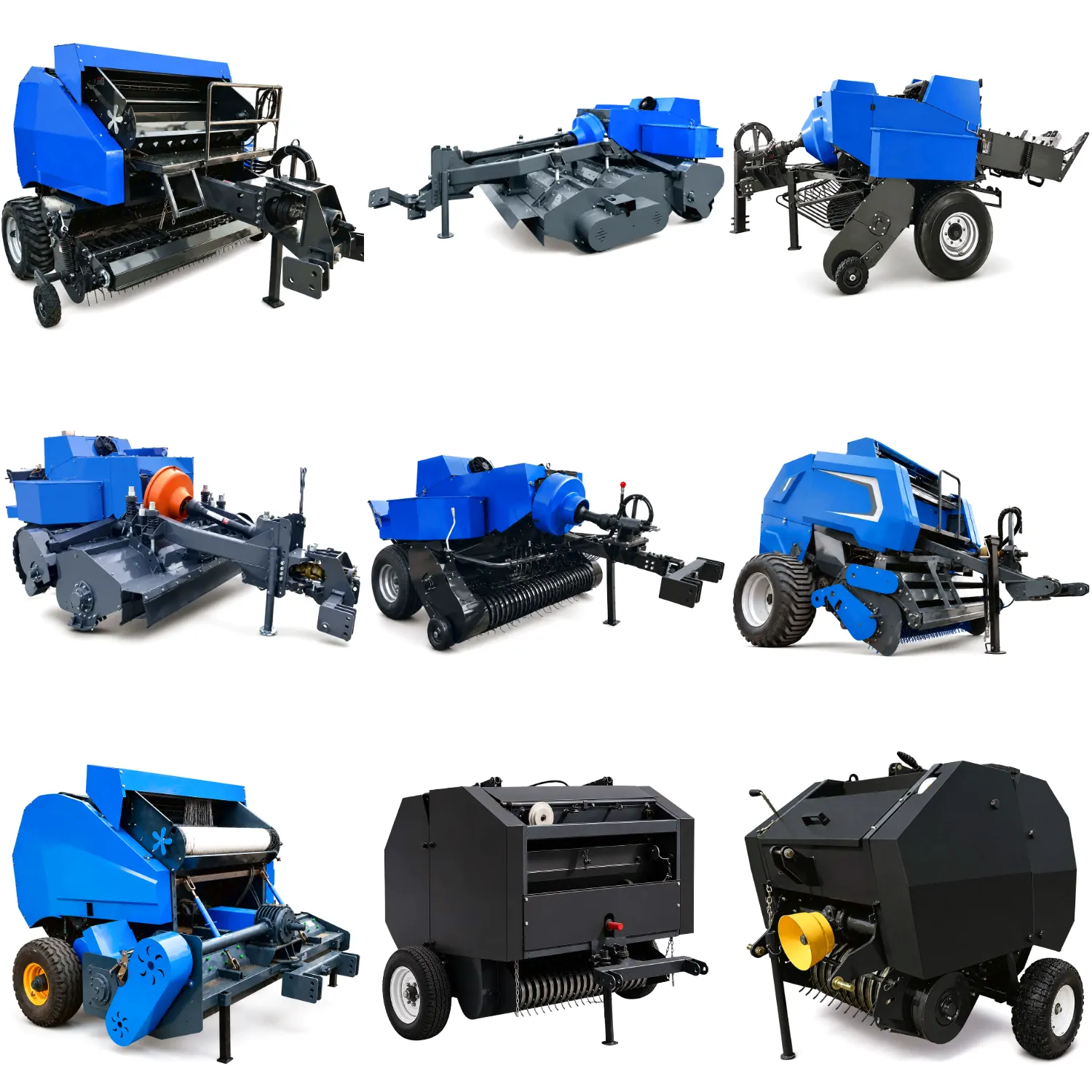
The S9000 is Ever Power’s high-performance flagship baler built for large-scale arable and contractor operations. With a 2.24 m wide pick-up system, heavy-duty flywheel drive, and commercial-grade knotter assembly, the S9000 is engineered for sustained high-throughput baling across the demanding harvest conditions encountered in the UK’s major cereal and straw production regions. Its reinforced bale chamber handles high-density loads without structural fatigue, making it the preferred choice for professional contractors running 300+ hour annual programmes.
The S9000 Classic brings the same core pick-up geometry and knotter reliability as the flagship S9000 in a specification tailored to mixed and medium-scale farm operations. With a more accessible entry price point and simplified service requirements, the S9000 Classic is well-suited to owner-operators who need dependable baling performance across a typical 150–250 hour annual season without the capital outlay of a full commercial-grade platform. Its design makes it a practical choice for farms diversifying into biomass or equine hay markets in the UK where versatility across material types is valued.
Ever Power Manufacturing: Precision Engineering & Custom Baler Solutions
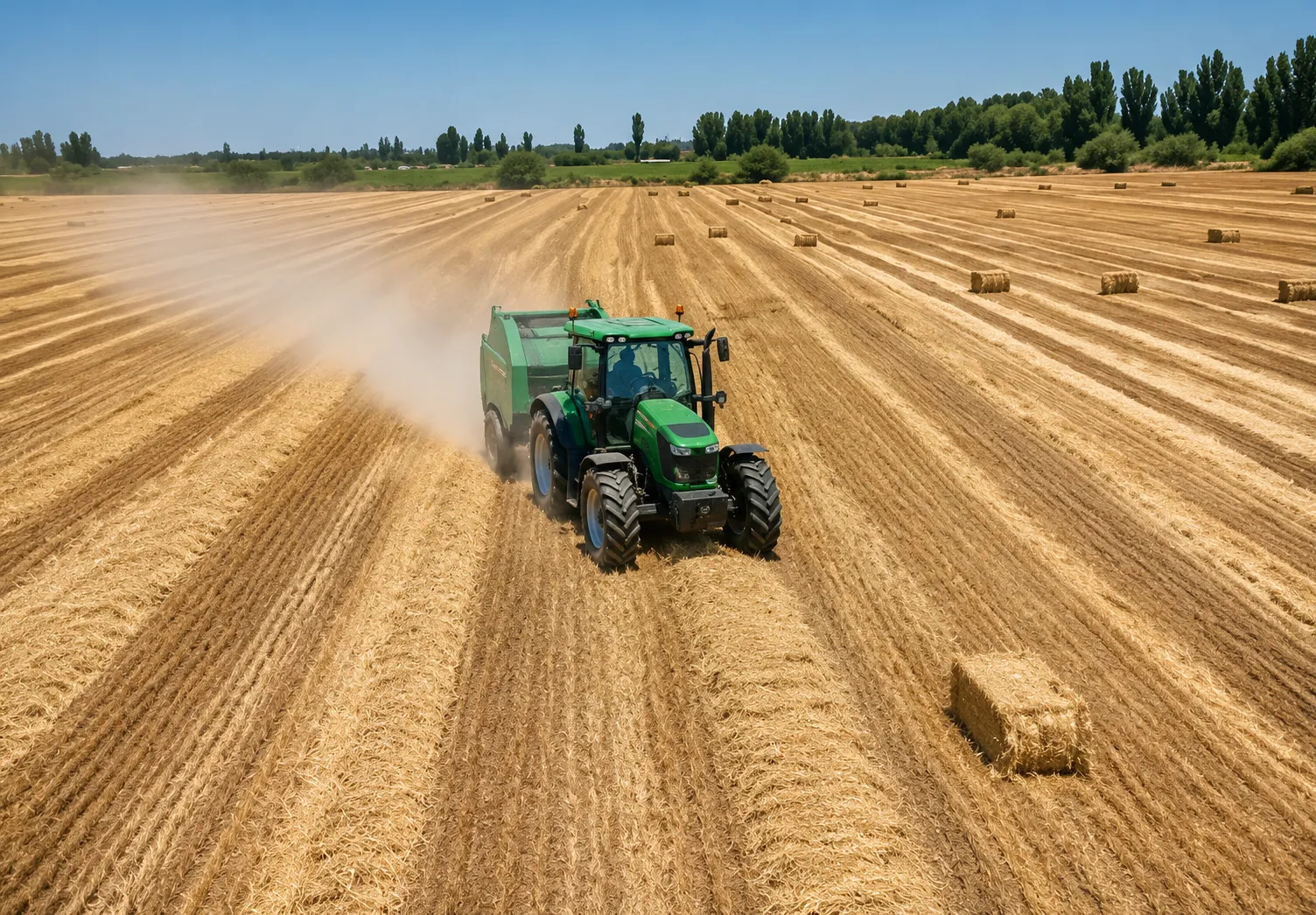
Tell Ever Power’s team about your crop type, annual acreage, tractor specification, and any non-standard bale requirements. We’ll provide a tailored technical specification and competitive quotation within 48 hours.
Customer Success Story: Lincolnshire Contracting Operation Scales Straw Baling Capacity
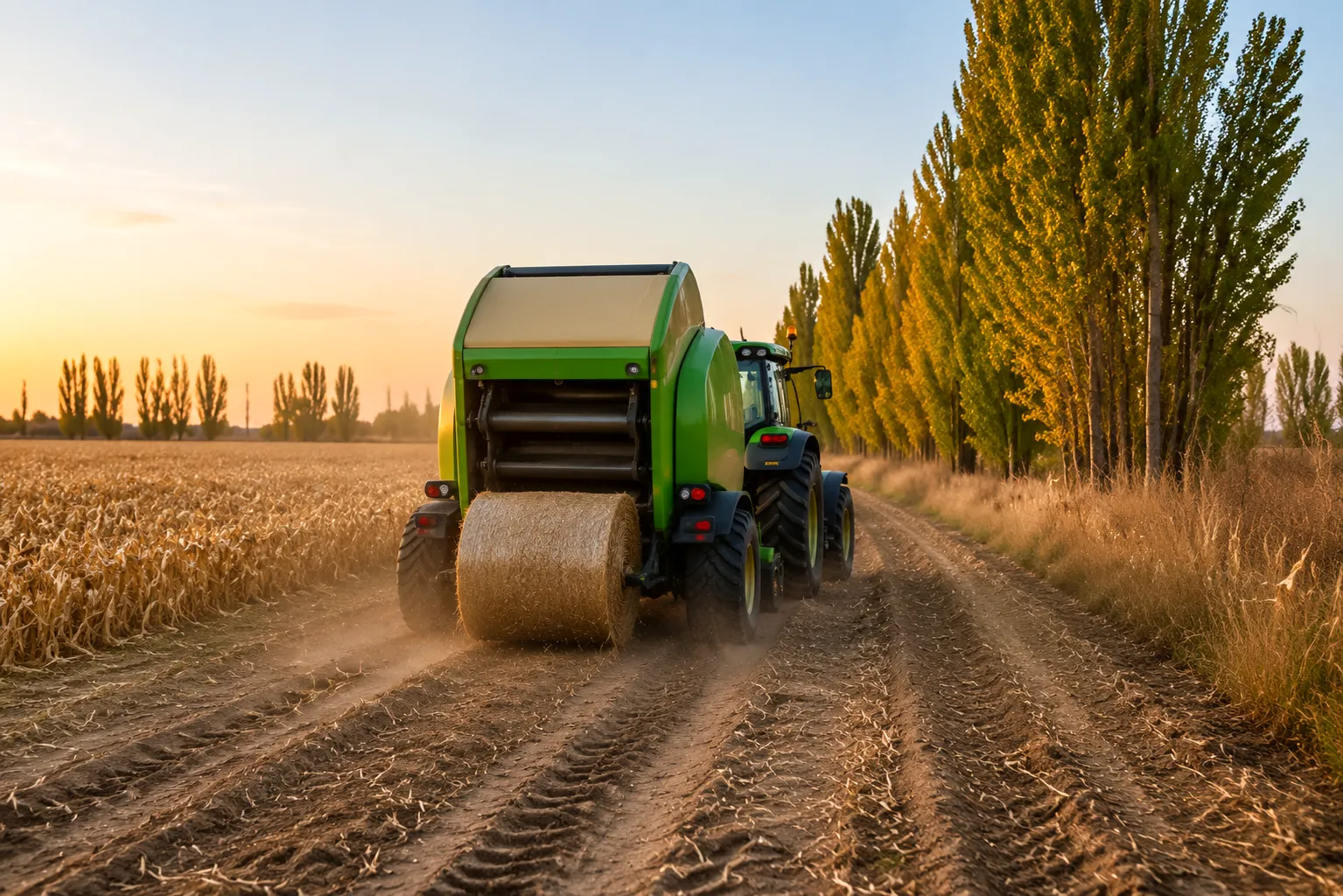 Hargreaves Agricultural Contracting, based near Sleaford in Lincolnshire, runs a mixed contracting business covering around 4,800 hectares of arable ground annually across the county and into adjacent areas of Nottinghamshire. In 2023, the business’s incumbent baler — a well-used machine from a European manufacturer — reached the end of its reliable service life after accumulating significant knotter wear and structural fatigue in the bale channel. Managing director Tom Hargreaves began researching replacement options with a clear specification in mind: he needed a machine capable of sustained 100+ bale per hour output in heavy wheat and oilseed rape straw, with a pick-up width of at least 2.0 m, and a supplier who could offer responsive parts availability to the UK.
After evaluating several options, Hargreaves contacted Ever Power through the company’s UK sales channel. The Ever Power engineering team worked through Tom’s specific requirements, including his preference for Hardox-lined bale channel walls given the abrasive nature of oilseed rape straw and the dusty field conditions typical of Lincolnshire’s free-draining soils in a dry August. A mid-range commercial specification was agreed, with triple knotters, a 2.0 m pick-up, and a heavy flywheel assembly to maintain consistent stroke energy across the variable density loads typical of mixed straw types.
The machine was delivered via container to Grimsby and collected by Hargreaves in early spring 2024, leaving enough time for commissioning and pre-season checks before harvest. Over the 2024 harvest season, the machine ran for 340 hours across July and August, producing an average of 106 bales per hour in wheat straw and 91 bales per hour in the denser oilseed rape straw, with zero knotter failures recorded during the season. Tom described the knotter reliability as “the thing that made the real difference” — in previous seasons, two or three knotter stoppages per day had been accepted as normal. The Ever Power machine completed the 2024 season without a single knotter stoppage requiring field intervention.
What UK Customers Say About Ever Power Balers
“We specified Hardox lining for our bale channel because oilseed rape straw tears through mild steel in two seasons. Ever Power built exactly what we asked for, delivered on schedule, and the machine has been completely solid through a tough harvest. The knotter geometry is spot-on — we haven’t touched them since commissioning.”
“We run the S9000 Classic for our hay production going to the equine market in Surrey and Kent. Bale consistency is excellent — weight variation between bales is minimal, which matters a lot when we’re selling individual bales to livery yards who need to know what they’re getting. Ever Power’s pre-sales support was thorough and they understood exactly what our end use required.”
“We adapted an Ever Power commercial baler for miscanthus baling in Yorkshire and the machine handled the extra stem diameter and moisture content without complaint. The flywheel assembly has real mass behind it — you can feel that it’s engineered to deal with variable load, not just designed to look impressive on a spec sheet. Customisation turnaround from Ever Power was three weeks, which was faster than we expected for the chamber modifications we needed.”
Frequently Asked Questions: Square Balers for UK Buyers
Square baler pricing in the UK ranges from roughly £15,000–£30,000 for compact models up to £80,000–£120,000 or more for large commercial-class machines with advanced features. Factors that move the price include chamber size, PTO power requirement, knotter count, bale channel lining specification, pick-up width, and whether the machine includes electronic bale length control or chamber pressure monitoring. Ever Power’s pricing is consistently competitive for the technical specification delivered — request a quote directly via [email protected] for a tailored price for your requirements.
For high-volume straw baling in the major cereal-growing counties, a commercial-class machine with a 2.0–2.4 m pick-up, 1,000 rpm PTO drive, quadruple or triple knotters, and a Hardox-lined bale chamber is the appropriate specification. Field speeds of 7–10 km/h with a 90–140 kW tractor are typical for this application, and output of 100+ bales per hour in wheat straw is achievable under good conditions.
Ever Power exports square balers directly to UK buyers and agricultural machinery importers, with a technical sales team available to specify machines for non-standard crop types including miscanthus, hemp, and oilseed rape straw. Spare parts packages can be ordered alongside the machine to ensure common wear items — knotters, pick-up tines, twine knife blades — are held on site rather than relying on dealer stock.
For standard-specification machines, Ever Power’s production and shipping lead time to the UK is typically 8–14 weeks from order confirmation. Bespoke customisation — such as modified chamber dimensions or special lining materials — may extend this to 10–18 weeks depending on the nature of the modification. UK buyers are strongly advised to order before the end of the calendar year preceding the target harvest season to ensure delivery, commissioning, and pre-season testing are complete before harvest begins.
The decision depends primarily on your end market for the bales. If you sell straw for livestock bedding, biomass fuel, or equine use where the buyer needs stackable, transportable units, a square baler almost always produces a better outcome per tonne hauled. If your operation is primarily making silage on grassland farms, round balers combined with wrappers are often better suited. For contracting operations serving both markets, some businesses run both types — with a square baler handling the main cereal straw harvest and a round baler for grass silage contracts through the spring and summer cutting cycles.
Yes. Ever Power’s engineering team has configured machines for miscanthus and similar energy crop baling, including oversize pick-up tines, reinforced pre-chamber geometry, and Hardox bale channel lining to handle the abrasive and dense material characteristics of standing miscanthus harvested after winter. Pricing for this specification falls in the mid-range commercial category — contact [email protected] with your annual hectarage and tractor specification for an accurate quote.
Whether you need a standard specification or a fully customised baling solution for a specific UK application, Ever Power’s team is ready to assist. Response within 48 hours guaranteed.