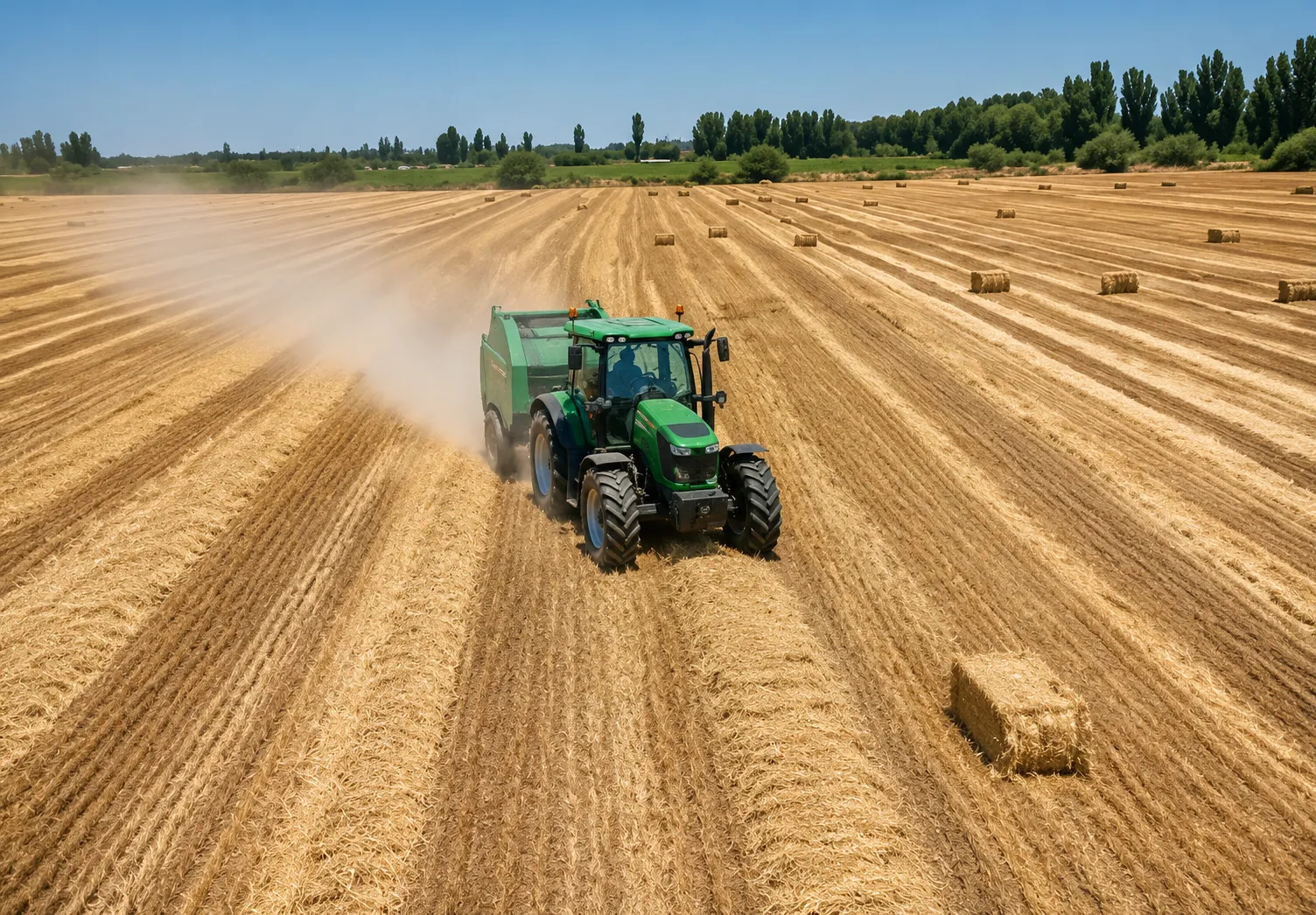
Across the fields of Yorkshire, the flatlands of Lincolnshire, and the mixed-use farms of the Scottish Borders, the square baler has become an indispensable piece of machinery. Unlike round balers, which produce cylindrical rolls well-suited to wrapped silage, the square baler compresses harvested crop material — straw, hay, silage, and biomass feedstocks — into rectangular blocks that stack cleanly, transport efficiently in curtain-sider lorries, and store with minimal wastage in standard agricultural buildings. With UK agriculture under sustained pressure to reduce labour costs while meeting tighter biosecurity and storage regulations, the engineering choices built into a square baler directly translate into farm-gate profitability. This guide examines the mechanical architecture, key materials, operational parameters, and real-world performance metrics that define today’s high-output square baling systems. Whether you are a contractor serving multiple estates in the East Midlands or a biomass energy processor near Sheffield, understanding these engineering fundamentals allows you to specify the right machine with confidence.
Working Principle of a Square Baler
01 — Pickup & Auger Feed
A cam-driven tine pickup reel rotates against the direction of travel, lifting windrowed crop cleanly from the stubble. Crop density sensors — standard on modern machines — modulate the feed rate in real time to prevent blockages. The auger then cross-feeds the crop evenly into the feeder chamber, ensuring that the compaction plunger meets a uniform mat on every stroke. This evenness is what separates high-density from low-density bales and is the critical first stage in achieving consistent bale weight across an entire harvest run.
02 — Plunger Compression
The reciprocating plunger is the heart of any square baler. Driven by a gearbox-mounted crankshaft, it delivers controlled compressive force — typically between 140 and 220 kN on large-format machines — at rates of 38 to 56 strokes per minute. Hardened chromium-steel plunger faces extend service life to over 2,000 hours without resurfacing. The geometry of the plunger chamber directly governs bale cross-section dimensions, and on modern twin-chamber designs, two independent chambers can produce bales simultaneously, doubling throughput without increasing PTO demand proportionally.
03 — Knotting & Twine Tie
Once the bale reaches its preset length — measured via a mechanical or electronic star wheel — the knotting mechanism fires. Twin or quad knotters, manufactured to tolerances of ±0.05 mm, form a secure bill-hook knot in sisal or synthetic twine at speeds exceeding 80 cycles per minute. Knot failure rate on a well-maintained machine runs below 0.03%, which on a 500-bale working day equates to fewer than two missed knots. The knotters are the highest-wear component in the machine and deserve careful inspection and lubrication at every 50-hour service interval without exception.
04 — Ejection & Chute Release
The finished bale is expelled through the rear chute under the force of subsequent bales being formed. A hydraulic or mechanical tailgate can hold the last bale in position until the operator triggers a windrow-drop function, grouping bales for easier loader collection. On contoured terrain — common in the Yorkshire Dales and the Shropshire Hills — a floating drawbar compensates for cross-slope and keeps the bale chamber aligned, preventing misshapen bales. Bale weight sensors at the exit chute are increasingly standard, feeding data directly to farm management software via ISOBUS connectivity.
Core Materials & Metallurgical Choices
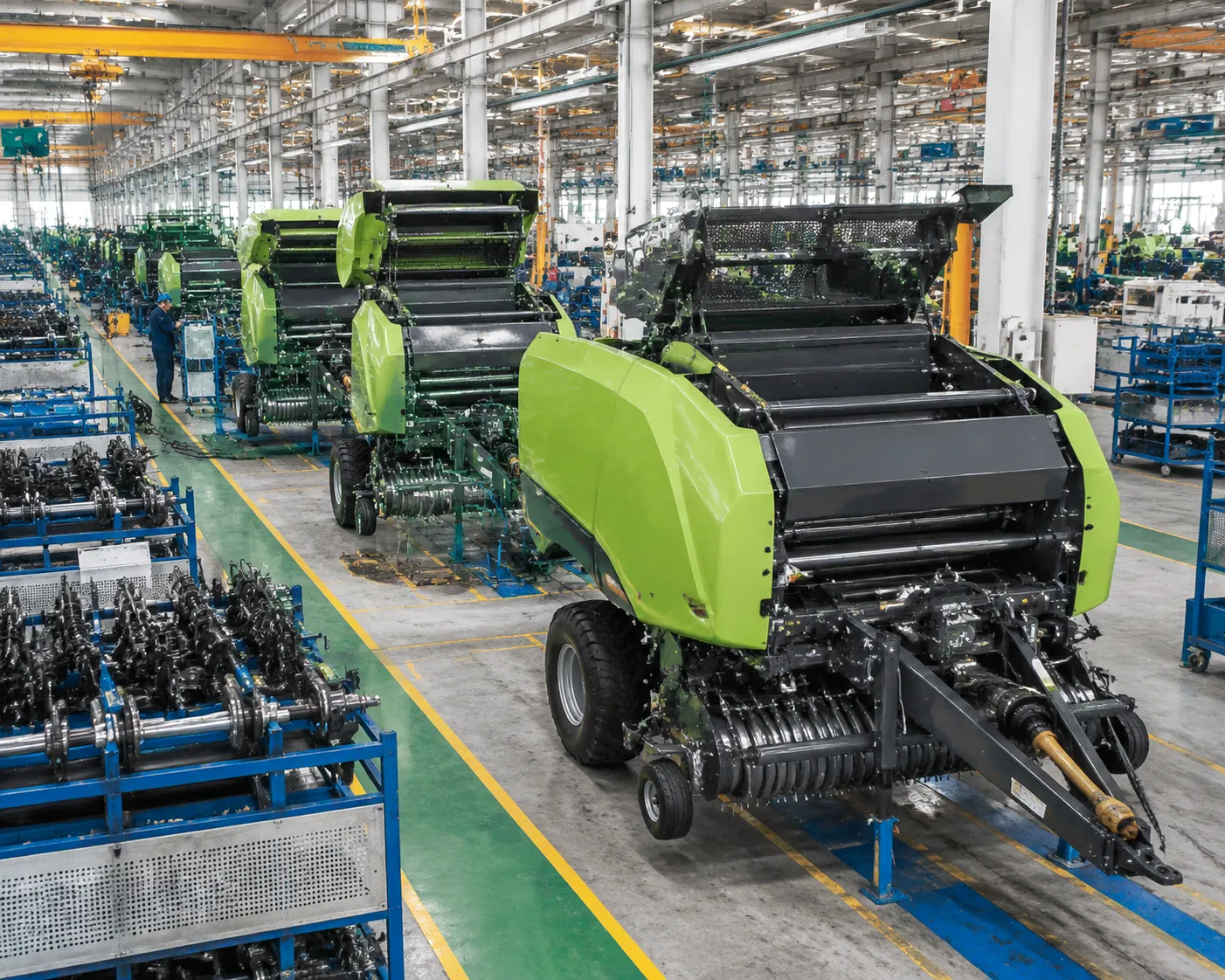
The mechanical punishment a square baler endures over a season is extraordinary. A machine completing 80,000 bales per year — realistic for a busy UK agricultural contractor — will have its plunger travel approximately 2,400 km in linear strokes, its knotters fire 6.4 million times, and its pickup tines deflect over rough stubble countless thousands of times. This demands materials engineered for fatigue resistance rather than simply high yield strength.
The main chassis on heavy-duty square balers is fabricated from high-tensile structural steel, typically S355J2 or equivalent EN 10025 specification, with wall thicknesses of 10 to 16 mm at stress concentration points. Weld preparations follow EN ISO 15614 qualified procedures, and critical joints in the drawbar and plunger guides are stress-relieved after welding to eliminate residual tensile stresses that would otherwise serve as fatigue crack initiation sites. The plunger itself is machined from 42CrMo4 alloy steel, through-hardened to 38–42 HRC, a specification that balances compressive strength with the toughness needed to absorb off-centre loads when crop distribution is uneven.
Pickup tines are manufactured from spring steel — typically 65Mn or equivalent — with a temper that allows up to 30 degrees of deflection before returning to original geometry. Tine sets are verified for fatigue life of not less than 10 million cycles before production release. Knotter bill hooks are case-hardened through-and-through using case-depth nitriding to Rz values below 1.6 µm, giving a surface hardness of 62–65 HRC against a softer core that absorbs shock without fracturing. Gearbox housings are spheroidal graphite cast iron (SG iron / ductile iron) to EN 1563 grade EN-GJS-500-7, offering a tensile strength of 500 N/mm² with elongation above 7% — critical for absorbing the sudden shock loads transmitted through the PTO when the plunger encounters a dense slug of material.
Technical Performance & Specification Table
The table below covers the principal performance and mechanical parameters for the Ever Power range of square balers. Values reflect factory-tested data under controlled conditions; field output varies with crop type, moisture content, and tractor PTO consistency.
Core Technical Advantages
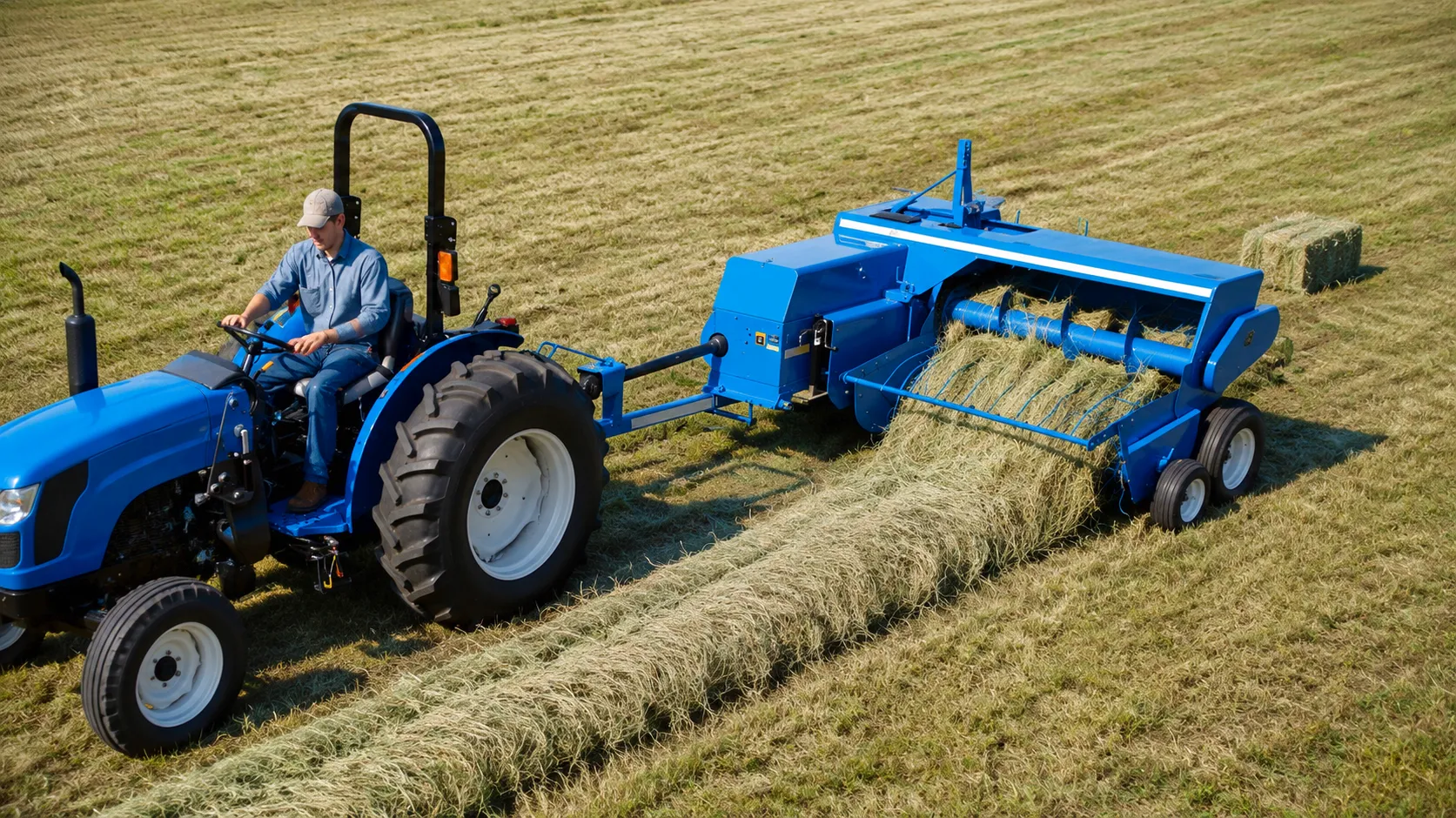
The rectangular geometry of a square bale is not merely a convenience — it is an engineering advantage that compounds through every step of the post-harvest logistics chain. A square bale with a cross-section of 460 x 360 mm fits onto a standard UK HGV flatbed without requiring specialist loading equipment, and bales can be stacked six to eight layers high in a ventilated Dutch barn without the risk of the load shifting that complicates round-bale storage. For biomass energy suppliers delivering to power stations in the Humber region or anaerobic digestion plants across the East Midlands, bale uniformity is not optional — contract specifications typically require weight tolerances within ±5% per bale, a target impossible to achieve without the precise density control built into the plunger geometry and feed sensing on current-generation machines.
High-Density Compression
Advanced plunger geometry combined with variable feed density sensing delivers bale densities up to 155 kg/m³ in wheat straw — reducing transport cost per tonne by up to 22% compared with conventional low-density machines. Fewer lorry movements translate directly into lower fuel costs and reduced road wear on farm tracks.
Dual-Chamber Output
The 9YFS-2.2 double-chamber design operates two independent compression sequences from a single PTO input. Net throughput at typical field speeds of 8–12 km/h reaches 220 bales per hour in light straw conditions, enabling a solo operator to clear a 200-acre barley field within a single harvesting window — a significant operational advantage during the tight weather windows common in British summers.
Extended Knotter Life
Bill hooks manufactured from nitrided alloy steel to a surface hardness of 62–65 HRC and a surface roughness below Rz 1.6 µm significantly reduce twine wear against the metal surface during knotting. Field data from contractors using high-output models suggests knotter life in excess of 600,000 cycles between refurbishment — roughly equivalent to two full UK harvest seasons in typical use.
Low Maintenance Architecture
Central lubrication circuits, accessible from ground level, reduce per-service time to under 35 minutes. Self-adjusting chain tension eliminates manual tensioner inspection during the season. Modular feeder forks and auger fingers are designed for tool-free replacement in the field, minimising costly downtime during the critical July–August harvest period when breakdown costs are highest.
ISOBUS Compatibility
Full ISOBUS Class 2 compatibility allows the baler to integrate with any compatible tractor terminal. Operators can set bale length, monitor knotter status, view throughput statistics, and receive blockage warnings from the cab without leaving the seat. This not only reduces operator fatigue over long working days but satisfies increasingly common GPS-linked yield-mapping requirements for precision agriculture programmes across the UK.
ความหลากหลายในการปลูกพืช
The adjustable pickup tine angle — settable in 5-degree increments from the cab — accommodates crops ranging from fine ryegrass hay at 18% moisture to coarse barley straw and even shredded miscanthus for energy crop applications. A pre-cutting rotor attachment, available as a factory-fitted option, reduces particle length to enhance bale density and aerobic stability in haylage applications without impacting throughput speed.
Industrial & Agricultural Application Scenarios in the UK
Scenario 1 — Cereal Straw Baling for Livestock Bedding in Lincolnshire
Lincolnshire and the broader East of England produce more wheat and barley straw per harvest than any other region in the UK. Large-scale pig and poultry operations in this region consume straw in quantities measured in thousands of tonnes annually, and they require bales of consistent weight, density, and moisture content to maintain controlled-atmosphere housing conditions. Square balers operating at 155 kg/m³ allow producers to fill a standard 13.6-metre curtain trailer with up to 28 tonnes of straw per load — well within the 26-tonne axle limit when a trailer is deployed — maximising payload and minimising transport costs per tonne delivered. The rectangular stack geometry also eliminates the need for specialist clamp attachments on yard telehandlers, using instead standard pallet forks adapted with bale tines — a practical consideration for farm businesses that already manage a range of attachments.
Scenario 2 — Hay Production for Equine Markets in Yorkshire
The equine market in Yorkshire — home to some of the UK’s most prestigious racing stables and a large population of leisure horses — demands hay of the highest quality, free from mould and of consistent leafiness. Square bales in the traditional 460 x 360 mm cross-section format remain the preferred product for equine retailers and end users, as they handle cleanly in stable environments without requiring mechanical handling equipment. Producing this market requires square balers capable of operating at moisture contents between 14% and 18% without compromising bale integrity — a challenge that demands the kind of precise feed control and consistent plunger force delivered by modern machines with electronic density management. A well-adjusted square baler can achieve knot failure rates below 0.02% in light hay conditions, which at 500 bales per day equates to essentially zero losses in a working week.
Scenario 3 — Biomass Energy Crop Baling for Anaerobic Digestion Plants in the East Midlands
The East Midlands is home to a growing cluster of anaerobic digestion (AD) facilities fed by purpose-grown energy crops, including whole-crop maize, ryegrass, and increasingly, sweet sorghum and fodder rye. These facilities accept feedstock as square bales rather than loose loads because bale delivery allows precise feedstock accounting, controlled moisture management in covered bale stores, and FIFO (first in, first out) stack rotation that limits aerobic spoilage. For an AD plant processing 15,000 tonnes of feedstock annually, the per-bale weight consistency enabled by electronic density control on a high-specification square baler translates into measurable improvements in gas yield calculations and feedstock planning. The shredding pre-cutter available on the 9YF-2200S variant further reduces particle size, which has been shown in UK research to improve cell wall disruption and increase biogas yield by 4–7% per tonne of dry matter compared with unprocessed bales.
Scenario 4 — Industrial Hemp Fibre Baling for Textile & Construction Material Processing in the Midlands
Hemp cultivation in the UK has expanded rapidly since 2018, with Midlands growers supplying fibre to hempcrete manufacturers, insulation board producers, and natural textile mills primarily in the West Midlands manufacturing corridor. Hemp stalks at harvest present a uniquely demanding baling challenge: the fibrous bast material wraps around tines and auger flights more aggressively than grain straw, and the high bulk volume requires maximum plunger force to achieve acceptable bale densities. Square balers with hardened chrome-steel pickup tines and anti-wrap auger coatings are specifically suited to hemp fibre, and several UK hemp processors have moved to pre-cutting rotor attachments to reduce particle length and prevent wrapping. Bale dimensions of 460 x 360 mm have been adopted as the de facto standard for UK hemp fibre delivery by the major textile processors operating in Birmingham and Coventry.
Scenario 5 — Recycling & Waste Material Baling for Industrial Processors near Sheffield and Manchester
Beyond agriculture, a growing number of UK industrial waste processors — particularly in the South Yorkshire and Greater Manchester areas — have adapted square baler technology for baling shredded cardboard, non-woven fabrics, and lightweight plastic film destined for recycling or energy recovery. These applications demand machines with reinforced chamber walls (minimum 12 mm plate) to handle the abrasive properties of mixed material streams, and modified knotter bill hooks designed for the higher tensile twine needed to secure compressed waste bales. The square bale format is particularly valued by Materials Recovery Facilities (MRFs) because it integrates directly into standard warehouse racking systems, simplifying inventory management and maximising storage density in constrained urban industrial units.
Shredding Mechanism Variants
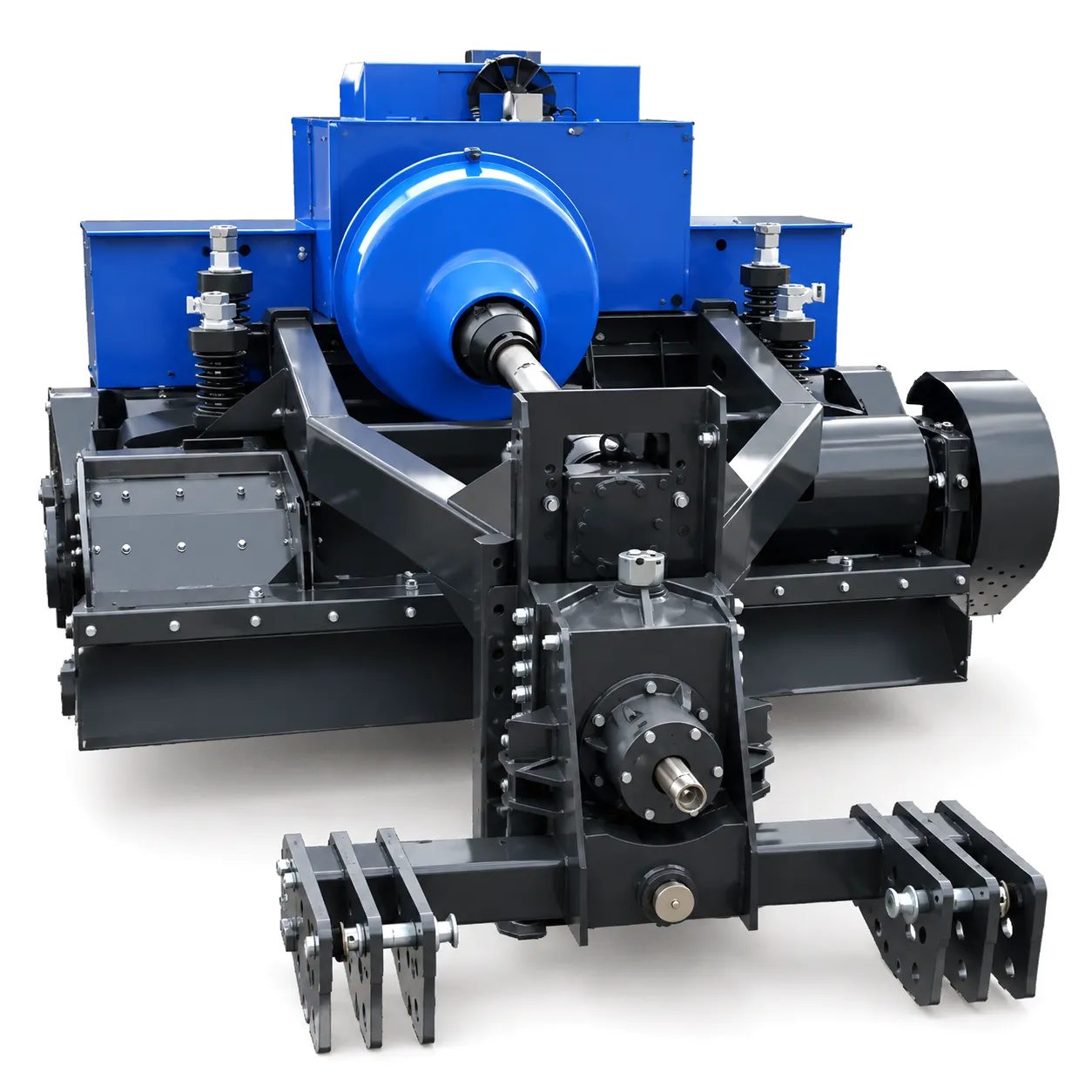
Single Shredding Mechanism (9YF-2200S)
A single rotor pre-cutter mounted ahead of the feeder chamber reduces crop particle length to 80–120 mm before compression. This variant suits mixed straw and haylage applications where moderate particle size reduction improves bale stability without requiring the additional PTO power of the dual configuration. The single rotor is simpler to maintain and is the preferred choice for operators running the machine primarily on cereal straw and ryegrass across northern England.
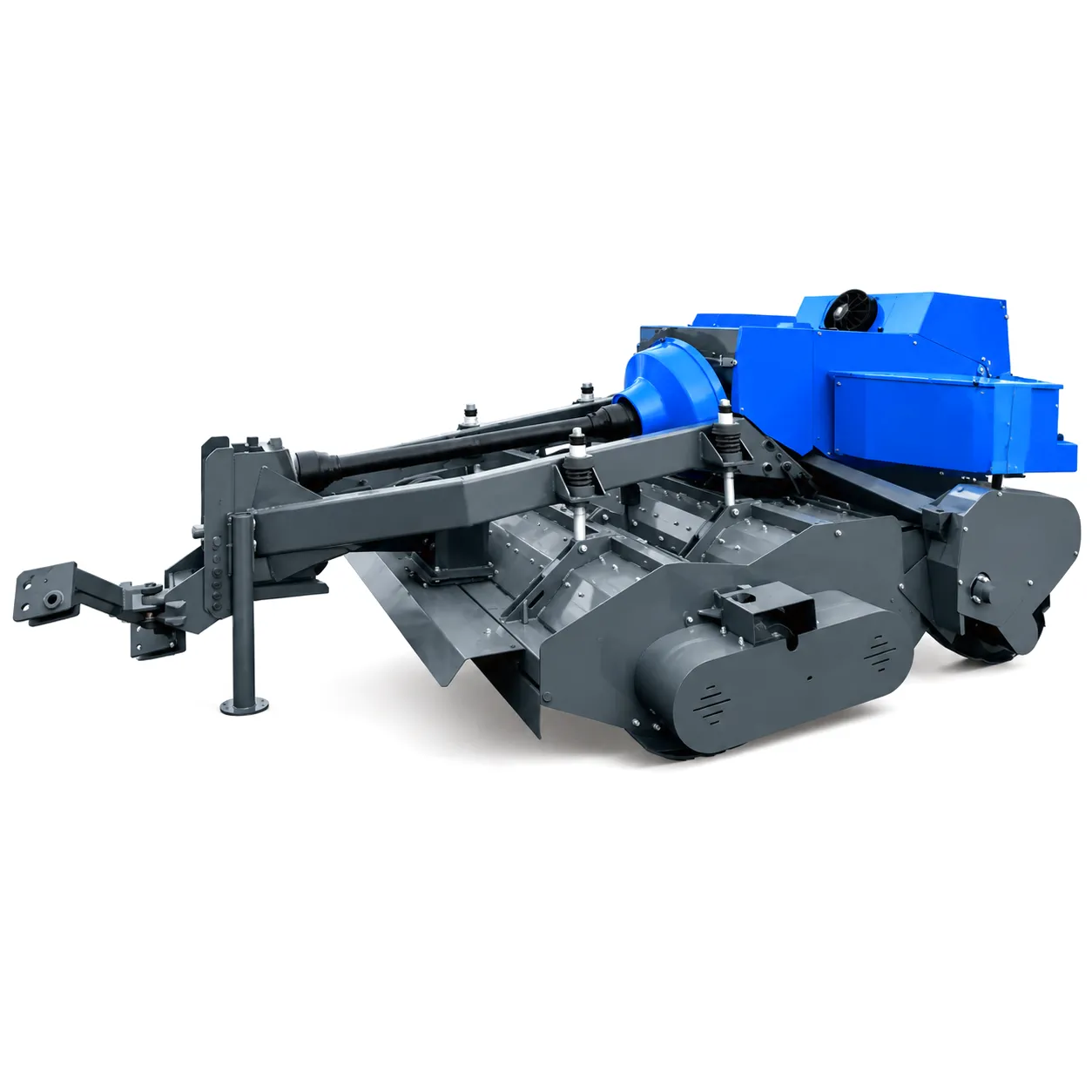
Dual Crushing Mechanism (9YF-2200S)
Twin counter-rotating rollers crush crop stems before they enter the shredding rotor, breaking the waxy cuticle of thick-stemmed crops such as maize, sorghum, and hemp. This mechanical treatment increases the surface area exposed in each bale, accelerating fermentation in silage applications and cell wall disruption in AD feedstocks. The dual crushing system adds approximately 8 kW to peak PTO demand but typically recovers that energy cost through a 4–7% increase in biogas yield per tonne of processed feedstock.
Ever Power — Manufacturing Capability & Customisation
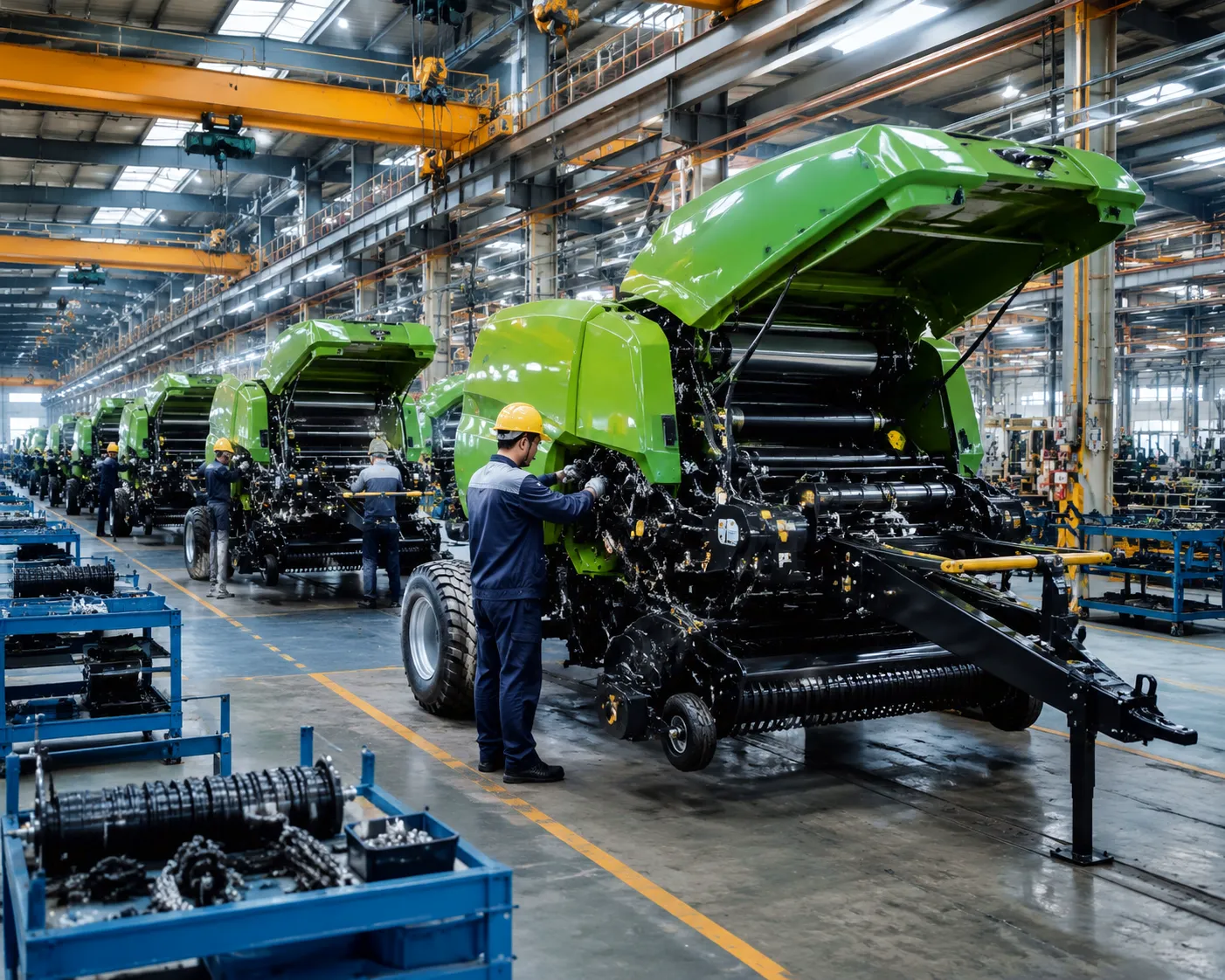
Ever Power operates a purpose-built agricultural machinery manufacturing facility with an annual output capacity exceeding 800 baler units. The production floor encompasses CNC plasma cutting, robotic welding cells, precision gear grinding, and a dedicated heat-treatment line capable of through-hardening plunger components and case-nitriding knotter bill hooks to the exacting tolerances specified for long-service UK agricultural and industrial applications. Every machine passes a complete functional test on the factory rig — including full-speed plunger stroke testing, knotter cycle verification at 80 cycles per minute, and hydraulic circuit pressure testing — before despatch.
For UK importers, distributors, and end users with specific operational requirements, Ever Power’s engineering team offers a structured customisation programme that goes well beyond the typical colour-and-decal-change service offered by generic OEM suppliers. Pickup width can be specified from 1,400 mm to 2,400 mm in 100 mm increments. Chamber cross-section dimensions are available in five standard formats, with bespoke tooling for non-standard cross-sections offered on minimum order quantities of 20 units. Pre-cutting rotor configurations — single, dual, or bypass — are selectable at order, with individual knife counts from 8 to 24 and knife pitch adjustable to suit crop type. Twine tensioner systems can be configured for standard sisal twine, high-tensile polypropylene baler twine, or twin-wrap net tie for ultra-dense biomass bales. Electrical systems are available factory-wired to ISOBUS Class 2 standard or in simplified analogue configurations for older tractor fleets.
Supply chain reliability is a recurring concern for UK agricultural machinery importers, particularly since the post-Brexit customs environment and global container shipping disruptions of recent years. Ever Power maintains finished-goods buffer stock at its bonded warehouse, with standard models available for shipment within 15 working days of order confirmation. Spare parts — including knotter kits, plunger wear strips, tine sets, and gearbox rebuild kits — are held in a dedicated export parts depot and despatched via DHL Express or pallet freight as required, with 48-hour delivery to UK mainland addresses as the standard service level.
Ready to specify your square baler? Contact Ever Power today.
Featured Ever Power Square Baler Models
เครื่องอัดฟางทรงสี่เหลี่ยม 9YF-2200/1900/1700
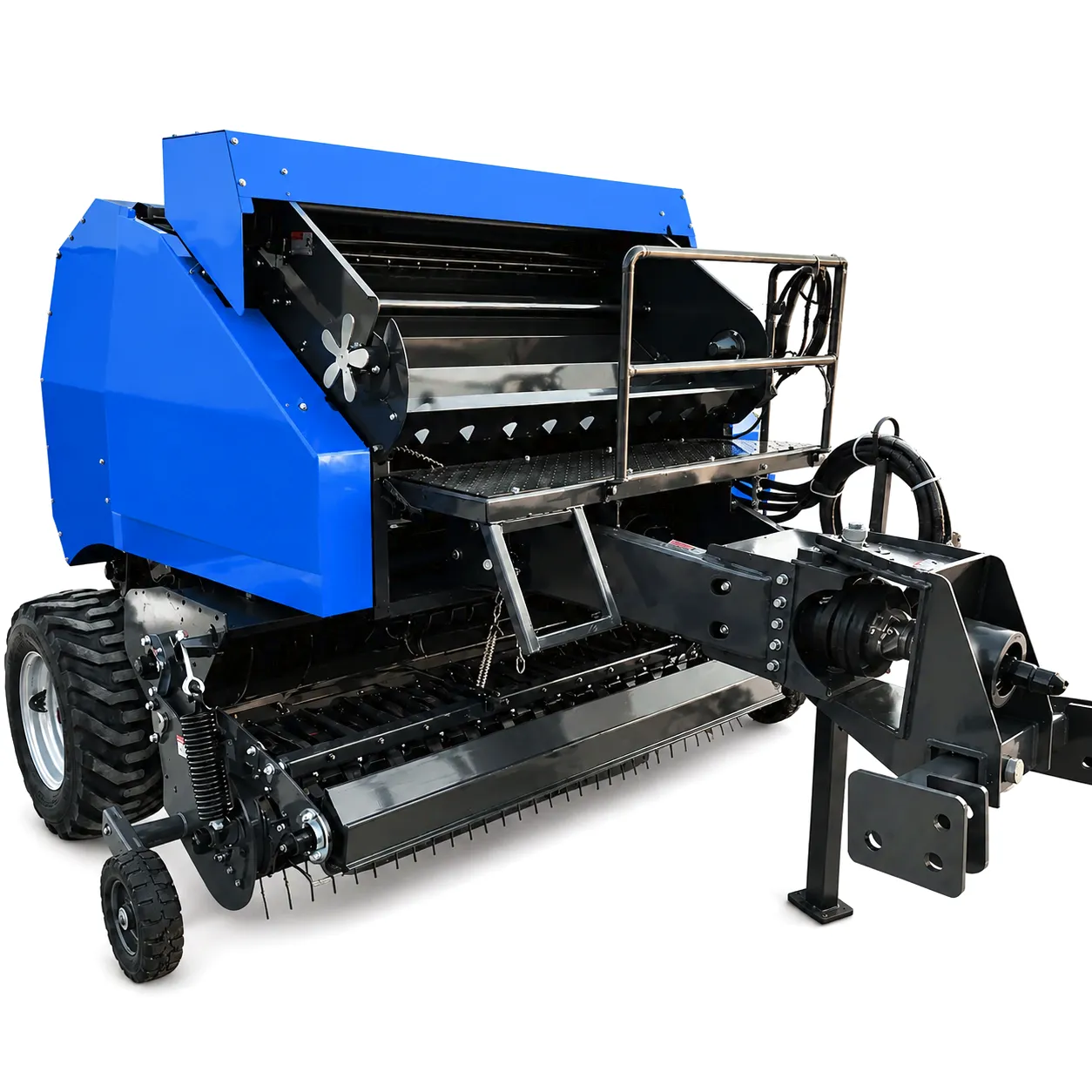
Available in three pickup widths — 1,700 mm, 1,900 mm, and 2,200 mm — this series covers the full range of UK agricultural scale from smaller mixed-farm operations to large-scale arable contracting businesses. All variants share the same reinforced S355J2 chassis, 42CrMo4 plunger, and twin-knotter system, with PTO power requirements scaling from 55 kW to 110 kW. The 2,200 mm pickup width is particularly valued by East Anglian contractors working wide, high-yield barley swaths. ISOBUS-compatible terminal ready as standard on all variants.
เครื่องอัดฟางทรงสี่เหลี่ยมแบบสองห้อง รุ่น 9YFS-2.2
The flagship double-chamber model delivers peak throughput of 220 bales per hour from a single 2,200 mm pickup pass, making it the machine of choice for large-scale UK contractors serving multiple farms across the harvest season. The quad-knotter system reduces per-knotter cycle frequency, extending service life significantly compared with equivalent single-chamber designs. Factory options include the dual crushing mechanism, hydraulic bale grouping, and remote density adjustment from the tractor cab. Ideal for biomass energy crop processors and straw merchants in the East Midlands requiring high daily output volumes.
Customer Success Story — Sheffield Biomass Contractor, South Yorkshire
Greenfields Agricultural Services, based in the Lower Don Valley near Sheffield, operates as a specialist baling and biomass logistics contractor serving five anaerobic digestion plants across South Yorkshire and North Derbyshire. In 2023, the business was processing approximately 12,000 tonnes of whole-crop rye and maize annually using a mixed fleet of older conventional square balers. Increasing feedstock volume commitments from two AD facilities pushed the existing fleet beyond sustainable capacity during the August–October harvest window, and the business was losing an estimated £68,000 per year in subcontracted baling costs.
After evaluating three competing suppliers, Greenfields placed an order for two 9YFS-2.2 Double-Chamber Square Balers from Ever Power in early 2024, specifying the dual crushing mechanism, hydraulic bale grouping, and ISOBUS integration for compatibility with their John Deere 6R series tractors. The Ever Power engineering team worked directly with Greenfields’ operations manager to configure chamber wall thickness to 14 mm — above the standard 12 mm — and specify an anti-wrap auger coating to address the hemp fibre baling work the business was beginning to take on as an additional revenue stream.
In its first full operating season, each machine averaged 195 bales per hour in whole-crop rye, comfortably exceeding the 180-bale-per-hour benchmark Greenfields had specified. Knotter failure rate over the season was 0.018%, equivalent to fewer than one missed knot per 5,500 bales — well within the AD plant contract specification. The business eliminated subcontracting entirely and recovered the capital cost of both machines in 22 months — eight months ahead of the financial projection used to justify the purchase. Spare parts availability via Ever Power’s UK logistics partner proved to be a decisive practical advantage during the season, with a replacement knotter kit delivered to their Sheffield yard within 36 hours of a telephone order.
สิ่งที่ลูกค้าของเราพูด
“The dual-chamber setup completely changed how we plan our harvest schedule. We cleared 340 acres of whole-crop rye in a single day last September with one tractor and one operator — that would have taken us two full days with our old single-chamber machines. The throughput numbers Ever Power quoted were, if anything, slightly conservative.”
— Operations Director, Greenfields Agricultural Services, Sheffield
“We specified the 14 mm chamber walls for our hemp baling work and that customisation was handled without any fuss at all — the Ever Power team had done it before and the machines arrived exactly as specified. The anti-wrap auger coating has been absolutely worth it. We haven’t had a single wrapping event in three months of hemp work.”
— Fleet Manager, Greenfields Agricultural Services, Sheffield
“Knotter reliability was our primary concern when evaluating suppliers — our AD plant clients have zero tolerance for loose or failed bales on the delivery. The knotter failure rate on the Ever Power machines in our first season was 0.018%, which is genuinely better than anything we have operated before. Parts support from Sheffield was also faster than we expected — 36 hours from call to delivery.”
— General Manager, Greenfields Agricultural Services, Sheffield
คำถามที่พบบ่อย
How much does a commercial square baler cost to buy from a UK supplier, and what should I budget for in 2024?
Pricing for a new square baler varies significantly by specification. Entry-level models with 1,700 mm pickups start from approximately £28,000–£35,000 ex-works, while high-output double-chamber machines with full ISOBUS integration, crushing mechanisms, and custom chamber specifications typically range from £55,000 to £80,000 depending on options. Ever Power offers competitive pricing on volume orders and can provide a detailed quote within 48 hours — contact [email protected] with your specification requirements.
Which type of square baler works best for baling wheat straw on large arable farms in Lincolnshire or the East of England?
For high-volume wheat straw operations in Lincolnshire and the East of England, the 9YF-2200 or the 9YFS-2.2 Double-Chamber are both well-suited. The 2,200 mm pickup width covers wide swaths efficiently, and the higher plunger force available on these models produces the dense, firm bales that straw merchants and livestock bedding suppliers require. The double-chamber model is the better choice if you are aiming to clear more than 200 acres per day with a single machine.
What is the average bale output per hour for a high-performance square baler working in typical UK cereal straw conditions?
In typical UK wheat or barley straw with a moisture content of 12–16%, a well-adjusted 9YF-2200 operating at standard field speed (10–12 km/h) will produce 100–140 bales per hour. The 9YFS-2.2 double-chamber model achieves 160–220 bales per hour under the same conditions. Output is sensitive to windrow uniformity, tractor PTO consistency, and ground speed — the best results come from maintaining a consistent field speed rather than varying it to chase high peak outputs.
Where can I get a reliable price quote from a Chinese square baler supplier who can deliver to the UK with spare parts support included?
Ever Power supplies square balers to the UK market with a full spare parts support package including a 24-month warranty on structural components and 12-month coverage on wearing parts. Quotes can be requested directly by email at [email protected]. Ever Power’s export logistics team handles documentation for UK customs and provides CIF pricing to any major UK port — including Immingham, Tilbury, and Southampton — as standard.
How do I choose between a single-chamber and a double-chamber square baler when running a biomass energy crop contracting business in the Midlands?
The choice depends on your seasonal peak tonnage requirement. If you are processing fewer than 8,000 tonnes of biomass feedstock per season, a single-chamber 9YF-2200 with the dual crushing mechanism attached will typically be the more cost-effective choice. Above 10,000 tonnes, the double-chamber 9YFS-2.2 delivers better economics per tonne of output because the higher throughput rate reduces the labour hours and fuel consumed per tonne processed. Contact Ever Power to discuss a seasonal output analysis based on your contract volumes.
When is the best time of year to order a new square baler from an overseas manufacturer to ensure delivery before the UK harvest season?
For UK harvest readiness by early July, ordering should be confirmed by no later than mid-February to allow production lead time (6–8 weeks for standard models), ocean freight (approximately 5 weeks to UK port), and pre-delivery inspection by your dealer or in-house workshop. Custom specifications add 2–3 weeks to the production lead time. Ever Power recommends placing orders for the following harvest season in the September–November window to secure preferred production slots and avoid last-minute freight premium costs.
What tractor horsepower do I need to run a high-output double-chamber square baler on a 130-acre Yorkshire hay farm?
The 9YFS-2.2 Double-Chamber Square Baler requires 90–130 kW (approximately 120–175 hp) at the PTO for normal hay and straw operation. On a 130-acre farm, a tractor in the 100–120 kW range will be sufficient for most conditions. In heavy, dense windrows or when the dual crushing mechanism is fitted, peak PTO demand can reach 128 kW briefly, so a tractor with at least 110 kW rated PTO output is the safe specification. Tractors in the John Deere 6R 150 or New Holland T6.180 class are commonly paired with this baler by UK operators.
edit by gzl | © Ever Power Industrial Equipment | [email protected]