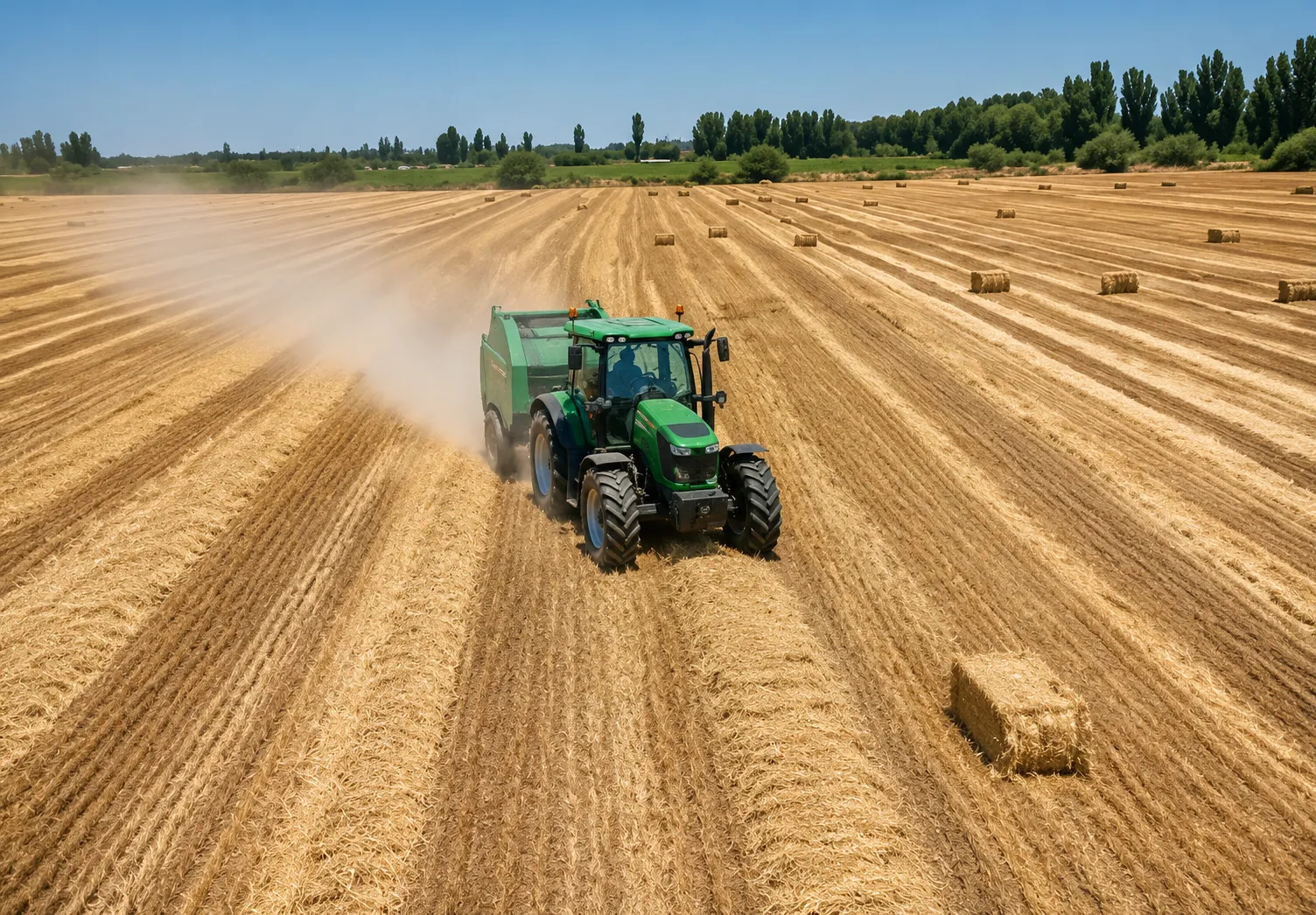
The square baler stands as one of the most mechanically demanding pieces of agricultural and industrial compaction equipment in service across the United Kingdom today. Whether operating on the rolling farmland of Yorkshire, the arable plains of East Anglia, or the large-scale silage estates scattered across Lincolnshire and Cheshire, these machines must deliver relentless compaction force, precise knotting cycles, and reliable bale geometry across seasons and materials that would challenge any lesser mechanism. For procurement engineers and machinery operations managers evaluating new equipment, understanding the exact engineering architecture behind a high-performance square baler—its working principle, structural materials, and load-bearing components—is not optional knowledge. It forms the technical foundation on which informed purchasing decisions, maintenance schedules, and long-term return-on-investment calculations are built. The global demand for efficient baling technology is rising sharply alongside growing pressure on agricultural throughput efficiency and the expanding secondary-use market for compacted biomass, recycled paper, and industrial fibre materials.
How a Square Baler Works: The Engineering Behind the Cycle
Pickup & Pre-Compression
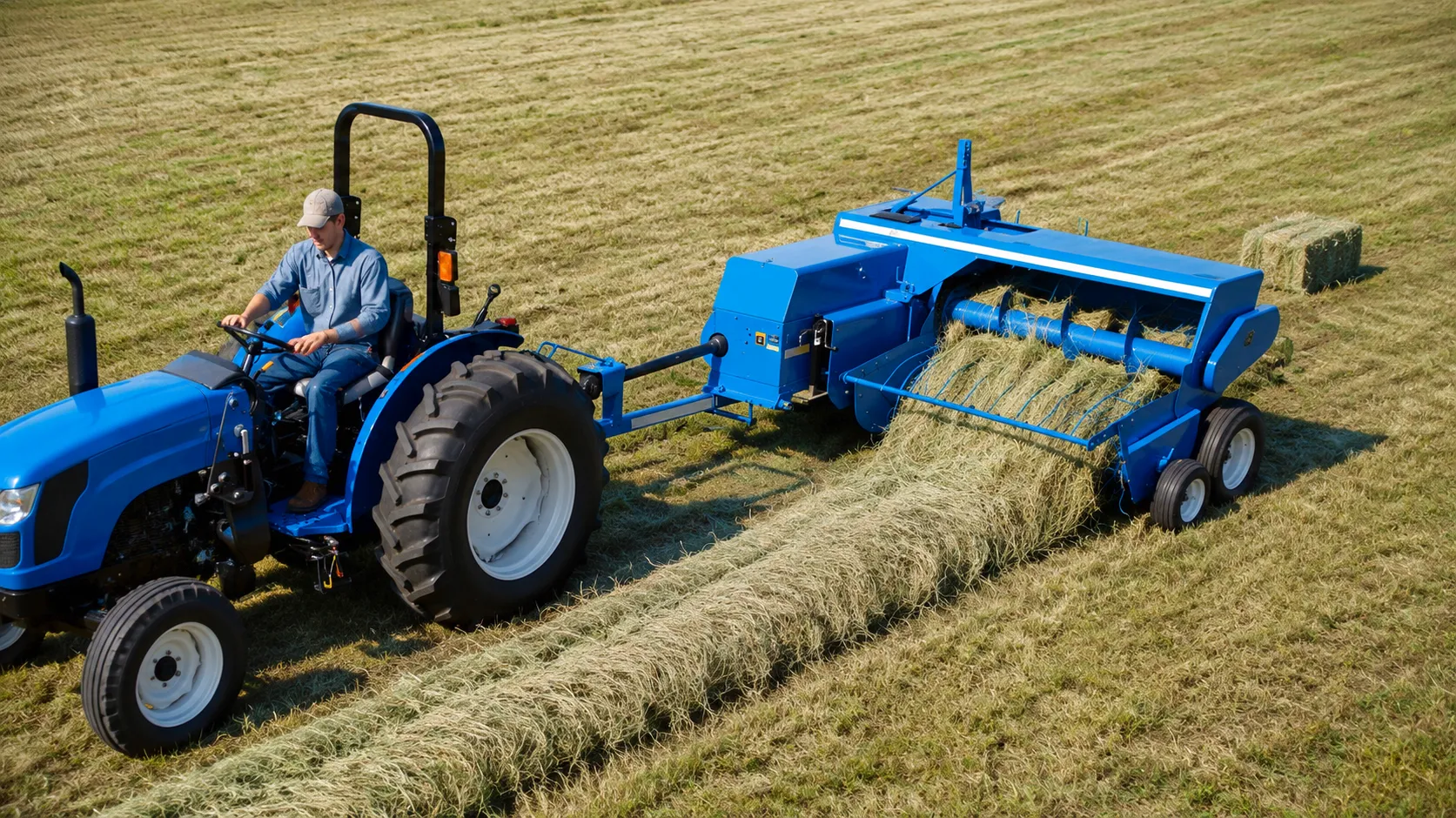
Crop or material lying in windrows is lifted by a rotating pickup reel fitted with spring-steel tines spaced to engage material uniformly without loss. As material enters the feed channel, an auger or rotary feeder pre-compresses the flow and doses it in measured slugs toward the bale chamber entrance. The consistency of this slug is critical: too little material per cycle and bale density suffers; too much and the plunger drive risks overload. Modern square balers use load-sensing hydraulic pre-compressors that monitor feed density in real time.
Plunger Drive & Compression
The plunger is the heart of every square baler. Driven through a heavy-duty crankshaft and connecting rod assembly—typically powered off the tractor’s PTO at 540 rpm or 1000 rpm—the plunger reciprocates at up to 90 strokes per minute in high-capacity models. Each stroke compresses the slug of material against the previously formed partial bale. The compaction pressure generated within the bale chamber can exceed 250 kN in large-format machines, demanding that the plunger face, side wear plates, and chamber walls are manufactured from hardened alloy steels with precise surface tolerances. The plunger’s geometry—its width, stroke length, and clearance to the chamber—directly determines the cross-section and density of the finished bale.
Metering & Knotting Mechanism
A star-wheel metering device tracks bale length by counting plunger strokes and triggering the knotting cycle at a precisely pre-set length. Knotter systems—invariably based on the Deering or McCormick lineage of bill-hook knotters—form a secure loop of twine around the finished bale. The bill hook rotates, captures the twine, forms the knot, and the twine knife severs the standing end cleanly. Reliable knotting depends on correct twine tension, clean bill hook geometry, and accurate timing between the knotter cam and the plunger. In dual-twine configurations, two knotters act in parallel. Missed knots and twine breaks remain among the most commercially costly downtime events for UK baling operations.
Bale Ejection & Density Control
Once the knotting cycle completes, the finished bale is ejected rearward through the bale chute. High-density machines use hydraulically adjustable friction flaps on the chute sides to apply back-pressure against the bale as it exits, maintaining compression until the knot fully closes. Electronic density monitoring systems fitted on premium square baler models continuously sample plunger flywheel load and adjust chute friction in closed-loop control, targeting a user-defined bale weight. This level of automation is increasingly valued in UK contract baling operations where consistent bale weight is directly tied to haulage efficiency and hay market pricing.
Core Materials: What a Square Baler Is Made Of
High-Tensile Structural Steel (S355 / S420)
The mainframe, bale chamber, and chassis members of a well-engineered square baler are fabricated from high-tensile structural steels, most commonly grades equivalent to S355 or S420 under EN 10025. These grades provide yield strengths of 355 MPa and 420 MPa respectively, essential for resisting the cyclic bending loads imposed by the crankshaft assembly during continuous plunger operation at field speeds. Full-penetration welds are required at all load-bearing joints, and post-weld stress relief is carried out on mainframe assemblies to prevent fatigue cracking in service.
Case-Hardened Alloy Steel (20CrMnTi / 42CrMo4)
Plunger faces, knotter bill hooks, crankshaft journals, and drive sprockets are subjected to both high surface stress and significant wear. These components are manufactured from case-hardening or through-hardening alloy steels such as 20CrMnTi (case depth 0.8–1.2 mm, surface hardness 58–62 HRC) or 42CrMo4 (quench and temper to 30–36 HRC core). The careful balance between hard surface and tough core is what prevents brittle fracture during the shock loads encountered when the plunger strikes particularly dense material slugs. Bill hook geometry is produced by precision CNC machining followed by induction hardening of the working surfaces.
Boron Steel & Wear-Resistant Plate (Hardox 400)
Bale chamber side liners, pickup tine holders, and shredder knife carriers operating in direct contact with abrasive crop material or contaminated biomass are best suited to wear-resistant steels like Hardox 400 (400 HBW) or boron steel grades (27MnCrB5). These materials offer two to four times the abrasion resistance of standard structural steel at comparable plate thickness, directly reducing the frequency of liner replacement and cutting lifetime ownership costs significantly. For operations in the sandier soil belts of East Anglia or the drier eastern counties, this material choice is particularly relevant.
Ductile Cast Iron & Forged Components
Gearbox housings, flywheel hubs, and heavy bearing carriers in the square baler driveline are produced from grade 700-2 or 600-3 ductile iron, offering a useful combination of damping capacity and tensile strength. Crankshaft arms and connecting rod big-end caps on premium machines are forged rather than cast, as the forging process aligns the grain structure of the steel along the line of principal stress, significantly improving fatigue life in these highly loaded rotating components. UK operators running two-shift harvesting programmes benefit from this manufacturing investment in fatigue-critical parts.
Core Technical Advantages of the Modern Square Baler
⚡
Superior Bale Density
Square bales achieve consistently higher compaction densities than round bale equivalents in the same material. Densities of 220–350 kg/m³ for dry hay and 450–600 kg/m³ for straw are regularly achieved, reducing transport volume, storage footprint, and handling costs per tonne of material across UK supply chains.
📦
Stackability & Logistics Efficiency
The flat geometry of square bales enables stable stacking up to six layers high without specialist racking, directly improving space utilisation in farm buildings and third-party storage warehouses. UK agricultural logistics operators report meaningful reductions in lorry loads required per harvest when switching from round to square bale formats in comparable output volumes.
🌿
Versatile Material Range
Modern square baler designs process not only traditional hay, straw, and silage crops but also recycled paper and cardboard, hemp fibre, miscanthus energy grass, and industrial biomass. This versatility makes the square baler a core piece of equipment for waste processing centres, biomass energy suppliers, and agricultural diversification operations across England and Wales.
🛠
Reduced Dry Matter Losses
High-density square bales expose less surface area per unit of stored volume than low-density alternatives, limiting oxidation and fermentation in outdoor storage conditions. For UK livestock farmers storing hay through the wet winter months in uncovered clamps or field stacks, this translates directly into higher feed quality and improved dry matter recovery per tonne harvested.
📅
Automation & Telemetry Integration
Contemporary square baler platforms support ISOBUS connectivity, allowing tractor operators to monitor bale count, knotter status, bale density, and channel pressure directly from the cab display. Remote diagnostics capabilities are now available across several product ranges, enabling UK dealers and service engineers to access machine fault codes and sensor data over 4G connectivity, reducing diagnostic visit time and increasing first-fix rates.
Product Technical & Performance Specifications
The table below provides representative technical parameters for industrial-grade square balers across two common product configurations. Values reflect engineering standards for field-ready machines targeting UK contract farming and biomass processing operations.
Industrial & Agricultural Application Scenarios
Application Scenario: Cereal Straw Baling on Large Arable Estates in Lincolnshire and East Anglia
Application Scenario: Biomass Energy Grass Baling for Anaerobic Digestion Plants in Yorkshire
Yorkshire hosts a growing cluster of agricultural anaerobic digestion facilities processing energy crops, including miscanthus, maize stover, and reed canary grass, alongside food processing wastes. These plants rely on square balers to deliver consistently dense input material in a format compatible with their automated in-feed systems. The critical requirement in this application is a stable bale density across the full moisture range of the feedstock—from freshly cut grass at 65 percent moisture down to dry miscanthus at 12 percent. Square balers with hydraulic density control systems and variable pre-compression auger drives are the correct choice for this variable-moisture environment. The large flat face of the square bale also suits the in-floor drag conveyors used in many Yorkshire AD plant reception bays. Contract baling operators supplying multiple AD facilities across West Yorkshire and North Yorkshire report that square bale contracts typically command a premium over round bale equivalents due to the handling advantages at the plant gate.
Application Scenario: Recycled Paper and Cardboard Baling at Waste Processing Facilities in Birmingham and the West Midlands
The waste management and recycling sector in Birmingham and across the broader West Midlands industrial region represents a substantial and growing market for stationary and semi-stationary square baler systems. Recovered paper, cardboard, and mixed fibre streams from retail, commercial, and industrial premises are channelled through materials recovery facilities where high-throughput baling equipment compresses these streams into export-ready bales. Square baler configurations for this industrial recycling application differ from agricultural models in several respects: the chamber cross-section is typically larger to accommodate the lower bulk density of loose cardboard; the pre-compression system uses a horizontal pusher plate rather than an auger; and the knotting system is engineered for plastic strapping rather than sisal twine. Companies operating waste transfer stations across Wolverhampton, Coventry, and Dudley commonly specify throughput capacities of 25 to 45 tonnes per hour for their primary baling lines, a level achievable with large-format high-density square baler technology.
Application Scenario: Industrial Hemp and Natural Fibre Baling for Textile and Construction Sector Supply Chains
The industrial hemp sector is growing notably across the south of England, with licensed hemp cultivation now established in counties including Suffolk, Kent, and Wiltshire. Hemp stalks, once retting is complete, present a baling challenge because of the combination of rigid lignified core and long fibrous outer skin, which can entangle pickup tines and jam pre-compression augers if the machine is not correctly configured. Square balers with heavy-duty crop deflectors, wide-pitch pickup tine spacing, and protected auger flights have proven well-suited to hemp fibre baling. The resulting bales—dense and well-tied—are delivered directly to natural insulation manufacturers and textile processors whose automated production lines require dimensional consistency from input material. The growing UK construction sector demand for natural insulation materials produced from hemp shiv and fibre has created a new and commercially attractive use case for purpose-configured square baler equipment.
Ever Power: Precision Manufacturing & Custom Baler Solutions
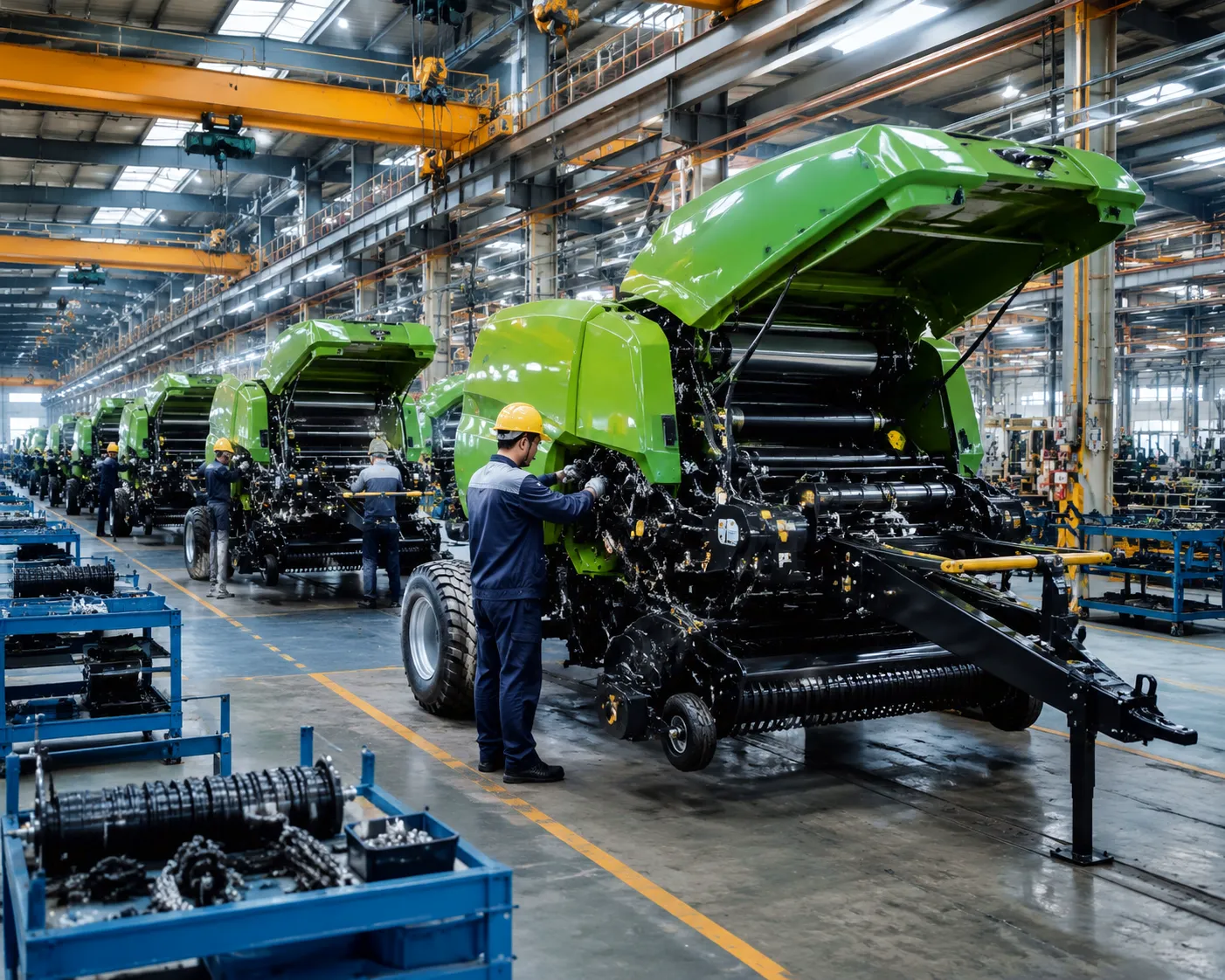
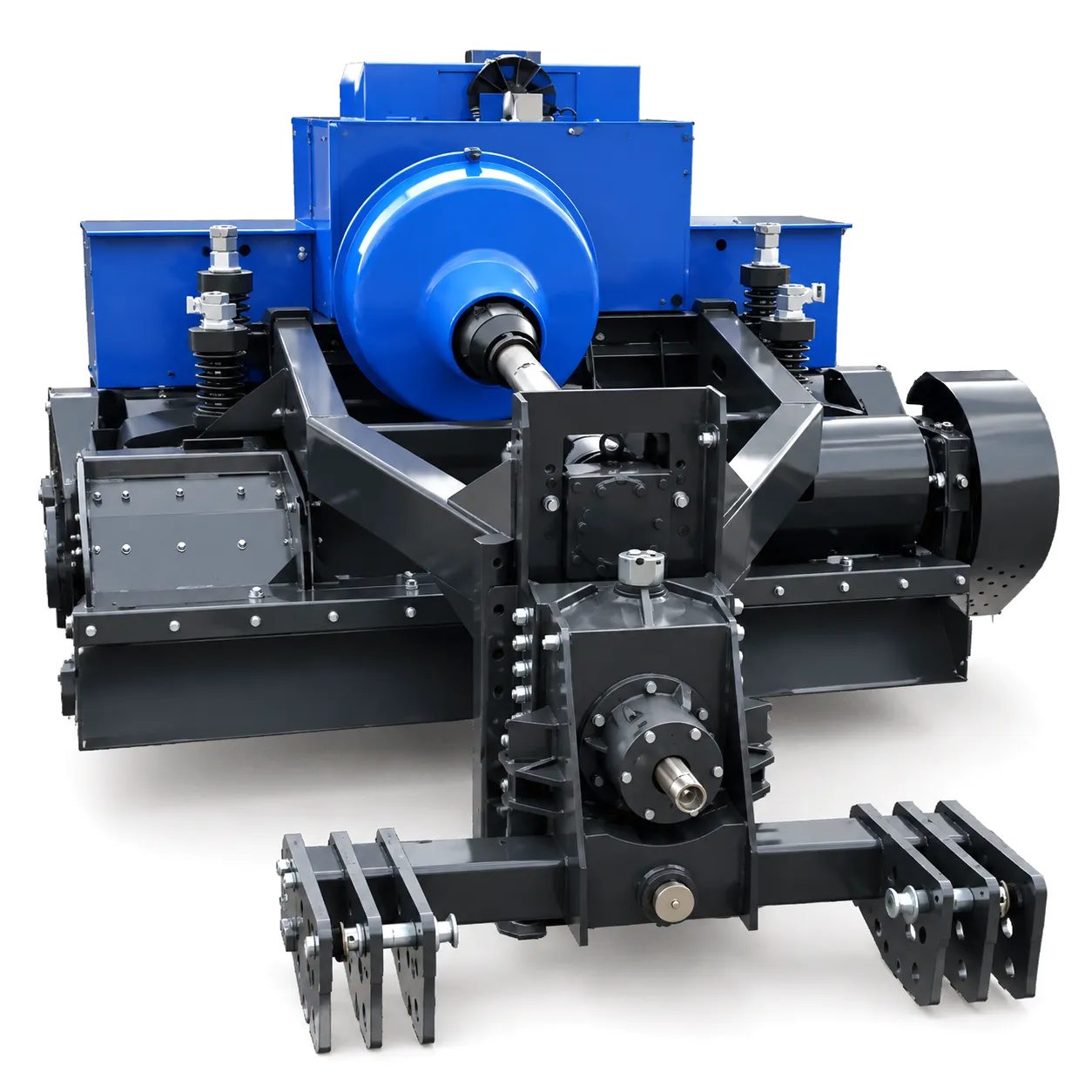
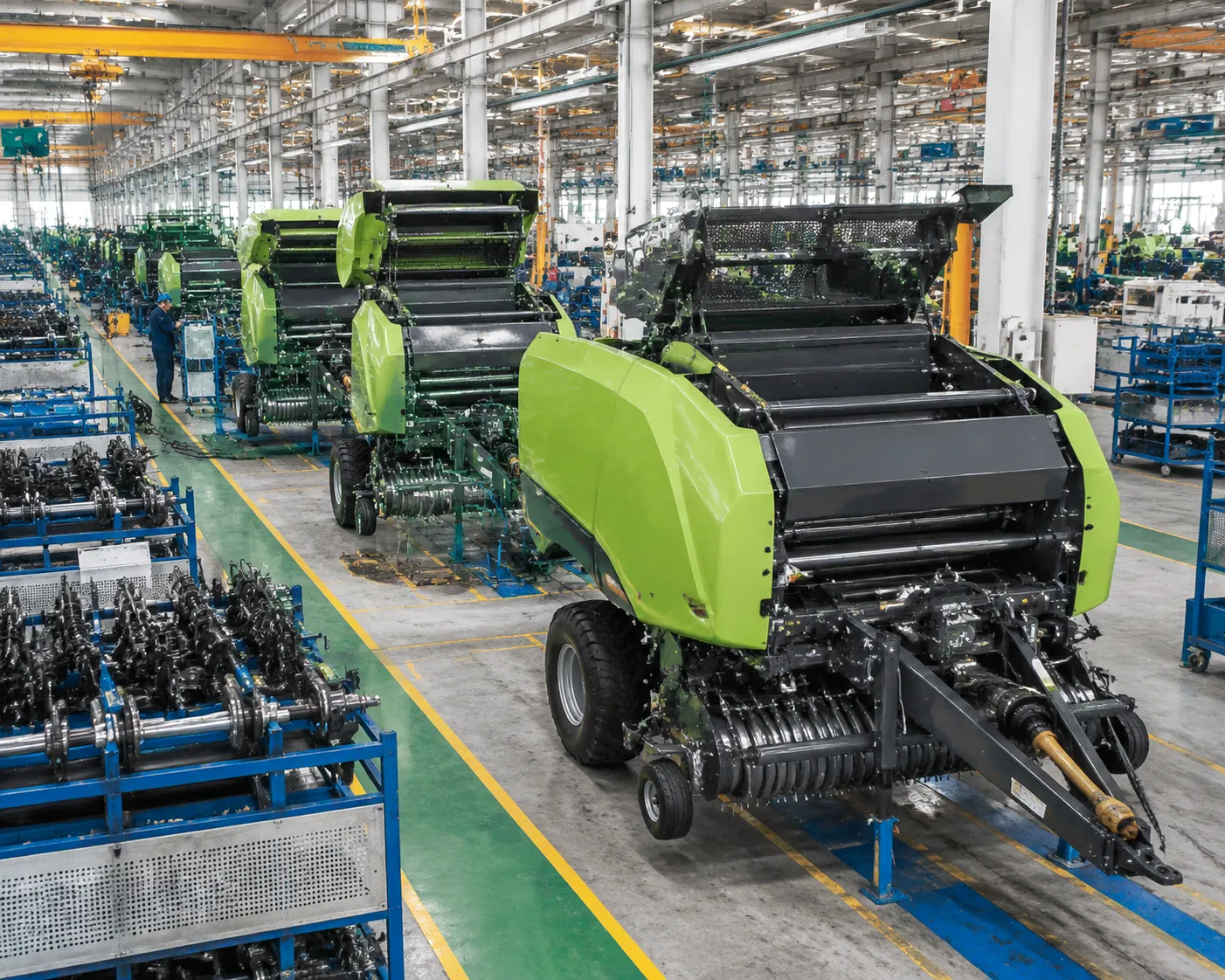
Ever Power operates a fully integrated manufacturing facility producing square baler equipment to exacting engineering standards. The company’s production lines combine robotic MIG and TIG welding stations with CNC machining centres for knotter components, plunger guides, and crankshaft assemblies. Every major structural weld is carried out by certified welding operators qualified to ISO 3834-2, with weld quality documented by in-process inspection and final NDT. Heat treatment for case-hardened components is performed in programmable atmosphere-controlled furnaces, ensuring consistent case depth and surface hardness batch to batch.
The customisation capabilities at Ever Power extend well beyond standard model configurations. The engineering team accepts full custom specifications from B2B clients, including non-standard bale chamber dimensions, alternative knotter configurations, specialised pre-compression systems for non-agricultural materials, custom paint schemes and livery, and integration of client-specified telematics modules. For UK distributors and agricultural machinery dealers placing fleet orders, Ever Power provides dedicated account management, pre-delivery inspection documentation, and technical training support for their after-sales teams. The supply chain at Ever Power is structured to support consistent lead times, with critical components—crankshafts, bill hooks, pickup tines—held in buffer inventory to prevent production delays during peak demand periods.
Ready to Discuss Your Custom Square Baler Requirements?
Whether you need a standard field-ready model or a fully engineered custom solution for an industrial baling application, our technical sales team is ready to support your specification process from initial enquiry through to delivery and commissioning.
Ever Power Square Baler Product Range
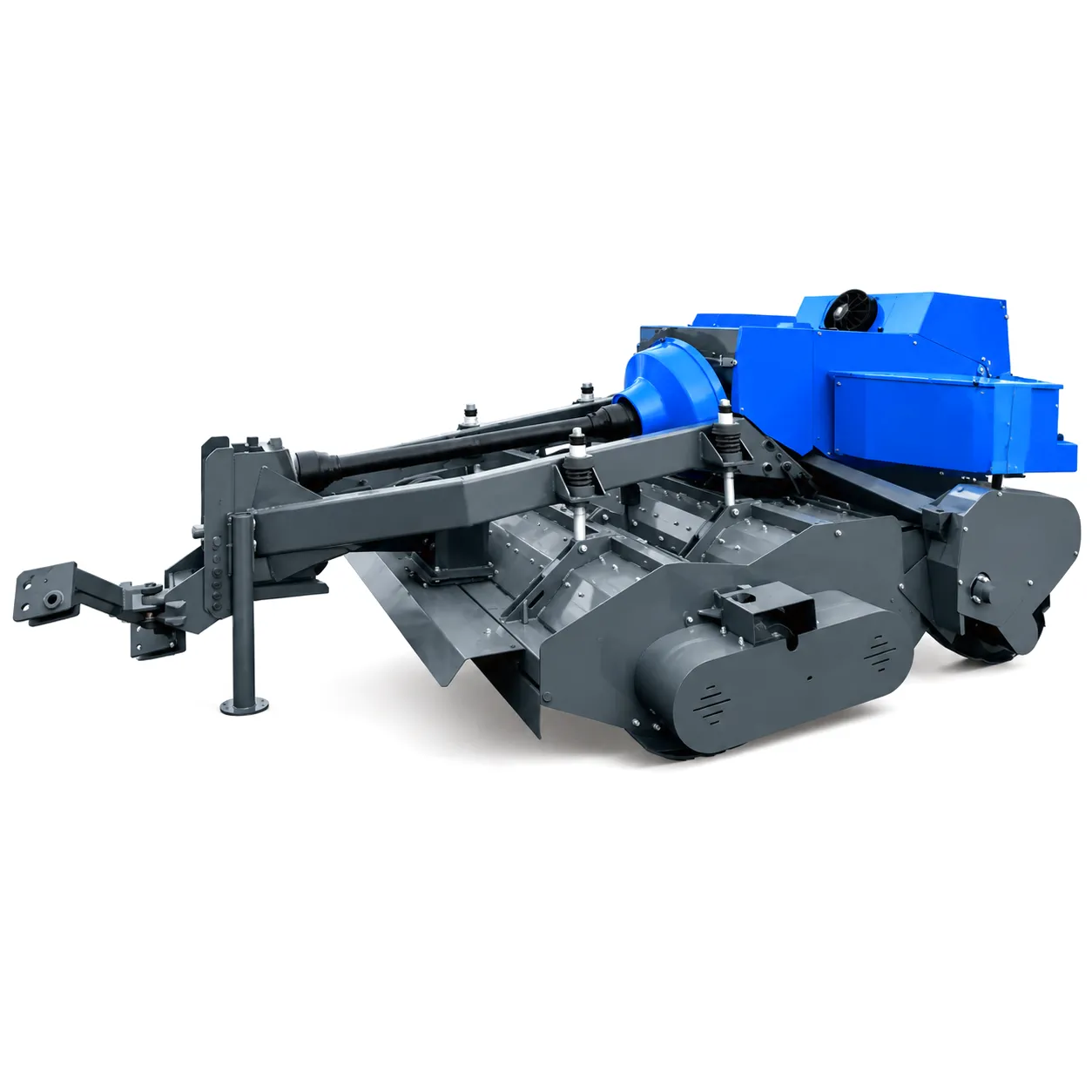
เครื่องอัดฟางทรงสี่เหลี่ยม 9YF-2200/1900/1700
A robust large-format square baler available in three bale-width configurations—2200 mm, 1900 mm, and 1700 mm. Purpose-built for high-throughput cereal straw, hay, and biomass operations, this model delivers high compaction density through its heavy-duty plunger drive and adjustable bale chamber friction system. Suited to UK contract farming and biomass energy supply operations requiring consistent bale geometry and minimal maintenance downtime.
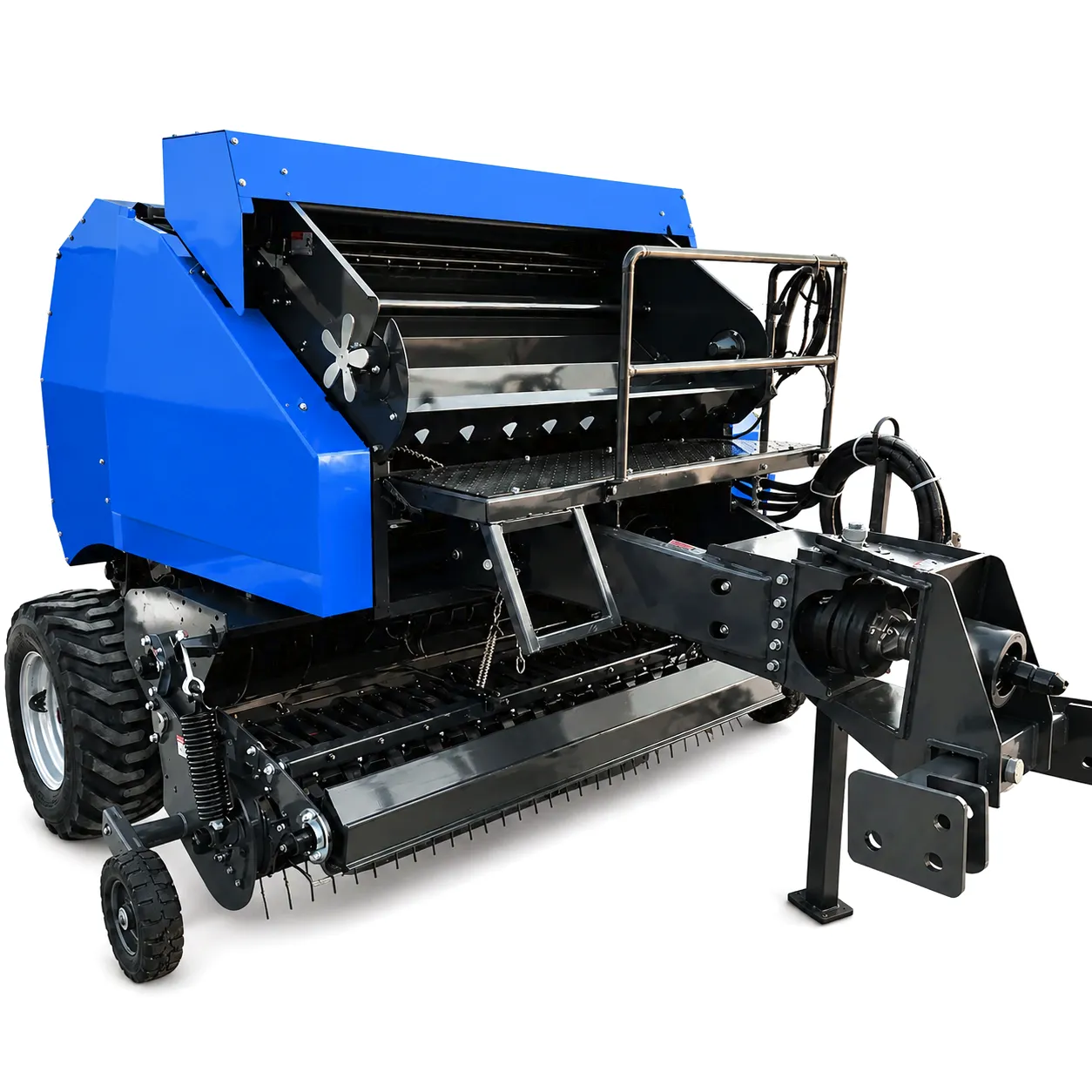
เครื่องอัดฟางทรงสี่เหลี่ยมแบบสองห้อง รุ่น 9YFS-2.2
The 9YFS-2.2 double-chamber configuration allows simultaneous production of two bale streams from a single pass, effectively doubling throughput capacity without increasing machine footprint or tractor power demand per tonne processed. This model is particularly well-suited to large arable operations in eastern England and Scotland where the window for straw clearance is limited and maximum field efficiency is a commercial necessity. The dual-chamber design also enables mixed-length bale production for operations supplying clients with different bale specification requirements.
Customer Success Story: Hargreaves Agricultural Contracting, North Yorkshire
Hargreaves Agricultural Contracting, based outside Thirsk in North Yorkshire, had been operating a mixed fleet of round and small square balers across a client base spanning cereal arable farms, livestock enterprises, and an anaerobic digestion facility near Northallerton. By 2023, the operation was under mounting pressure: the AD plant contract required large-format bales in a tight delivery window following the hay cut, and the existing small baler fleet could not meet throughput targets without running equipment beyond its rated capacity. Bale quality complaints were increasing, and two knotter failures within a single month had caused costly field downtime at harvest.
Following technical discussions with Ever Power’s sales engineering team, Hargreaves specified two units of the 9YF-2200 large-format square baler, customised with extended pickup width, heavy-duty crop deflectors for the often-heavy Yorkshire grass swards, and a hydraulic density monitoring system integrated with their existing tractor ISOBUS displays. Ever Power’s engineering team also adjusted the pre-compression auger pitch to handle the variable stem length of the perennial ryegrass and fescue mixtures typical of the region’s permanent pasture fields. Pre-delivery inspection documentation and detailed commissioning support were provided ahead of the first hay season, with a technical representative attending the first day of field operations to verify settings.
The results across the first full season of operation exceeded Hargreaves’ targets on every key metric. Throughput capacity increased by 68 percent compared to the previous fleet, the AD plant delivery schedule was met with four days to spare, and there were zero knotter failures across the entire season—a result the workshop manager attributed directly to the quality of the induction-hardened bill hook components specified for the Ever Power machines. The bale weight consistency delivered by the hydraulic density control system also reduced variability in lorry load weights, improving routing efficiency for the haulage contractor moving bales from farm to AD facility.
★★★★★
“The density consistency from the Ever Power machines is genuinely impressive. We’re hitting target bale weight on over 94 percent of bales now, which has transformed our lorry load planning completely. The AD plant now takes our deliveries without re-weighing at the gate—that alone saves us two hours per delivery run.”
James Hargreaves, Operations Director — Hargreaves Agricultural Contracting, Thirsk, North Yorkshire
★★★★★
“Ever Power’s customisation process was the deciding factor for us. We had a very specific pickup width requirement because of our field gate widths and the need to clear headlands cleanly. Their engineering team turned around a modified specification within ten working days, and the technical drawing matched what we asked for exactly. Other suppliers couldn’t commit to a custom width without an order minimum we couldn’t justify.”
David Sutton, Fleet Purchasing Manager — Sutton Contract Farming Ltd, Driffield, East Yorkshire
★★★★★
“We process miscanthus for a district heating scheme near York. The stem length and abrasive quality of dry miscanthus destroys standard equipment quickly—we went through two sets of pickup tines in our first season with a different brand. The Hardox-lined chamber on the Ever Power machine has been running for eighteen months without any measurable liner wear. The supply chain support from Ever Power for spare parts has also been significantly better than we experienced with European OEM suppliers.”
Rachel Thornton, Supply Chain Manager — GreenFuel Biomass Yorkshire, Selby, North Yorkshire
คำถามที่พบบ่อย
How much does a large-format square baler typically cost from a supplier in the UK, and what factors affect the final price?
The cost of a large-format square baler in the UK market varies significantly depending on bale chamber width, plunger capacity, automation level, and optional equipment. Entry-level mid-size models start from around £35,000 to £55,000, while large-format high-density machines with full electronic density control and ISOBUS compatibility typically range from £80,000 to £160,000 or above. Custom-configured machines from manufacturers like Ever Power that include non-standard pickup widths, specialised pre-compression systems, or modified knotting arrangements will be priced based on the specific engineering scope. For an accurate quotation based on your operational requirements, contacting the manufacturer or their UK representative directly is advisable. You can reach Ever Power’s technical sales team at [email protected].
What tractor horsepower do I need to run a square baler effectively for heavy straw baling in Yorkshire or Lincolnshire?
For mid-size square balers producing 400 × 360 mm or 600 × 450 mm bales, a minimum of 75 hp (56 kW) at the PTO is typically required, with 100 to 130 hp recommended for sustained heavy-crop operation in dense Yorkshire and Lincolnshire straw windrows. Large-format machines in the 1200 × 700 mm class generally require 130 to 180 hp minimum, and high-density models working at maximum throughput in heavy wheat straw can demand over 200 hp during peak plunger loading events. Tractor manufacturers recommend maintaining a 20 percent power margin above rated baler requirement to protect the tractor transmission and avoid flywheel stall events in unexpected dense patches.
Which square baler supplier in the UK offers the best customisation options for non-standard bale dimensions or industrial applications?
For B2B buyers requiring non-standard bale chamber dimensions, modified pickup widths, or machines configured for industrial materials such as recycled cardboard, hemp fibre, or miscanthus energy grass, Ever Power offers one of the most flexible custom engineering programmes currently available. The company’s engineering team works directly with clients to produce custom specifications, technical drawings, and prototypes to validated designs. This level of customisation service is uncommon among large-volume European OEM suppliers who typically only offer limited option packages within fixed product platforms. Contact Ever Power at [email protected] to discuss your specific requirements.
How do I get a competitive quote for square balers to supply a biomass energy plant near Sheffield or Leeds?
Requesting a quote for square baler equipment for biomass energy plant supply contracts near Sheffield, Leeds, or anywhere in the Yorkshire region is straightforward via Ever Power’s sales team at [email protected]. When making your enquiry, it is helpful to include the target feedstock type (miscanthus, maize stover, reed canary grass, or mixed grasses), the required throughput in tonnes per hour, the available tractor PTO horsepower, the target bale dimensions required by the plant in-feed system, and any special requirements for ISOBUS connectivity or telemetry integration. Providing these details at the outset allows the technical sales team to return a meaningful and accurately priced quotation rather than a generic model price.
When is the best time of year to order a square baler for delivery ahead of the UK hay and straw harvest season?
The UK hay and straw harvest window typically runs from late June through to September, with cereal straw baling peaking in August across most of England. To ensure a new square baler is commissioned, field-tested, and ready for full operational deployment before the harvest window, placing your order in the October to January period of the preceding year is strongly recommended. This allows sufficient lead time for custom configurations, shipping from manufacturing facility, pre-delivery inspection, and any dealer preparation work required. Orders placed after March for an August deployment carry significant commissioning risk, particularly for custom-configured machines requiring extended production time.
What are the most common knotter failure causes in square balers operating in UK conditions and how can they be prevented?
Knotter failures in UK field conditions most commonly result from four causes: incorrect twine tension adjusted at the twine holders, contamination of the bill hook and knotter cam surfaces with soil, crop sap, or oil, worn or mis-timed knotter cam profile, and excessive wear on the bill hook working surfaces. Prevention centres on a consistent pre-season service schedule covering twine tension adjustment to manufacturer specification, thorough cleaning and inspection of all knotter components including the twine knife edge condition, and checking cam timing against the machine’s calibration marks. Using high-quality twine with certified tensile strength and consistent knotting performance is equally important. Machines with induction-hardened bill hooks, such as those manufactured by Ever Power, show significantly reduced bill hook wear rates compared to machines using conventionally hardened components.
Ready to Source Your Next Square Baler?
Speak directly with Ever Power’s technical sales team about machine specification, pricing, and delivery timelines for UK operations.
แก้ไขโดย gzl